Thunderbolt Chen Lei Case: Dark Deals, Mistresses, and Cryptocurrency Black Money Under the Blockchain Frenzy

marsbitОпубликовано 2026-01-15Обновлено 2026-01-15

Введение

Lei Chen, former CEO of Xunlei and its subsidiary Wangxin Technology, is facing a 200 million RMB civil lawsuit filed by the company in January 2026 for alleged damage to corporate interests. The case, accepted by a Shenzhen court, revives earlier accusations from 2020 that Chen embezzled company funds through fabricated transactions and false contracts, diverting tens of millions of yuan into illegal cryptocurrency speculation. Chen, a tech elite with a background at Google, Microsoft, and Tencent, led Xunlei's pivot to blockchain in 2017, launching the popular "Wanke Cloud" device and its associated "Wanke Coin" (later renamed "LinkToken"). The initiative initially boosted Xunlei’s stock, but internal governance issues emerged. An audit revealed Chen allegedly funneled money through a controlled supplier, Xingronghe, and used company resources for crypto trading—violating China’s crypto ban. The case also involves Chen’s close relationship with Dong Xia, a senior VP he appointed, with whom he had a child—contradicting his prior denials. Both left China in April 2020, hindering a criminal investigation that was later dropped. The civil case now seeks accountability, highlighting early crypto industry risks and corporate governance failures in Chinese tech.

Original Author: Ma He, Foresight News

In January 2026, Thunderbolt Company and its subsidiary Wangxin Technology filed a civil lawsuit against Chen Lei and his core team on the grounds of "dispute over liability for damaging company interests," seeking compensation of up to 200 million yuan. The case has been accepted and filed by the relevant court in Shenzhen.

This lawsuit stems from a series of allegations in 2020, including Chen Lei's suspected embezzlement of company assets through fabricated transactions and false contracts, as well as the misappropriation of tens of millions of funds for illegal cryptocurrency trading. To evade investigation, Chen Lei left the country in early April 2020 and has since remained overseas for an extended period, leading to the criminal investigation being dropped due to difficulties in obtaining evidence.

This incident not only exposed the internal governance chaos at Thunderbolt but also reflected the wild growth and regulatory risks of early Chinese internet companies venturing into the cryptocurrency space.

Chen Lei began learning programming in high school, enrolled in the Computer Science Department of Tsinghua University for college, pursued further studies in the United States, gained experience at Google and Microsoft, and then returned to China to join Tencent. Chen Lei is a standard sample of a technical elite.

In 2014, he joined Thunderbolt as Chief Technology Officer (CTO) when the company was facing a decline in its download business. As a former Microsoft employee, Chen Lei excelled in distributed computing and cloud computing technologies, which aligned with Thunderbolt's core P2P download business. From 2015 to 2017, he served as Thunderbolt's co-CEO, and in July 2017, he officially became CEO and director.

At this time, the global blockchain boom was rising, Bitcoin prices were soaring, and Chinese companies were actively exploring this emerging field. Chen Lei led Thunderbolt's transformation toward blockchain, viewing it as the key to the company's revival.

Wankeyun: From Glory to Decline

Thunderbolt's landmark product in the cryptocurrency space was "Wankeyun." In October 2017, Thunderbolt launched the Wankeyun hardware, a smart shared storage device where users were rewarded with "Wankey Coins" for contributing idle bandwidth and storage resources.
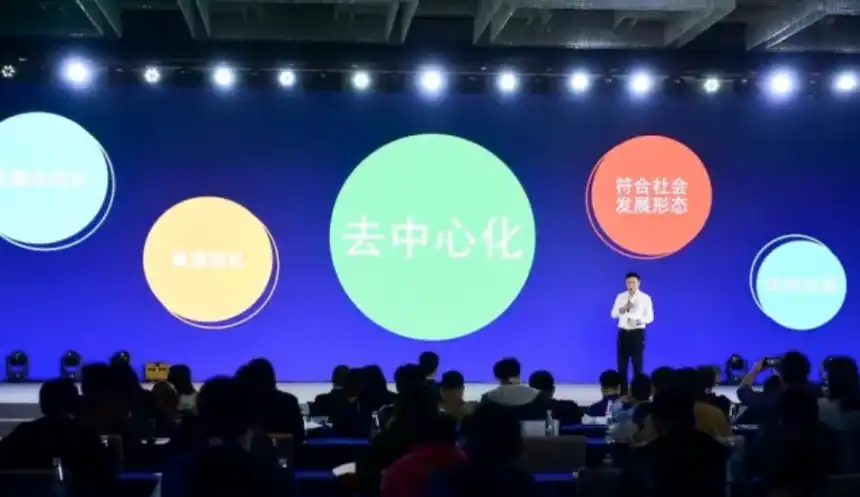
This model quickly ignited the market, with Wankeyun sales surging and the price of LinkToken soaring hundreds of times at one point. At its peak, the daily revenue from Wankeyun devices exceeded 100 million yuan, and the originally 399-yuan Wankeyun devices were resold for as much as 3,000 yuan even as second-hand items. The initial unofficial opening price of LinkToken was 0.1 yuan, and it once rose to nearly 10 yuan.

Chen Lei repeatedly emphasized in public that this was Thunderbolt's innovation in "shared economy + blockchain," aimed at building a distributed computing ecosystem. Thunderbolt also established a blockchain laboratory to promote projects like Onething Chain, attempting to position itself in the field of decentralized storage and computing.

However, in late 2017 and early 2018, due to the impact of the 94 ban and the announcement by the China Internet Finance Association, Wankey Coin was renamed "LinkToken." The price of LinkToken continued to fall, leading to protests from some investors.

Having a Child with a Lover, Misappropriating Tens of Millions for Cryptocurrency Trading

Thanks to the blockchain布局, Thunderbolt's stock price once soared from $4 to $27.
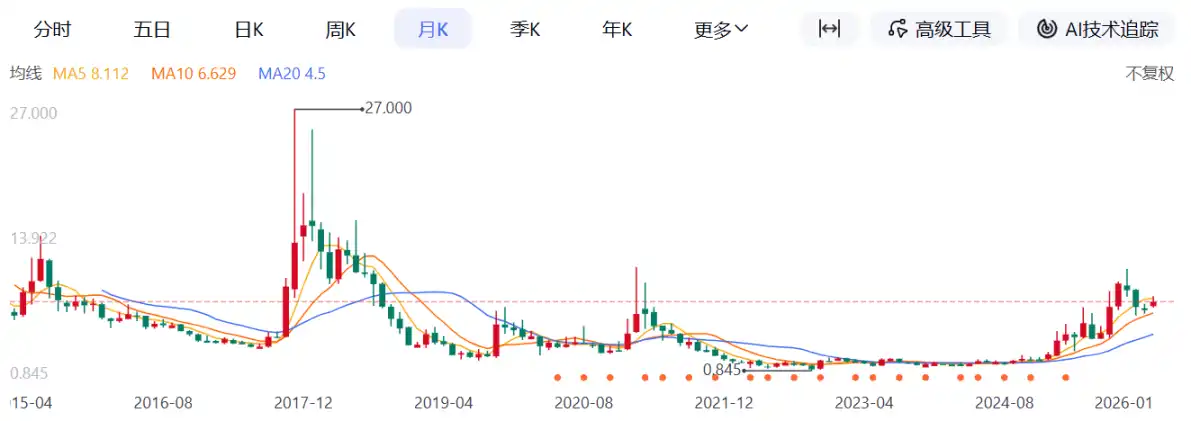
Chen Lei's cryptocurrency布局 seemed successful but埋下hidden dangers: company resources were倾斜toward blockchain, internal management was loose, and fund flows were unclear. Entering 2019, Thunderbolt's blockchain business faced bottlenecks. The global crypto market corrected, Chinese regulation tightened, and Wankeyun sales declined. Chen Lei attempted to expand edge computing through subsidiary Wangxin Technology, but internal conflicts gradually emerged.

According to informed sources, Chen Lei had a close relationship with then Senior Vice President Dong Xia, who recruited many fellow townspeople and relatives from Heilongjiang into key positions, forming a "small circle."

This provided the soil for subsequent corruption allegations. In April 2020, Thunderbolt's board suddenly dismissed Chen Lei, citing suspected job-related embezzlement. The new management's audit found that Chen Lei transferred funds through the company "Xingronghe" (a Thunderbolt bandwidth supplier) that he actually controlled. Xingronghe was established in 2019 and had frequent transactions with Wangxin Technology. Chen Lei was suspected of fabricating transaction links and creating false contracts to embezzle approximately 200 million yuan from the company.

More notably, there were allegations of misappropriating funds for cryptocurrency trading. The audit showed that Chen Lei was suspected of misappropriating tens of millions of company funds for illegal cryptocurrency trading activities explicitly prohibited by the state.

Specific details include: through close associates like Dong Xia, placing personnel in departments such as finance and procurement to create false reimbursements and overpaid salaries, with the funds ultimately flowing into the cryptocurrency market. At the time, Bitcoin prices were rebounding from lows in early 2020, and Chen Lei may have used this for speculation. This behavior violated China's ban on virtual currency transactions and涉嫌job-related embezzlement.

Additionally, Chen Lei and Dong Xia had a child together during their tenure, and their relationship was not purely professional, further fueling suspicions of利益输送.

Public information shows that Dong Xia once served as Senior Vice President of Thunderbolt Group and Marketing Vice President of Wangxin Technology, overseeing core departments such as business marketing and human resources, reporting directly to then CEO Chen Lei. The two had early interactions during the Tencent Cloud era (Dong Xia was once an ordinary public relations staff member at Tencent Cloud). After Chen Lei joined Thunderbolt in 2014, Dong Xia was gradually promoted and became an important confidant. As early as during Chen Lei's tenure, there were internal rumors that the two were lovers (or had an improper relationship).

The Thunderbolt board once questioned Chen Lei face-to-face, and he guaranteed with his "Christian reputation" that they were merely colleagues with no other relationship.

However, after Chen Lei was dismissed, the company's audit and investigation found that Chen Lei and Dong Xia had a child together during their tenure at Thunderbolt. This directly contradicted Chen Lei's previous guarantee, confirming that the two had an intimate personal relationship and formed a tight利益共同体.

To evade investigation, Chen Lei left the country with Dong Xia in early April 2020, transferring equity at low prices to relatives, making it difficult for Thunderbolt to pursue accountability.

In October 2020, Thunderbolt reported to the Shenzhen Public Security Bureau that Chen Lei and others were suspected of job-related embezzlement, and the police filed a case for investigation. The company issued a公告calling for Chen Lei to return to the country to cooperate, but to no avail. The criminal case was dropped at the end of 2022 due to Chen Lei's overseas stay and obstacles in obtaining evidence.

Five years later, in 2026, Thunderbolt restarted civil litigation, with the focus still on fund transfers and misappropriation for cryptocurrency trading. New evidence shows that Chen Lei dismissed dozens of core employees before his dismissal, causing brain drain and compensation losses.

If this case is won, it may provide an example for corporate governance in China. Chen Lei started with Thunderbolt's blockchain innovation and ended with涉嫌misappropriating funds for cryptocurrency trading, reflecting the opportunities and pitfalls of the early cryptocurrency space. Thunderbolt once revived with the blockchain concept but collapsed due to regulation and internal corruption. Chen Lei's case serves as a warning that technological innovation must comply with regulations, and personal ambition that crosses boundaries will inevitably lead to serious consequences.


Похожее

RWA First Stock's Major Acquisition: Why Buy a 'Traditional' Mortgage Company?

On June 10th, Figure Technology Solutions (Nasdaq: FIGR), a blockchain-native capital markets firm, announced a $717 million acquisition of Kiavi, a leading non-bank lender for residential real estate investors. The deal involves Figure acquiring Kiavi's technology and operations for approximately $538 million, while forming a joint venture with alternative asset manager Sixth Street to purchase Kiavi's existing loan portfolio. Sixth Street also provided a $3 billion forward purchase commitment. This acquisition marks a strategic shift for Figure, known as the "RWA (Real World Asset) first stock," allowing it to expand significantly into the larger market of first-lien mortgages. Kiavi specializes in non-qualified mortgage (Non-QM) loans, such as short-term fix-and-flip (RTL) and rental property (DSCR) loans—a segment traditionally underserved by major banks. The move is expected to increase Figure's first-lien loan origination to over $7 billion annually, aiming for these to constitute about 40% of its business by 2027. Both companies leverage AI for underwriting: Kiavi uses proprietary models to value renovated properties and automate document processing, dominating the fix-and-flip lending space. Figure plans to integrate these assets onto its blockchain platform, Provenance, using its new 'Adaptor' product to standardize and tokenize the loans for institutional investors on its Democratized Prime marketplace. While the integration poses challenges—including merging different asset types, interest rate sensitivity of Kiavi's loans, and post-IPO execution risks—Figure projects the deal to be accretive to earnings with a cash payback period under four years. The transaction is seen as a major step in scaling blockchain-based capital markets, moving RWA tokenization from concept validation toward large-scale operation.

Foresight News21 мин. назад

RWA First Stock's Major Acquisition: Why Buy a 'Traditional' Mortgage Company?

Foresight News21 мин. назад

Trend in US Stocks: A Post Triggers a 930-Point Rebound, Tonight Belongs to SpaceX

On Thursday (June 11, U.S. Eastern Time), Wall Street staged a textbook V-shaped reversal. The Dow Jones surged 929.97 points (+1.86%) to close above 50,000, while the Nasdaq and S&P 500 rose 2.54% and 1.75%, respectively. The rally occurred despite the hottest PPI report in years, with May data showing a 6.5% year-on-year surge, the highest since 2022. The market ignored the inflation data, focusing instead on reports that former President Trump called off a planned strike on Iran, hinting at a potential multi-party peace agreement draft. This sparked a sharp drop in oil prices, fueling hopes that inflation may have peaked. Sector rotations were stark: previously battered AI hardware and cyclical stocks led the gains, while defensive sectors that hit record highs the prior day were sold off. Chip stocks like Micron and Intel saw sharp rebounds. In contrast, software giant Oracle plunged nearly 10% despite beating earnings, with concerns over cloud revenue and cash flow. Adobe also fell after hours despite raising guidance, as its CFO announced departure. The rally's sustainability is questioned, driven largely by social media posts about unconfirmed geopolitical developments. Inflation risks remain, with pipeline pressures still high. Meanwhile, the market's risk appetite faces a major test with SpaceX's historic IPO. Priced at $135 per share, it aims to raise ~$75 billion with a $1.75 trillion valuation, becoming the largest U.S. IPO ever. It will join the Nasdaq 100 in 15 days, triggering massive index fund buying. However, critics cite extreme valuation (88x sales) and market liquidity concerns.

marsbit44 мин. назад

Trend in US Stocks: A Post Triggers a 930-Point Rebound, Tonight Belongs to SpaceX

marsbit44 мин. назад

The Trillion-Dollar Valuation Test: Are the Three Super IPOs a Tech Stock Frenzy or a Crypto Market Nightmare?

Trillion-Dollar Valuation Test: Are the Three Mega IPOs a Tech Stock Frenzy or a Crypto Market Nightmare? The capital market in 2026 is witnessing a highly anticipated wave of tech IPOs, centered on SpaceX, OpenAI, and Anthropic. Collectively valued at over $3.5 trillion, their potential listing represents one of the largest such waves in recent years. This raises concerns about market liquidity, valuation bubbles, and potential capital outflows from other assets like crypto. SpaceX's valuation narrative has shifted from rocket launches to becoming a global infrastructure play via its Starlink satellite network, which now drives most revenue. Despite ongoing losses, investors focus on its long-term growth potential. OpenAI and Anthropic represent the core productivity engines of generative AI. Their public listings would offer the first direct investment opportunity in large foundation model companies, potentially triggering a repricing within the AI sector. Market fears of a massive "capital drain" from these IPOs are likely overstated. Historical precedents like Alibaba and Saudi Aramco show that mega-listings primarily cause capital reallocation, not destruction, within the vast equities market. Systemic risk is rarely triggered by IPOs alone. For stock markets, short-term volatility and sector repricing are expected, especially for AI concept stocks. Long-term, these listings could reinforce the tech sector's importance. For crypto, direct competition for speculative capital exists, particularly affecting AI-themed tokens. However, crypto's trajectory remains more tied to its own cycles, macro liquidity, and Bitcoin ETF flows rather than a single IPO event. The real risk lies not in the listings themselves but in the sky-high growth expectations embedded in these valuations. If future revenue, profitability, or commercialization progress disappoints, significant valuation resets could follow, impacting high-growth tech stocks. Ultimately, the market's direction hinges on macroeconomic conditions and whether these companies can deliver on their ambitious promises.

链捕手1 ч. назад

The Trillion-Dollar Valuation Test: Are the Three Super IPOs a Tech Stock Frenzy or a Crypto Market Nightmare?

链捕手1 ч. назад

Trillion-Dollar Valuation Test: Are the Three Super IPOs a Tech Stock Frenzy or a Crypto Market Nightmare?

Title: Trillion-Dollar Valuations at Stake: Super IPOs of SpaceX, OpenAI, Anthropic – Tech Boom or Crypto Nightmare? TL;DR: A wave of mega-tech IPOs is approaching, featuring SpaceX (targeting a $1.75 trillion valuation), OpenAI (~$852B), and Anthropic (~$965B), with a combined potential valuation exceeding $3.5 trillion. This tests the market's pricing of innovation and sparks debate on liquidity impact. * **SpaceX**'s valuation is now driven more by its Starlink global communications infrastructure than its core rocket business. * **OpenAI & Anthropic** offer the first major public investment opportunities in foundational AI models, potentially repricing the entire AI sector. * Concerns about a market-wide "liquidity drain" are likely overblown; history shows large IPOs mainly cause fund reallocation, not disappearance, and rarely trigger systemic risk. * Crypto markets, especially some AI-themed tokens, may face short-term fund competition, but their long-term trajectory depends more on macro liquidity, regulation, and Bitcoin cycles. * The real risk lies not in the IPOs themselves, but in whether these companies can justify their sky-high valuations with future revenue growth and profitability. Unmet expectations could lead to significant repricing pressure. Ultimately, these IPOs represent a massive market pricing of next-gen tech infrastructure, not a prelude to a market crash. The broader market direction will be determined by macro conditions, corporate earnings, and risk appetite.

marsbit1 ч. назад

Trillion-Dollar Valuation Test: Are the Three Super IPOs a Tech Stock Frenzy or a Crypto Market Nightmare?

marsbit1 ч. назад

Торговля

Спот
Фьючерсы
活动图片



