Частота обновлений Codex в последнее время просто сумасшедшая.
За последние два месяца OpenAI практически через каждые несколько дней добавляет в Codex что-то новое.
Сначала плагины, встроенный браузер, управление компьютером, ревью пулл-реквестов, удаленный SSH, доступ через мобильные устройства... А потом 21 мая в Codex устроили "Бешеный четверг", разом выпустив несколько крупных функций: отправка содержимого экрана в Codex одной кнопкой, продолжительная работа Codex над целью, удаленное использование после блокировки экрана компьютера, а также поддержка совместного использования плагинов командами и просмотра данных об использовании.
Ранее в интернете был довольно популярный мем: проснулся, увидел очередное обновление Claude. Теперь Codex не отстает.
Просто Claude обновляется более "мелко" и детально, а Codex выпускает больше крупных функций.

Стоит отметить, что они обновляются в одном направлении — внедрение в бизнес и реальные рабочие процессы.
Claude Code уже доказал ценность этого пути. Anthropic даже начала убеждать рынок, что передовые модельные компании не обязательно вечно сжигать деньги, у них тоже есть шанс показать прибыль.
Codex делает то же самое, и на данный момент за ним стоит OpenAI, готовящаяся к IPO.
ChatGPT доказал, что у OpenAI есть пользователи, но пользователи — это не бизнес, а ажиотаж не обязательно приносит прибыль. Особенно для передовой модельной компании, где затраты на вычисления, обучение и инференс велики. OpenAI нужно доказать рынку, что она умеет не только создавать популярные чат-боты, но и внедрять ИИ в те производственные процессы, за которые предприятия действительно готовы платить.
Частые обновления Codex как раз закрывают эту часть.
Это не просто инструмент разработки, это на данный момент самая понятная карта коммерческой ценности для OpenAI.
01
Чем занимался Codex последние два месяца
Мы использовали ChatGPT Images 2.0, чтобы сделать график, показывающий, какие обновления Codex выпускал в последние два месяца.
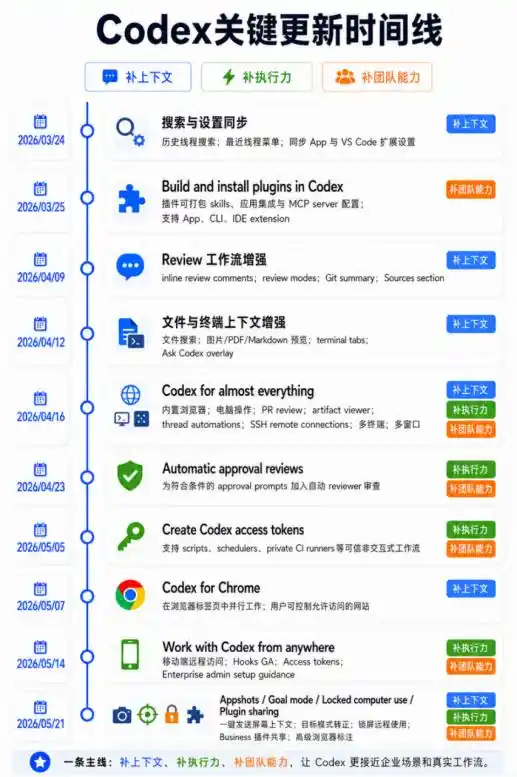
24 марта, поиск и синхронизация настроек.
В приложение Codex добавлены функции поиска по истории диалогов, быстрого перехода к последним диалогам, а также синхронизация ключевых настроек между приложением Codex и расширением VS Code. Это базовые улучшения пользовательского опыта: позволяют быстрее вернуться к предыдущим задачам и сделать опыт использования на десктопе и в редакторе более единообразным.
25 марта, запуск системы плагинов.
Codex начал поддерживать плагины. Плагины могут включать навыки (skills), интеграции приложений и настройки MCP-серверов для повторного использования рабочих процессов, поддерживаются в приложении Codex, CLI и IDE-расширении.
9 апреля, улучшения рабочего процесса ревью кода.
В приложение Codex добавлены сворачиваемые inline-комментарии к ревью, различные режимы ревью, Git-сводки и блоки источников. Codex начал глубже интегрироваться в процесс ревью кода и PR-коллаборации.
12 апреля, улучшения контекста файлов и терминала.
Codex добавил поиск файлов в командном меню, поддержку предпросмотра изображений, PDF и Markdown на боковой панели, а также вкладки терминала для каждого диалога и возможность выделить текст и сразу спросить о нем Codex.
16 апреля, Codex for almost everything.
Это первая крупная веха за последние два месяца. OpenAI начала превращать Codex в более полноценную рабочую среду ИИ. Этот набор обновлений включает встроенный браузер, управление компьютером, автоматизацию диалогов, боковую панель задач, рабочий процесс PR, предпросмотр результатов, удаленное SSH-подключение, несколько терминалов, несколько окон, поддержку Intel Mac и набор новых плагинов.
23 апреля, автоматическое одобрение ревью.
Codex может передавать соответствующие запросы на одобрение автономному агенту ревью для оценки рисков, а затем отображать статус ревью и уровень риска, после чего пользователь решает, одобрять или нет.
5 мая, запуск токенов доступа Codex.
Владельцы и администраторы рабочих пространств ChatGPT Enterprise могут разрешать участникам создавать токены доступа Codex для использования в скриптах, планировщиках, приватных CI-раннерах и других доверенных неинтерактивных локальных рабочих процессах. Codex начал приближаться к CI, автоматизации и корпоративным инженерным системам.
7 мая, Codex входит в Chrome.
Codex выпустил расширение для Chrome, позволяющее работать параллельно во вкладках браузера, но не напрямую управляя браузером пользователя; пользователь также может контролировать, на каких сайтах разрешено использование Codex. Браузер — это вход во многие бэкенд-системы, внутренние инструменты и сценарии веб-отладки, этот шаг приблизил Codex к реальным рабочим процессам.
14 мая, Codex поддерживает управление с телефона.
OpenAI позволяет пользователям использовать Codex через мобильное приложение ChatGPT, подключаясь к Mac, на котором запущено приложение Codex. С телефона можно отслеживать прогресс задач, одобрять действия, просматривать различия в коде и результаты тестов. Этот релиз также включает официальную доступность Hooks, токенов доступа и руководств для администраторов предприятий. Codex начал превращаться в рабочего агента, за которым можно следить удаленно.
21 мая, Appshots, целевой режим, удаленное использование при заблокированном экране и совместное использование плагинов.
Это вторая крупная веха. Appshots позволяет отправить Codex скриншот текущего окна на Mac вместе с доступным текстом; целевой режим официально запущен, пользователь может дать Codex цель, и он будет работать над ней непрерывно часами или даже днями; удаленное использование при заблокированном экране позволяет Codex продолжать работу с настольными приложениями после блокировки Mac, больше не нужно "оставлять его включенным".
Одновременно ChatGPT Business начал поддерживать совместное использование плагинов командами; возможности аннотирования во встроенном браузере были дополнительно усилены, теперь можно напрямую настраивать шрифты, цвета, интервалы и другие стили.
Сами функции, конечно, важны, но общая тенденция обновлений также заслуживает внимания. И Appshots, и целевой режим, а также расширение для Chrome, токены доступа и совместное использование плагинов — все это дополняет базовые условия для внедрения в реальные рабочие процессы: видеть рабочую среду, продвигать задачи и контролировать риски.
Чтобы видеть рабочую среду, нужно дополнить контекстные возможности.
Реальные задачи разработки редко происходят только в редакторе кода. Поиск файлов, предпросмотр файлов, вкладки терминала, встроенный браузер, аннотации в браузере, расширение для Chrome, Appshots — по сути, все это сокращает затраты пользователя на описание контекста для ИИ.
Раньше вам приходилось описывать проблему или копировать-вставлять, чтобы объяснить ИИ, где проблема. Теперь OpenAI хочет, чтобы Codex видел это напрямую.
Чтобы продвигать задачи, важны способности к длительным задачам и удаленному исполнению.
Целевой режим решает вопрос "может ли он продолжать работать". Удаленный доступ с мобильного устройства и удаленное использование при заблокированном экране позволяют задачам продолжать выполняться, даже когда пользователя нет за компьютером. Токены доступа и Hooks дополнительно интегрируют Codex в скрипты, планировщики, CI-раннеры и другие корпоративные инженерные системы.
Контроль над рисками — это уже вопрос корпоративного и командного управления.
Для индивидуальных разработчиков, использующих инструмент, ключевой фактор — удобство, но вопросы корпоративных инструментов сложнее: как управлять правами, как распространять плагины, кто использует и сколько, как проводить ревью рисков, можно ли интегрировать в CI, может ли им управлять команда.
Codex также проделал большую работу в этой области. Система плагинов позволяет упаковывать и повторно использовать рабочие процессы; совместное использование плагинов позволяет командам централизованно распространять инструменты; автоматическое одобрение ревью контролирует риски выполнения агентами; токены доступа и настройки для администраторов предприятий интегрируют Codex в существующие инженерные и управленческие процессы компании.
02
"Надежда всей деревни"
Обновления Codex принесли ему впечатляющие темпы роста пользовательской базы.
В начале марта еженедельная аудитория активных пользователей Codex составляла около 1,6 млн человек. К 14 мая, как упомянул OpenAI в анонсе мобильной версии Codex, еженедельное число пользователей Codex превысило 4 млн. То есть примерно за два месяца количество еженедельных активных пользователей Codex снова значительно выросло.
Этот рост неотделим от возможностей базовой модели. Пользователи готовы чаще доверять Codex реальные задачи при условии, что он действительно может работать. Особенно после выхода GPT-5.5, у Codex появилась лучшая основа для кодирования, вызова инструментов, работы с длинным контекстом и многошаговыми задачами.
Но одной модели недостаточно. Рынок не станет платить только потому, что улучшились бенчмарки модели; его больше волнует, могут ли эти возможности превратиться в доход.
Это именно то, что OpenAI должна четко объяснить перед IPO.
У OpenAI много карт на руках, но у каждой есть своя неопределенность.
ChatGPT — крупнейший пользовательский вход, доказавший, что у OpenAI есть глобальная аудитория и способность к потребительским подпискам. Проблема в том, что чем больше масштаб пользователей, тем выше затраты на инференс; также нужно продолжать доказывать, могут ли потребительские подписки поддерживать долгосрочные инвестиции передовой модельной компании.
API — основной источник дохода, позволяющий продавать возможности модели разработчикам и предприятиям. Но рынок API легко вовлекается в ценовую конкуренцию, корпоративные клиенты также не обязательно привязываются к одному поставщику моделей. Чем универсальнее возможности модели, тем больше вероятность, что клиенты будут использовать несколько моделей.
ChatGPT Enterprise, Agents и отраслевые решения — это прямой выход OpenAI на корпоративный рынок. Но для реального глубокого внедрения в бизнес-процессы этим продуктам нужно время, продажи, интеграция и отраслевое внедрение.
Более отдаленные планы OpenAI включают оборудование, дата-центры, мультиоблачное сотрудничество и инфраструктуру вычислений. Эти истории очень амбициозны, но они также более затратные, долгосрочные и капиталоемкие. Они могут поддерживать долгосрочное видение, но вряд ли сразу объяснят краткосрочную коммерческую отдачу.
А коммерческая ценность Codex объясняется легче. Его целевая аудитория четко определена: разработчики и инженерные команды.
Это группа людей, которые уже готовы платить за услуги. Время инженеров дорого, циклы разработки ПО длинны, затраты на поддержку кода высоки. Исправление багов, тестирование, ревью кода — на каждом этапе можно посчитать стоимость.
Сама разработка ПО также является одним из ключевых производственных процессов предприятий. У финансовых компаний есть системы управления рисками и торговые системы, у ритейлеров — системы поставок и лояльности, у медицинских компаний — системы данных и соответствия, у медиакомпаний — бэкенды для контента и системы дистрибуции. Даже не-технологическим компаниям нужно поддерживать множество внутренних инструментов, пайплайнов данных, скриптов автоматизации и бизнес-систем... Сегодня почти все компании зависят от программных систем.
Другими словами, Codex входит туда, куда предприятия ежедневно тратят деньги и где ежедневно расходуются человеческие ресурсы.
В определенном смысле, это надежда OpenAI на успешный рассказ истории для IPO. В момент, когда OpenAI готовится выйти на фондовый рынок, это становится особенно важно.
Потому что в повествовании для листинга OpenAI больше не сталкивается с вопросом "есть ли у ИИ будущее". По-настоящему сложный вопрос другой: может ли передовая модельная компания, помимо огромных инвестиций в вычисления, найти достаточно ясный, стабильный и прибыльный коммерческий путь.
И что еще хуже, Anthropic уже продвинула этот вопрос на шаг вперед.
03
Anthropic уже на шаг впереди
Есть еще одна ключевая причина, почему Codex должен выйти на передний план: один из главных конкурентов OpenAI, Anthropic, уже проложил путь в корпоративном секторе.
Хотя по объему выручки OpenAI все еще лидирует (по данным The Information, выручка OpenAI в первом квартале 2026 года составила около 5,7 млрд долларов против 4,8 млрд долларов у Anthropic за тот же период), сейчас проблема уже не только в том, сколько заработано. Реальное давление на передовые модельные компании заключается в том, может ли рост доходов опережать рост затрат.
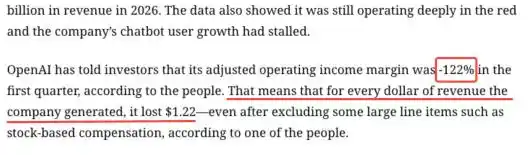
Доходы OpenAI в первом квартале высоки, но ее скорректированная операционная маржа составила около -122%. По этой оценке, на каждый заработанный доллар, скорректированные операционные затраты составляли около 2,22 доллара, в итоге теряя 1,22 доллара.
В последние годы внешний мир сомневался, что крупные модельные компании слишком затратны: обучение, инференс, GPU, расходы на таланты — каждая из этих статей представляет собой бездонную бочку. Чем больше пользователей, вызовов, тем выше затраты.
Недавние сигналы от Anthropic изменили пространство для размышлений на эту тему.
По данным The Wall Street Journal, Anthropic ожидает, что ее выручка во втором квартале 2026 года превысит 10,9 млрд долларов, и компания приблизится к своей первой квартальной операционной прибыли, которая, по прогнозам, составит около 559 млн долларов.
Хотя это не означает, что Anthropic навсегда избавилась от проблемы сжигания денег, она дает рынку очень важный сигнал: передовые модельные компании не обязательно вечно зависят от финансирования; если возможности модели достаточно сильны, а продукты достаточно близки к высокоценным корпоративным сценариям, рост доходов может опережать рост затрат.
У Anthropic нет такого всеобщего входа, как у ChatGPT, и не так много параллельно развиваемых направлений. Ее путь уже, но чище: прямое вхождение в те сферы, за которые предприятия готовы платить, особенно высокоценные сценарии, такие как разработка, финансы, право, исследования, анализ данных и внутренняя интеллектуальная работа.
Claude Code — одна из самых показательных карт в этой колоде. Изначально он был волшебным инструментом в кругах разработчиков, ориентированным на программирование, а затем постепенно дополнялся длительными задачами, плагинами, правами, управлением командами и корпоративным управлением, медленно превращаясь в важный вход для Anthropic в рабочие процессы предприятий. Сначала его используют разработчики, затем подключаются команды, и в итоге он становится предметом корпоративных закупок и бюджетов.
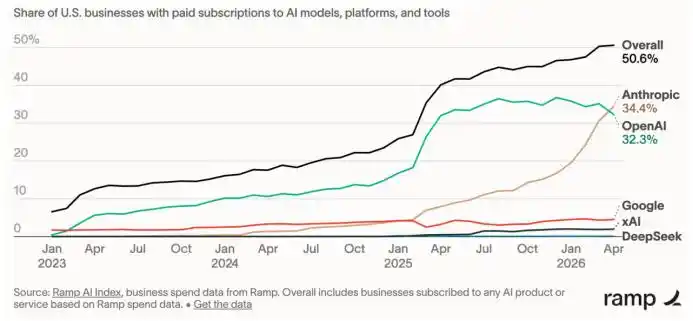
В апреле 2026 года, согласно данным по компаниям-клиентам Ramp, уровень внедрения Anthropic вырос до 34,4%, в то время как OpenAI снизился до 32,3%. Хотя это всего лишь выборка на основе расходов компаний на платформе Ramp и не представляет полной рыночной статистики, эти данные, по крайней мере, показывают, что позиции Anthropic в сценариях корпоративных платежей усиливаются.
Именно здесь давление на Codex.
Объем выручки OpenAI по-прежнему лидирует, но если она хочет выйти на фондовый рынок, недостаточно говорить только о масштабе пользователей или возможностях модели. Ей нужен продукт, который ближе к производственной среде предприятий, чтобы доказать, что она может превратить ИИ в стабильный корпоративный доход.
Если Claude Code доказал, что рабочий процесс разработчиков может стать входом для Anthropic в предприятия, то Codex должен доказать, что OpenAI тоже может пройти этим путем.
Руководитель Codex Тибо Соттьо (Tibo Sottiaux) недавно в шутку резюмировал "генеральный план" компании: выпускать более качественные и эффективные модели, выпускать лучшие продукты каждую неделю, получать больше вычислительных мощностей (и увеличивать время серфинга в X).
Лучшие модели определяют, может ли Codex действительно работать; более частые обновления продуктов определяют, может ли Codex войти в реальные рабочие процессы; больше вычислительных мощностей определяет, может ли все это поддерживать растущие объемы использования.
Все это очень важно для листинга.

Другими словами, недавние частые обновления Codex — это не просто гонка за функциональностью, это также гонка по тому корпоративному пути, который уже проложила Anthropic.
ChatGPT уже доказал, что у OpenAI есть пользователи.
А Codex должен доказать, что OpenAI — это бизнес, который умеет зарабатывать деньги.
Эта статья взята с официального аккаунта WeChat "Zimu AI", автор: Юань Синьюэ