Автор: Nicky, Foresight News
Оригинальное название: Стейблкоин с самым быстрым ростом в последнее время оказался инструментом семьи Трампа
В условиях относительно стабильной ситуации на стейблкоинов, USD1, долларовый стейблкоин, выпущенный WLFI, пытается завоевать позиции за счет ресурсов семьи Трамп и агрессивной экосистемной стратегии.
Недавно WLFI использовала средства казначейства для стимулирования внедрения и совместно с Binance запустила высокодоходственный продукт с годовой доходностью 20%, что позволило объему выпуска USD1 недавно превысить 3 миллиарда долларов, с максимальным суточным ростом более 7,6%.
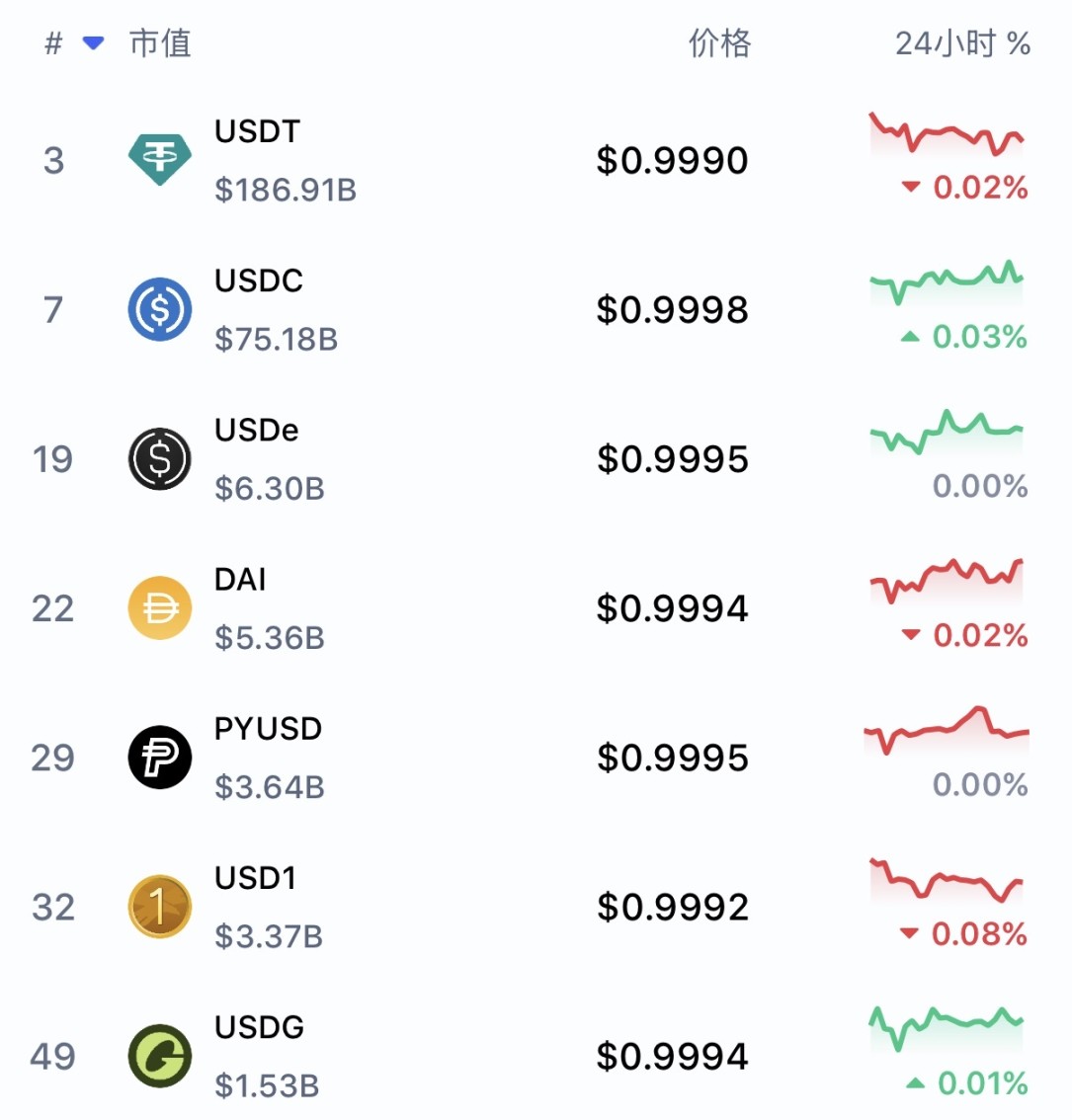
Согласно данным CoinMarketCap, на данный момент рыночная капитализация USD1 составляет 3,37 миллиарда долларов, занимая шестое место среди стейблкоинов по рыночной капитализации, что составляет около 1,8% от общей капитализации USDT и 4,48% от капитализации USDC.
На уровне централизованных бирж USD1 получил относительно полную торговую поддержку и уже представлен на таких биржах, как Binance, Coinbase, Upbit и других. Например, на Binance USD1 в настоящее время имеет 14 торговых пар, включая BTC, ETH, SOL, BNB, а также XRP, ASTER и другие активы.
Судя по данным торгов за последние три дня, объем торгов по паре BTC/USD1 составил около 5,13 миллиарда долларов, а объем торгов по паре ETH/USD1 — около 38,9 миллиона долларов. Для сравнения, объем торгов по паре BTC/USDT за тот же период составил около 5 миллиардов долларов, а по паре ETH/USDT — 3,59 миллиарда долларов; объем торгов по паре BTC/USDC составил около 1,44 миллиарда долларов, а по паре ETH/USDC — около 1,06 миллиарда долларов.
Это сравнение отражает относительно ясную реальность: несмотря на то, что USD1 уже доступен на биржах, его ликвидность в спотовой торговле основными активами все еще значительно уступает USDT и также имеет разрыв на порядок с USDC. По крайней мере, на текущем этапе USD1 больше похож на стейблкоин, введенный на рынок, а не на базовый расчетный актив, по которому уже сформировались естественные торговые предпочтения.
Недавний быстрый рост объема выпуска USD1 тесно связан с мерами стимулирования. 24 декабря 2025 года Binance запустила фиксированный годовой финансовый продукт для USD1 с максимальной годовой доходностью 20%. До начала мероприятия объем выпуска USD1 составлял около 2,7 миллиарда монет, а затем в короткие сроки вырос и превысил 3 миллиарда монет.
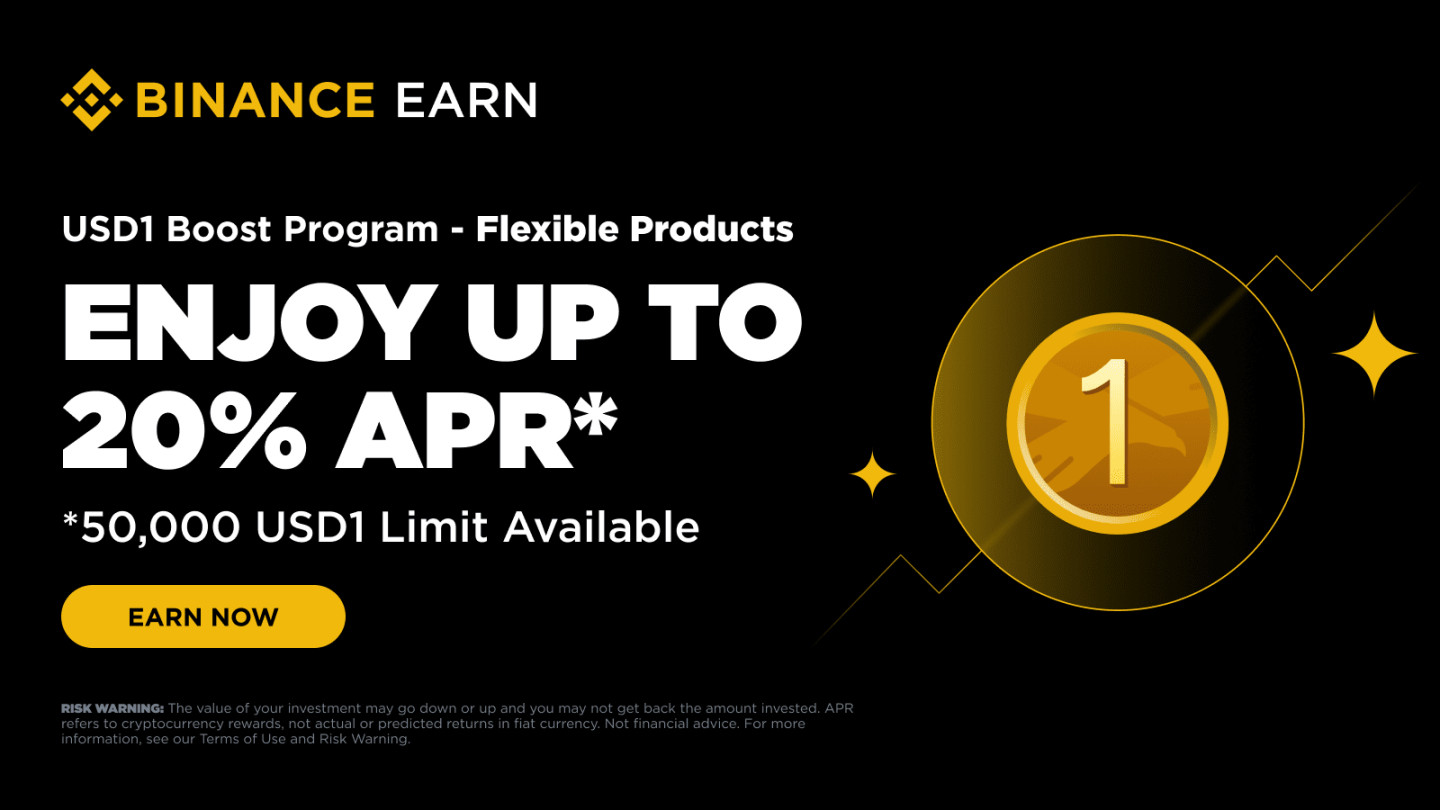
5 января 2026 года WLFI официально объявила, что предложение о «использовании части разблокированных средств казначейства для стимулирования внедрения USD1» было принято, при этом 77,75% голосов были за. Это предложение означает, что WLFI будет продолжать расширять сферы применения USD1 за счет более прямых ресурсных вливаний.
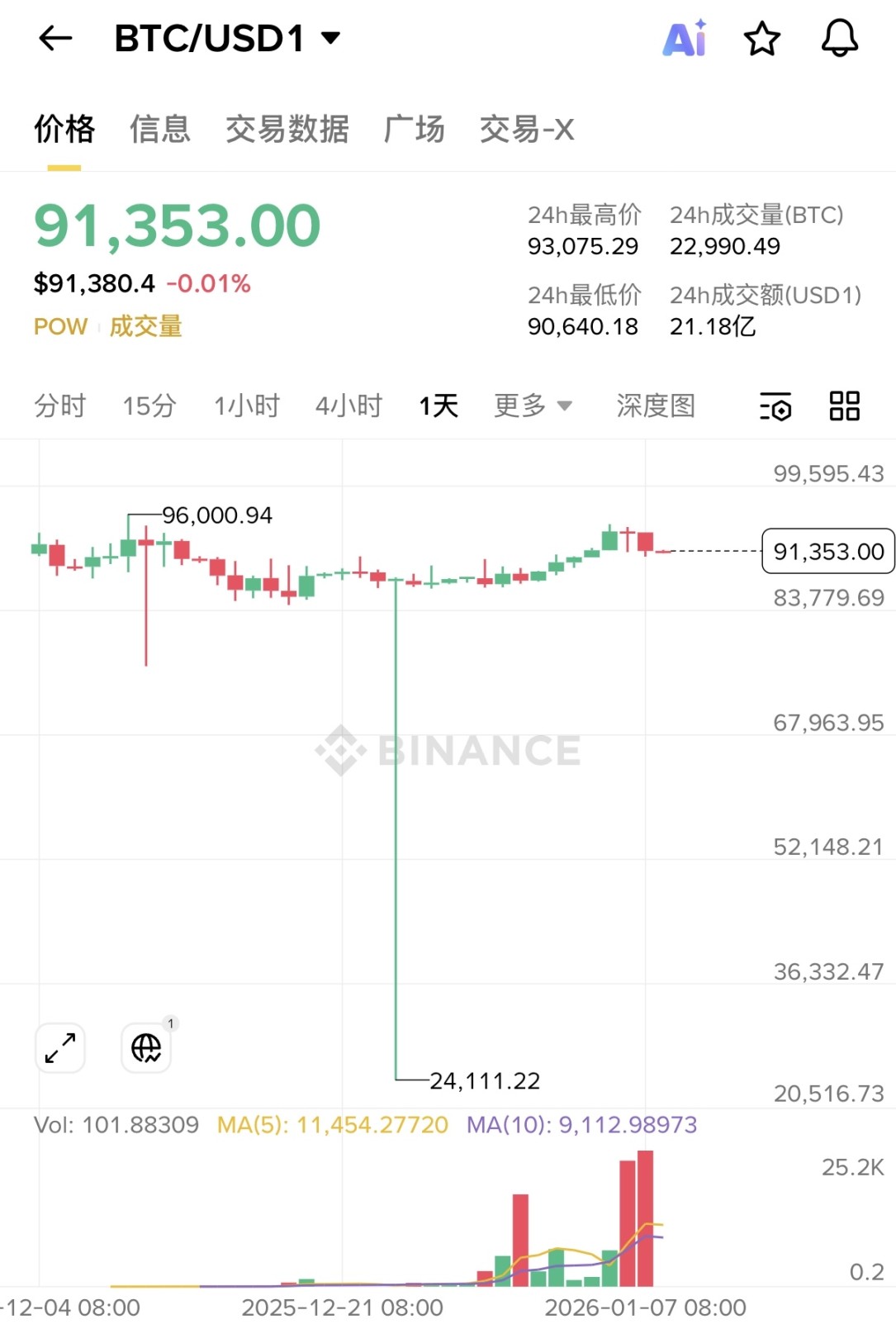
В этот период на рынке также наблюдались кратковременные колебания, связанные со структурой ликвидности. 24 декабря 2025 года крупный рыночный ордер временно снизил котировки BTC/USD1, в результате чего цена быстро упала с около 87 000 долларов до 24 111,22 доллара, а дневная амплитуда составила 73%.
26 декабря, по данным осведомленных источников, из-за того, что финансовое мероприятие Binance привлекло большое количество пользователей, конвертировавших USDT в USD1, USD1 временно торговался с премией около 0,39%. Часть средств затем была получена на рынке кредитования для приобретения USD1 и постепенно продана на спотовом рынке для удовлетворения спроса. Поскольку первоначальная ликвидность по паре BTC/USD1 была низкой, это привело к быстрому падению. CZ объяснил это тем, что данная торговая пара не включена ни в один индекс, поэтому она не вызвала ликвидаций, а связанные колебания больше отражают то, что ликвидность по новой торговой паре еще не установилась.
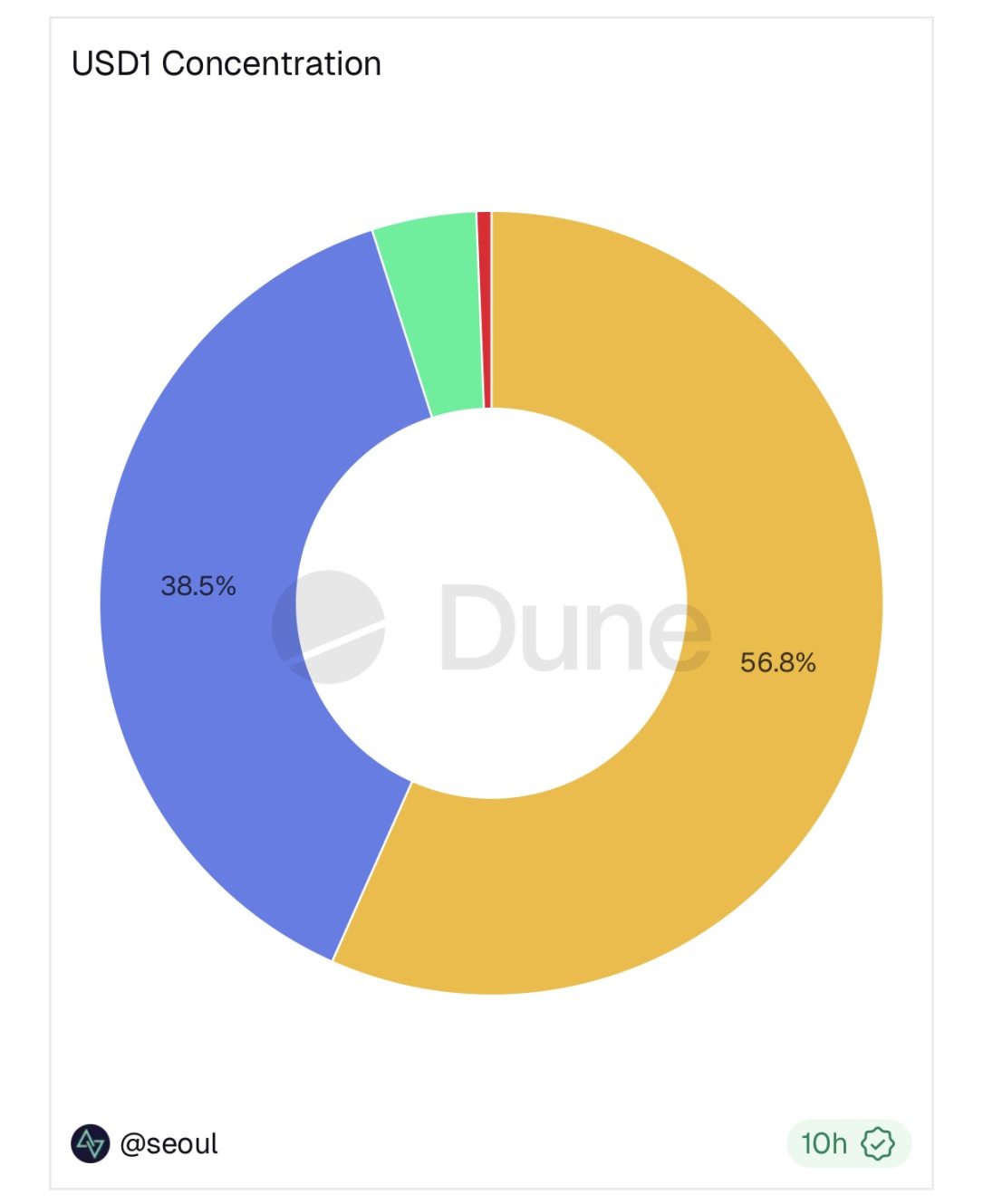
По состоянию на 8 января 2026 года рыночная капитализация USD1 составляет около 3,37 миллиарда долларов. С точки зрения распределения в сети, его выпуск в основном сосредоточен в сетях BSC и Ethereum, составляя около 1,91 миллиарда долларов и 1,3 миллиарда долларов соответственно, что вместе составляет подавляющее большинство. Для сравнения, объем USD1 в сети Solana составляет около 143 миллионов долларов, что явно меньше. Хотя WLFI продолжает подчеркивать поддержку экосистемы Solana Meme в своих нарративах и направлениях сотрудничества, судя по фактическому объему, USD1 в настоящее время все еще в основном зависит от традиционной структуры ликвидности сетей EVM.
По сравнению с централизованными биржами, WLFI также пытается продвигать использование USD1 через сценарии в сети. В сентябре 2025 года WLFI объявила о партнерстве с платформой запуска Meme на Solana BONK.fun и децентрализованной биржей Raydium, чтобы внедрить USD1 в качестве торговой пары в соответствующую экосистему.
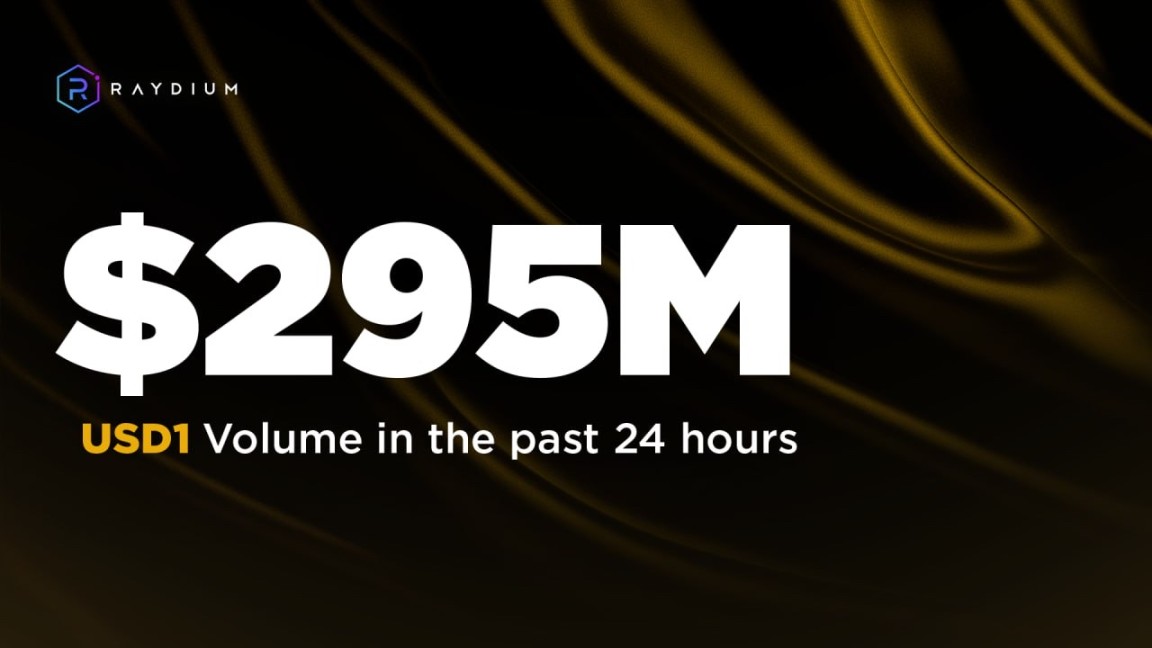
6 января Raydium опубликовала данные, показывающие, что за последние 24 часа объем торгов USD1 в сети Solana составил около 295 миллионов долларов.
Кроме того, WLFI также раскрыла, что приобрела мем-токены, такие как B, 1 и другие, для поддержки развития сообщества. Такое сотрудничество предоставляет USD1 сценарии, более близкие к нативному использованию в сети, но связанный спрос во многом все еще зависит от активности сообщества и阶段性 рыночных настроений, и его устойчивость еще предстоит проверить.
Кроме того, 8 января WLFI сообщила, что ее аффилированное лицо WLTC Holdings LLC подало заявку в Управление валютного контролера США (OCC) на создание World Liberty Trust Company, National Association (WLTC). Эта организация позиционируется как национальный трастовый банк, специализирующийся на выпуске, хранении и связанной финансовой деятельности стейблкоина USD1.
Согласно пояснениям WLFI, основная цель создания WLTC — объединить в рамках единого, строго регулируемого субъекта функции выпуска, погашения, хранения, а также обмена между долларом и USD1. WLFI заявляет, что объем обращения USD1 в течение года с момента запуска превысил 3,37 миллиарда долларов, и он уже используется некоторыми учреждениями для трансграничных платежей, расчетов и управления денежными средствами.
Если заявка будет одобрена, WLTC планирует в рамках федеральной нормативной базы предложить институциональным клиентам три основных вида услуг: выпуск и погашение USD1, каналы ввода и вывода средств между долларом и USD1, а также услуги хранения и конвертации USD1 и других стейблкоинов. На начальном этапе相关 услуги планируется推出 в бесплатной форме.
WLFI также подчеркивает, что предлагаемый к созданию трастовый банк будет соблюдать нормативные требования, включая борьбу с отмыванием денег, проверку санкций и кибербезопасность, а также использовать такие механизмы, как изоляция активов клиентов, независимое управление резервами и定期审计. Организация будет работать в соответствии с регулирующей структурой, соответствующей Закону GENIUS.
Что касается существующих партнерских отношений, BitGo продолжит оставаться одним из важных партнеров USD1 после начала официальной работы WLTC, участвуя в поддержке его дальнейшего развития.
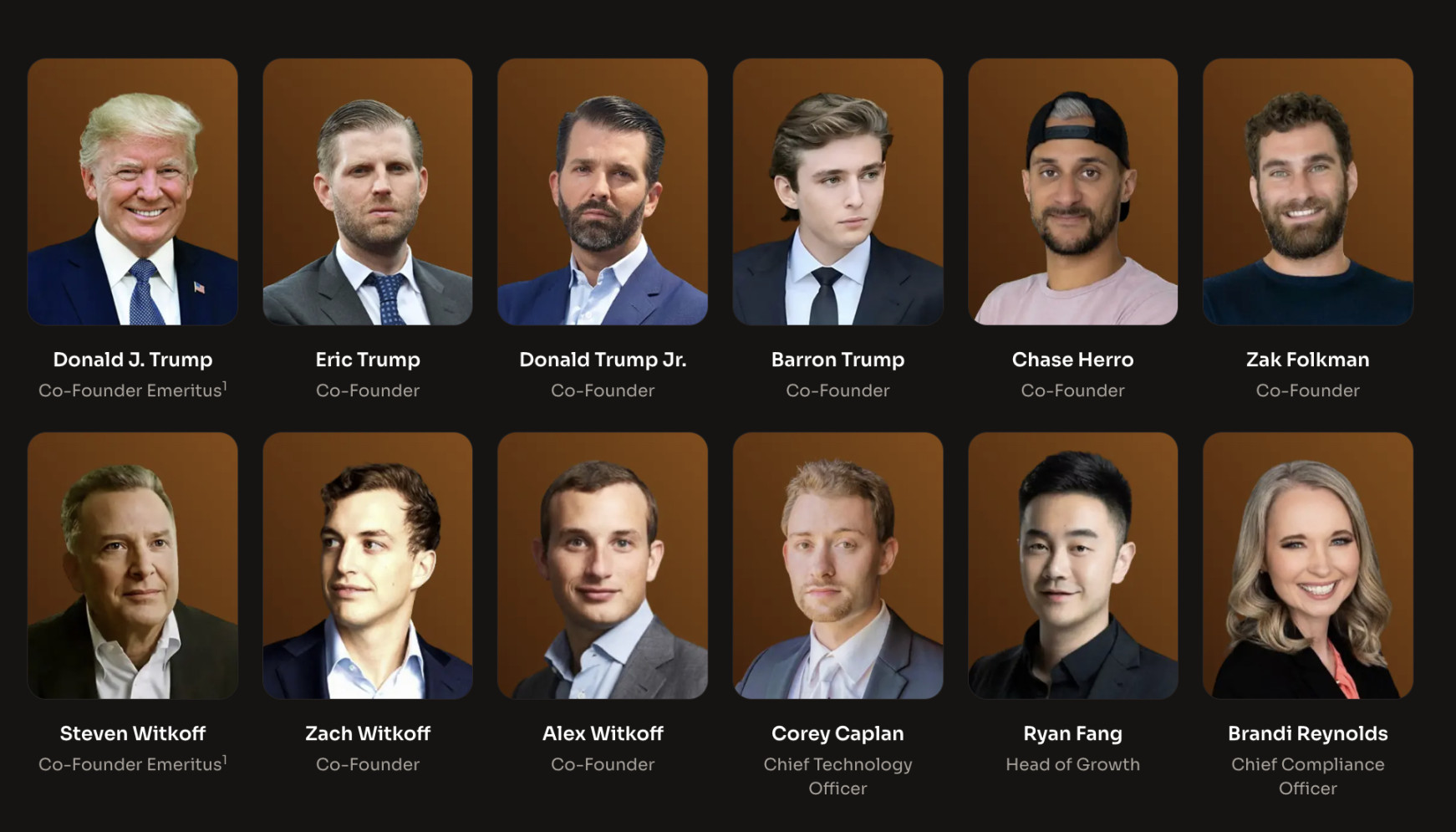
World Liberty Financial была основана в 2024 году как проект, ориентированный на децентрализованные финансы. Согласно公开данным, проект тесно связан с семьей Трампа на уровне структурного дизайна и маркетинга, а相关члены играют роль в продвижении проекта и распространении экосистемы. USD1 — это долларовый стейблкоин, выпущенный WLFI в марте 2025 года, целью которого является предоставление в сети расчетного актива, который можно обменивать 1:1 на доллар, для использования в трансграничных платежах, деятельности DeFi и потребностях ликвидности рынка цифровых активов.
Согласно информации, раскрытой на официальном сайте WLFI, каждая монета USD1 обеспечена эквивалентными долларовыми резервами, которые в основном включают долларовые денежные средства, краткосрочные казначейские обязательства США и другие эквиваленты денежных средств. Соответствующие активы находятся на хранении у BitGo Trust Company и ее аффилированных лиц, а BitGo также выполняет функции выпуска и погашения USD1. Квалифицированные клиенты BitGo могут напрямую обменивать USD1 на доллары в соотношении 1:1, в то время как другим держателям необходимо完成обмен через торговые платформы, поддерживающие USD1, или регулируемые custodial организации.
Как и другие централизованно выпускаемые, ориентированные на соответствие стейблкоины, USD1 в официальных раскрытиях также четко перечисляет ряд рисков. Его основные ограничения в основном сосредоточены в нескольких аспектах: USD1 не является法定货币 и не пользуется страхованием вкладов; прямое погашение доступно только квалифицированным клиентам BitGo; хотя резервные активы в основном являются высоколиквидными, в экстремальных ситуациях они все же могут столкнуться с压力ликвидности; кроме того, изменения в политике регулирования, механизмы замораживания адресов и риски сторонних платформ могут повлиять на использование и обращение USD1.
Twitter:https://twitter.com/BitpushNewsCN
Группа общения比推 TG:https://t.me/BitPushCommunity
Подписка比推 TG: https://t.me/bitpush







