The Most Centralized Giant in the Crypto World Starts Selling the 'Decentralized AI' Dream

比推Опубликовано 2026-01-05Обновлено 2026-01-05

Введение

Tether, the highly centralized issuer of the USDT stablecoin, reported $13 billion in profit in 2024—far exceeding the combined revenues and losses of major AI firms like OpenAI and Anthropic. With only 150 employees, Tether earns primarily by investing user funds in U.S. Treasury bonds, profiting from the interest without paying users any yield. Now, Tether is aggressively investing in AI. It loaned over $600 million to Northern Data, Europe’s largest GPU cloud provider with over 10,000 Nvidia H100 GPUs. It also released QVAC Genesis, a massive open-source AI training dataset, and acquired Blackrock Neurotech, a brain-computer interface company, for $200 million. Total AI-related investments approach $1 billion, with potential additional deals in robotics sector. Despite its centralized control over USDT reserves and lack of external audits, Tether promotes a “decentralized AI” vision—advocating for local AI operation and individual data ownership. Critics find this ironic, given Tether’s opaque governance. Tether’s move into AI may stem from concerns over declining Treasury yields and a desire to position itself as a tech innovator. Unlike AI startups burning billions without clear profitability, Tether uses stablecoin profits to fund speculative AI bets—insulating itself from sector risks while gaining influence. The article suggests that in 2026, the best business model in AI might be not doing AI at all, but rather funding it with profits from a separate, lucrative ve...

Author: Curry, Deep Tide TechFlow

Original Title: The AI Industry Welcomes a Cash-Rich Tether


Tether earned $13 billion in 2024.

You might not have a clear idea of this number. Let me put it another way: OpenAI had $3.7 billion in revenue in 2024 but lost $5 billion. Anthropic had $1 billion in revenue and also lost $5 billion.

The combined losses of these two legitimate AI companies are still less than what Tether earned in a year.

Tether has 150 employees, while OpenAI has over 3,000. The per capita output difference is roughly:

60 times.

How does Tether make money? When you buy 1 USDT, they take $1 and use it to buy U.S. Treasury bonds. The interest from the bonds goes to them, not you.

The essence of this business is that Tether doesn't pay interest. Banks pay interest on savings, but Tether doesn't. You hold USDT, and you get zero interest. They use your money to buy U.S. Treasury bonds and earned $7 billion in interest in 2024 alone.

150 people managing over $130 billion in Treasury bonds, doing nothing, and the interest just rolls in.

Who wouldn't want to lie back with a business like this?

But with so much money, it has to be spent. Tether has chosen a direction:

AI.

And they’re not just casually investing in a few projects to tick a box.

First, computing power.

Running AI requires GPUs—the more, the better, and the more expensive, the better. Tether loaned over $600 million to a German company called Northern Data.

What does this company do?

It’s Europe’s largest GPU cloud service provider. They have over 10,000 Nvidia H100 GPUs—the same ones OpenAI used to train GPT, each costing $20,000 to $30,000.

The cluster formed by these GPUs ranks 26th in the global TOP500 supercomputer list. With this $600 million investment, Tether essentially bought an AI training base in Europe.

Next, data.

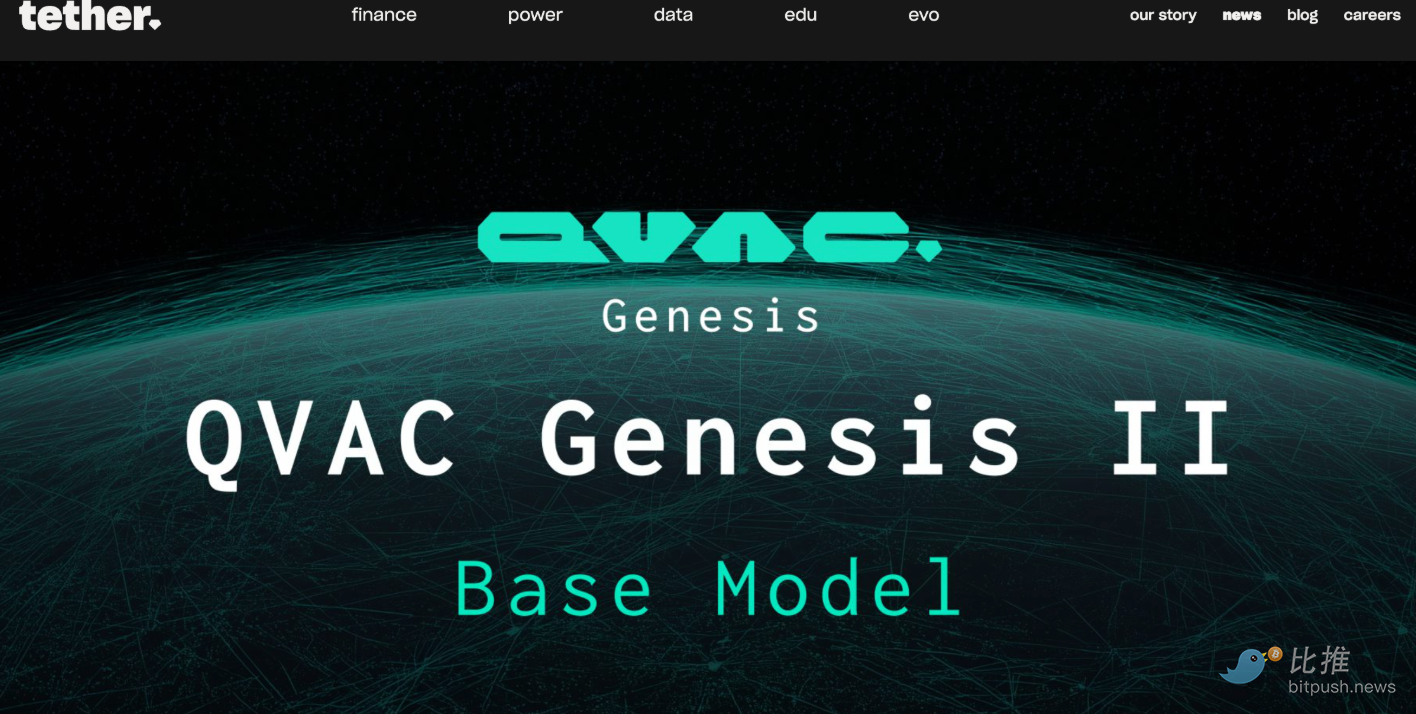
Training AI requires feeding it data. Last week, Tether released a dataset called QVAC Genesis, covering 19 disciplines including mathematics, physics, chemistry, and computer science. They claim it’s the world’s largest open-source AI training dataset.

Keep in mind that OpenAI and Anthropic’s training data are not public. Tether is releasing theirs for free, available to anyone.

Then comes the even more sci-fi part.

In April 2024, Tether spent $200 million to acquire a company called Blackrock Neurotech. The name includes "Blackrock," but it has no relation to the asset management giant BlackRock.

This company works on brain-computer interfaces. They implant chips into human brains, allowing paralyzed individuals to type with their thoughts, control wheelchairs, and operate robotic arms. It sounds like science fiction, but they’ve been doing it since 2008—eight years before Musk’s Neuralink.

How impressive is this company?

Out of the 35 people worldwide who have brain-computer interface chips implanted, 31 use Blackrock’s technology. In 2016, a fully paralyzed patient used their device to control a robotic arm and fist-bump Obama. The chip implanted in the sensory cortex allowed him to "feel" the president’s hand.

Last year, this brain-computer interface company enabled an ALS patient to "speak" again. The chip in his brain translated his thoughts into speech at a rate of 62 words per minute.

Tether spent $200 million to become the majority shareholder of this company.

Combined, Tether has invested nearly $1 billion in AI-related fields. Rumor has it they’re also negotiating with a German robotics company, offering $1.2 billion. If that deal goes through, their total investment could reach $2 billion.

What does this mean?

Anthropic raised $3.5 billion in funding in 2024. Tether’s investment alone is almost half of what a top-tier AI company raised in a year.

OpenAI spent $6.7 billion on R&D in the first half of 2025. Tether, with just a fraction of its profits, can play the role of a major investor in the AI world.

Why is a stablecoin company getting into AI?

We think there are two possibilities.

The first is anxiety. The Fed is cutting interest rates, and Treasury yields are falling. In 2024, they earned $7 billion in interest just by lying back. From 2025 onward, it might not be so easy. Even money-printing machines need new stories.

The second is ambition. The whole world is talking about AI—investors, media, politicians. If you say you’re a stablecoin company, no one pays attention. But if you say you’re working on AI, brain-computer interfaces, and humanoid robots, then you’re:

A tech leader.

The most amusing part?

Tether’s slogan for its AI endeavors is "decentralization," "local operation," and "returning intelligence to individuals."

But Tether itself is the most centralized company in the crypto world.

They decide how many coins to issue, how much reserve capital to hold. In ten years of operation, they’ve never been audited. Only they know where users’ money is.

Now, this company wants to teach the world what "decentralized AI" means.

It’s a bit like a casino owner offering classes on how to quit gambling.

Not that it’s impossible.

After all, OpenAI is still losing money and isn’t expected to break even until 2029. Anthropic is in a similar situation, aiming for 2028. Sam Altman is fundraising everywhere, and Dario Amodei is doing the same. The two companies have lost a combined $10 billion and are still telling stories to investors.

Tether doesn’t need to tell stories. The money is already in their pocket.

What’s the biggest challenge in the entire AI industry? The business model.

How to make money? No one knows. When will it make money? No one knows. Can it make money? No one knows.

Tether doesn’t have this problem. Their business model is:

Not doing AI.

They use the money earned from stablecoins to invest in AI. If the investment succeeds, it’s foresight. If it fails, it’s a learning expense. Either way, it doesn’t affect their core business.

Those doing AI are losing money; those not doing AI are making money. Those doing AI are fundraising; those not doing AI are investing.

The best AI business model in 2026 might just be not doing AI.

First, get your money-printing machine in order.


Original link:https://www.bitpush.news/articles/7600174

Связанные с этим вопросы

QHow much profit did Tether make in 2024, and how does it compare to major AI companies like OpenAI and Anthropic?

ATether made a profit of $13 billion in 2024. In comparison, OpenAI had revenue of $3.7 billion but lost $5 billion, while Anthropic had revenue of $1 billion and also lost $5 billion. Combined, the losses of these two major AI companies were less than Tether's profit.

QWhat is Tether's core business model that generates such significant profits?

ATether's core business model involves issuing the USDT stablecoin. When users buy 1 USDT, Tether receives 1 US dollar and uses it to purchase U.S. Treasury bonds. The interest earned on these bonds is kept by Tether, as they do not pay any interest to USDT holders. In 2024, Tether earned $7 billion in interest from this strategy.

QWhat are some key AI-related investments Tether has made, and what is their significance?

ATether has made several significant AI-related investments, including a $600 million+ loan to Northern Data, Europe's largest GPU cloud service provider with over 10,000 Nvidia H100 GPUs. They also released the QVAC Genesis dataset, claimed to be the world's largest open-source AI training data, and acquired Blackrock Neurotech, a brain-computer interface company, for $200 million. Their total AI investments approach $1 billion, with potential additional deals like a $1.2 billion German robotics company.

QWhy is Tether, a centralized stablecoin company, investing in AI and promoting 'decentralized AI'?

ATether is investing in AI likely for two reasons: anxiety over declining U.S. Treasury yields threatening their profit model, and ambition to position themselves as a tech leader in the booming AI field. Despite being a highly centralized company (controlling USDT issuance and reserves without audits), they promote 'decentralized AI' as a strategic narrative to gain relevance and influence in the tech industry.

QWhat ironic contrast does the article highlight about Tether's role in the AI industry?

AThe article highlights the irony that Tether, which profits massively from its stablecoin business without engaging in AI development, is investing in AI while major AI companies like OpenAI and Anthropic are losing billions. Tether doesn't face the AI industry's core problem of finding a sustainable business model; instead, it uses its stablecoin profits to fund AI ventures, making 'not doing AI' a profitable strategy to finance AI investments.

Похожее

STRC Breaks Below $95: Why Does It Continue to Depeg? Is There Default Risk?

"STRC Falls Below $95: Why the Persistent Depegging and Is There Default Risk?" The article discusses the recent decline in the price of STRC, a perpetual preferred stock issued by Strategy (MSTR) designed to trade around a $100 par value. As of publication, STRC traded at $94.65, raising market concerns. STRC is described as a high-yield cash flow product, offering an 11.50% annual dividend paid monthly. Its "preferred" status grants it priority over common stock for dividends and in liquidation. Key reasons cited for the price depegging include: 1. **Bitcoin's Price Drop:** MSTR's assets are heavily tied to Bitcoin (BTC), which fell over 21% from its recent high, pressuring all Strategy-related products. 2. **Competitive Pressure:** Rival Strive Asset Management's similar product, SATA, offers daily dividends and has maintained its $100 par value with a ~13% yield. In response, Strategy has proposed changing STRC's dividend frequency from monthly to bi-weekly, pending shareholder vote. 3. **Technical Selling:** A break below $100 may have triggered algorithmic selling and stop-losses, exacerbating the decline. Regarding default risk, the analysis suggests it is currently low. Strategy founder Michael Saylor confirmed the June 2026 dividend rate remains at 11.50% with no cuts or suspensions. The company's massive reserve of 843,706 BTC provides a significant backstop for its obligations. Industry opinions are mixed. Some analysts view the BTC holdings as reliable support for dividends, while critics like Peter Schiff warn of potential dividend cuts leading to price crashes and lawsuits. Others highlight inflation risk and the company's ability to reduce dividends without a formal default. In summary, STRC's drop is attributed to BTC volatility, competition, and technical factors. While immediate default risk appears contained, the product faces challenges from market conditions and competitive dynamics.

marsbit43 мин. назад

STRC Breaks Below $95: Why Does It Continue to Depeg? Is There Default Risk?

marsbit43 мин. назад

AI Trading Cools, South Korean Stocks Plunge 1.8%, Spot Gold Rises 1%, Bitcoin Dives

A sell-off in AI-related stocks, triggered by Broadcom's disappointing earnings forecast, sent shockwaves through global markets. South Korea's KOSPI led Asia's decline, plunging 1.8% as the risks from concentrated chip stock gains and surging leveraged investments came to the fore. The tech-heavy Nasdaq 100 futures fell 0.5% following Broadcom's 14% after-hours plunge, which signaled a slower-than-expected transition to AI clients. This pullback extended Wall Street's weakness, halting the S&P 500's nine-day rally amid hawkish Fed signals and renewed Middle East tensions. South Korean authorities convened an emergency meeting, pledging "immediate measures" against market volatility and warning of record-high stock margin debt. The adjustment rippled across assets: Bitcoin fell to around $64,000, its lowest since February, while safe-haven gold rose 1% on bargain hunting. Oil prices dipped on Middle East ceasefire news. Market analysts noted the sell-off was driven by profit-taking after massive gains, particularly in chip stocks like Samsung and SK Hynix, which now dominate the KOSPI. Wall Street banks are divided on Korea's outlook, with Goldman Sachs raising its target while Citigroup and others warn of overvaluation and a potential bubble. Bridgewater's Ray Dalio noted that great technological shifts often create bubbles. Meanwhile, Fed officials' hints at potential future rate hikes added to the cautious mood ahead of key U.S. jobs data.

华尔街日报1 ч. назад

AI Trading Cools, South Korean Stocks Plunge 1.8%, Spot Gold Rises 1%, Bitcoin Dives

华尔街日报1 ч. назад

Seeking Alpha's Hot Article: Why Might the U.S. Stock Market Crash in June?

In a recent Seeking Alpha article, financial professor and analyst Damir Tokic argues that the US stock market may be poised for a significant crash in June 2026. The core thesis centers on a "mega-bubble" in equities, particularly within the technology sector, which has driven the S&P 500 to near-record valuations, with a Shiller P/E ratio exceeding 40—a level comparable to the 2000 dot-com bubble. Tokic identifies two primary catalysts for a potential collapse. First, he points to unsustainable market exuberance fueled by what he terms the "Trump Stimulus"—massive AI capital expenditure by tech giants, which he believes is politically driven and cannot last. Second, and more urgently, he highlights the escalating Iran war as a critical threat. The ongoing closure of the Strait of Hormuz has created a severe global energy supply crunch. Strategic petroleum reserves are projected to hit critically low operational levels by June, potentially causing oil prices to spike above $200 per barrel and triggering a severe, supply-driven inflationary shock. This scenario, Tokic warns, would force the Federal Reserve's hand. Despite currently maintaining a dovish bias, the Fed would likely be compelled to officially pivot to a hawkish stance at its June FOMC meeting to combat soaring inflation and bond yields. He contends that such a shift—or even a failure to act, which would destroy Fed credibility—could be the trigger that punctures the market bubble. The resulting downturn, he concludes, could rival the bear markets of 2000 and 2008, advising investors to prepare for a major correction.

marsbit1 ч. назад

Seeking Alpha's Hot Article: Why Might the U.S. Stock Market Crash in June?

marsbit1 ч. назад

Торговля

Спот
Фьючерсы

Популярные статьи

Неделя обучения по популярным токенам (2): 2026 может стать годом приложений реального времени, сектор AI продолжает оставаться в тренде

2025 год — год институциональных инвесторов, в будущем он будет доминировать в приложениях реального времени.

1.8k просмотров всегоОпубликовано 2025.12.16Обновлено 2025.12.16

Неделя обучения по популярным токенам (2): 2026 может стать годом приложений реального времени, сектор AI продолжает оставаться в тренде

Обсуждения

Добро пожаловать в Сообщество HTX. Здесь вы сможете быть в курсе последних новостей о развитии платформы и получить доступ к профессиональной аналитической информации о рынке. Мнения пользователей о цене на AI (AI) представлены ниже.

活动图片