The Most Centralized Giant in the Crypto World Starts Selling the 'Decentralized AI' Dream

比推Опубликовано 2026-01-05Обновлено 2026-01-05

Введение

Tether, the highly centralized issuer of the USDT stablecoin, reported $13 billion in profit in 2024—far exceeding the combined revenues and losses of major AI firms like OpenAI and Anthropic. With only 150 employees, Tether earns primarily by investing user funds in U.S. Treasury bonds, profiting from the interest without paying users any yield. Now, Tether is aggressively investing in AI. It loaned over $600 million to Northern Data, Europe’s largest GPU cloud provider with over 10,000 Nvidia H100 GPUs. It also released QVAC Genesis, a massive open-source AI training dataset, and acquired Blackrock Neurotech, a brain-computer interface company, for $200 million. Total AI-related investments approach $1 billion, with potential additional deals in robotics sector. Despite its centralized control over USDT reserves and lack of external audits, Tether promotes a “decentralized AI” vision—advocating for local AI operation and individual data ownership. Critics find this ironic, given Tether’s opaque governance. Tether’s move into AI may stem from concerns over declining Treasury yields and a desire to position itself as a tech innovator. Unlike AI startups burning billions without clear profitability, Tether uses stablecoin profits to fund speculative AI bets—insulating itself from sector risks while gaining influence. The article suggests that in 2026, the best business model in AI might be not doing AI at all, but rather funding it with profits from a separate, lucrative ve...

Author: Curry, Deep Tide TechFlow

Original Title: The AI Industry Welcomes a Cash-Rich Tether


Tether earned $13 billion in 2024.

You might not have a clear idea of this number. Let me put it another way: OpenAI had $3.7 billion in revenue in 2024 but lost $5 billion. Anthropic had $1 billion in revenue and also lost $5 billion.

The combined losses of these two legitimate AI companies are still less than what Tether earned in a year.

Tether has 150 employees, while OpenAI has over 3,000. The per capita output difference is roughly:

60 times.

How does Tether make money? When you buy 1 USDT, they take $1 and use it to buy U.S. Treasury bonds. The interest from the bonds goes to them, not you.

The essence of this business is that Tether doesn't pay interest. Banks pay interest on savings, but Tether doesn't. You hold USDT, and you get zero interest. They use your money to buy U.S. Treasury bonds and earned $7 billion in interest in 2024 alone.

150 people managing over $130 billion in Treasury bonds, doing nothing, and the interest just rolls in.

Who wouldn't want to lie back with a business like this?

But with so much money, it has to be spent. Tether has chosen a direction:

AI.

And they’re not just casually investing in a few projects to tick a box.

First, computing power.

Running AI requires GPUs—the more, the better, and the more expensive, the better. Tether loaned over $600 million to a German company called Northern Data.

What does this company do?

It’s Europe’s largest GPU cloud service provider. They have over 10,000 Nvidia H100 GPUs—the same ones OpenAI used to train GPT, each costing $20,000 to $30,000.

The cluster formed by these GPUs ranks 26th in the global TOP500 supercomputer list. With this $600 million investment, Tether essentially bought an AI training base in Europe.

Next, data.

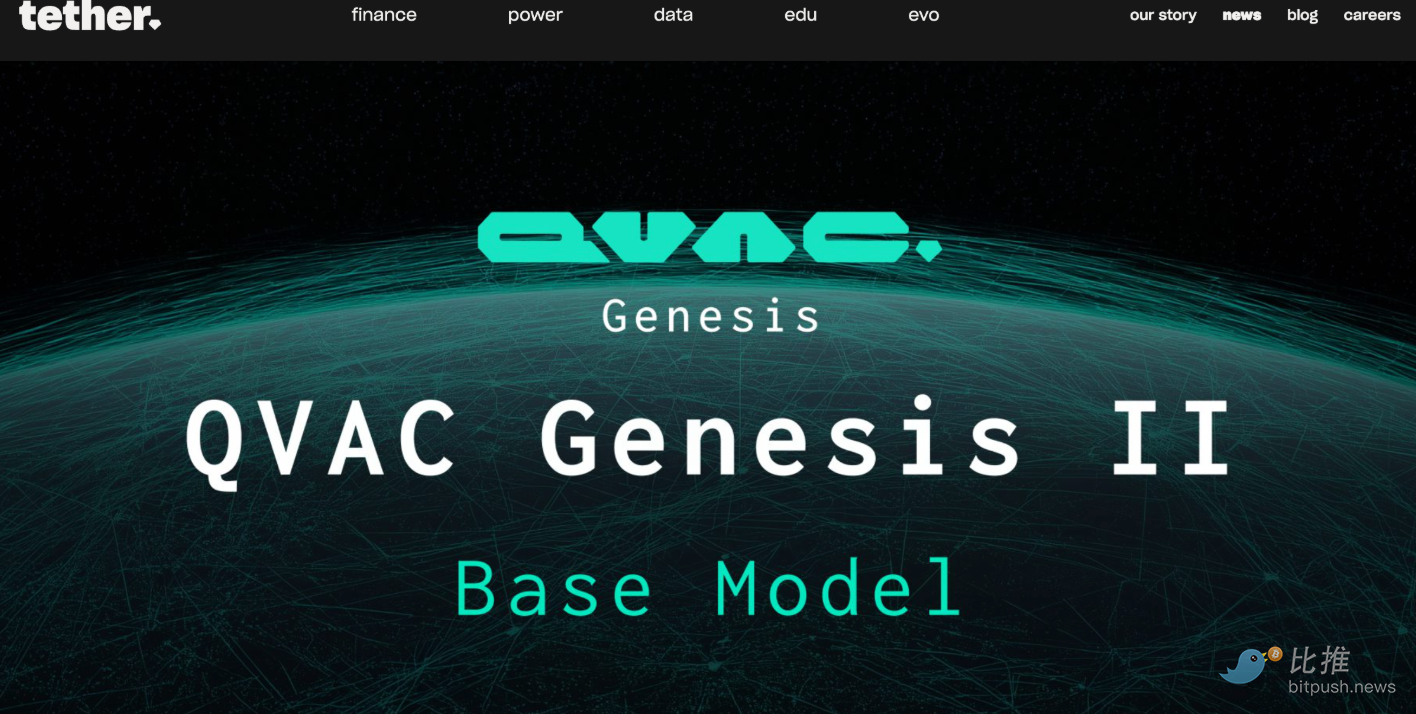
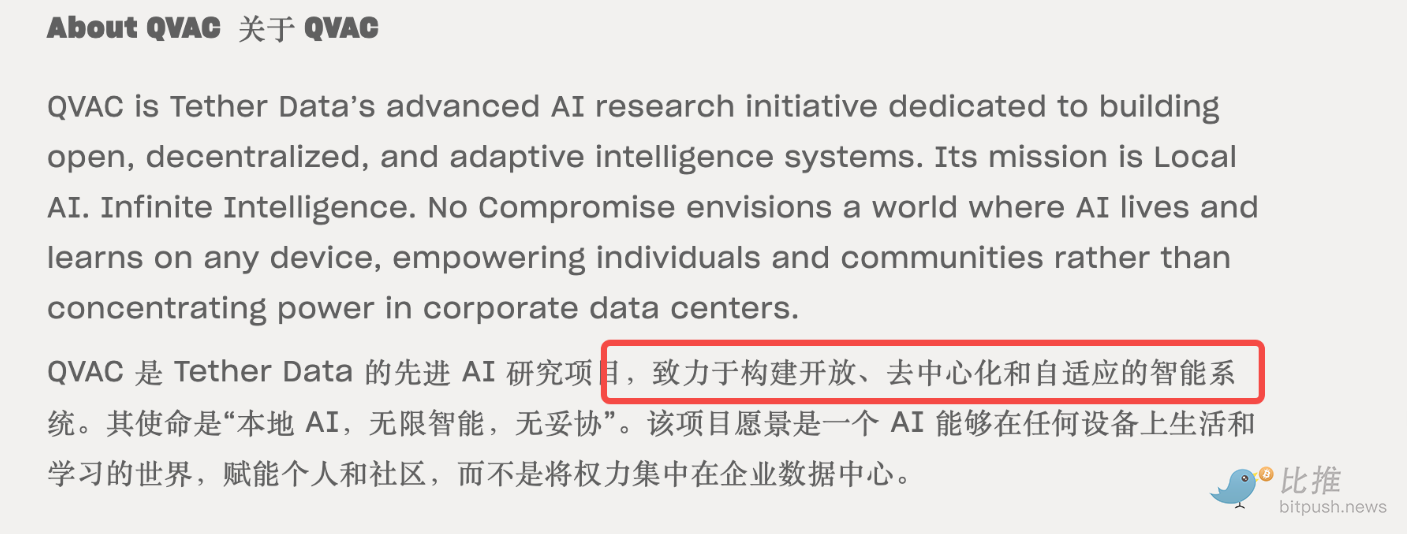
Training AI requires feeding it data. Last week, Tether released a dataset called QVAC Genesis, covering 19 disciplines including mathematics, physics, chemistry, and computer science. They claim it’s the world’s largest open-source AI training dataset.

Keep in mind that OpenAI and Anthropic’s training data are not public. Tether is releasing theirs for free, available to anyone.

Then comes the even more sci-fi part.

In April 2024, Tether spent $200 million to acquire a company called Blackrock Neurotech. The name includes "Blackrock," but it has no relation to the asset management giant BlackRock.

This company works on brain-computer interfaces. They implant chips into human brains, allowing paralyzed individuals to type with their thoughts, control wheelchairs, and operate robotic arms. It sounds like science fiction, but they’ve been doing it since 2008—eight years before Musk’s Neuralink.

How impressive is this company?

Out of the 35 people worldwide who have brain-computer interface chips implanted, 31 use Blackrock’s technology. In 2016, a fully paralyzed patient used their device to control a robotic arm and fist-bump Obama. The chip implanted in the sensory cortex allowed him to "feel" the president’s hand.

Last year, this brain-computer interface company enabled an ALS patient to "speak" again. The chip in his brain translated his thoughts into speech at a rate of 62 words per minute.

Tether spent $200 million to become the majority shareholder of this company.

Combined, Tether has invested nearly $1 billion in AI-related fields. Rumor has it they’re also negotiating with a German robotics company, offering $1.2 billion. If that deal goes through, their total investment could reach $2 billion.

What does this mean?

Anthropic raised $3.5 billion in funding in 2024. Tether’s investment alone is almost half of what a top-tier AI company raised in a year.

OpenAI spent $6.7 billion on R&D in the first half of 2025. Tether, with just a fraction of its profits, can play the role of a major investor in the AI world.

Why is a stablecoin company getting into AI?

We think there are two possibilities.

The first is anxiety. The Fed is cutting interest rates, and Treasury yields are falling. In 2024, they earned $7 billion in interest just by lying back. From 2025 onward, it might not be so easy. Even money-printing machines need new stories.

The second is ambition. The whole world is talking about AI—investors, media, politicians. If you say you’re a stablecoin company, no one pays attention. But if you say you’re working on AI, brain-computer interfaces, and humanoid robots, then you’re:

A tech leader.

The most amusing part?

Tether’s slogan for its AI endeavors is "decentralization," "local operation," and "returning intelligence to individuals."

But Tether itself is the most centralized company in the crypto world.

They decide how many coins to issue, how much reserve capital to hold. In ten years of operation, they’ve never been audited. Only they know where users’ money is.

Now, this company wants to teach the world what "decentralized AI" means.

It’s a bit like a casino owner offering classes on how to quit gambling.

Not that it’s impossible.

After all, OpenAI is still losing money and isn’t expected to break even until 2029. Anthropic is in a similar situation, aiming for 2028. Sam Altman is fundraising everywhere, and Dario Amodei is doing the same. The two companies have lost a combined $10 billion and are still telling stories to investors.

Tether doesn’t need to tell stories. The money is already in their pocket.

What’s the biggest challenge in the entire AI industry? The business model.

How to make money? No one knows. When will it make money? No one knows. Can it make money? No one knows.

Tether doesn’t have this problem. Their business model is:

Not doing AI.

They use the money earned from stablecoins to invest in AI. If the investment succeeds, it’s foresight. If it fails, it’s a learning expense. Either way, it doesn’t affect their core business.

Those doing AI are losing money; those not doing AI are making money. Those doing AI are fundraising; those not doing AI are investing.

The best AI business model in 2026 might just be not doing AI.

First, get your money-printing machine in order.


Original link:https://www.bitpush.news/articles/7600174

Связанные с этим вопросы

QHow much profit did Tether make in 2024, and how does it compare to major AI companies like OpenAI and Anthropic?

ATether made a profit of $13 billion in 2024. In comparison, OpenAI had revenue of $3.7 billion but lost $5 billion, while Anthropic had revenue of $1 billion and also lost $5 billion. Combined, the losses of these two major AI companies were less than Tether's profit.

QWhat is Tether's core business model that generates such significant profits?

ATether's core business model involves issuing the USDT stablecoin. When users buy 1 USDT, Tether receives 1 US dollar and uses it to purchase U.S. Treasury bonds. The interest earned on these bonds is kept by Tether, as they do not pay any interest to USDT holders. In 2024, Tether earned $7 billion in interest from this strategy.

QWhat are some key AI-related investments Tether has made, and what is their significance?

ATether has made several significant AI-related investments, including a $600 million+ loan to Northern Data, Europe's largest GPU cloud service provider with over 10,000 Nvidia H100 GPUs. They also released the QVAC Genesis dataset, claimed to be the world's largest open-source AI training data, and acquired Blackrock Neurotech, a brain-computer interface company, for $200 million. Their total AI investments approach $1 billion, with potential additional deals like a $1.2 billion German robotics company.

QWhy is Tether, a centralized stablecoin company, investing in AI and promoting 'decentralized AI'?

ATether is investing in AI likely for two reasons: anxiety over declining U.S. Treasury yields threatening their profit model, and ambition to position themselves as a tech leader in the booming AI field. Despite being a highly centralized company (controlling USDT issuance and reserves without audits), they promote 'decentralized AI' as a strategic narrative to gain relevance and influence in the tech industry.

QWhat ironic contrast does the article highlight about Tether's role in the AI industry?

AThe article highlights the irony that Tether, which profits massively from its stablecoin business without engaging in AI development, is investing in AI while major AI companies like OpenAI and Anthropic are losing billions. Tether doesn't face the AI industry's core problem of finding a sustainable business model; instead, it uses its stablecoin profits to fund AI ventures, making 'not doing AI' a profitable strategy to finance AI investments.

Похожее

Jensen Huang's CMU Speech: In the AI Era, Don't Just Watch, Build

Jensen Huang, CEO of NVIDIA and a first-generation immigrant, delivered the commencement address to Carnegie Mellon University's class of 2026. He shared his personal journey from a humble background to founding NVIDIA, emphasizing resilience, learning from failure, and the responsibility that comes with leadership. Huang framed the present moment as the dawn of the AI revolution, a shift he believes is more profound than previous computing waves. He described AI as fundamentally resetting computing—moving from human-written software to machines that understand, reason, and use tools. This will create a new industry for generating intelligence and transform every sector. While acknowledging AI's potential to automate tasks and displace some jobs, Huang distinguished between the *tasks* of a job and its core *purpose*. He argued AI will augment human capability, not replace humans. The real risk, he stated, is not AI itself, but people being left behind by those who effectively use AI. He presented AI as a generational opportunity for massive infrastructure investment—in chip factories, data centers, energy grids, and advanced manufacturing—that could re-industrialize nations like the U.S. and bridge the digital divide by making computing and intelligent tools accessible to all. Huang called for a balanced approach: advancing AI safely and responsibly, establishing prudent policies, ensuring broad access, and encouraging universal participation. He urged the graduates not to fear the future but to engage with optimism and ambition, reminding them of CMU's motto, "My heart is in the work." His core message was clear: this is their moment to actively build and shape the AI-powered future, not merely observe it.

marsbit43 мин. назад

Jensen Huang's CMU Speech: In the AI Era, Don't Just Watch, Build

marsbit43 мин. назад

The Era Has Arrived Where Human Writers Must Prove They Are Not Machines

The article describes an era where AI-generated content is flooding the market, forcing human authors to prove they are not machines. It begins with the example of dozens of AI-written, error-ridden biographies of Henry Kissinger appearing on Amazon within hours of his death, a pattern repeated for other deceased celebrities and even living experts who find fraudulent books under their names. This spam content has exploded, with monthly new book releases on platforms like Amazon reaching 300,000 by late 2025. The issue spans genres, from suspiciously high proportions of AI-written teen romance and self-help books to dangerous, AI-generated foraging guides containing lethal advice. The platforms' automated review systems, designed to catch plagiarism and banned words, are ill-equipped to detect AI-generated text that avoids these pitfalls while being nonsensical or fraudulent. The problem has infiltrated traditional publishing. A major publisher, Hachette, had to recall a bestselling horror novel after AI detection tools suggested 78% of its content was machine-generated. An acclaimed European philosophy book was later revealed to be entirely written by AI under a fake author persona. In response, authors are fighting back. At the 2026 London Book Fair, 10,000 writers published a blank book titled "Don't Steal This Book" containing only their signatures—using emptiness as a protest weapon in an age of AI overproduction. Initiatives like the "Human Author Certification" program have emerged, ironically placing the burden on humans to prove their work is not machine-made. The article warns of a vicious cycle: AI-generated low-quality books pollute the data used to train future AI models, leading to "model collapse" and an ever-worsening flood of digital waste, eroding trust in publishing and devaluing human creativity.

marsbit1 ч. назад

The Era Has Arrived Where Human Writers Must Prove They Are Not Machines

marsbit1 ч. назад

Торговля

Спот
Фьючерсы

Популярные статьи

Неделя обучения по популярным токенам (2): 2026 может стать годом приложений реального времени, сектор AI продолжает оставаться в тренде

2025 год — год институциональных инвесторов, в будущем он будет доминировать в приложениях реального времени.

1.8k просмотров всегоОпубликовано 2025.12.16Обновлено 2025.12.16

Неделя обучения по популярным токенам (2): 2026 может стать годом приложений реального времени, сектор AI продолжает оставаться в тренде

Обсуждения

Добро пожаловать в Сообщество HTX. Здесь вы сможете быть в курсе последних новостей о развитии платформы и получить доступ к профессиональной аналитической информации о рынке. Мнения пользователей о цене на AI (AI) представлены ниже.

活动图片