The Block Research Predicts: IPOs Will Outperform Token Launches, Forecasting That Prediction Markets Will Launch Their Own Chains

Odaily星球日报Опубликовано 2026-01-05Обновлено 2026-01-05

Введение

The Block Research's annual prediction report for 2026 presents a mix of bullish and cautious forecasts from its analysts. Key predictions include Bitcoin potentially reaching $140,000, stablecoin market cap surpassing $500 billion, and notable token launches from Polymarket and Base—both expected to enter the top 10 by fully diluted valuation. Several analysts emphasize the growing dominance of Bitcoin, with its market share remaining above 50%. A significant theme is the shift from token launches to IPOs among crypto companies, with firms like Kraken, BitGo, and Consensys expected to go public. Prediction markets, particularly Polymarket and Kalshi, are projected to see substantial growth, with at least one likely to launch its own blockchain. Stablecoins are anticipated to see accelerated adoption in both emerging and developed markets, with USDC becoming a key bridging asset. Other highlights include the rise of mobile-first crypto apps on Base, increased institutional adoption of stablecoins for payments, and the continued growth of decentralized perpetual exchanges—especially for stocks and commodities. However, not all sectors are optimistic; NFTs and memecoins are expected to decline, and many digital asset trusts (DATs) may face selling pressure due to persistent discounts to net asset value. The market is predicted to be selective, favoring projects with real users and sustainable models over speculative assets.

Original | Odaily Planet Daily (@OdailyChina)

Author | jk

Well-known crypto research institution The Block Research, as usual, released its annual forecast report at the beginning of the new year. As one of the earliest professional research teams in the industry, The Block Research is quite influential within the circle due to its in-depth data analysis and reliable market insights. This year, their analyst team has set many flags: Bitcoin will surge to $140,000, stablecoin market cap will break $500 billion, Polymarket and Base will launch tokens and enter the top ten, multiple crypto companies will IPO, etc.. Interestingly, the analysts' views are not entirely consistent; some are optimistic about a small bull market in 2026, while others believe the market will continue to diverge.

This forecast report is a combination of each individual's independent views. Let's see what the industry's top researchers have to say; remember to come back at the end of the year to verify who got it wrong!

Steven's Predictions

Tom Lee's Bitmine will conduct its first ETH sell-off before the end of Q1 2026. This sell-off will become a catalyst, prompting more Digital Asset Trust (DAT) treasuries to follow suit, further dampening market sentiment.

Bitcoin's market dominance will remain above 50% throughout the year.

Polymarket and Base are about to launch tokens, and their fully diluted valuations are expected to rank in the top ten by market cap.

The Base ecosystem will see a surge in mobile-first crypto applications. The market will experience several rounds of small, rotating hotspots similar to 2025, including: the RWA (Real World Assets) sector, the prediction market sector, and mobile projects.

Tether, in collaboration with other institutions, will launch a crypto exchange in the US.

Robinhood will list cryptocurrency perpetual contracts.

Eden's Predictions

The velocity of stablecoins will explode, primarily driven by regulated payment institutions adopting stablecoins for clearing and settlement. The total stablecoin market cap will exceed $400 billion, but USDT's market share will decline. The number of stablecoins with a market cap over $1 billion will reach 20. The total value of non-stablecoin RWAs will exceed $30 billion. Besides gold, other commodities will also be tokenized and gain some market recognition.

Decentralized perpetual contract exchanges will launch stock and commodity perpetual contracts, generating significant trading volume. The trading volume ratio between DEXs and CEXs, for both spot and perpetuals, will stabilize around 20%. Request-for-Quote (RFQ) based DEXs will emerge.

Polymarket and Kalshi's annual trading volume will at least triple, and the two will engage in fierce competition for exclusive partnerships. At least one of them will launch its own blockchain.

Plasma will become a top-four public chain by TVL (Total Value Locked) based on real on-chain activity, being one of the few enterprise-grade blockchains with genuine organic growth. Base and MetaMask will issue native tokens. Multiple leading crypto companies like Kraken, BitGo, and Consensys will initiate IPOs, re-attracting mainstream capital attention. Strategy and BitMine will not sell their held BTC and ETH.

Bitcoin will break through $140,000. Although Bitcoin's market share will decline, it will not fall significantly below 50%.

Bitcoin will hit a new all-time high in Q2.

NFT and memecoin launchpads will not make a comeback.

The privacy narrative will gradually fade from the market.

The four-year cycle theory will be disproven by the end of the year.

Gabriel's Predictions

DATs will continue to trade below their modified Net Asset Value (mNAV), forcing many funds to sell assets. As crypto ETFs become increasingly convenient to trade and offer better risk-reward ratios, the DAT narrative will gradually lose its appeal.

Massive token unlocks combined with weak market sentiment will lead to sustained selling pressure for tokens issued in this cycle. Short-sighted buyback-and-burn strategies will become a burden for projects when market sentiment sours and cash reserves diminish.

Financing valuations will be significantly lower than this year's levels. Many VCs will learn from their high-valuation investments—although they seemed cheap compared to previous cycles, valuations will continue to adjust downward as the industry matures and hype subsides.

Network native tokens will struggle to attract buying interest because stablecoins are becoming the most attractive and widely used asset class in DeFi, and on-chain activity is accelerating its shift from being denominated in ETH and SOL to being denominated in USDC.

Ivan's Predictions

2026 will see a K-shaped recovery pattern: low-quality projects will lose market attention, while capital and focus will concentrate on high-quality projects with real paying users.

Outperforming sectors will include decentralized perpetual contract exchanges and prediction markets.

Crypto projects will generally begin to delay token launches, opting instead for the IPO route. Similarly, high-quality DATs will continue to explore on-chain use cases, while other funds will be forced to sell tokens under the pressure of continuously shrinking NAV.

Due to altcoins struggling to maintain their market position, Bitcoin's market share will rise in 2026, with capital flowing into listed crypto companies. Crypto stocks will continue to perform strongly, benefiting from business diversification (miners transitioning to AI computing power, exchanges launching stock trading, etc.). Despite volatility, Bitcoin's performance in 2026 will outperform the Nasdaq. Outside of crypto, US gold sales will mark a bottom for the US Dollar Index.

Brandon's Predictions

The rise of bank-issued deposit tokens in 2026 will lead to the fragmentation of institutional liquidity across various banks' proprietary ledgers (e.g., competition between JPM Coin and Citi Coin). As global banks are structurally unable to hold significant liabilities of competitors, USDC will become the dominant neutral bridging asset, with its 2026 growth largely deriving from its value as a clearing tool between isolated banking networks.

Agent-to-Agent trading will be standardized on the x402 protocol and will account for a significant share of global on-chain activity.

Cryptocurrency "Greek letter" derivatives, such as implied volatility products (e.g., BTCVOL-PERP) or funding rate swaps, will gain market favor in 2026.

Alessandro's Predictions

2026 will start slowly, trading within a range in the first half. High-risk premiums and selective capital will favor mainstream coins. The consistent winners will be products with real users and sustained usage, especially wallets and trading platforms, which can continue to acquire users even if token performance is weak. The second half will be overall bullish, with a few ecosystems and projects attracting most of the incremental capital. The strongest buying will come from new consumer products that combine risk with solid fundamentals.

Cross-chain interoperability becomes the theme of the year, with improvements in cross-chain routing and chain abstraction allowing "super apps" to gain market share. RWA makes progress through tokenized stocks, equity perpetuals, and credit products, while traditional finance continues to advance internal or permissioned Distributed Ledger Technology (DLT). This exacerbates the divergence between "true cryptocurrency" (as a high-risk testing ground for new mechanisms and markets) and enterprise-grade DLT settlement systems.

Better execution, tools, and automation will further concentrate arbitrage opportunities among professional institutions. Stablecoin supply growth will accelerate, with the USD still dominant, but the Swiss Franc and Singapore Dollar will see the strongest growth from a small base. Prediction markets compound growth during the US midterm elections, while the risk of a messy insider trading investigation also rises.

Simon's Predictions

Bitcoin's market share will remain above 50%. The total cryptocurrency market cap will not break $4 trillion. ETF flows for all coins will remain net positive throughout the year. Non-BTC and non-ETH ETF trading volume will reach $20 billion. Stablecoin adoption will continue to grow, with traditional enterprises launching new stablecoins and existing stablecoins continuing to expand.

Prediction markets will be the fastest-growing crypto application in 2026, with open interest reaching $500 million, and trading volume accounting for 3% of total CEX volume. These platforms will issue tokens to aggressively attract users. Thanks to technological advancements, decentralized derivatives trading volume will continue to grow, reaching 25% of centralized derivatives trading volume.

NFTs will not revive in 2026, and NFT market trading volume will continue to shrink.

Tiago's Predictions

Prediction markets will continue to be one of the strongest narratives in crypto, while other concepts that dominated the market in the past two years, such as memecoins and various launchpads, will lose momentum.

Even though ETFs and other financial instruments continue to attract institutional and retail attention, Bitcoin and other major coins will struggle to set new all-time highs against the backdrop of escalating geopolitical tensions.

Stablecoins will remain the strongest narrative for attracting new users into the crypto space, with major players either launching their own stablecoins or establishing partnerships with established institutions like Circle and Tether.

Ian's Predictions

Most DATs will crash in 2026 as their share prices fall below NAV, breaking the equity issuance model that supported their growth in 2025. Crypto ETFs offer better liquidity and lower fees, further squeezing DATs'生存空间 (living space). Strategy and a few large institutions survive due to their scale and brand advantage, but small DATs face liquidation, acquisition, or are forced to转型 (transform).

Stablecoin supply will break the $500 billion mark, with trading volume exceeding the US ACH system in Q3. Growth accelerates on two fronts: continued expansion in emerging markets and integration into corporate payment processes in developed markets. Companies shift from passive holding to practical application, migrating part of cross-border supplier payments, international contractor salaries, and intra-group settlements to the stablecoin轨道 (track). At least one major card network will process 5-10% of its cross-border merchant settlements via stablecoins by year-end. B2B payment platforms increasingly integrate stablecoin options for international invoices.

Prediction markets experience explosive growth during the US midterm elections, with Polymarket's trading volume quadrupling compared to 2024. The industry diverges: Polymarket and Kalshi dominate cultural and political markets, while specialized DeFi platforms focus on leveraged financial products. 85% of copycat platforms shut down due to inability to gain users. The legal framework for sports betting and prediction markets remains unclear until year-end, but user growth continues to accelerate due to the huge and highly attractive market size.

Связанные с этим вопросы

QWhat is the main prediction from The Block Research regarding fundraising methods for crypto projects in 2026?

AThe Block Research predicts that IPOs will become more favored than token launches for crypto projects in 2026, as companies like Kraken, BitGo, and Consensys are expected to pursue IPOs to attract mainstream capital.

QWhich two platforms are predicted to launch their own tokens and potentially enter the top 10 by fully diluted valuation?

APolymarket and Base are predicted to launch their own tokens, with their fully diluted valuations expected to enter the top 10.

QWhat significant milestone is predicted for Bitcoin's price in 2026 by one of the analysts?

AOne analyst, Eden, predicts that Bitcoin will break through $140,000 in 2026.

QAccording to the predictions, which sector is expected to be the fastest-growing crypto application in 2026?

APrediction markets are expected to be the fastest-growing crypto application in 2026, with platforms like Polymarket and Kalshi predicted to see significant growth and competition.

QWhat is the forecast for the total stablecoin market capitalization in 2026?

AThe stablecoin market capitalization is predicted to break through the $500 billion mark in 2026, driven by adoption in both emerging markets and corporate payment flows in developed markets.

Похожее

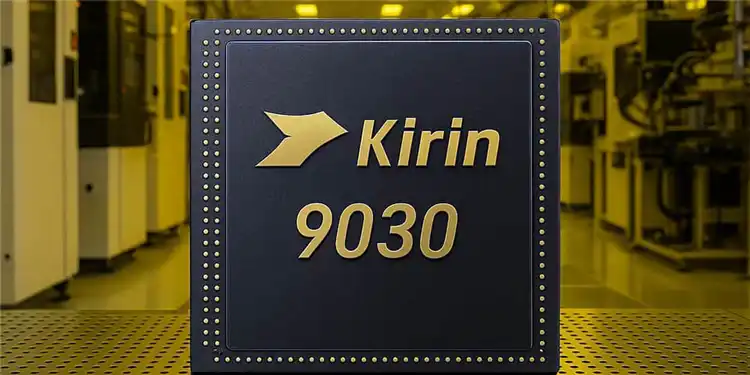
SemiAnalysis Dissects Huawei's Kirin 9030: Process Technology Halted, So They Folded the Chip

SemiAnalysis has published a detailed teardown report on the HiSilicon Kirin 9030 Pro chipset found in Huawei's Mate 80 Pro. Fabricated using SMIC's most advanced N+3 node without EUV lithography, the analysis reveals significant technical achievements and strategic shifts. The report indicates SMIC's N+3 has achieved transistor density comparable to TSMC's N6 (113.4 vs 107.7 MTr/mm²), primarily through aggressive use of Self-Aligned Quadruple Patterning (SAQP) for its metal layers. This results in a notably small 32.5nm M0 metal pitch. However, SemiAnalysis notes this achievement comes with significantly higher process complexity, cost, and potential yield challenges compared to competitors using more advanced tools. The Kirin 9030 design maximizes this constrained density. While its GPU performance has improved ~70% and matches Qualcomm's 2022 flagship level, the CPU core's IPC lags behind current top-tier designs from Apple and Qualcomm, a gap attributed to the underlying manufacturing technology rather than design capability. Facing long-term restrictions on advanced tools, Huawei is charting a new path. The report highlights the company's "LogicFolding" roadmap, a 3D stacking technique aimed at shortening signal paths to boost performance and efficiency. The goal is to reach 5GHz frequency and a projected density of 295 MTr/mm² by 2031. SemiAnalysis concludes that export controls have not halted China's chip progress but have fundamentally altered its trajectory, making it more expensive and complex. This has spurred innovation in alternative areas like 3D stacking and domestic EDA tool development, with Huawei's supply chain also beginning to integrate Chinese memory from CXMT.

marsbit30 мин. назад

SemiAnalysis Dissects Huawei's Kirin 9030: Process Technology Halted, So They Folded the Chip

marsbit30 мин. назад

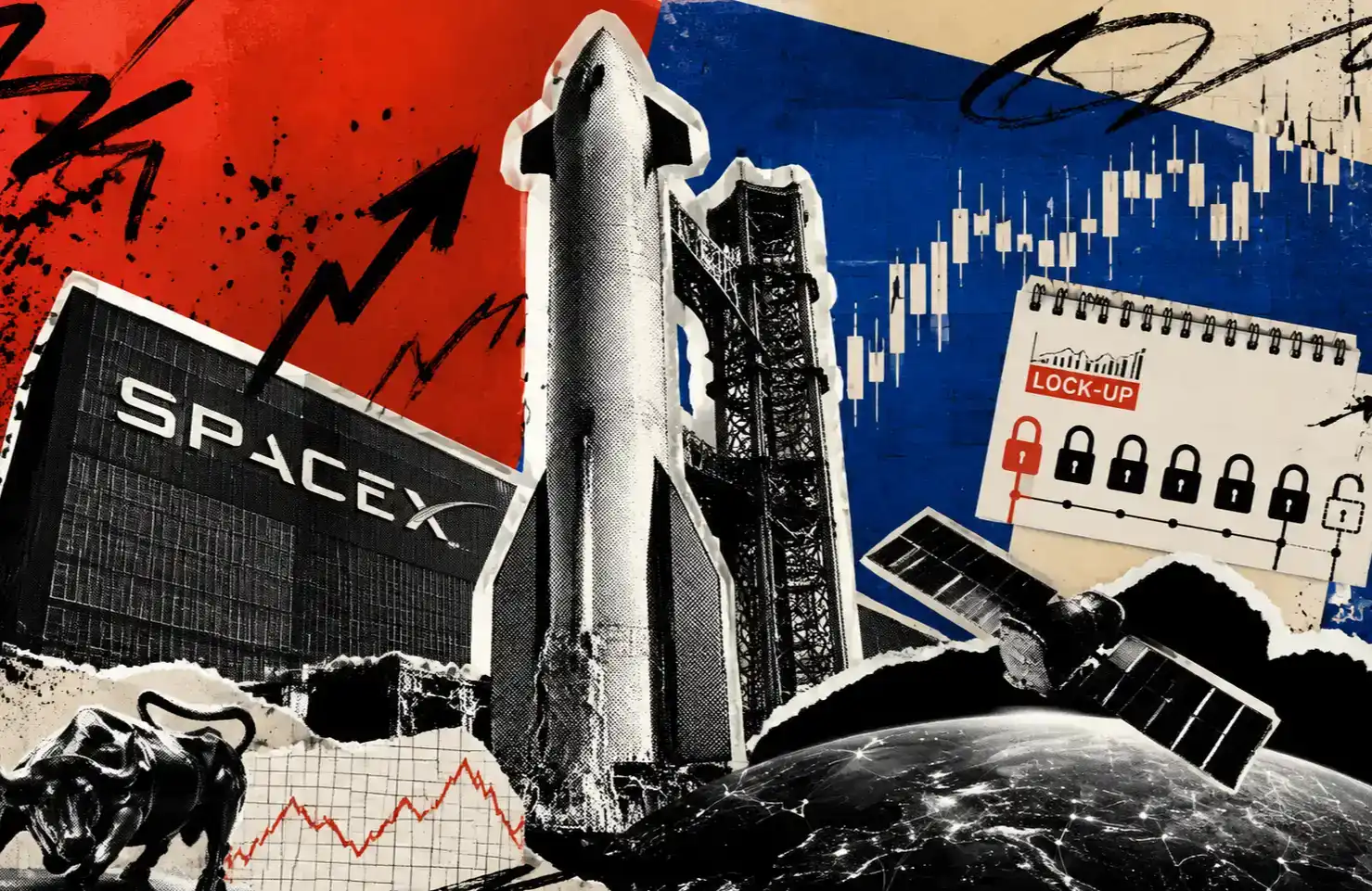
How Will the Price Move Before SpaceX's Next Share Unlock?

TL;DR Investors buying SPCX after SpaceX's IPO are not simply investing in a typical tech stock. It’s a high-valuation asset driven by Musk's narrative, Starlink, and space transport potential, but with a key twist: a very small initial float of ~4% has led to significant post-listing price appreciation. The current price action reflects a timing gap. Before the first lock-up expiration (estimated around August, subject to official confirmation), scarcity and high demand could continue to push prices up. Short-term bulls focus on low float, FOMO, and potential index inclusion. However, bears point to the supply dynamics that will change post-lockup. Existing shareholders still hold over 95% of shares, which will be released in stages starting from the first unlock window. This introduces future selling pressure from low-cost holders. The upcoming Q2 earnings report is a critical catalyst before the unlock. It will test whether the company's fundamentals can justify the current ~$2.1T valuation. Strong results could support the pre-unlock momentum, while weak figures could amplify concerns about future supply. The trading thesis is shifting from immediate scarcity ("can't buy enough") to evaluating future absorption capacity ("who will buy when more supply hits"). The path ahead hinges on the specifics of the unlock schedule, Q2 earnings performance, and whether anticipated passive index buying materializes.

marsbit51 мин. назад

How Will the Price Move Before SpaceX's Next Share Unlock?

marsbit51 мин. назад

Bitcoin Short-Term Bullish Structure Validated, HYPE Low-Entry Window Opens | Guest Analysis

**Market Analysis Summary (Week of June 2026)** **Overall Market Context:** The market environment is exceptionally complex, with the unexpected US-Iran agreement and the reopening of the Strait of Hormuz triggering a global asset repricing and significant volatility. This heightened noise underscores the importance of a structured analytical framework. **Bitcoin (BTC) Analysis & Strategy:** * **Current Status:** The price has climbed above $65,000, currently in a rebound phase (segment 38-39) following a complex 12-segment correction from the May high of $82,850. * **Key Levels:** * **Primary Resistance:** $69,500–$70,500. A successful breakout above $65,000 targets this zone. * **Primary Support:** $65,000 (immediate), followed by $59,000–$60,000 and $55,000. * **Weekly Outlook & Strategy:** The focus is on the confirmation of the $65,000 level. * **Bullish Scenario (Hold $65K):** A move toward the $69.5K–$70.5K resistance zone is anticipated, which is a potential area for initiating medium-term short positions. * **Bearish Scenario (Break below $65K):** A retest of the $60,000–$62,000 support range is likely. * **Medium-Term Strategy:** Currently neutral. Plan to establish short positions (up to 60% allocation) either in the $69.5K–$70.5K resistance zone upon signs of rejection, or on a confirmed breakdown below $65,000 and further below $59K–$60K. * **Short-Term Strategy:** Utilize 30% capital for scalping opportunities based on support/resistance levels, using 30/60-minute charts. **HYPE Analysis & Strategy:** * **Current Status:** The price has stabilized around $52 after a four-segment decline from the June high of $75.87 and is now in a rebound (segment 50-51). * **Key Levels:** * **Primary Resistance:** $62.50–$64.57. Watch for potential rejection here to form a lower high. * **Primary Support:** $52–$55.50, followed by $47–$49. * **Weekly Outlook & Strategy:** Adopt a "buy on dips, avoid chasing rallies" approach. * **Core View:** Monitor the price action and potential formation of a lower high ("endpoint 51") in the $62.50–$64.57 resistance zone. * **Short-Term Strategy:** Consider light long positions (max 30% allocation) if the price finds support and shows reversal signals in the $52–$54.50 or deeper $47–$49 support zones, confirmed by proprietary quantitative bottom signals. **Trade Review:** Last week's HYPE short-term long trade, executed based on proprietary "Price Difference" and "Momentum" model signals, yielded a profit of approximately 11.88%. The entry was near $54.39 and exit near $60.85. **Risk Management Reminder:** Always set an initial stop-loss upon entry. Move stop-loss to breakeven at +1% profit, then trail it upwards to lock in gains as the trade progresses. *Disclaimer: All analysis, models, and strategies are based on personal technical analysis for educational purposes only, not investment advice. The market carries inherent risk.*

Odaily星球日报55 мин. назад

Bitcoin Short-Term Bullish Structure Validated, HYPE Low-Entry Window Opens | Guest Analysis

Odaily星球日报55 мин. назад

Bitcoin Short-Term Bullish Structure Validated, HYPE Accumulation Window Opens | Guest Analysis

**Bitcoin and HYPE Market Analysis: Short-Term Outlook and Trading Strategies** This market analysis examines Bitcoin (BTC) and HYPE amid volatile conditions, providing short-term outlooks and specific trading strategies. **Key Outlooks:** * **Bitcoin (BTC):** Focus is on whether BTC's recent move above $65,000 holds. A successful breakout could lead to a test of the $69,500-$70,500 resistance zone, where medium-term short positions are considered. A failure, breaking below $65,000, may trigger a decline towards the $59,000-$60,000 support area. * **HYPE:** The token completed a four-wave correction and is now rebounding. The key resistance zone is $62.5-$64.57. The trading strategy is "buy on dips," looking for entry opportunities near the $52-$54.5 or deeper $47-$49 support zones, pending confirmation from proprietary models. **BTC Trading Strategy:** * **Medium-term:** Primarily looking to establish short positions (up to 60% allocated capital) if price rallies to the $69,500-$70,500 resistance area and shows signs of reversal. Alternative plans involve initiating shorts on a breakdown below $65,000. * **Short-term:** Allocate up to 30% capital for intraday "spread" trades based on support/resistance levels on 30/60-minute charts. **HYPE Trading Strategy:** * **Short-term:** Adopt a dip-buying approach. Consider light long positions (under 30% capital) when price tests key support levels ($52-$54.5 or $47-$49) and shows stabilization, confirmed by proprietary "Price Spread" and "Momentum Quant" models. **Trade Recap:** The analysis reviews a successful HYPE long trade from the previous week, executed at ~$54.39 and closed at ~$60.85 for an ~11.88% gain, based on signals from the aforementioned models. **Risk Management Emphasis:** The article stresses strict capital allocation (under 30-60%), immediate initial stop-loss placement, and a trailing stop-loss protocol to lock in profits as trades move favorably. ***Disclaimer:** All analysis, models, and strategies are for educational purposes based on technical analysis, not investment advice. Markets are volatile; trade with caution.*

marsbit58 мин. назад

Bitcoin Short-Term Bullish Structure Validated, HYPE Accumulation Window Opens | Guest Analysis

marsbit58 мин. назад

Торговля

Спот
Фьючерсы
活动图片