Биткоин восстановил краткосрочный импульс после роста примерно на 7% в среду, что принесло некоторое облегчение рынку, который оставался под постоянным давлением продаж. Отскок последовал за возобновившимися обсуждениями вокруг Jane Street — глобальной количественной трейдинговой фирмы, которую в некоторых кругах криптосообщества широко обвиняли в причастности к коллапсу LUNA в 2022 году, хотя прямую ответственность так и не подтвердили никакими формальными доказательствами. Возрождение этого нарратива, по-видимому, совпало с улучшением ожиданий ликвидности и краткосрочным перераспределением активов, что помогло стабилизировать настроения после недавней волатильности.
Несмотря на отскок, структурный стресс остается заметным под поверхностью. По словам ведущего аналитика Darkfost, когорта ончейн-трейдеров — определяемая как держатели монет в возрасте от одного до трех месяцев — имеет реализованную цену около $90 000. При текущей цене Биткоина около $68 000 эта группа имеет средний нереализованный убыток приблизительно в 24%, что исторически повышает поведенческую чувствительность.
Полосы отклонения вокруг этой реализованной цены дополнительно контекстуализируют зону давления. Верхние полосы находятся около отметок $126 000 и $153 000, в то время как нижние пороги расположены около $79 000 и $56 000. Эти уровни помогают очертить потенциальные пути возврата к среднему, подчеркивая, что, хотя импульс и улучшился, большая часть недавних покупателей остается «под водой».
Полосы реализованной цены Биткоина выделяют критическую зону перелома
Биткоин в настоящее время переживает чувствительную фазу, которая может определить, перерастет ли недавний отскок в устойчивое восстановление или останется лишь временной передышкой в рамках более широкой коррекционной структуры. Цена остается значительно ниже реализованной цены когорты ончейн-трейдеров с монетами возрастом 1–3 месяца, которая оценивается около $90 000, оставляя существенную часть недавних entrants в зоне нереализованных убытков. Такая позиция обычно увеличивает реактивность рынка, поскольку краткосрочные держатели склонны быстро реагировать на колебания цен.
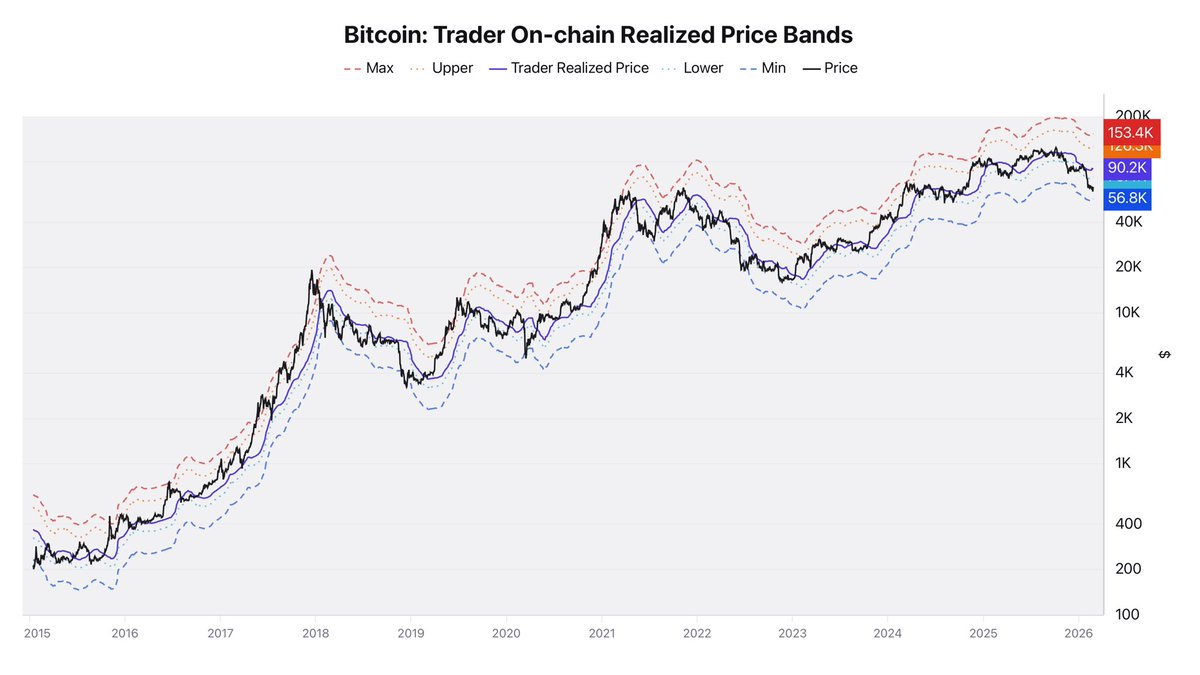
Методология Darkfost с полосами отклонения предоставляет полезный контекст для оценки потенциальных зон давления. Эти статистические диапазоны помогают определить, где накапливаются скрытые прибыли или убытки. Исторически, когда Биткоин приближался к верхней полосе отклонения «Макс» в течение этого цикла, часто следовали коррекционные фазы, что позволяет предположить, что перегретое позиционирование, как правило, провоцирует дистрибуцию или фиксацию прибыли.
В настоящий момент, однако, ситуация обратная: трейдеры в основном «под водой», а не в прибыли. Это снижает непосредственный риск фиксации прибыли, но увеличивает чувствительность к дальнейшему снижению. Что важно, цене все еще требуется значительное восстановление, прежде чем эта когорта вернется к комфортному среднему уровню прибыли.
Следовательно, Биткоин находится в точке технического и поведенческого перелома. Продолжающаяся стабилизация могла бы постепенно восстанавливать уверенность, но возобновление слабости рискует усилить оборонительное позиционирование и продлить коррекционную фазу.





















