# Сопутствующие статьи по теме Web3

Новостной центр HTX предлагает последние статьи и углубленный анализ по "Web3", охватывающие рыночные тренды, новости проектов, развитие технологий и политику регулирования в криптоиндустрии.

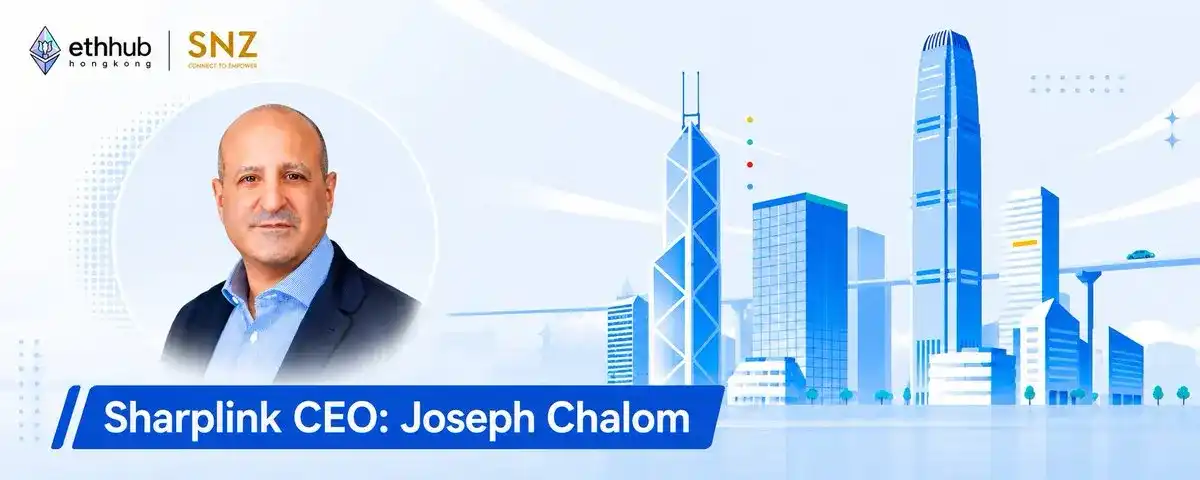
Interview with KK, UXLINK Ecosystem Lead: Not a Prisoner, Just a Player, Staying in Web3 Because 'It's Fun'

Interview with Kongkou (KK), UXLINK Ecosystem Lead: "Not a Prisoner, Just a Player – Staying in Web3 Because It’s Fun" KK, UXLINK’s Ecosystem Lead, shares his unconventional journey into Web3. With a background in economics and experience spanning Swedish manufacturing supply chains, Hasselblad (under DJI), and community growth in Web3, he emphasizes adaptability over formal credentials. He entered Web3 in 2021, learning through hands-on experience—earning and losing in NFTs, participating in early Solana trading, and navigating GameFi downturns. He believes real learning comes from taking risks and experiencing losses firsthand. At UXLINK, KK drove significant growth through well-timed, mechanism-focused campaigns like joint airdrops, leveraging Telegram’s invite-based reward system. He stresses that timing and structure matter more than creativity in driving user adoption. KK also reflects on a major security breach UXLINK suffered—a costly lesson highlighting that security is a discipline issue, not just a technical one. He advises strict measures like physical isolation, avoiding cloud-stored seed phrases, and using dedicated devices for financial operations. Despite challenges, he remains in Web3 for the positive team environment and personal enjoyment. He embraces AI tools for work and life, balances stress with sports like climbing and squash, and advises newcomers to network actively and keep learning. Beyond Web3, KK is a craft beer enthusiast, recommending Japanese lagers for beginners and stouts or IPAs for advanced drinkers, with a shout-out to Shanghai’s 233 Bar. His philosophy centers on staying relaxed, avoiding industry burnout, and valuing longevity over short-term gains.

marsbit03/10 09:32

Interview with KK, UXLINK Ecosystem Lead: Not a Prisoner, Just a Player, Staying in Web3 Because 'It's Fun'

marsbit03/10 09:32

On-Chain Economy: Past, Present, and Future

On-Chain Economy: Past, Present, and Future In 2014, before "Web3" became synonymous with blockchain and crypto assets, the core vision revolved around smart contracts and their potential to enable a self-managing decentralized network. This early idea evolved into the concept of a Smart Economy, where autonomous economic coordination could flourish. Today, Web3 is rapidly growing, largely driven by decentralized finance (DeFi). Stablecoins serve as global settlement tools, and crypto assets have reshaped public understanding of money. Beneath these developments lies a fundamental improvement in financial efficiency. At the same time, AI has moved from abstract concept to daily reality. While many see AI as a productivity tool, its deeper role is that of a new financial efficiency paradigm. By increasing productivity, AI raises the value of attention even during non-working hours, making it a natural core component of the next-generation on-chain economy. The future on-chain economy will be defined by three core features: 1. Minimal human involvement: Humans act as intent providers, while AI handles analysis, execution, and feedback. 2. Complete trustlessness: Systems must be fully secure and trustless. 3. Extreme efficiency: AI will push capital utilization to unprecedented levels. Key enabling technologies include rapidly evolving AI models, intent-based AI agents, agent networks, privacy-preserving tech like ZKP and FHE, enhanced security components, and sustainable monitoring systems. The convergence of AI and blockchain will lead to an organic, self-evolving, and autonomous on-chain economy—what we call the Intelligent Sensible Economy. This is not just a faster system but a structural shift: from human-centered operations to collaboratively intelligent networks. The economy begins to exhibit life-like traits, responding to data, adapting, and self-optimizing. This transformation raises a fundamental question: as systems become self-learning and self-coordinating, are we still building an economy—or a new form of intelligent life?

marsbit03/06 08:23

On-Chain Economy: Past, Present, and Future

marsbit03/06 08:23

活动图片