# Сопутствующие статьи по теме Volatility

Новостной центр HTX предлагает последние статьи и углубленный анализ по "Volatility", охватывающие рыночные тренды, новости проектов, развитие технологий и политику регулирования в криптоиндустрии.

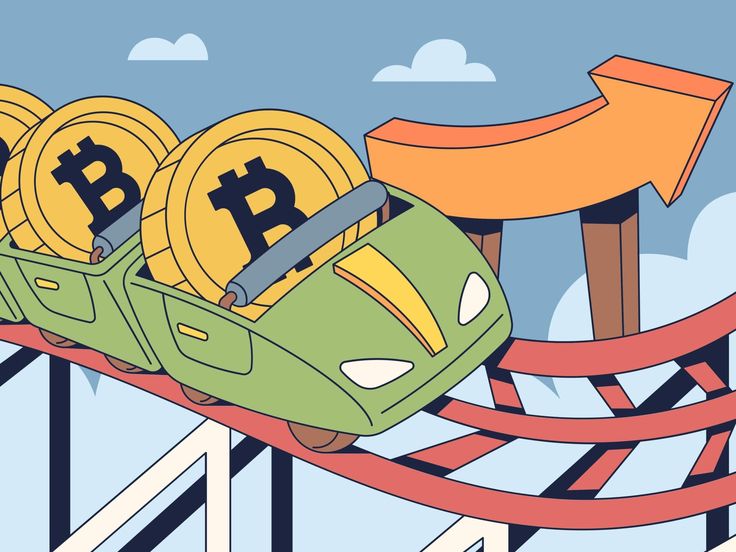
Bitcoin's Losses Against the Dollar Are 10 Times Lower Than Against the Ruble. How Did This Happen

The article analyzes Bitcoin's (BTC) significant 30%+ depreciation against the Russian ruble since the start of 2025, contrasting it with much smaller losses against major currencies like the US dollar (~3%). This disparity is attributed to the ruble's own substantial strengthening, which appreciated roughly 25% against the dollar over the same period. Consequently, while Bitcoin hit new all-time highs against the dollar, euro, and yen in late 2024, it failed to do so against the ruble. The piece further explains that the Russian ruble/Bitcoin exchange rate is not directly traded on major spot markets. Instead, it is calculated by converting the BTC/USD price using the current USD/RUB rate, leading to potential pricing discrepancies. This indirect method, coupled with the absence of major exchanges like Binance from the Russian market, has fragmented liquidity. The market now heavily relies on peer-to-peer (P2P) exchanges and over-the-counter trades using stablecoins like USDT, which often trade at a premium to the official dollar rate. These conditions have created a challenging environment, increasing fraud and "gray" schemes in P2P markets. The situation is further complicated by recent Russian legislation that impose criminal penalties for using "dropper" bank accounts (money mules) and restrict cash withdrawals, which are expected to significantly alter the crypto exchange landscape.

RBK-crypto12/11 21:30

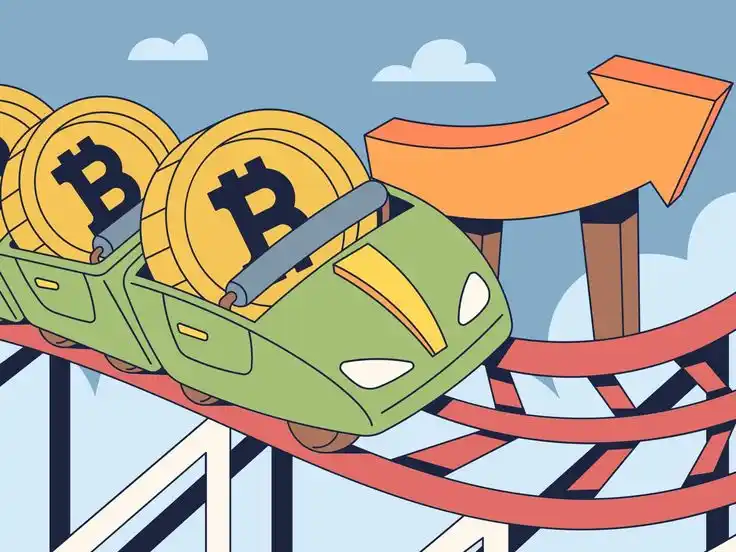
Bitcoin's Losses Against the Dollar Are 10 Times Lower Than Against the Ruble. How Did This Happen

RBK-crypto12/11 21:30

Dogecoin Price Forecast for 2026: The Path to $1 Amid Meme Rally

Dogecoin (DOGE) is back in the spotlight as retail traders return to the meme segment. Analysts express cautious optimism, suggesting that under favorable conditions, including a continued bull market and increased risk appetite, DOGE could potentially reach the $1 mark in 2026. The price is currently consolidating after volatile swings, with significant trading volumes indicating ongoing speculative interest. Key drivers remain its meme narrative, support from high-profile figures, and its correlation with Bitcoin's cycles. The path to $1 is not linear. DOGE must hold key support levels, sustain derivatives interest without overheating, and receive fresh meme-driven momentum. Technical analysis highlights the importance of watching RSI levels and volume for signs of sustainable growth versus short-term pumps. Alongside DOGE, newer, more aggressive meme tokens like Maxi Doge (MAXI) are gaining attention. Having raised approximately $4.3 million in its presale, MAXI offers high-risk, high-reward speculation with features like staking rewards and trading tournaments. While it could amplify portfolio returns during a rally, it carries significant risks associated with early-stage projects, unlike the more established DOGE. The overall strategy for many investors is to combine a core position in DOGE with a smaller, speculative bet on tokens like MAXI to capitalize on the potential meme rally.

bitcoinist12/11 19:40

Dogecoin Price Forecast for 2026: The Path to $1 Amid Meme Rally

bitcoinist12/11 19:40

Bitcoin Price Surpasses Open Interest Following FOMC

Following Bitcoin Price Surpasses Open Interest After FOMC Following the FOMC announcement, Bitcoin's price demonstrated the instability of leverage in the current market cycle, fluctuating between $92,000 and $89,500. This volatility liquidated billions in open positions on major derivatives markets. Despite the extreme swings, capital continued flowing into high-conviction crypto projects like Bitcoin Hyper ($HYPER), a Bitcoin Layer-2 solution combining Solana-level transaction speeds with Bitcoin's security. U.S. traders added over $38 million in new Bitcoin exposure ahead of key macroeconomic data. The sentiment remains cautiously optimistic, with analysts viewing the $90,000 level as a critical psychological and structural support. A sustained break above $92,000 could open a path toward the $100,000–$110,000 resistance range. Post-FOMC, the market saw a healthy reset with open interest dropping and funding rates normalizing. U.S. institutional flows via ETFs remained strong, indicating long-term investor confidence. Analysts from Bernstein project a potential long-term move to $200,000, while others like Matrixport forecast a mid-cycle consolidation around $120,000–$150,000. Concurrently, Bitcoin Hyper is gaining attention as an ambitious L2 project, having raised over $29 million in its presale. It aims to solve Bitcoin's scalability issues by enabling seamless cross-chain movement with instant, low-fee transactions. Its architecture and staking rewards position it as a high-beta play on Bitcoin's adoption, attracting capital shifting from speculative altcoins to core infrastructure projects.

bitcoinist12/11 17:44

Bitcoin Price Surpasses Open Interest Following FOMC

bitcoinist12/11 17:44

Shorting the Dip, Buying the Rally? FOMC Outcome Reveals the Truth Behind Bitcoin (BTC) Price Trends

Based on historical data from 2025, Bitcoin's (BTC) price action around FOMC meetings reveals a distinct pattern: the market often prices in macroeconomic expectations in advance, leading to a "buy the rumor, sell the news" dynamic. Despite the actual policy decisions, BTC typically experiences selling pressure post-announcement, even during rate-cut cycles. Key findings show that BTC declined after most FOMC events in 2025, with the sharpest seven-day drops (-6.9% and -8%) occurring after the two 25-basis-point rate cuts in September and October. In contrast, meetings with unchanged rates resulted in mixed performance, ranging from +6.92% to -4.58%. This counterintuitive reaction is attributed to structural market dynamics rather than macroeconomic fundamentals. Before FOMC meetings, especially in July, September, and October, significant capital inflows and leveraged long positions were observed, leading to reduced spot liquidity. This over-leveraging often meant that any "hawkish" momentum was already priced in, leaving the market vulnerable to a sell-off once the actual decision was announced. Analysts note that FOMC events act more as market reset points than directional catalysts. When policy outcomes are highly anticipated, pre-meeting volatility compresses, and post-announcement volatility expands, creating predictable short-term dislocations. The data suggests that traders should prepare for heightened volatility, with potential retests of key support levels, such as $88,000, following the typical post-FOMC decline.

cointelegraph_中文12/11 05:16

Shorting the Dip, Buying the Rally? FOMC Outcome Reveals the Truth Behind Bitcoin (BTC) Price Trends

cointelegraph_中文12/11 05:16

Crypto Market Prices the Verdict: $1.8 Billion Bet on Do Kwon's Sentencing Outcome

The cryptocurrency market is witnessing an extraordinary $1.8 billion in futures trading volume for LUNA and LUNA2 tokens, despite their lack of fundamental value. This surge in speculative activity is directly tied to the upcoming sentencing hearing of Terraform Labs co-founder Do Kwon in a New York federal court on December 11th. Prosecutors are seeking a 12-year prison sentence for Kwon’s role in the $40 billion Terra-LUNA collapse, while his defense team is arguing for a 5-year term. This 7-year discrepancy has created a high-stakes betting environment. The market is characterized by extreme divergence, with a high volume of short positions (indicated by negative funding rates) and a powerful counter-force of buyers attempting to squeeze those shorts. The article argues that the current LUNA traders are not the original victims of the crash but are now primarily event-driven speculators, quantitative funds, and opportunistic traders. For them, LUNA has been transformed from a failed project into a pure "legal derivative," a volatile instrument whose price is entirely driven by the legal outcome of Kwon's case, devoid of any fundamental anchor. The author concludes that regardless of the sentencing outcome—whether a harsh or light sentence—the event's conclusion will likely cause LUNA's price to collapse. A harsh sentence would reaffirm its zero fundamental value, while a light sentence would trigger a "sell the news" event. This situation exemplifies the crypto market's cold, hyper-efficient ability to price and monetize anything, including justice and a person's freedom, reducing moral judgment to mere noise against the pursuit of volatility and profit.

比推12/10 14:17

Crypto Market Prices the Verdict: $1.8 Billion Bet on Do Kwon's Sentencing Outcome

比推12/10 14:17

活动图片