# Сопутствующие статьи по теме USDC

Новостной центр HTX предлагает последние статьи и углубленный анализ по "USDC", охватывающие рыночные тренды, новости проектов, развитие технологий и политику регулирования в криптоиндустрии.

War Doesn't Just Drive Up Oil Prices, Why Is Circle's Stock Price Soaring?

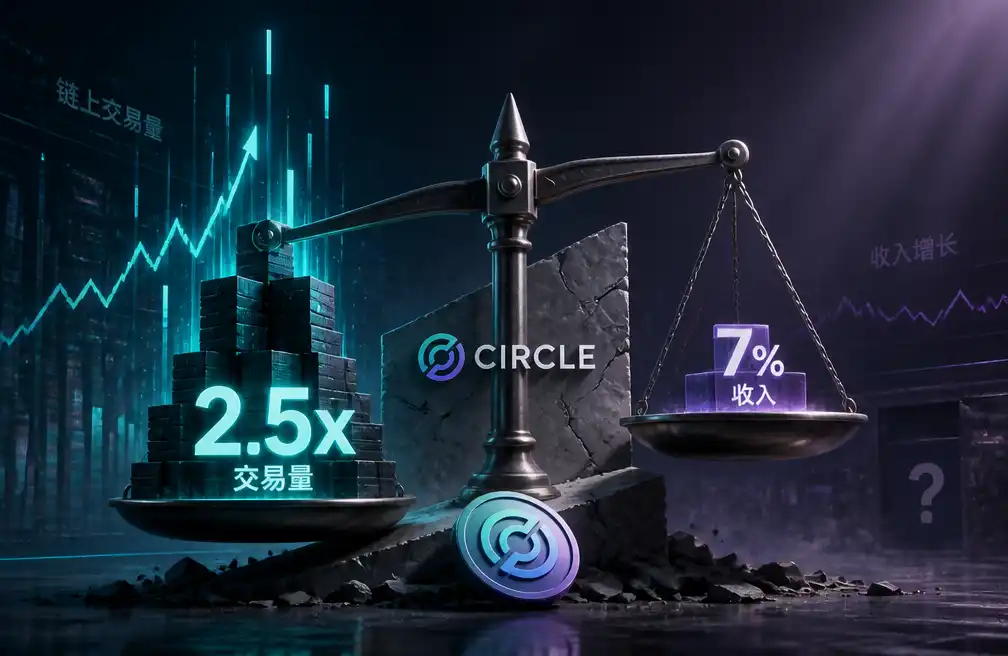
A class of companies, like defense contractors and oil giants, typically benefit from global instability. Circle, the issuer of the USDC stablecoin, unexpectedly joined this group as its stock price surged over 150% in five weeks, while the broader crypto market remained down 44% from its peak. The core of Circle's business is holding US Treasuries to back each USDC in circulation. The interest earned on these bonds constitutes about 90% of its quarterly revenue, making the Federal Funds rate its primary driver. The recent price surge was triggered by geopolitical conflict in the Middle East, which drove oil prices up approximately 35%. This raised inflation concerns, leading markets to drastically scale back expectations for Federal Reserve interest rate cuts in 2026. Higher-for-longer interest rates mean Circle's treasury reserves continue to generate elevated yields, translating to more revenue and a rising stock price. This macroeconomic shift caused a short squeeze, as a significant portion of Circl's stock was shorted based on the expectation of falling rates. However, the bullish narrative extends beyond a macro trade. Despite a net loss for FY2025, USDC's supply has reached a new all-time high of $79 billion, and its transaction volume now surpasses that of the larger USDT. This growth is attributed to its use as a payment infrastructure for cross-border transfers, tokenized assets, and AI agent micropayments, especially in regions where traditional banking becomes unreliable during crises. A major structural challenge is Circle's costly revenue-sharing agreement with Coinbase, which took 54 cents of every dollar Circle earned in 2024. The market is currently pricing Circle as both a high-yield play and a critical piece of future financial infrastructure. The central tension remains: its profitability is currently dependent on high interest rates, but its long-term value hinges on successfully transitioning to a business model sustained by transaction fees and payment network services, independent of the Fed's decisions.

marsbit03/30 09:56

War Doesn't Just Drive Up Oil Prices, Why Is Circle's Stock Price Soaring?

marsbit03/30 09:56

From Speculation to Utility: Why AI and Stablecoins Remain Unfazed by the Bear Market?

Despite the overall downturn in the cryptocurrency market in 2026, the AI and stablecoin sectors have outperformed, showing resilience and continued adoption. While Bitcoin price dropped by 18.5% and the total crypto market cap fell to $2.42 trillion, these two areas recorded significant growth in usage and market activity. Key data highlights include: - The AI token sector declined by only 14% in Q1 2026, the smallest drop among major categories. - Stablecoin total market cap reached a record $3.2 trillion, with monthly trading volume hitting $1.8 trillion in February 2026, also a historic high. USDC supply grew by 220% since November 2023, reaching $78 billion, while ChatGPT’s weekly active users increased tenfold to 900 million during the same period. Tether’s USDT remains the leading stablecoin with a $184 billion market cap. The convergence of AI and stablecoins is driven by structural trends: AI requires fast, low-cost payment systems, and stablecoins serve as ideal “internet money.” Both sectors benefit from real-world utility beyond speculation—AI enhances productivity and security, while stablecoins provide efficient global dollar distribution and settlement infrastructure. This shift reflects a broader market transition from speculation to practical, infrastructure-focused applications, positioning AI and stablecoins for sustained growth.

marsbit03/27 09:04

From Speculation to Utility: Why AI and Stablecoins Remain Unfazed by the Bear Market?

marsbit03/27 09:04

Coinbase Partners with Fannie Mae to Make Crypto Assets a Real 'Down Payment' for Home Purchases

Coinbase has partnered with Better Home & Finance to launch a bitcoin-backed mortgage program supported by Fannie Mae, integrating digital assets into the traditional housing finance system. The product allows eligible borrowers to use Bitcoin or USDC as collateral for down payments without selling their holdings, avoiding potential capital gains taxes while maintaining market exposure. The mortgage is structured as a compliant loan product with standards aligned to traditional Fannie Mae-backed loans. Better originates and services the loans, while Coinbase provides custody and infrastructure support for the crypto assets. The initiative aims to address the barrier of upfront down payment funds, particularly for the 41% of U.S. households that lack sufficient liquid assets despite holding other forms of wealth. Unlike traditional crypto-backed loans, this product minimizes volatility risk for borrowers—no margin calls or additional collateral are required due to price fluctuations. Collateral is only at risk if the borrower is at least 60 days delinquent on mortgage payments. Interest rates are expected to be 0.5 to 1.5 percentage points higher than standard 30-year mortgages. The product reflects shifting wealth patterns, especially among younger Americans—45% of young investors hold crypto, compared to 18% of older adults. It also introduces features like yield generation on USDC holdings to offset mortgage costs. Future plans may include expanding eligible collateral to tokenized stocks, fixed-income products, and real estate assets. Fannie Mae’s involvement signals a move toward broader adoption, positioning digital assets as part of mainstream financial infrastructure.

marsbit03/27 07:44

Coinbase Partners with Fannie Mae to Make Crypto Assets a Real 'Down Payment' for Home Purchases

marsbit03/27 07:44

活动图片