# Сопутствующие статьи по теме TAO

Новостной центр HTX предлагает последние статьи и углубленный анализ по "TAO", охватывающие рыночные тренды, новости проектов, развитие технологий и политику регулирования в криптоиндустрии.

Behind the $TAO Crash: The Bittensor Internal Strife and the 'Impossible Trinity' of DeAI

The decentralized AI (DeAI) sector is facing a major crisis following a public conflict within Bittensor ($TAO), a leading DeAI project. Covenant AI, one of its top development teams, which recently successfully trained a 72-billion-parameter large language model, announced its exit from the Bittensor network. The team accused founder Jacob Steeves of having "absolute and dictatorial" control over the network, alleging he arbitrarily cut off token rewards to their subnet without transparent governance. This triggered a panic sell-off, causing $TAO’s price to drop 15-25% in a single day and wiping out hundreds of millions in market value. The incident has raised serious questions about the viability of decentralized AI, highlighting a fundamental tension—referred to as DeAI’s "impossible trilemma"—between model quality and scale, credible neutrality of decentralization, and Sybil-resistant incentive alignment. Covenant’s departure exposed the centralized reality beneath Bittensor’s decentralized facade: although the network relies on a Yuma consensus mechanism for reward distribution, key validator nodes are controlled by early investors and the founder, allowing unilateral intervention. The event underscores systemic governance risks that may deter high-quality developers and institutional participants, threatening the entire DeAI narrative centered around trustless, incentive-driven AI development.

marsbit2 дня назад 08:59

Behind the $TAO Crash: The Bittensor Internal Strife and the 'Impossible Trinity' of DeAI

marsbit2 дня назад 08:59

TAO is Elon Musk who invested in OpenAI, Subnet is Sam Altman

The article, titled "TAO is Elon Musk who invested in OpenAI, Subnet is Sam Altman," presents a critical analysis of the Bittensor (TAO) project. It argues that Bittensor functions as a decentralized AI marketplace where TAO tokens fund AI research via subnets. However, the author highlights a fundamental flaw: subnet operators have no obligation to return any value, such as AI models or profits, back to the TAO ecosystem or its token holders. This structure is likened to Elon Musk's early investment in the non-profit OpenAI, which later commercialized its technology without returning value to its initial benefactor. The bear case posits that Bittensor is essentially a wealth transfer from crypto speculators to AI researchers ("miners"). Subnets can use TAO incentives for development and then take their successful products elsewhere, leaving TAO holders with diluted tokens from inflation and no captured value. The lack of enforced equity or binding mechanisms means the project relies on a "hope" that subnet tokens maintain value. The optimistic perspective counters that two factors could create a successful, self-sustaining economy: 1) AI's perpetual and massive resource needs could incentivize subnets to stay for continued funding, and 2) crypto has a proven ability to aggregate resources through token incentives, as seen with Bitcoin and Ethereum. The conclusion states that investing in TAO is a bet on a博弈论 (game theory) miracle—that soft incentives alone will be enough to keep the best subnets within the ecosystem and create a flywheel effect. This outcome is possible but represents a highly skewed, low-probability success scenario amidst significant risks of failure.

marsbit04/13 14:01

TAO is Elon Musk who invested in OpenAI, Subnet is Sam Altman

marsbit04/13 14:01

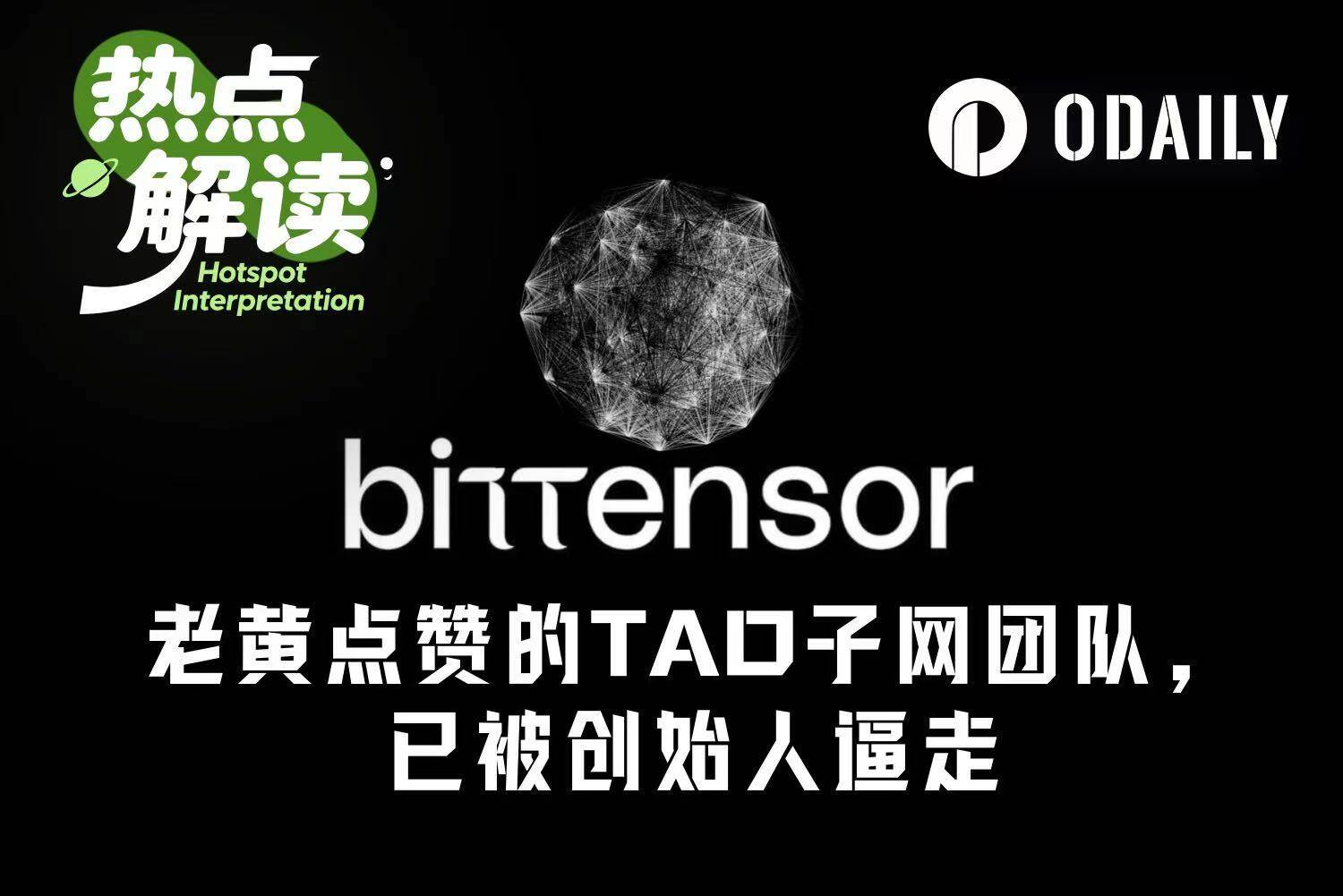
The TAO Subnet Team Praised by Jensen Huang Has Parted Ways with the Founder Amidst a Fallout

Nvidia CEO Jensen Huang recently praised the decentralized AI project Bittensor (TAO) during a podcast, specifically highlighting a 72-billion-parameter Llama model trained collaboratively by a subnet team called Covenant AI. This endorsement initially boosted TAO's price, but the situation deteriorated rapidly when Covenant AI's founder, Sam Dare, publicly announced the team's departure from the Bittensor network. Covenant AI accused Bittensor and its key figure, Jacob Steeves (known as Const), of centralization and abuse of power, contradicting Bittensor’s decentralized ethos. The team claimed that Const exercised unilateral control by halting subnet emissions, removing administrative rights, discarding infrastructure, and using token sales to pressure the team. They argued that Bittensor’s governance is effectively centralized under Const, despite claims of distributed control. As a result, Covenant AI decided to leave, intending to continue its work on decentralized AI training elsewhere. The exit has sparked significant concern within the Bittensor community, raising doubts about the network’s decentralization narrative, technical future, and token value. TAO’s price fell sharply following the news. Const responded vaguely on social media, suggesting the event would push Bittensor toward more decentralized, “headless” subnets, but has not addressed the specific allegations in detail. The incident has damaged Bittensor’s reputation while raising Covenant AI’s profile.

Odaily星球日报04/10 03:08

The TAO Subnet Team Praised by Jensen Huang Has Parted Ways with the Founder Amidst a Fallout

Odaily星球日报04/10 03:08

活动图片