# Сопутствующие статьи по теме Survival

Новостной центр HTX предлагает последние статьи и углубленный анализ по "Survival", охватывающие рыночные тренды, новости проектов, развитие технологий и политику регулирования в криптоиндустрии.

Trading Reflection: Why Does Trading Cryptocurrencies Become More Miserable the Longer You Do It? In Fact, Your Brain Has Been 'Damaged' by Stress.

Trading Reflection: Why Does Trading Cryptocurrency Become More Miserable Over Time? Your Brain Might Be Damaged by Stress This article explores the often-overlooked yet crucial psychological aspect of trading. It argues that long-term success depends less on intellect and more on the survival capacity of one's nervous system. The core issue is that sustained trading pressure disrupts normal brain chemistry. While initial hope and occasional wins provide dopamine-driven pleasure, repeated losses and constant market exposure trigger chronic cortisol release. This stress hormone, meant for short-term survival, keeps the trader in a perpetual "fight-or-flight" mode. Over time, this erodes sleep quality, depletes patience, and fuels emotional, impulsive decision-making. The author describes a dangerous cycle: fear of missing out leads to overtrading and lowered standards. As losses mount (30%, 50%), trading shifts from a pursuit of profit to a psychological battle for survival. The brain begins to associate prolonged stress with the occasional reward, trapping the trader in an addictive loop. Anxiety becomes a baseline state, and trading turns into a compulsive need to feel something—where green candles offer relief and red ones spark self-loathing. The most powerful move a trader can make, the article concludes, is sometimes to stop entirely—to avoid revenge trading, chasing losses, or seeking dopamine fixes. The key is to step back long enough to ask: is this still about passion, or is it a cage of stress hormones? The market and its opportunities will always return, but a trader who is mentally broken will have nothing left to capitalize on them. The best traders are not necessarily the smartest, but those who preserve their mental well-being long enough to stay in the game. Ultimately, the chase may not be for money, but for relief from the very pressure the game creates.

marsbit2 дня назад 06:07

Trading Reflection: Why Does Trading Cryptocurrencies Become More Miserable the Longer You Do It? In Fact, Your Brain Has Been 'Damaged' by Stress.

marsbit2 дня назад 06:07

IOSG Founder: Web3 Is 'Losing Blood,' How Can Practitioners Survive Better?

IOSG Founder: Web3 Is "Bleeding Out" – How Can Practitioners Survive Better? In a candid reflection, the founder of IOSG Ventures voices deep concerns about the current state of Web3, describing an ecosystem experiencing severe "blood loss." Despite the recent MuShanghai event showcasing a successful pivot towards a more diverse, global community, a somber reality persists: many crypto-native attendees were there exploring exits or new labels in biotech, AI, and robotics. The core issue is identified as a breakdown in the ecosystem's positive feedback loop. Alarmingly, underestimated "low-probability bad events" are occurring simultaneously: a significant brain drain of Chinese developers to AI, a lack of breakout applications despite massive funding, and a widening credibility gap for practitioners globally, often stigmatized as scam artists. This has created a dire接班人 (successor) problem, with the next generation seeing little professional prestige or financial upside in crypto compared to fields like AI. A significant portion of the critique focuses on Ethereum and Vitalik Buterin. While not pessimistic about Ethereum's technology, the founder worries that critical development windows were missed by focusing on niche technical narratives like ZK and L2 instead of mass-market applications. A more urgent concern is that Vitalik may be isolated in an "information bubble," shielded from the grassroots community's hardships by layers of intermediaries, preventing crucial feedback from reaching him. The call is for Vitalik to return to a founder's mindset, re-engage directly with the community, and rally efforts for the next decade. The divergence between U.S. and Chinese OG (Original Gangster) ecosystems is stark. While many U.S. builders reinvest their wealth into the ecosystem, the Chinese scene suffers from a severe lack of "造血能力" (blood-making ability), with most market-driven funds struggling and many early success stories cashing out entirely. This threatens the entire Asian Web3 ecosystem's survival. For individual practitioners, survival advice is pragmatic: find your core "why," maintain life balance beyond token prices, continuously learn new skills (like AI), form small, trusted alliances for mutual support, and practice self-compassion. The industry's greatest need is not money or tech, but lighthouses—individuals at all levels who offer mentorship, grants, referrals, and honest reflection to guide others. The piece concludes with a direct appeal: OGs must pay forward the opportunities the industry gave them; founders must not struggle alone; and builders must continue their work, ensuring it remains a viable profession. The survival of Web3's "cathedral" depends not on any single leader but on the collective responsibility of everyone who remains.

marsbit05/23 03:06

IOSG Founder: Web3 Is 'Losing Blood,' How Can Practitioners Survive Better?

marsbit05/23 03:06

The Night Before the AI Model Shakeout

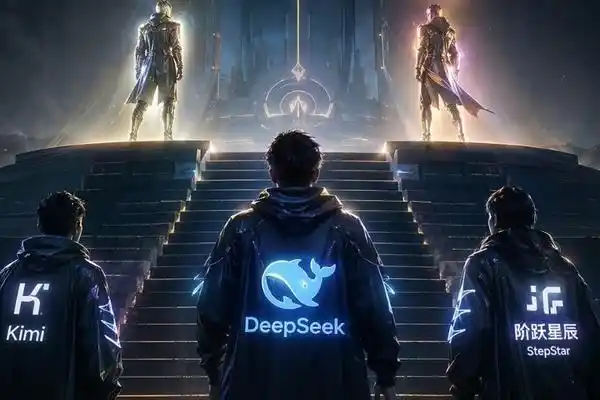
China's large language model (LLM) industry is entering a critical consolidation phase. In a concentrated wave of funding in May 2026, leading players Kimi, StepFun, and DeepSeek reportedly secured over $70 billion combined, signaling a dramatic capital rush towards the few remaining independent contenders. This frenzy masks an impending shakeout. The core dynamic has shifted from a pure technology race to a battle for survival and strategic positioning. LLM capabilities are rapidly commoditized; gaps between top models are narrowing. Consequently, investment logic has pivoted from betting on future potential to prioritizing cash flow, user access, and ecosystem integration. The economic model poses a fundamental challenge: while user growth previously meant profits, in the AI era, it drives soaring inference costs. Startups, lacking the cross-subsidy ability of tech giants like ByteDance or Tencent, face immense pressure to achieve financial sustainability. DeepSeek's open-source, high-performance, low-cost strategy has further compressed industry profit margins. Facing this reality, the top players are scrambling to lock in their status before the window closes. StepFun is accelerating its港股 IPO, embedding itself in hardware supply chains. Kimi is aggressively showcasing revenue growth (ARR doubling to $2 billion in a month) to prove viability. DeepSeek, with new state-backed investment, is solidifying its role as a strategic national asset. The parallel to China's previous AI "Four Dragons" is stark. The industry is witnessing extreme capital concentration at the top, while mid-tier companies face a funding winter. The narrative has evolved from "who can build the best model" to "who can survive." For independent LLM companies, securing a public listing or a definitive strategic identity is no longer about expansion—it's about securing the very right to exist in the impending era of industry clearance.

marsbit05/10 02:05

The Night Before the AI Model Shakeout

marsbit05/10 02:05

Existing AI Agents Are All Pleasing Humans, None Truly Know How to 'Survive'

The article argues that current AI agents are not truly autonomous because they are primarily trained to please humans rather than to perform specialized tasks or survive in real-world environments. Foundation models undergo pre-training (learning from vast data) and post-training, including Reinforcement Learning from Human Feedback (RLHF), which optimizes for human preference and approval, not task-specific excellence. The author shares an example from a hedge fund where a general-purpose model failed to predict stock returns from news articles until it was specifically fine-tuned using proprietary data to minimize prediction error. This demonstrates that without specialized training, general models lack domain expertise. The piece contends that achieving world-class performance in areas like trading or autonomous survival requires fine-tuning models with specialized data to rewire their objectives—shifting from “preference fitness” to “agent fitness.” Merely providing rules or documents is insufficient. The future of effective agents lies in targeted training on proprietary datasets and iterative improvement based on performance telemetry. The author introduces the OpenForager Foundation, an open-source initiative to develop autonomous agents that learn survival strategies through evolutionary pressure, fine-tuning, and continuous data collection, aiming to advance truly autonomous AI.

marsbit03/30 04:37

Existing AI Agents Are All Pleasing Humans, None Truly Know How to 'Survive'

marsbit03/30 04:37

The Guy Who Free-Solo Climbed Taipei 101 Yesterday Is a Spokesperson for a Trading Software

Alex Honnold, a 40-year-old professional rock climber, free-soloed Taipei 101—a 508-meter, 101-story skyscraper—in a live-streamed event watched by millions. Known for his historic free solo ascent of El Capitan documented in the Oscar-winning film *Free Solo*, Honnold is also a brand ambassador for TradingView, a popular financial charting and trading platform. The partnership, which began in 2021 under the slogan “Look first / Then leap,” may seem unusual at first. However, Honnold’s approach to risk aligns closely with prudent trading principles. He avoids uncertainty and emphasizes meticulous preparation, having spent nearly a decade planning his El Capitan climb and rehearsing each move repeatedly. He views fear not as a barrier to overcome, but as a signal that he isn’t yet prepared. His method is defined by extreme risk management: extensive practice, patience for ideal conditions, and eliminating unpredictability. This contrasts sharply with impulsive trading behaviors common in meme stocks and leverage trading, where decisions are often made without analysis or risk calculation. Ultimately, TradingView’s choice of Honnold symbolizes survival—the goal isn’t just to reach the top, but to do so safely and live to continue climbing. Similarly, in trading, long-term success depends on preparation, discipline, and managing risk, not blind courage.

marsbit01/26 06:06

The Guy Who Free-Solo Climbed Taipei 101 Yesterday Is a Spokesperson for a Trading Software

marsbit01/26 06:06

VC "Dead"? No, the Industry is Undergoing a Brutal Shakeout

The article addresses the prevailing sentiment that "VC is dead" in the crypto industry, arguing that while some venture capital firms have indeed failed, the sector as a whole is not dying but undergoing a severe shakeout. The author, a former VC investor, states that many Asian VCs have been hit hardest, with top firms shutting down or scaling back significantly. Even second- and third-tier Western VCs are now facing similar challenges, marked by reduced investment pace and difficulty in exiting portfolios. This downturn is seen as a delayed effect of the 2022 market collapse, exacerbated by broken four-year cycle expectations, overvalued deals, and extended token lockups that strain returns. However, the piece contends that VCs won’t disappear entirely. They remain essential for funding early-stage projects and supporting innovation. Well-vetted VC backing has been behind nearly all major successful crypto projects, and quality ventures continue to attract interest. The industry is moving toward a maturity phase with higher barriers to entry—akin to Web2. VCs will need stronger reputations and expertise to compete. Projects are increasingly judged by real user adoption and revenue, not just narratives or token launches. Hyperliquid and Polymarket are cited as examples of projects that built sustainable traction before launching tokens. Despite current challenges, the author remains optimistic: top talent continues to enter the space, and foundational areas like stablecoins, prediction markets, and AI-driven economies hold promise. While the barrier to success is higher than in previous cycles, Web3 remains a land of opportunity—especially when compared to the hyper-competitive Web2 environment.

marsbit12/18 03:04

VC "Dead"? No, the Industry is Undergoing a Brutal Shakeout

marsbit12/18 03:04

How to Truly Make It in the Crypto Industry?

How to Truly Succeed in the Crypto Industry Most people enter the crypto space chasing flashy symbols of success—Bitcoin logos, black cards, stacks of cash, luxury cars, yachts, and lavish vacations. But these are just the finish line. Few talk about what it truly takes to get there. Real success starts with a mental shift: viewing crypto not as a casino but as a system of incentives. The first real profit isn’t monetary—it’s clarity of thought. Understanding narrative cycles, liquidity flows, crowd psychology, and asymmetric positioning is key. The market rewards observers, not followers. While most chase pumps and panic-sell, winners patiently observe, act decisively, and accumulate wealth quietly. You can’t copy-paste success; traits like patience, discipline, and emotional stability are earned, not replicated. Your greatest edge is surviving long enough for luck to find you. Staying in the game—avoiding reckless bets, emotional trading, and liquidation—is how you position yourself for asymmetric opportunities. True wealth comes from noticing what others miss: developer activity, early on-chain flows, policy shifts, and narrative rotations (e.g., privacy coins like Zcash). Freedom isn’t bought; it’s built through the realization that you no longer trade time for money. Most fail because they seek shortcuts, not mastery. Winners embrace the daily grind: learning, researching, and waiting. The glamorous life shown in pictures is the result of a choice: to treat crypto as a career, not a lottery. It demands dedication, but the reward—financial and personal freedom—is inevitable for those who commit.

marsbit12/12 03:45

How to Truly Make It in the Crypto Industry?

marsbit12/12 03:45

活动图片