# Сопутствующие статьи по теме Robotics

Новостной центр HTX предлагает последние статьи и углубленный анализ по "Robotics", охватывающие рыночные тренды, новости проектов, развитие технологий и политику регулирования в криптоиндустрии.

Elon Musk's First Interview in 2026: Discussing the Impact of AI, Robotics, Energy, and US-China Competition on the Near Future

In a January 2026 interview, Elon Musk discussed the profound impact of AI, robotics, energy, and global competition on the near future. He declared 2026 as the "Year of Singularity," asserting that AI progress is exponential, with AGI achievable by 2026 and AI intelligence surpassing all humans combined by 2030. Musk predicted that Optimus robots would outperform human surgeons within three years, making high-quality healthcare essentially free due to AI, chip performance, and robotic dexterity advancing exponentially. He argued that pursuing medical degrees would become pointless unless for social reasons. On global AI competition, Musk stated China would dominate in computing power, citing its massive electricity production (3 times the U.S. by 2026), reduced chip advantage gaps, and exceptional execution capabilities. He envisioned the AI landscape led by XAI, Google, and China. For energy, Musk emphasized solar power as the ultimate solution, proposing a three-phase plan: doubling grid efficiency with battery storage, deploying space-based solar satellites, and eventually building satellite factories on the Moon. He described energy as the future currency. Economically, Musk suggested that money might become irrelevant in 10-20 years due to AI and robotics driving abundance, leading to "Universal High Income" (UHI) instead of UBI. He warned of a turbulent 3-7 year transition period. He also noted that work would become optional within two decades, expressed concern over declining birthrates, and criticized traditional education, advocating for curiosity-driven learning enhanced by AI tutors. Musk concluded by encouraging active optimism: "Make hope happen."

marsbit01/13 05:11

Elon Musk's First Interview in 2026: Discussing the Impact of AI, Robotics, Energy, and US-China Competition on the Near Future

marsbit01/13 05:11

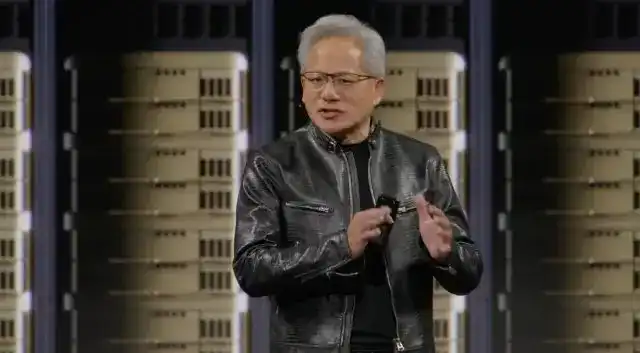
Jensen Huang Announces 8 New Products in 1.5 Hours, NVIDIA Fully Bets on AI Inference and Physical AI

NVIDIA CEO Jensen Huang unveiled eight major announcements during his CES 2026 keynote, focusing on advancing AI inference and physical AI technologies. The centerpiece was the NVIDIA Vera Rubin POD AI supercomputer, which integrates six custom chips—Vera CPU, Rubin GPU, NVLink 6 Switch, ConnectX-9 SuperNIC, BlueField-4 DPU, and Spectrum-X CPO—designed for协同 performance. The Rubin GPU offers 5x higher inference and 3.5x higher training performance than Blackwell, with support for HBM4 memory. The Vera Rubin NVL72 system delivers 3.6 EFLOPS in NVFP4 inference performance in a single rack, with enhanced memory bandwidth. NVIDIA also introduced the Spectrum-X Ethernet CPO for improved power efficiency, a推理上下文内存存储平台 to optimize KV cache storage and reduce recomputation, and the DGX SuperPOD based on Rubin architecture, cutting token costs for large MoE models to 1/10. On the software side, NVIDIA expanded its open-source offerings, including new models and datasets, and emphasized the rise of physical AI. The company open-sourced the Alpha-Mayo model for autonomous driving, enabling reasoning-based decision-making, and announced production-ready NVIDIA DRIVE platforms for Mercedes-Benz. Partnerships with Siemens and robotics firms like Boston Dynamics were highlighted, underscoring NVIDIA’s full-stack approach to AI infrastructure and real-world AI applications.

marsbit01/06 04:36

Jensen Huang Announces 8 New Products in 1.5 Hours, NVIDIA Fully Bets on AI Inference and Physical AI

marsbit01/06 04:36

VC Retrospective 2025: Compute is King, Narrative is Dead

Venture Capital Review 2025: Compute is King, Narrative is Dead The article reflects on the challenging yet transformative year of 2025 for crypto and AI investments. While on-chain financial tools and the machine economy saw significant growth, long-term crypto investors faced a difficult market structure plagued by a "negative prisoner's dilemma," premature token unlocks, and a major market failure in October that triggered industry-wide deleveraging. Despite these setbacks, the value creation in crypto and AI over the past decade has been immense, far outpacing other regions and sectors. The "Magnificent 7" tech giants and crypto assets collectively added trillions in market cap. The key lesson from 2025 is that value accrued to the narratives but to the owners of physical and financial bottlenecks: power, semiconductors, and scarce compute. Public market winners were companies like NVIDIA, TSMC, IREN, and Bloom Energy. In software, value flowed to embedded, "must-have" platforms (e.g., Alphabet, Meta) rather than optional tools. In private markets, foundational AI companies grew rapidly but faced fragility, while value-controlling companies (e.g., Applied Intuition, Anduril) were better positioned. Tokenized networks were the weakest performers, as usage failed to translate into token value capture. The core takeaway is that the market rewarded ownership of choke points and punished projects lacking control over cash flow or compute. For 2026, the investment focus shifts downstream to: (1) machine transaction surfaces (payments, billing, compliance), (2) applied infrastructure with existing budgets, and (3) high-conviction, non-consensus opportunities. The allocation will temporarily favor equity over tokens until market structure issues are resolved. The author concludes that a major shakeout is coming, but it also presents significant opportunity. The need to move beyond collective illusions and focus on real, budget-backed economic activity is paramount.

比推12/23 23:11

VC Retrospective 2025: Compute is King, Narrative is Dead

比推12/23 23:11

活动图片