# Сопутствующие статьи по теме Mining

Новостной центр HTX предлагает последние статьи и углубленный анализ по "Mining", охватывающие рыночные тренды, новости проектов, развитие технологий и политику регулирования в криптоиндустрии.

Jensen Huang is Satoshi Nakamoto

Summary: The article draws a compelling parallel between Jensen Huang, CEO of NVIDIA, and Satoshi Nakamoto, the pseudonymous creator of Bitcoin. It argues that both figures, though operating in different eras, fundamentally architected new "token economies" based on a core conversion rule: inputting computational power (electricity) to output a valuable token. Nakamoto's 2008 whitepaper defined a system where Proof-of-Work mining produces scarce cryptographic tokens, creating a decentralized "faith economy" based on speculative value. In 2026, Huang is portrayed as performing a structurally identical act at GTC. Instead of merely selling GPUs, he presented a complete "token economics" framework, segmenting the market into tiers (Free, Medium, High, Premium, Ultra) based on inference speed, model type, and price per million tokens. He defined valuable computation for the AI age. The key distinction lies in the tokens' purpose and resulting scarcity. Crypto tokens derive value from artificial, code-enforced scarcity (e.g., Bitcoin's 21 million cap) and are meant to be held. AI tokens derive value from their immediate consumption for productive tasks (coding, decision-making) and face a natural, physical scarcity governed by the laws of thermodynamics, land, and power grids, which Huang's hardware is designed to maximize. Ultimately, while Nakamoto created a speculative asset, Huang is building an indispensable utility. The AI token economy, powered by NVIDIA ecosystem, is argued to be more resilient and fundamental, as the author concludes, "You don't need to believe the token has value—your credit card bill has already proven it." Huang is presented as the visible, commercial architect of a tangible token future, the successor to Satoshi's anonymous, ideological blueprint.

marsbit03/19 01:31

Jensen Huang is Satoshi Nakamoto

marsbit03/19 01:31

Cango Releases 2025 Financial Report: Advancing Towards AI Infrastructure

Cango Inc. (NYSE: CANG) released its unaudited financial results for Q4 and full year 2025, highlighting its transition into a Bitcoin mining company and its strategic pivot toward AI infrastructure. In 2025, the company reported total revenue of $688.1 million, with Bitcoin mining contributing $675.5 million. A total of 6,594.6 Bitcoin were mined throughout the year. However, the company reported a net loss from continuing operations of $452.8 million, influenced by one-time transition costs and fair value adjustments on Bitcoin-collateralized receivables. Adjusted EBITDA for the year was $24.5 million. In Q4, revenue was $179.5 million, with a net loss of $285 million and negative EBITDA of $156.3 million. The company ended the year with $41.2 million in cash and equivalents, $663 million in non-current Bitcoin receivables, and $557.6 million in related-party long-term debt. To reduce leverage, the company sold 4,451 Bitcoin in February 2026. CEO Paul Yu emphasized 2025 as a foundational year, noting the completion of structural adjustments and the establishment of a global mining network. The company is now advancing its transformation into an AI infrastructure provider through its EcoHash platform, aiming to offer flexible and cost-efficient AI inference services. CFO Michael Zhang highlighted efforts to optimize the balance sheet and secure new capital to support growth in high-potential areas like AI.

marsbit03/17 06:38

Cango Releases 2025 Financial Report: Advancing Towards AI Infrastructure

marsbit03/17 06:38

Mine Owners' New Business: Sitting on Land and Collecting Rent, Earning Billions Annually

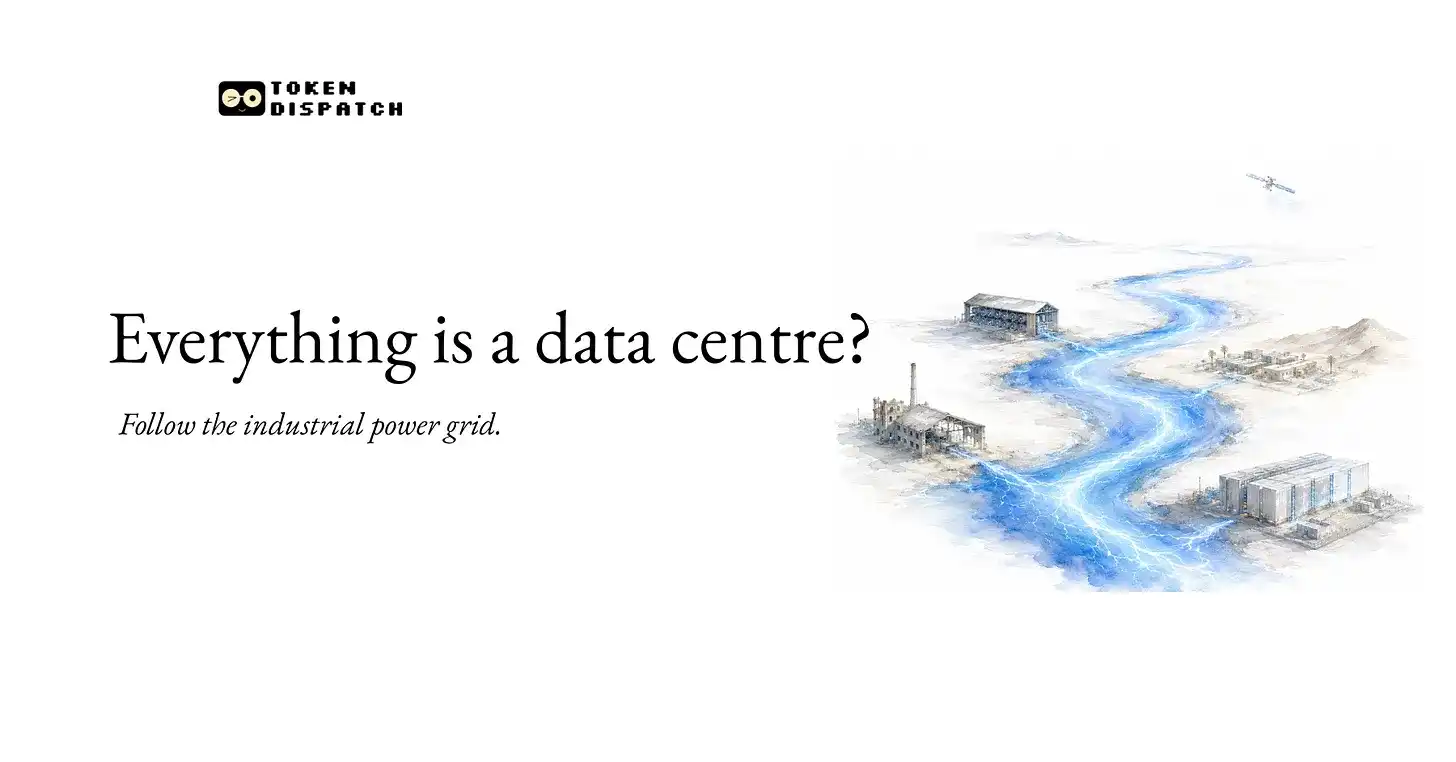
The article "Mine Owners' New Business: Collecting Rent, Earning Billions Annually" explores the strategic pivot of Bitcoin mining companies towards AI infrastructure and high-performance computing (HPC) as Bitcoin approaches its supply limit. By 2026, with only 1 million Bitcoin left to mine and rising operational costs squeezing profitability, major mining firms are capitalizing on their existing assets—large-scale power capacity, data centers, and cooling systems—to serve the exploding demand for AI compute. Companies like IREN, Core Scientific, Cipher Digital, and Hut 8 have secured long-term contracts worth tens of billions of dollars with tech giants (Microsoft, Amazon, Google) and AI firms (Anthropic, CoreWeave) to provide GPU cloud services and HPC hosting. Financial reports highlight a stark contrast: while Bitcoin毛利率 have plummeted post-halving, AI-related services boast margins as high as 86%. Firms are rebranding, exiting mining, and leveraging their power infrastructure advantages—deploying AI data centers in months versus years for traditional builders. However, this转型 comes with risks: high debt from infrastructure upgrades, strict contract deadlines, regulatory hurdles, and operational challenges. The shift positions these companies as key "digital power stations" in the AI era, where control over electricity and grid access becomes a critical competitive edge. The period from 2026 to 2028 will be crucial for determining which players succeed in this high-stakes transition.

比推03/16 11:10

Mine Owners' New Business: Sitting on Land and Collecting Rent, Earning Billions Annually

比推03/16 11:10

活动图片