# Сопутствующие статьи по теме Investment

Новостной центр HTX предлагает последние статьи и углубленный анализ по "Investment", охватывающие рыночные тренды, новости проектов, развитие технологий и политику регулирования в криптоиндустрии.

The Age of Decoupling Has Arrived: Bitcoin is No Longer the Sole Compass of Crypto

The era of the cryptocurrency market moving in lockstep with Bitcoin is ending, as the industry splits into two distinct asset categories: endogenous and exogenous. Endogenous assets, like Bitcoin, derive value purely from the crypto market's cycles. Their narratives swing between being "interstellar money" in bull markets and "digital collectibles" in bear markets. Exogenous assets, however, are nominally crypto but operate with independent value drivers. Examples include: * **Venice:** An AI inference service using tokens for payments; its consumer-AI business model is decoupled from crypto price swings. * **Figure:** A fintech lender using blockchain to speed up loan approvals; its core value is in credit, not crypto. * **Stablecoin firms like BVNK:** Acquired by traditional finance giants (Mastercard, Stripe), their growth is tied to payment infrastructure, not market cycles. Hybrid projects like **Hyperliquid** (a decentralized exchange) show a shift, with a growing share of non-crypto trading (e.g., prediction markets). This divergence is fundamental. Endogenous assets remain highly correlated to Bitcoin, similar to gold miners to gold. Exogenous assets are evolving to have their own fundamentals, like the weak correlation between gold and the S&P 500. This changes investment analysis. Evaluating exogenous assets requires traditional fundamental research—assessing user bases, unit economics, and moats—more akin to fintech investing than charting Bitcoin. Promising exogenous sectors include: on-chain exchanges/brokers, AI-crypto fusion, privacy-focused digital banks, lending (institutional/private credit), stablecoins/real-world asset tokenization, payment rails, and non-financial crypto-consumer products. Currently, investing via equity is often safer than via tokens, as token value accrual mechanisms need further regulatory and industry development (e.g., the CLARITY Act). Nonetheless, the core trend is clear: crypto market drivers are diversifying from a single factor (Bitcoin) to multiple fundamentals, ending the era of uniform market moves.

marsbit06/01 13:06

The Age of Decoupling Has Arrived: Bitcoin is No Longer the Sole Compass of Crypto

marsbit06/01 13:06

Five Cryptos That Could Outperform Bitcoin Over the Next Cycle Due To Higher Growth Velocity

Bitcoin's growth often sets market trends, but analysts believe the next cycle's highest percentage gains may come from assets with greater growth velocity. While Bitcoin provides stability, several cryptocurrencies are positioned for stronger relative upside. This article highlights five such assets, with a particular focus on Ozak AI as the potential high-growth standout of the cycle. Ethereum (ETH) is noted for its ongoing evolution and institutional adoption. Solana (SOL) is recognized for its high throughput and history of sharp rallies. Chainlink (LINK) is highlighted as essential infrastructure for DeFi and AI applications. Avalanche (AVAX) is mentioned for its subnet architecture and enterprise potential. Ozak AI ($OZ) is presented as a distinct early-stage opportunity, currently in presale at $0.014 with a target listing price of $1.00. The project is building a full AI-native blockchain ecosystem, including prediction agents, a data stream network, and structured data vaults. Analysts suggest its early valuation stage and focus on AI infrastructure could allow for exponential growth velocity compared to more mature assets like Bitcoin, which requires massive capital inflows for significant price movement. The final takeaway positions Ozak AI as a high-asymmetry bet for investors seeking exponential upside alongside more stable assets.

TheNewsCrypto06/01 12:27

Five Cryptos That Could Outperform Bitcoin Over the Next Cycle Due To Higher Growth Velocity

TheNewsCrypto06/01 12:27

Unitree Passes the Hearing, Hangzhou Reaps the Rewards

Unitree Technology, a leading company in Hangzhou's tech scene known as one of the "Hangzhou Six Dragons," has officially passed the review for listing on the Shanghai Stock Exchange's STAR Market (科创板). It plans to raise 4.202 billion yuan for the research and development of intelligent robot models and robot hardware. This milestone will make Unitree the "first humanoid robotics stock." Founded in 2016 by Wang Xingxing, the company started humbly in a small office in Hangzhou's Binjiang district. Initially, the robotics sector was not viewed favorably by the market, with Unitree's products often labeled as "toys" and struggling to secure funding. At its most critical point, with only around 100,000 yuan left, Wang stopped his own salary to keep the company afloat. A crucial turning point came in 2018 when Hangzhou's state-owned capital system provided timely support. A financial platform under the city's state-owned assets completed due diligence in three days and granted a 20-million-yuan loan within a week. This "patient capital" infusion stabilized Unitree, enabling its transition from prototype development to mass production and commercial viability. Subsequently, Hangzhou Capital, through its two major 100-billion-yuan mother funds—the Hangzhou Science and Technology Innovation Fund and the Hangzhou Innovation Fund—participated in four of Unitree's financing rounds (B2, B3, C, and C+). This continuous backing helped the company grow, attract top-tier industrial investors like China Mobile, Tencent, Alibaba, and Geely, and solidify its position as a global leader in legged robotics. By 2025, Unitree achieved significant scale, with revenue reaching 16.99 billion yuan, net profit of 5.91 billion yuan, global leadership in humanoid robot shipments, and over 33,000 quadruped robots sold worldwide. Unitree's journey exemplifies Hangzhou's strategy of nurturing hard-tech startups from "seedlings" to industry leaders. Beyond Unitree, Hangzhou's capital ecosystem has supported other "Six Dragons" like Cloudwalk, BrainCo, and DeepSeek. The city has established a 500-billion-yuan "3+N" industrial fund cluster and specialized early-stage funds like the "Runmiao Fund" with a 20-year term to fill funding gaps for very early-stage projects. This robust "capital + talent" model, coupled with an influx of over 430,000 young professionals in 2025 alone, has fostered a vibrant innovation ecosystem. Hangzhou is now home to 48 unicorns and 413 potential unicorns, building comprehensive industrial chains in AI, robotics, brain-computer interfaces, and more. As Hangzhou experiences a wave of IPOs, it is solidifying its reputation as an ideal city for entrepreneurs.

marsbit06/01 10:11

Unitree Passes the Hearing, Hangzhou Reaps the Rewards

marsbit06/01 10:11

DAT Failure? Listed Companies Betting on HYPE Floating Profit of $12.5 Billion

Several public companies that adopted a "HYPE Treasury" strategy—holding significant reserves of the HYPE token from the Hyperliquid ecosystem—have achieved substantial paper gains, collectively exceeding $1.25 billion. This contrasts with the reported struggles of MicroStrategy's flagship BTC treasury strategy. The article profiles three such HYPE-focused treasury companies: 1. **Hyperliquid Strategies Inc. (PURR):** The largest holder, with approximately 22.3 million HYPE tokens valued at ~$1.636 billion, resulting in an unrealized gain of ~$1.22 billion. It has fully transitioned from a biotech firm to a dedicated crypto treasury, adding staking and validator operations to enhance returns. 2. **Hyperion DeFi (HYPD):** Holds around 2 million HYPE tokens (~$147 million value) with a gain of ~$49.4 million. It is deeply integrated into the Hyperliquid ecosystem, running a major validator node and building DeFi products for additional yield. 3. **Lion Group Holding (LGHL):** A smaller holder with ~194,000 HYPE tokens (~$14.14 million value), maintaining a long-term commitment to the token. The success of these HYPE treasuries is attributed not only to the token's significant price appreciation but also to active on-chain participation through staking, validation, and ecosystem integrations, creating a compounding "flywheel" effect. The article posits that while MicroStrategy's BTC strategy faces challenges, HYPE treasuries may offer a more sustainable model through deeper protocol engagement, with potential for further growth if HYPE's price rises as predicted by some analysts.

marsbit06/01 09:25

DAT Failure? Listed Companies Betting on HYPE Floating Profit of $12.5 Billion

marsbit06/01 09:25

DAT Failing? Listed Companies Betting on HYPE Have Floating Profits of $12.5 Billion

Facing a potential need to sell Bitcoin to pay dividends amid a $12.5B quarterly net loss, the crypto treasury strategy pioneered by Strategy appears strained. In contrast, public companies that adopted a similar strategy by betting on the HYPE token are seeing massive gains, with collective unrealized profits exceeding $1.25 billion. Three key HYPE treasury companies are highlighted: 1. **Hyperliquid Strategies Inc. (PURR):** The largest holder, with approximately 22.3 million HYPE tokens valued at ~$1.636 billion, resulting in ~$1.22 billion in unrealized gains. It has fully transitioned from a biotech firm to a native crypto treasury, focusing on staking and ecosystem participation via validator operations. 2. **Hyperion DeFi (HYPD):** Holds about 2 million HYPE tokens (~$147M value) with ~$49.4M in gains. It is deeply integrated into the Hyperliquid ecosystem, running a top validator node and building DeFi products to generate additional yield. 3. **Lion Group Holding (LGHL):** A smaller player holding ~193,775 HYPE tokens (~$14.14M value), maintaining a long-term holding strategy alongside other crypto assets. The article argues that HYPE treasuries have an advantage over Bitcoin-based ones like Strategy's. Their success stems not just from price appreciation but from active on-chain participation—staking, earning validator rewards, and engaging with ecosystem protocols—creating a compounding "flywheel" effect. With Hyperliquid dominating the on-chain perpetuals market and HYPE's tokenomics encouraging buys and burns, these treasuries are positioned to benefit further if HYPE's price rises as some predict. While the original Bitcoin treasury strategy isn't declared a failure, the current narrative highlights the outsized success of early movers into the HYPE ecosystem.

Odaily星球日报06/01 09:20

DAT Failing? Listed Companies Betting on HYPE Have Floating Profits of $12.5 Billion

Odaily星球日报06/01 09:20

Comics Illustration: Helping You Understand China's New Regulations on Outbound Investment

Summary: Understanding China's New Regulations on Overseas Investment The State Council has announced new regulations on overseas investment, effective July 1, 2026. The core message is not a prohibition on international investment, but a call for both companies and individuals to operate with strong regulatory awareness. Here are the key points: 1. **Scope is Broad:** The rules apply not only to companies but also to other organizations and individual residents. 2. **Definition of Investment is Wide:** It encompasses not just capital transfers but also asset contributions, obtaining equity or rights, financing, providing guarantees, and direct or indirect acquisition of rights related to overseas entities or assets. 3. **Companies Must Plan Comprehensively:** Beyond simple ownership charts, firms need clear plans covering the investing entity, required approvals or filings, fund transfer paths, and compliance with technology, data, and security reviews. 4. **Individuals Should Prioritize Compliance:** Before focusing on returns, individuals must first assess their eligibility, understand legal channels for capital outflow, know what they are acquiring, and identify responsible parties in case of issues. 5. **Penalties are Significant:** Violations can result in fines and potentially restrictions on future overseas investment activities. In essence, overseas investment remains possible, but it must be approached with regulatory compliance as a fundamental priority, not solely based on commercial opportunity. *Note: This is a general informational summary and does not constitute legal advice or investment recommendations.*

marsbit06/01 09:06

Comics Illustration: Helping You Understand China's New Regulations on Outbound Investment

marsbit06/01 09:06

Deconstructing the U.S. Stock Quantum Computing Sector: IonQ, Rigetti, D-Wave, Which of These Concept Stocks is Worth Betting On?

**Title:** Analyzing the US Quantum Computing Race: IonQ, Rigetti, D-Wave – Which Concept Stock is Worth Betting On? **Summary:** The podcast discusses the resurgence of quantum computing as a national priority for both the US and China, driven by its potential to break current encryption, revolutionize drug discovery, finance, and logistics. The core challenge is commercializing the technology, which is hampered by high error rates in quantum bits (qubits). Quantum error correction, requiring thousands of physical qubits per reliable logical qubit, is key but years away. The analysis compares three main publicly traded US quantum computing firms: * **IonQ (Ion Trap):** Considered the most financially stable with the fastest commercial progress (2025 revenue: $130M, +202%) and high-quality clients. Its valuation is very high, pricing in significant future growth. * **Rigetti (Superconducting):** Seen as the highest-risk, highest-potential-reward bet. It has the smallest revenue but recently launched a 108-qubit system. Its valuation multiples are extreme, making it highly sensitive to news. * **D-Wave (Quantum Annealing):** Has the most unique positioning with real-world enterprise clients today (e.g., Mastercard, Volkswagen) solving optimization problems. Its recent acquisition moves it into general-purpose quantum computing ("dual-platform"), adding execution risk. Major tech giants like Google, IBM, and Microsoft are also heavily invested, pursuing various technical approaches. Nvidia is positioning itself as the essential bridge between classical and quantum computing. The investment phase is likened to AI in 2018-2020: promising underlying technology with accelerating breakthroughs but a commercial inflection point still 3-7 years away, suggesting potential for a market correction ("bubble washout"). For investors, suggested approaches include gaining exposure through tech giants with quantum divisions (e.g., Google, IBM) or using niche ETFs like WQTM for pure-play quantum exposure, rather than direct stock picks in the highly volatile pure-play companies at this early stage.

marsbit06/01 07:43

Deconstructing the U.S. Stock Quantum Computing Sector: IonQ, Rigetti, D-Wave, Which of These Concept Stocks is Worth Betting On?

marsbit06/01 07:43

Wang Chuan: When the Neighbor Old Wang Made 30x on Memory Stocks, How to Avoid Anxiety (Part Six) - The Trap of Commoditized Goods

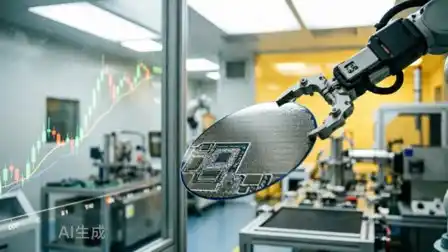
Wang Chuan: When the Neighbor Lao Wang Made 30x on Storage Stocks, How to Stay Anxiety-Free (Part 6) - The Trap of Commoditized Goods. This essay uses historical and current examples to analyze the cyclical and high-risk nature of the data storage industry. It begins with the 1990s rise and dramatic fall of Iomega, whose stock soared over 160x in 18 months before collapsing 97% from its peak, illustrating the fleeting success of storage "meme stocks." The core problem is that storage products, like DRAM and flash memory, are highly commoditized. This leads to extreme volatility: prices have plummeted over 80% multiple times, and company stocks often crash 95% or go bankrupt. The industry's dynamic is defined by "elastic demand facing heavy-asset, long-cycle, rigid supply." When demand spikes and supply is fixed, prices skyrocket, as seen recently with AI-driven demand for High Bandwidth Memory (HBM). Companies like Sandisk and Micron have reported massive revenue and gross margin jumps (e.g., Sandisk's gross margin rising from 22.5% to 78.3%) despite minimal increases in production volume. However, these high margins are self-defeating. They incentivize massive new capacity investments (hundreds of billions planned from 2026), with supply expected to surge by late 2027. Once new supply meets demand, prices and profits will crash, potentially leading to a scenario where "selling more results in earning less." The article debunks the safety of long-term supply agreements, comparing them to fragile non-aggression pacts easily broken when market conditions shift. It warns that when an industry is highly profitable but trades at low P/E ratios, the risk is greatest, as plummeting prices quickly erase those earnings. Multiple asymmetric risks loom, including economic recession, reduced AI spending, faster-than-expected capacity expansion (especially from Chinese firms), and technological innovations that reduce memory requirements. In conclusion, the storage sector is a cyclical trap where periods of euphoric profits are often precursors to devastating downturns, luring unprepared investors into a "wealth incinerator."

marsbit06/01 07:13

Wang Chuan: When the Neighbor Old Wang Made 30x on Memory Stocks, How to Avoid Anxiety (Part Six) - The Trap of Commoditized Goods

marsbit06/01 07:13

活动图片