# Сопутствующие статьи по теме Interest

Новостной центр HTX предлагает последние статьи и углубленный анализ по "Interest", охватывающие рыночные тренды, новости проектов, развитие технологий и политику регулирования в криптоиндустрии.
The Banking Industry's Resistance: The Endless Debate Over Stablecoin Interest Payments

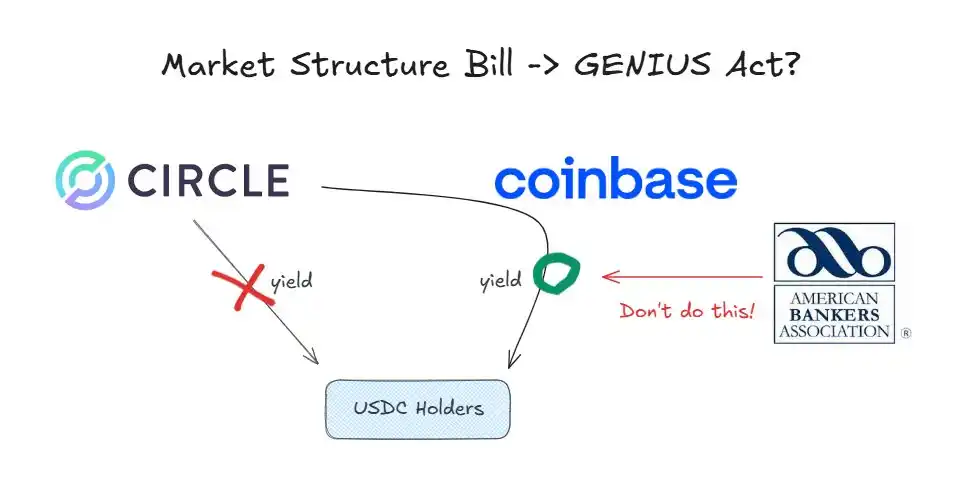
The article discusses the ongoing regulatory debate in the U.S. regarding interest payments on stablecoins. The proposed *GENIUS Act* currently prohibits stablecoin *issuers* from paying interest to holders. However, platforms like Coinbase can still offer yields (e.g., 3.35% on USDC) because they act as *distributors*, not issuers. This loophole has sparked a significant political battle. The American Bankers Association (ABA) is leading efforts to expand the interest ban to include distributors in the upcoming *Crypto Market Structure Bill*. Banks argue that stablecoins threaten their deposit base, reduce lending capacity, and lack FDIC insurance, thereby endangering their traditional business model. The crypto industry strongly opposes this expansion. Coinbase's Chief Policy Officer argues stablecoins haven't caused significant bank deposit outflows. Think tank Paradigm suggests that banning interest on stablecoins used for payments would be akin to a "holding tax" on consumers. The article contrasts the U.S. situation with approaches in China and South Korea. China's digital yuan (a CBDC) pays interest to promote adoption, while South Korea's policy mirrors the current U.S. stance—banning issuer interest but not distributor interest. The conclusion warns that if the ABA's lobbying succeeds, it would cripple the crypto industry. It argues that traditional finance should adapt to innovation, citing examples of banks and asset managers (like BNY Mellon, JPMorgan, and BlackRock) already embracing opportunities in stablecoins and tokenization.

marsbit01/09 12:44

The Banking Industry's Resistance: The Endless Debate Over Stablecoin Interest Payments

marsbit01/09 12:44

Will The GENIUS Act Shift $6.6T From US Banks? Critics Warn Stablecoin ‘Loophole’ Could Damage Small Businesses, Mortgages and More

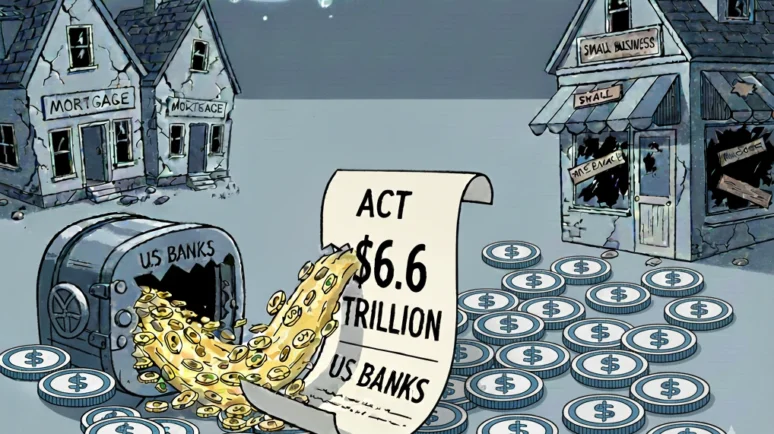
A coalition of banking groups warns that a perceived "loophole" in the GENIUS Act could put up to $6.6 trillion in U.S. bank deposits at risk, potentially undermining community lending that supports small businesses, homebuyers, and local economies. The dispute centers on the Act’s ban on stablecoin issuers paying interest or yield directly to holders, which was intended to prevent stablecoins from competing with bank deposits. However, critics argue that some issuers are circumventing this by indirectly funding rewards through exchanges and partners. Banking associations, including the Bank Policy Institute, urge lawmakers to clarify that all forms of inducements—direct or indirect—should be prohibited. They warn that without this, stablecoins could incentivize customers to move savings out of banks, jeopardizing traditional lending. Crypto advocates and industry groups strongly reject these concerns, calling them a "last-ditch effort" by big banks to block competition. They argue there is little evidence that stablecoins threaten the banking system and that rewards benefit everyday users. Pro-crypto figures also warn that tightening the law could have geopolitical consequences, potentially pushing users toward foreign alternatives like China’s Digital Yuan. The stablecoin market, led by Tether’s USDT and Circle’s USDC, has grown to nearly $318 billion, partly driven by reward programs. Banking groups view these incentives as blurring the line between payment tools and deposit-like products, while crypto advocates see them as legitimate competitive features. If lawmakers restrict these rewards, the sector’s growth could slow significantly.

ccn.com01/08 10:55

Will The GENIUS Act Shift $6.6T From US Banks? Critics Warn Stablecoin ‘Loophole’ Could Damage Small Businesses, Mortgages and More

ccn.com01/08 10:55

RWA Weekly: Digital Yuan Wallets Implement Interest on Balances, Ondo's Tokenized Silver Product Surges Over 155% in Market Cap in 30 Days

RWA Weekly: Digital Yuan Wallets to Earn Interest, Ondo's Tokenized Silver Surges Over 155% This weekly report covers December 27, 2025, to January 2, 2026. The on-chain RWA market cap grew steadily to $19.21 billion, with holders nearing 600,000, though growth suggests potential demand constraints. Stablecoin market cap slightly declined to $2.97 trillion, but monthly transfer volume surged 13.77%, indicating an "efficiency-driven" phase. RWA protocol TVL has surpassed DEXes to become the fifth-largest DeFi category. In China, the PBOC announced plans to enhance the digital yuan management system, with six major state-owned banks introducing interest payments (0.05% annual rate) on balances in verified digital yuan wallets starting January 1, 2026, advancing its function toward M1. Cross-border adoption accelerated, with Bank of China completing the first QR code payment between China and Laos. Globally, the US FASB plans to study whether stablecoins can be classified as cash equivalents in 2026. India's central bank urged prioritizing CBDCs over private stablecoins due to financial stability concerns. Notable project developments include BlackRock's tokenized money market fund BUIDL distributing over $100 million in dividends, and Ondo's tokenized silver product (SLVon) surging over 155% in market cap to nearly $18 million. Commodity tokenization expanded with platforms like MSX listing copper, uranium, and oil tokens. The report highlights growing interest in tokenized commodities amid rising gold and silver prices, and discusses stablecoins' evolution toward programmable money and AI-driven "agent finance," emphasizing transparency and global reach as key advantages over traditional finance.

marsbit01/02 05:05

RWA Weekly: Digital Yuan Wallets Implement Interest on Balances, Ondo's Tokenized Silver Product Surges Over 155% in Market Cap in 30 Days

marsbit01/02 05:05

What Impact Does Interest-Bearing Digital Yuan Have on Hong Kong's Digital Finance?

China's digital yuan (e-CNY) has entered a new phase with the introduction of interest-bearing wallets starting January 2026, transitioning from a "digital cash" to a "digital deposit currency" model. This makes it the world’s first CBDC to pay interest to general users, fundamentally changing its legal nature from a central bank liability to a commercial bank liability, while still backed by sovereign credit. This innovation addresses a core challenge faced by global CBDC initiatives: avoiding financial disintermediation while promoting adoption. By allowing commercial banks to manage and profit from e-CNY deposits, China has turned a potential competitor into a integrated part of the banking system, creating sustainable incentives for adoption and enabling new monetary policy tools. For Hong Kong, interest-bearing e-CNY is transformative development. It enhances the city’s role as an offshore RMB hub by encouraging longer-term retention of digital yuan within its financial system, especially through platforms like mBridge. It also strengthens Hong Kong’s digital asset ecosystem by providing a high-credit settlement option for tokenized assets, enables new fintech innovations around programmable money, and complements—rather than competes with—Hong Kong’s own wholesale-focused digital Hong Kong dollar strategy. Together, these advances support Hong Kong’s ambition to become an international digital asset center.

marsbit01/01 08:12

What Impact Does Interest-Bearing Digital Yuan Have on Hong Kong's Digital Finance?

marsbit01/01 08:12

活动图片