# Сопутствующие статьи по теме Innovation

Новостной центр HTX предлагает последние статьи и углубленный анализ по "Innovation", охватывающие рыночные тренды, новости проектов, развитие технологий и политику регулирования в криптоиндустрии.
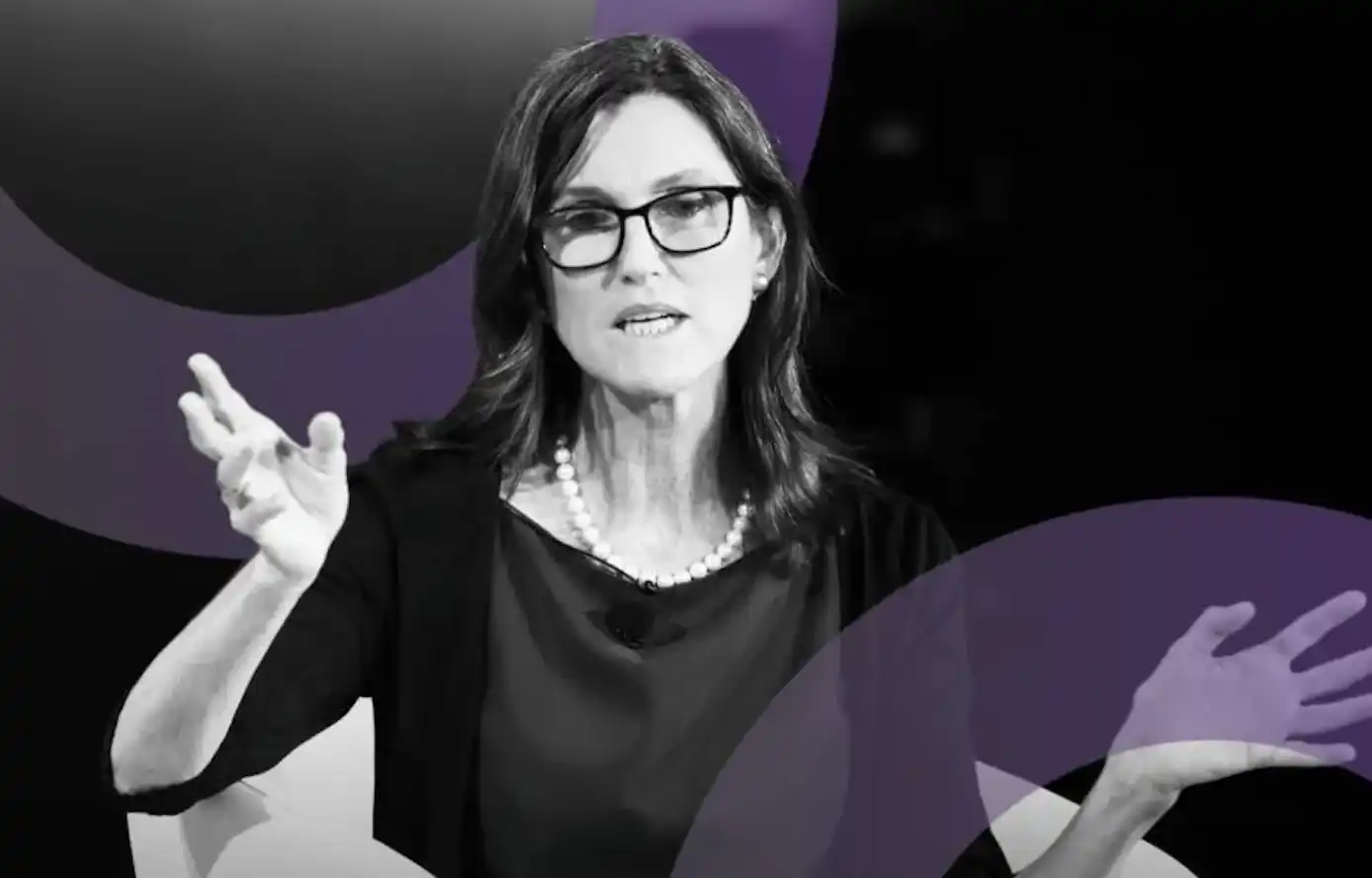
"Shelling" Google Gemini, But Apple Hasn't Given Up on Its Own Model

Apple has reportedly entered into a significant partnership with Google to integrate its Gemini AI model into Apple's ecosystem, as a "foundation" component for its future AI features, including a more personalized Siri expected later this year. The deal, estimated at around $1 billion annually, is not a direct replacement of Apple's own models but rather a strategic collaboration where Gemini will assist in training and enhancing Apple's proprietary on-device AI, with all processing occurring on Apple's private cloud servers to ensure user data privacy and isolation from Google. This move is seen as a tactical, transitional step for Apple to accelerate its AI capabilities and meet product launch timelines, especially after facing delays and setbacks with its in-house Apple Intelligence development and losing key AI talent to competitors like Meta. Despite this partnership, Apple continues its independent research and is reportedly developing its own trillion-parameter model, targeted for around 2027. The collaboration has drawn criticism, notably from Elon Musk, who raised concerns about the concentration of power with Google, which also controls Android and Chrome. For Google, the deal is a major win, boosting its market valuation, while OpenAI's existing partnership with Apple, which positions ChatGPT as a supplementary option for Siri, appears less central by comparison. The arrangement highlights Apple's pragmatic approach to bridging its AI gap while maintaining its long-term ambition for a fully independent AI system.

marsbit01/13 07:21

"Shelling" Google Gemini, But Apple Hasn't Given Up on Its Own Model

marsbit01/13 07:21

Elon Musk's First Interview in 2026: Discussing the Impact of AI, Robotics, Energy, and US-China Competition on the Near Future

In a January 2026 interview, Elon Musk discussed the profound impact of AI, robotics, energy, and global competition on the near future. He declared 2026 as the "Year of Singularity," asserting that AI progress is exponential, with AGI achievable by 2026 and AI intelligence surpassing all humans combined by 2030. Musk predicted that Optimus robots would outperform human surgeons within three years, making high-quality healthcare essentially free due to AI, chip performance, and robotic dexterity advancing exponentially. He argued that pursuing medical degrees would become pointless unless for social reasons. On global AI competition, Musk stated China would dominate in computing power, citing its massive electricity production (3 times the U.S. by 2026), reduced chip advantage gaps, and exceptional execution capabilities. He envisioned the AI landscape led by XAI, Google, and China. For energy, Musk emphasized solar power as the ultimate solution, proposing a three-phase plan: doubling grid efficiency with battery storage, deploying space-based solar satellites, and eventually building satellite factories on the Moon. He described energy as the future currency. Economically, Musk suggested that money might become irrelevant in 10-20 years due to AI and robotics driving abundance, leading to "Universal High Income" (UHI) instead of UBI. He warned of a turbulent 3-7 year transition period. He also noted that work would become optional within two decades, expressed concern over declining birthrates, and criticized traditional education, advocating for curiosity-driven learning enhanced by AI tutors. Musk concluded by encouraging active optimism: "Make hope happen."

marsbit01/13 05:11

Elon Musk's First Interview in 2026: Discussing the Impact of AI, Robotics, Energy, and US-China Competition on the Near Future

marsbit01/13 05:11

K1 Research and Klein Labs Co-host "2026 Seoul Signal", Foreseeing the Next Wave of Web3

K1 Research, an Asia-Pacific market expansion consultancy, and Klein Labs, a strategic market maker and Web3 venture incubator, will co-host "2026 Seoul Signal: Insights into the Next Wave of Web3" on January 22 in Seoul at People the Terrace. Leveraging K1 Research's global network across Seoul, Hong Kong, Singapore, and Dubai, along with Klein Labs' expertise in liquidity design and market structure, the event aims to provide forward-looking strategic insights for the Web3 industry in 2026. It will bring together builders, creators, and traders to discuss survival strategies and long-term growth paths for the upcoming cycle. The forum is supported by three major gold sponsors: - BGB: The official platform token of Bitget Exchange, serving as a core asset within its ecosystem. - LeverUp: A perpetual contracts DEX on Monad, offering up to 1001x leverage and a fee-sharing mechanism. - AetheriumX: A Web3 ecosystem integrating staking, gaming, and a creator marketplace. Additional partners include Gaea Ventures, PlaysOut, and KapKap, all contributing to Web3 ecosystem collaboration. The organizers emphasize the event's goal to offer clear directional insights for key Web3 participants, combining practical market experience with systematic research to position Seoul as a global hub for Web3 innovation. Post-event, K1 Research and Klein Labs plan to deepen cooperation to accelerate the discovery and implementation of high-quality global projects. The event is open for pre-registration. - Time: January 22, 2026 (18:30 ~ 23:00 KST) - Location: People the Terrace, 13 Dosandaero 81-gil, Gangnam-gu, Seoul - Registration: Link provided

marsbit01/12 09:29

K1 Research and Klein Labs Co-host "2026 Seoul Signal", Foreseeing the Next Wave of Web3

marsbit01/12 09:29

The Banking Industry's Resistance: The Endless Debate Over Stablecoin Interest Payments

The article discusses the ongoing regulatory debate in the U.S. regarding interest payments on stablecoins. The proposed *GENIUS Act* currently prohibits stablecoin *issuers* from paying interest to holders. However, platforms like Coinbase can still offer yields (e.g., 3.35% on USDC) because they act as *distributors*, not issuers. This loophole has sparked a significant political battle. The American Bankers Association (ABA) is leading efforts to expand the interest ban to include distributors in the upcoming *Crypto Market Structure Bill*. Banks argue that stablecoins threaten their deposit base, reduce lending capacity, and lack FDIC insurance, thereby endangering their traditional business model. The crypto industry strongly opposes this expansion. Coinbase's Chief Policy Officer argues stablecoins haven't caused significant bank deposit outflows. Think tank Paradigm suggests that banning interest on stablecoins used for payments would be akin to a "holding tax" on consumers. The article contrasts the U.S. situation with approaches in China and South Korea. China's digital yuan (a CBDC) pays interest to promote adoption, while South Korea's policy mirrors the current U.S. stance—banning issuer interest but not distributor interest. The conclusion warns that if the ABA's lobbying succeeds, it would cripple the crypto industry. It argues that traditional finance should adapt to innovation, citing examples of banks and asset managers (like BNY Mellon, JPMorgan, and BlackRock) already embracing opportunities in stablecoins and tokenization.

marsbit01/09 12:44

The Banking Industry's Resistance: The Endless Debate Over Stablecoin Interest Payments

marsbit01/09 12:44

Three CZs, Three Different Stories

Three individuals share the initials "CZ" but represent vastly different paths in the era of globalization. The first, Chen Zhi, epitomized the lawless, gray-area entrepreneurship of the mid-2010s. Operating from Cambodia, he built a transnational fraud network, generating up to $30 million daily through scams and forced labor. His empire, built on exploiting regulatory gaps and weak international cooperation, collapsed in 2026 when he was arrested and repatriated to China, signaling the end of an era of unregulated profiteering. The second, Changpeng Zhao (CZ), founder of Binance, represents the tech-entrepreneurial era. A technologist at heart, he built the world's largest cryptocurrency exchange through product excellence and innovation. Unlike Chen Zhi, his venture created value but eventually faced escalating regulatory scrutiny. In 2023, Zhao and Binance pleaded guilty to U.S. charges, resulting in a $4.3 billion fine and his resignation as CEO. His story illustrates that technological innovation must ultimately adapt to regulatory frameworks to survive. The third, CZ Chen, a Millennial and COO of AI firm Manus, represents a new model of success in the AI age. As a skilled professional, she achieved rapid wealth and influence by joining the right company at the right time. Manus, hailed as the first通用 AI Agent, was acquired by Meta in 2025. However, the deal faced review by Chinese authorities, highlighting that her success is now intertwined with geopolitical tensions between major powers. Together, these three stories reflect the evolving interplay between individual ambition and the shifting landscapes of regulation, technology, and global politics.

marsbit01/09 11:55

Three CZs, Three Different Stories

marsbit01/09 11:55

活动图片