# Сопутствующие статьи по теме Inflation

Новостной центр HTX предлагает последние статьи и углубленный анализ по "Inflation", охватывающие рыночные тренды, новости проектов, развитие технологий и политику регулирования в криптоиндустрии.

Fed Rate Cut Tonight Almost Certain, This Meeting More Like a 'Political Pressure Test'!

This week's Federal Reserve policy meeting is set to be one of the most contentious in recent years. With key economic data missing due to a 43-day U.S. government shutdown, the meeting has evolved into a stress test of the Fed’s independence and decision-making process. Market expectations for a rate cut have surged from 30% to 97%, reflecting both data uncertainty and growing political influence. Internally, the Fed is deeply divided, with a 4-4 split among key officials between holding rates and cutting. The dot plot shows a rare "bimodal distribution," with 7 officials favoring no change and 8 supporting a 50-basis-point cut. Doves point to a weakening labor market—unemployment rose to 4.3% in August, a four-year high—while hawks emphasize persistent inflation, with core PCE at 2.7%, above the 2% target. Political pressure has intensified, notably through appointments like Stephen Milan, who voted for a deeper cut just one day into his role, aligning with former President Trump’s public demands. The upcoming Fed leadership transition adds further uncertainty, as officials may be positioning for future roles. Amid data gaps and political interference, the Fed faces a complex risk-management dilemma: balancing concerns over slowing employment against inflation risks and soaring government debt interest costs. Communication challenges are heightened by internal divisions, forcing the Fed to rely more on high-frequency and alternative data. This meeting may mark a shift toward a new monetary policy framework where data scarcity and political pressure become persistent challenges to the Fed’s independence.

marsbit12/10 02:29

Fed Rate Cut Tonight Almost Certain, This Meeting More Like a 'Political Pressure Test'!

marsbit12/10 02:29

Underground Argentina: Jewish Money Houses, Chinese Supermarkets, Slacking Youth, and the Impoverished Middle Class

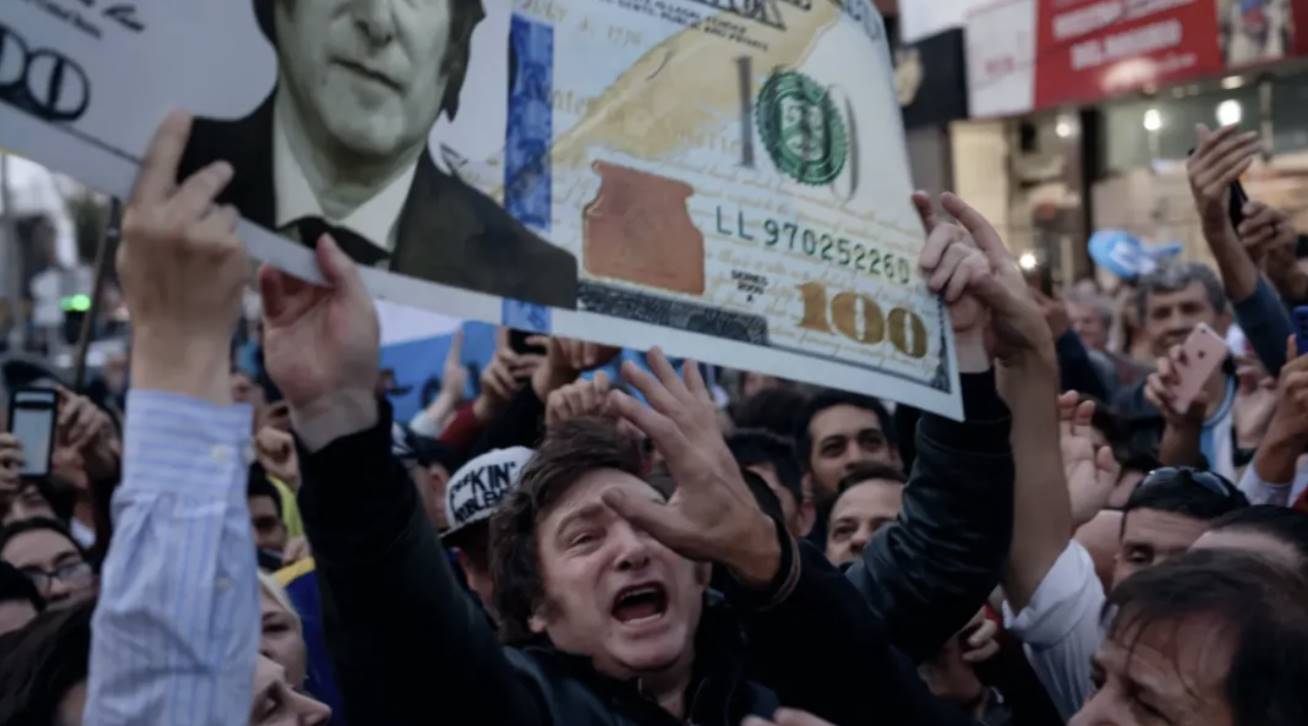
Argentina is experiencing a state of hyperinflation and economic collapse, where the official currency, the peso, has become nearly unusable. The black market exchange rate has reached 1 USD to 1,400 pesos, yet prices for basic goods remain shockingly high, even for those holding foreign currency. A significant portion of the population, especially the youth, has adopted a "live for the moment" mentality, spending their wages immediately as savings become worthless. Poverty rates are high, and real wages have plummeted. The country’s real financial system operates underground, dominated by two key players: a network of over 13,000 Chinese-owned supermarkets that act as cash collection points, and Jewish-owned informal exchange houses (cuevas) that manage black market dollar transactions. This shadow economy allows businesses and individuals to bypass strict currency controls, high taxes, and a collapsing official banking system. Cryptocurrency, particularly USDT, is used not as a technological innovation but as a practical tool for wealth preservation and tax avoidance, especially among freelancers and the upper middle class. However, those who remain in the formal economy—the “rule-followers”—suffer the most, as their peso-denominated incomes collapse in value while living costs soar. President Milei’s radical reforms have brought some fiscal stability and reduced inflation, but at a great social cost. Yet, much of the public still supports the changes, hoping to break Argentina’s cycle of economic crises. Through it all, the informal systems—cash transactions, black market exchanges, and a general distrust of the state—continue to sustain daily life.

深潮12/08 06:16

Underground Argentina: Jewish Money Houses, Chinese Supermarkets, Slacking Youth, and the Impoverished Middle Class

深潮12/08 06:16

活动图片