# Сопутствующие статьи по теме DeFi

Новостной центр HTX предлагает последние статьи и углубленный анализ по "DeFi", охватывающие рыночные тренды, новости проектов, развитие технологий и политику регулирования в криптоиндустрии.

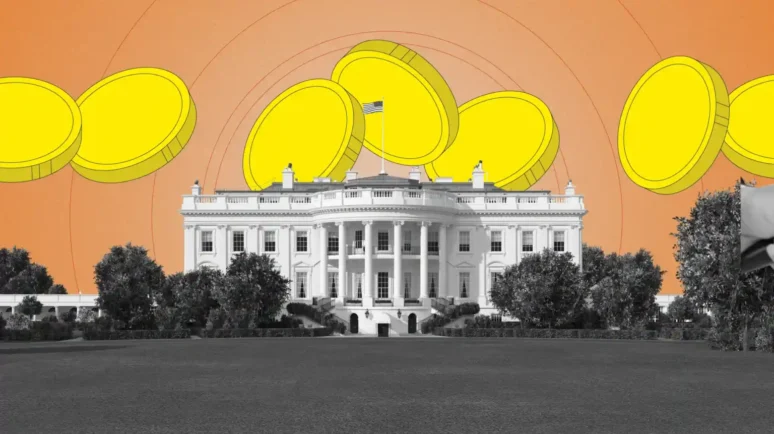
The Biggest Variable in the Post-Encryption Market: Can the CLARITY Act Pass the Senate?

The CLARITY Act (Digital Asset Market Clarity Act of 2025), a key U.S. crypto market structure bill, faces a critical Senate Banking Committee vote on January 15. The bill aims to establish a clear regulatory framework by classifying digital assets into three categories: digital commodities, investment contract assets (securities), and regulated payment stablecoins. It also delineates regulatory jurisdiction between the SEC and CFTC. Recent closed-door meetings between Wall Street representatives (including SIFMA) and crypto industry players have been "constructive," particularly on contentious issues like DeFi regulatory exemptions and yield-bearing stablecoins. However, significant disagreements remain. Wall Street opposes broad DeFi exemptions and wants to restrict yield-paying stablecoins to protect traditional banks, while the crypto industry defends these provisions. Having passed the House with strong support in July, CLARITY's Senate progress has been delayed multiple times due to these disputes. The upcoming committee vote is crucial for the bill to advance to the full Senate. Supporters warn that postponement beyond April could jeopardize its passage due to midterm election politics. The outcome will determine whether the U.S. can resolve long-standing regulatory uncertainties and provide a clearer path for crypto market growth.

Odaily星球日报01/09 09:51

The Biggest Variable in the Post-Encryption Market: Can the CLARITY Act Pass the Senate?

Odaily星球日报01/09 09:51

BNB Chain 2025 Year-End Review: Self-Transcendence, Trading Everything

BNB Chain 2025 Year-End Review: Self-Transformation and Trading Everything In 2025, BNB Chain underwent a qualitative transformation, evolving from a low-cost alternative to a robust infrastructure capable of handling real-world financial and payment scenarios. Key achievements include a 40.5% growth in TVL, a 100% increase in on-chain stablecoin market cap to $14.7 billion, and over $1.8 billion in RWA assets. The network maintained zero downtime despite high transaction loads, processing a record 31 million daily transactions. Technical upgrades through Lorentz and Maxwell hard forks reduced block time to sub-second levels and increased throughput to 133 million gas/second, significantly improving speed, reducing MEV attacks by 95%, and lowering costs. These enhancements enabled high-frequency applications like stablecoin payments and DEX interactions, driving daily active addresses to 4.4 million, the highest among blockchains. Stablecoin adoption flourished, with BNB Chain becoming a leading network for efficient, low-cost payments. Initiatives like United Stables' multi-collateral model and a $1 billion Builder Fund fostered ecosystem growth. RWA integration accelerated with major institutions like BlackRock and Franklin Templeton tokenizing assets on-chain, leveraging BNB Chain’s user base and liquidity for deeper adoption. BNB Chain’s 2025 progress validated its capacity as reliable infrastructure under sustained demand, setting the stage for 2026 goals: enhancing user experience, reducing latency and costs, and supporting advanced use cases like AI and global payments, moving toward seamless Web3 integration into everyday economies.

marsbit01/09 09:39

BNB Chain 2025 Year-End Review: Self-Transcendence, Trading Everything

marsbit01/09 09:39

To Hyperliquid: Stop Talking About 'Decentralization' and Learn from BNB's 'Strong Operations'

The article critiques Hyperliquid's overemphasis on "decentralization" and urges it to adopt a "strong operations" model akin to Binance's BNB ecosystem. It argues that the perpetual decentralized exchange (Perp DEX) market is saturated, with over 20 projects aiming for Token Generation Events (TGE) by Q1 2026, leading to intense competition. While Hyperliquid excels in liquidity and professional trading体验 for assets like BTC/ETH, its native token HYPE and HyperEVM ecosystem lack synergistic value capture, unlike BNB's integrated model. The author highlights that Binance’s success stems from its "listing effect" and operational synergy between Binance main站 and BNB Chain, which sustains project viability post-listing. In contrast, Hyperliquid’s minimalist, hands-off approach to HyperEVM has hindered ecosystem growth, causing projects to fail quickly after HYPE distribution. The piece suggests Hyperliquid should learn from BNB Chain’s "strong operations" to foster ecosystem collaboration, such as endorsing key DeFi sectors (e.g., lending, swaps), without compromising decentralization entirely. Ultimately, Hyperliquid’s engineering strengths are noted, but it must evolve beyond its current passive strategy to maintain competitiveness against rivals like Lighter and Aster, which are expanding into L2s/chains. The conclusion urges Hyperliquid to embrace complexity and operational rigor to secure long-term growth and token value.

marsbit01/09 07:12

To Hyperliquid: Stop Talking About 'Decentralization' and Learn from BNB's 'Strong Operations'

marsbit01/09 07:12

DeFi Gold Rush: 6 Metrics to Filter Out 90% of Shitcoins

Title: DeFi Gold Rush: 6 Key Metrics to Filter Out 90% of Low-Quality Projects This article explains how to evaluate crypto projects using on-chain fundamental metrics, a revolutionary advantage DeFi has over traditional finance. Unlike quarterly corporate reports, DeFi data is transparent, real-time, and publicly available on the blockchain. The author, drawing on four years of experience, including work with DefiLlama, outlines six core metrics: 1. **TVL (Total Value Locked):** The total value of assets deposited in a protocol. It's a measure of trust but should be analyzed alongside activity metrics as it's highly correlated with token prices. 2. **Fees, Revenue & Holders' Revenue:** *Fees* are the total amount users pay (gross revenue). *Revenue* is the portion of fees kept by the protocol (gross income). *Holders' Revenue* is the share distributed to token holders via buybacks or dividends. 3. **Volume:** Tracks trading activity on DEXs and perpetual exchanges. Market share trends within a category are often more insightful than absolute numbers. 4. **Open Interest:** The total value of unsettled derivative contracts, indicating liquidity on a platform. It can collapse quickly during market volatility. 5. **Stablecoin Market Cap:** The total value of stablecoins on a blockchain, representing real capital inflows into an ecosystem, unaffected by token price volatility. 6. **App Revenue & Fees:** The total fees and revenue generated by all applications on a blockchain, excluding stablecoins and gas. It acts as a "GDP" for a chain's economic activity. The article provides a three-step framework for analysis: 1. **Focus on sustained, stable growth** over time rather than short-term spikes. 2. **Track both stock metrics** (e.g., TVL, OI) and **flow metrics** (e.g., Fees, Volume) to get a complete picture of capital deposits and actual activity. 3. **Consider token unlocks and incentives**, as they create sell pressure. High revenue is less impressive if it's outweighed by token emissions. The key takeaway is that these on-chain fundamentals provide a powerful filter to identify valuable projects with real traction long before market narratives catch up.

marsbit01/08 13:08

DeFi Gold Rush: 6 Metrics to Filter Out 90% of Shitcoins

marsbit01/08 13:08

活动图片