# Сопутствующие статьи по теме BTC

Новостной центр HTX предлагает последние статьи и углубленный анализ по "BTC", охватывающие рыночные тренды, новости проектов, развитие технологий и политику регулирования в криптоиндустрии.

86% Return? How to Use a Bot to 'Earn Passively' on Polymarket

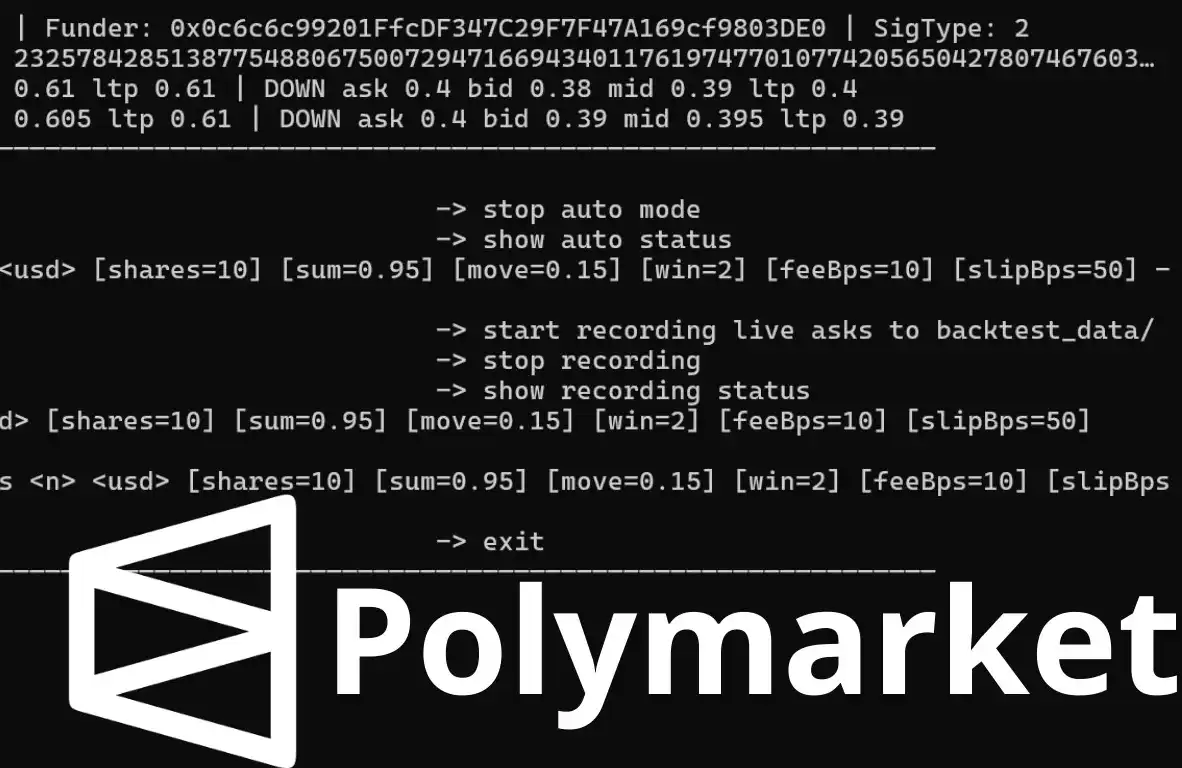
This article details the development and backtesting of an automated trading bot for the "BTC 15-minute UP/DOWN" market on Polymarket. The author identified market inefficiencies and automated a manual strategy to exploit them. The bot operates in two modes. In manual mode, users can directly place orders. In auto mode, it runs a two-leg cycle: First, it observes the market for a set time after a round begins. If either the "UP" or "DOWN" side drops by a specified percentage (e.g., 15%) within seconds, it triggers "Leg 1" and buys the crashed side. It then waits for "Leg 2," a hedging trade on the opposite side, which is only executed if the sum of the Leg 1 entry price and the opposite ask price meets a target threshold (e.g., ≤ 0.95). Due to a lack of historical market data from Polymarket's API, the author created a custom backtesting system by recording 6 GB of live price snapshots over four days. A conservative backtest with parameters of a 15% crash threshold and a 0.95 sum target showed an 86% ROI, turning $1,000 into $1,869. An aggressive parameter set resulted in a -50% loss, highlighting the critical role of parameter selection. The author acknowledges significant limitations of the backtesting, including its short data period, failure to model order book depth, partial fills, variable network latency, and the market impact of the bot's own orders. Future improvements include rewriting the bot in Rust for performance, running a dedicated node, and deploying on a low-latency VPS.

marsbit12/30 04:07

86% Return? How to Use a Bot to 'Earn Passively' on Polymarket

marsbit12/30 04:07

Deciphering Messari's 100,000-Word Annual Report (Part 2): ETH Underperforms BTC—Marginalization or Pricing Dilemma?

Analysis of Messari's 2025 Annual Report: Why ETH Underperformed BTC ETH's underperformance against BTC in 2025 is not a sign of its marginalization but rather a reflection of its complex and evolving pricing logic. While BTC thrives on a singular narrative as a macro hedge and institutional asset, ETH serves multiple roles: a decentralized settlement layer, DeFi infrastructure, and a production network with ongoing upgrades. Key data shows Ethereum's usage grew significantly in stablecoins, RWA, and institutional settlements, often occurring on L2s rather than L1. This shift reduced direct fee revenue for ETH, weakening its value capture despite increased network utility. Competition from chains like Solana and Hyperliquid further pressured L1 fee income, but Ethereum remained the dominant settlement layer for high-value, institutional-grade activity. ETH's asset narrative remains tied to BTC's macro momentum. While ETH ETF flows eventually improved, its monetary premium is still derivative of BTC's consensus. The core issue is structural: Ethereum is becoming essential global financial infrastructure, but ETH's value relies more on abstract security premiums and macro risk sentiment than direct cash flows. In conclusion, ETH is not being replaced. It operates as the financial operating system built atop BTC's monetary anchor—critically important, yet not yet independently priced.

marsbit12/29 07:02

Deciphering Messari's 100,000-Word Annual Report (Part 2): ETH Underperforms BTC—Marginalization or Pricing Dilemma?

marsbit12/29 07:02

活动图片