# Сопутствующие статьи по теме Bitcoin

Новостной центр HTX предлагает последние статьи и углубленный анализ по "Bitcoin", охватывающие рыночные тренды, новости проектов, развитие технологий и политику регулирования в криптоиндустрии.

When Bitcoin Miners Take to Space

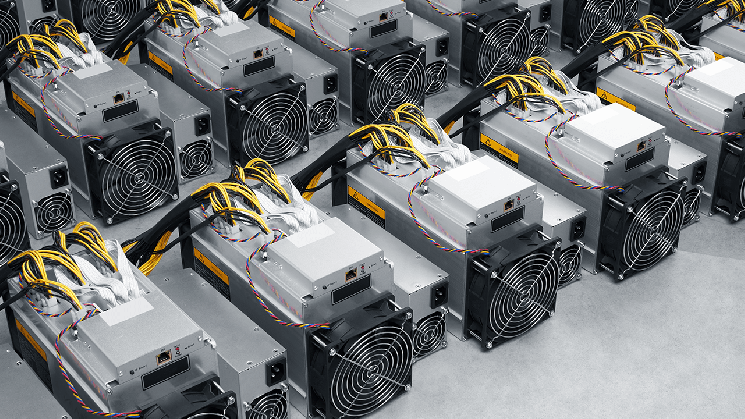
SpaceX is reportedly preparing for a historic IPO with a target of $1.75 trillion, while simultaneously advancing plans to deploy AI data centers in orbit, leveraging space’s vacuum for cooling and solar energy for power. This has sparked interest in whether Bitcoin mining—also energy-intensive and dependent on computing hardware—could also move to space. The core idea involves placing mining ASICs on the back of solar panels in orbit, using abundant solar energy to power mining operations. Heat dissipation in vacuum, a key challenge, is manageable through thermal radiation, and communication with mining pools is feasible with low latency via low Earth orbit satellites. However, the economics remain prohibitive. Launch costs, currently around $2,720 per kilogram via Falcon 9, make mining payloads financially unviable. Estimates suggest that with current technology, the payback period would exceed 100 years. SpaceX’s Starship may eventually reduce launch costs below $200/kg, making space mining more feasible. Companies like Starcloud—backed by NVIDIA and top VCs—are already testing orbit-based computing, including AI and planned Bitcoin mining experiments. Others, like SpaceChain and Cryptosat, focus on secure blockchain nodes and cryptographic services in space rather than mining. While orbital mining is not yet economically competitive with terrestrial operations, it represents a long-term vision for radically reducing energy costs and expanding the infrastructure of decentralized networks beyond Earth.

marsbit04/01 03:49

When Bitcoin Miners Take to Space

marsbit04/01 03:49

BitMart VIP Insights: March Crypto Market Review and Hotspot Analysis

BitMart VIP Insights: March 2026 Crypto Market Review and Analysis March saw a mixed macro environment with a hawkish Fed holding rates steady amid persistent inflation, rising oil prices, and weakening employment, raising stagflation concerns. Equities and risk assets weakened. Crypto trading volume showed volatile spikes but lacked sustainability, with total market cap stabilizing around $2.45–2.50T after a mid-month peak. BTC and ETH spot ETFs reversed from outflows to net inflows, with ETH showing stronger capital return and price elasticity. Stablecoin supply expanded modestly but concentrated in major tokens, indicating cautious liquidity return rather than broad risk-on sentiment. BTC traded between $62K–$74K, currently around $69K–$71K, while ETH was weaker in the $1.9K–$2.2K range. SOL was relatively resilient between $82–$97. Key developments included a landmark SEC/CFTC joint framework classifying 16 major assets (including BTC and ETH) as digital commodities, significantly improving regulatory clarity. BlackRock launched the first staking-enabled ETH ETF (ETHB), shifting crypto ETFs from pure price-trackers to yield-generating assets. However, security incidents like the Resolv Labs private key attack highlighted growing off-chain risks. April will be critical for crypto regulation, with the CLARITY法案 potentially advancing. The Ethereum Glamsterdam upgrade enters key testing, and Fed Chair Powell’s term end adds policy uncertainty. Macro data, geopolitics, and ETF flows will remain key market drivers.

marsbit04/01 03:32

BitMart VIP Insights: March Crypto Market Review and Hotspot Analysis

marsbit04/01 03:32

活动图片