Stablecoin USDT Tycoon's Shopping Cart Includes a Mattress

marsbitОпубликовано 2026-03-05Обновлено 2026-03-05

Введение

Tether, the issuer of the world's largest stablecoin USDT, has invested $50 million in Eight Sleep, a luxury smart mattress company. This move is part of a broader investment strategy driven by CEO Paolo Ardoino's vision of human sovereignty over data and the body. Ardoino, a cryptographer and Bitcoin advocate, believes in building technology for a potential societal collapse, emphasizing individual control over communication, health data, and physical well-being. His investments include Holepunch for decentralized P2P communication, QVAC for encrypted health data storage, and Blackrock Neurotech for brain-computer interfaces. However, this idealistic vision contrasts with USDT's real-world usage. While it provides financial access in unstable economies, it is also used for sanctions evasion, money laundering, and illicit activities. Tether, with $100 billion in annual profits, operates without full transparency or independent audits, requiring users to trust its reserves. Ultimately, Tether's investments reflect Ardoino's personal philosophy: using immense profits to build a decentralized future, albeit with unresolved contradictions between its idealistic goals and the opaque reality of its financial operations.

Author: David, Shenchao TechFlow
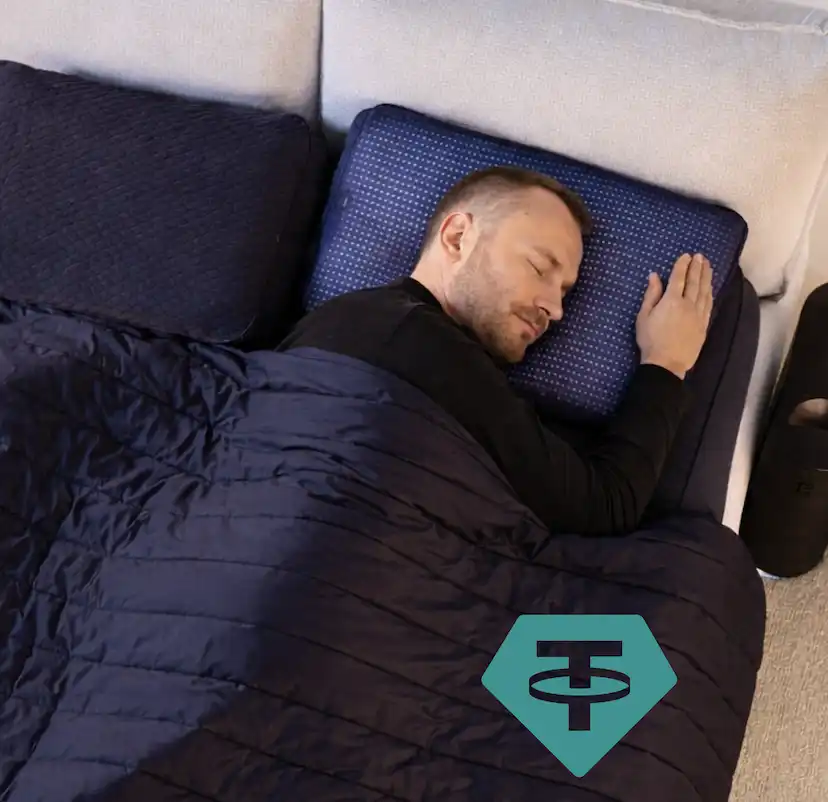
On March 4, stablecoin giant Tether announced an investment.

The invested company is called Eight Sleep, which makes smart mattresses. Tether invested $50 million, valuing the company at $1.5 billion.

The company's mattresses are very high-end, with individual prices ranging from $2,000 to $4,000. They feature built-in water cooling and heating systems, precise temperature control, sleep tracking, automatic adjustment...
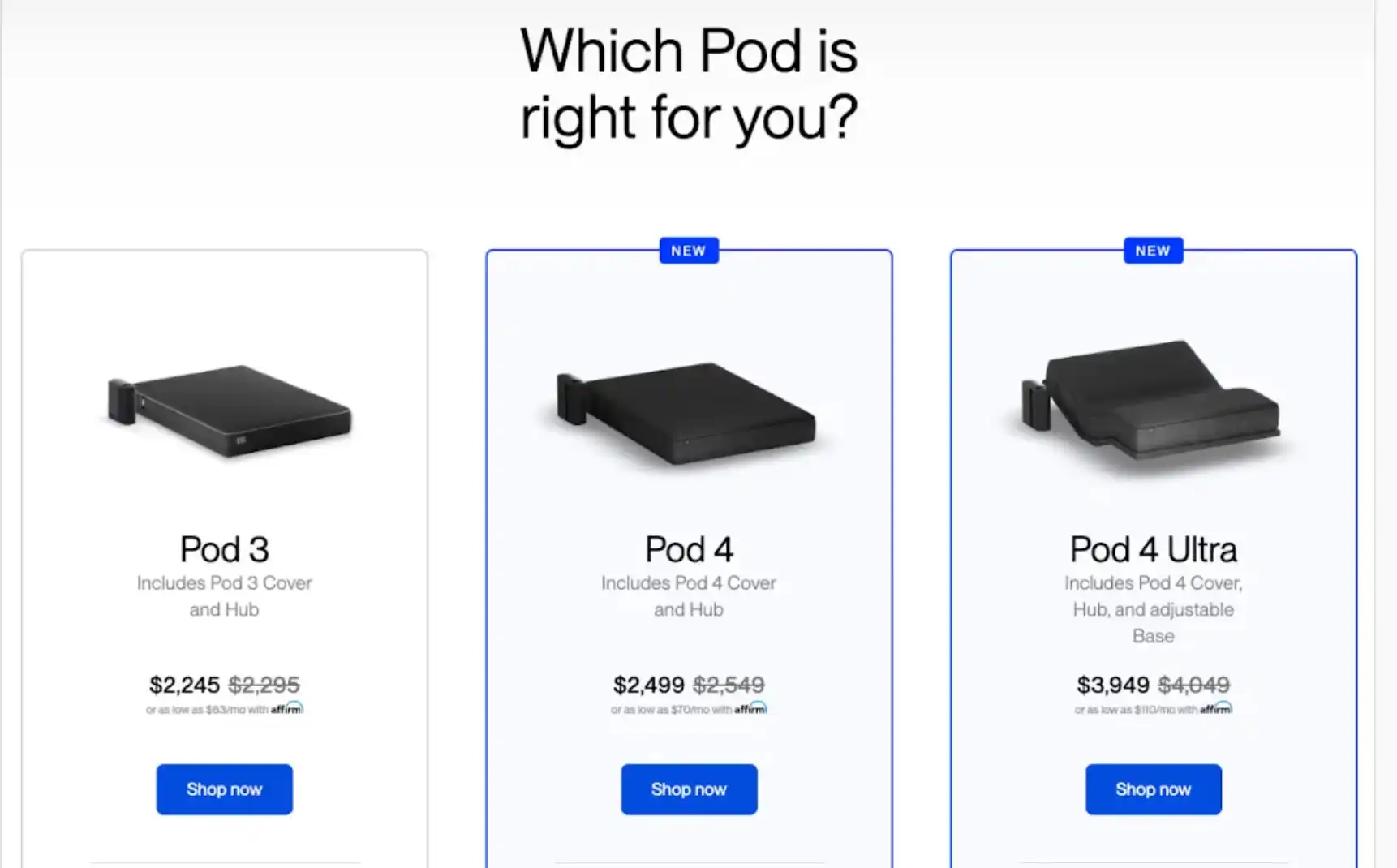
Famous NBA star LeBron James is one of its public users. Its main customer base includes Silicon Valley executives, professional athletes, and a group of biohackers who love experimenting on themselves.

The issuer of the world's largest stablecoin, USDT, reported a net profit of over $10 billion in 2025. It is almost entirely non-transparent, not publicly listed, and does not need to explain its actions to any shareholders.

And then it spends $50 million to invest in a mattress company?

Of course, this isn't the first strange investment. A review of Tether's investment records over the past few years reveals that the mattress might not even be the most puzzling one.

It all starts with the company's CEO.

The CEO's Shopping Cart Is Filled with Human Sovereignty

Paolo Ardoino, born in 1984 in Genoa, started coding at the age of 8.

He studied computer science in university, stayed on as a researcher after graduation, focusing on cryptography for military projects. He read the Bitcoin whitepaper in 2012, joined Bitfinex in 2014, became Tether's CTO in 2017, and was promoted to CEO in 2023.
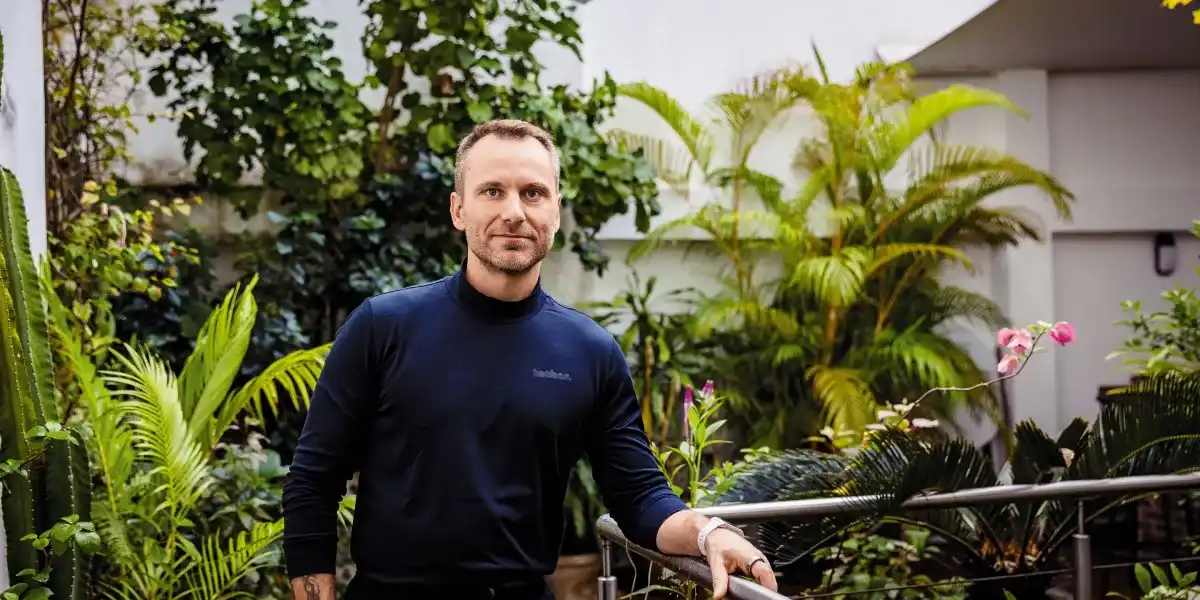
A Fortune magazine journalist once noticed dumbbells and a gym bag next to his desk during an interview.

This is a person who brings his workout gear to work every day. He is the type who manages his body as a system—sleep, training, biometric data, every aspect must be tracked, optimized, and controlled by himself.

He then extended this logic to everything: money, communication, data, the body. He believes that people should have complete sovereignty over everything that belongs to them.

And he believes:

The U.S. government will eventually collapse.

This is not a joke. Paolo has stated publicly that he is doing all this not to make money, but to provide people with a way out when the system fails.

His exact words were:

"I don't think the best solution is to fix the politics of every country. The best solution is to allow people to form communities freely through technology, where a sense of belonging comes from shared values, not geographic location."

It sounds like a line from a sci-fi novel. But Paolo is serious. His keynote speech at BTC Prague 2024 was titled directly:

"Building for the Apocalypse."

Understanding this, Tether's investment in a mattress company makes sense. Because every item in the company's shopping cart corresponds to an extension of the CEO's worldview: bodily data sovereignty.
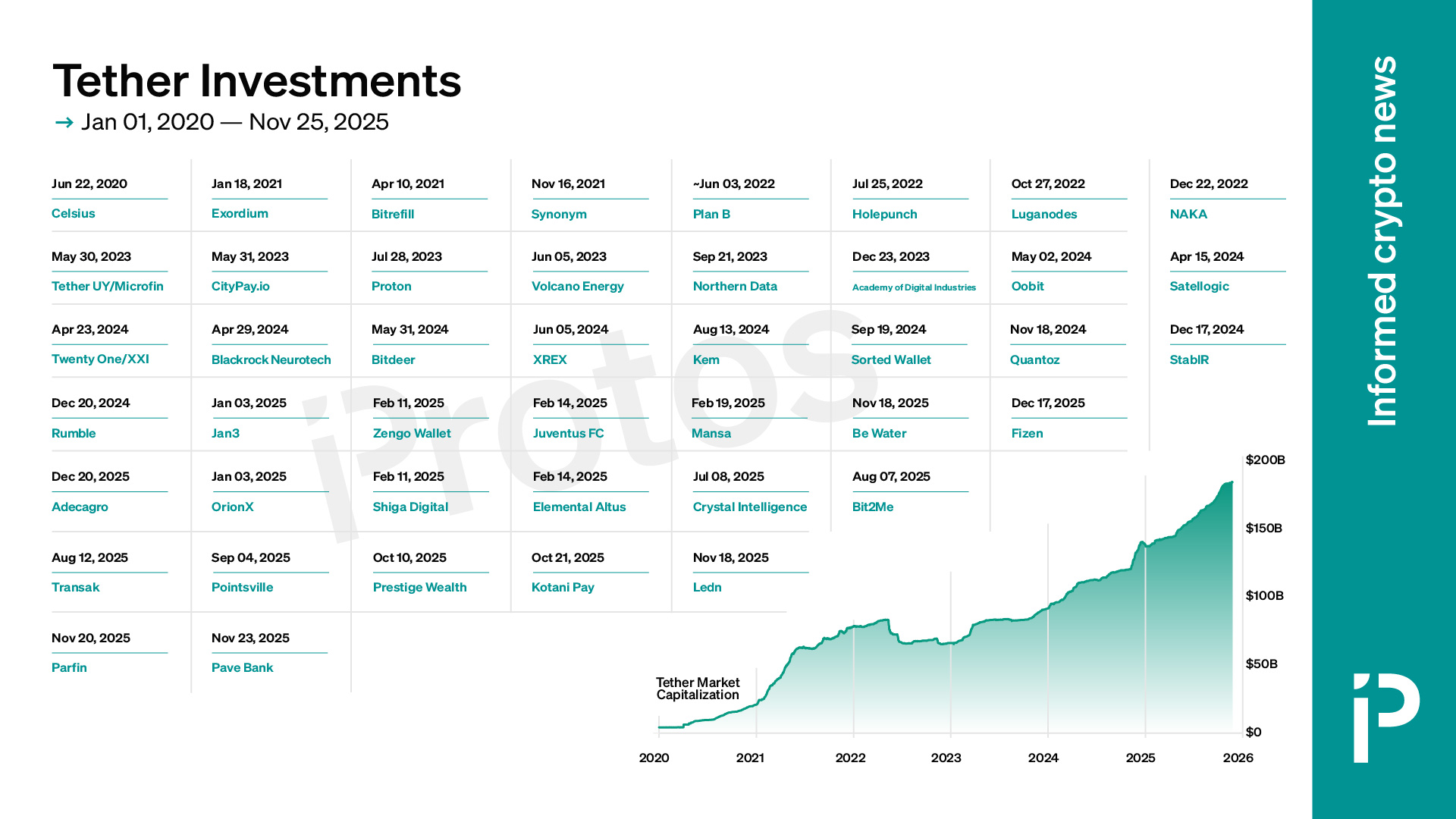
In 2022, he co-created a platform called Holepunch. This platform does something simple: it allows people to make calls, send messages, and transfer files without going through any servers. It's P2P direct connection, signals go directly from your device to the other party's device.

You can think of it as communication sovereignty.

Then there's QVAC. A health platform launched by Tether in late 2025, it encrypts all your biometric data—heart rate, sleep, exercise records—and stores it locally on your own device, without uploading anything to the cloud.

Paolo explained this product: "AI today has been politicized and centralized. We want to create AI that can run locally on your device, keeping everything about you in your own hands."

This is about data sovereignty.

Thus, after acquiring Eight Sleep, this mattress, integrated with QVAC, becomes a node in the infrastructure of bodily data sovereignty. Your sleep data doesn't belong to Apple, Google, or any cloud platform.

It belongs to you.

Additionally, Paolo's $200 million acquisition of a majority stake in brain-computer interface company Blackrock Neurotech might not be because he is optimistic about the market size of brain-computer interfaces, but because he doesn't want the field of brain-computer technology to be controlled by others.

Writing this, I recall another thing he said in an interview: "We've made money that we couldn't spend in hundreds of years. My biggest fear is wasting this once-in-a-century opportunity."

This statement is hard to evaluate. A person can simultaneously believe that civilization will collapse and also believe that he has a responsibility to use money to prevent it, or at least, leave behind a set of infrastructure that can reboot after the collapse.

Of course, the prerequisite is that you are Tether, with $10 billion in annual profit, allowing investments to become an extension of your worldview.

You Must First Trust Tether to Trust No One

There is a premise to Paolo's philosophy of sovereignty that he never mentions proactively.

USDT is the world's most circulated stablecoin. Behind its market capitalization of $183 billion is an equivalent amount of dollar reserves, at least that's what Tether says.

Where these reserves are held, who custodies them, whether each transaction is real—Tether has never undergone a full independent audit.

The company is not publicly listed, does not need to disclose to shareholders, and has operated in a regulatory vacuum for over a decade. How this money is calculated, what the balance sheet looks like—outsiders only see reports released by Tether itself.

Holders of USDT must choose to believe that all of this is real. There is no other option.

This is the subtle part. The CEO is constantly investing in various projects that build human data sovereignty, seemingly going off on a tangent to construct a set of infrastructure for "mastering human data sovereignty";

But this infrastructure itself is built with money from a company that requires your unconditional trust.

Paolo talks about "building for the apocalypse," but if the apocalypse really comes, if the dollar system really collapses, and USDT's reserves are held in U.S. Treasury bonds, what would happen to the corresponding $183 billion backing Tether.

He has not publicly answered this question.

With Enough Money, Investment Becomes an Autobiography

When you have enough money, your investment portfolio becomes an autobiography of your worldview.

Elon Musk bought Twitter because he believes free speech is being stifled by tech platforms; SpaceX exists because he believes Earth's civilization needs a backup. Peter Thiel invested in PayPal because he believes the government's monopoly on currency is wrong; he invested in Palantir because he believes the national security system needs to be rebuilt by Silicon Valley.

Bryan Johnson spends millions of dollars a year experimenting on himself, aiming to reverse his biological age to 18.

The things these people invest in seem diverse, but the internal logic is consistent:

They are using money to build the world they believe should exist. Returns are secondary, sometimes not even considered.

From this perspective, Tether's CEO Paolo is not an outlier. However, one thing sets him apart from the people mentioned above.

The real circulation scenarios of USDT are far more complex than Paolo's speech drafts.

Argentinians use it to fight the devaluation of the peso, Nigerians use it for cross-border remittances, Turks use it to preserve savings when the lira plummets. These are real, valuable uses; Paolo refers to these people when he talks about financial inclusion.

But USDT is also a tool for sanctions evasion, a transit point for cross-border money laundering, a settlement currency for dark web transactions, a收款 address for ransomware... This is also real.

Tether addresses have appeared on the U.S. Treasury Department's sanctions list, UN reports have mentioned the scale of USDT use in Southeast Asian scam compounds. Tether has cooperated in freezing some assets, but more were transferred long before freezing could occur.

The reason this system can achieve a market cap of $183 billion and an annual profit of $10 billion is partly because it is sufficiently "neutral." It doesn't ask where the money comes from or where it goes.

And then these profits flow into brain-computer interfaces, P2P communication, data sovereignty, bodily sovereignty, flowing into a set of idealistic infrastructure "built for the apocalypse."

From the infrastructure of grey circulation to the infrastructure chasing utopia. The same system, the same CEO, the same money.

With enough money, investment indeed becomes an autobiography.

It's just that this autobiography, Paolo hasn't fully finished writing it. There are a few pages he has turned over, difficult to scrutinize deeply.


Связанные с этим вопросы

QWhat is the main reason behind Tether's investment in Eight Sleep, according to the article?

AThe investment aligns with CEO Paolo Ardoino's worldview of human data sovereignty, as the smart mattress will integrate with Tether's QVAC health platform to keep sleep data encrypted and under user control, rather than being stored on centralized cloud platforms.

QWhat is Paolo Ardoino's stated motivation for Tether's various investments, beyond profit?

AHe believes in building infrastructure for a potential societal collapse, aiming to allow people to form communities based on shared values rather than geography, and to ensure sovereignty over money, communication, data, and the human body.

QWhat contradiction does the article highlight regarding Tether's operations and its CEO's philosophy?

AWhile Paolo Ardoino promotes sovereignty and distrust of centralized systems, Tether itself requires users to place unconditional trust in its unaudited reserves and opaque operations, which contradicts the ethos of decentralization and self-sovereignty he advocates for in other investments.

QHow does the article characterize investments made by extremely wealthy individuals or entities like Tether?

AIt states that when money exceeds a certain level, investments become an 'autobiography' of one's worldview, where the primary goal is to build the world they believe should exist, often with financial returns being secondary or not a consideration.

QWhat are some of the real-world use cases of USDT mentioned in the article, both positive and negative?

APositive uses include helping people in countries like Argentina, Nigeria, and Turkey combat currency devaluation, facilitate cross-border remittances, and preserve savings. Negative uses involve sanction evasion, cross-border money laundering, dark web transactions, and as a payment method in scam operations, as noted by the U.S. Treasury and UN reports.

Похожее

a16z Partner: Being in the Flow of Capital Is the True Moat

A16z Partner: Standing in the Cash Flow is the True Moat Historically, many of the strongest companies built their moats by positioning themselves within "cash flows"—facilitating value creation and transfer in a network and taking a cut. The more value flows, the larger they grow. Crypto is the first modern technology natively built for this. With open ledgers, programmable settlement, and stablecoins enabling internet-speed global value transfer, it allows startups to inherit network effects from day one. Well-designed tokens align users, developers, and the protocol towards network growth, distributing value to contributors. This model isn't new (e.g., railroads, Visa, Google, AWS) but Crypto democratizes it. It lets entrepreneurs target areas with high inefficiency and profit extraction—like traditional finance's payments, custody, FX, and settlement—to compress costs, increase speed, and redistribute value by standing in the new flow. The opportunity extends beyond finance to emerging markets like GPU/compute, AI training data, energy, and space, where new, programmable infrastructure can be built without legacy constraints. Key questions for founders: Are you already in the cash flow? Does your revenue scale 10x with network activity? Where is profit extraction highest relative to value created in your market? The strategy is clear: compress the old cost structure, position yourself in the new value stream, and let the network compound.

marsbit20 мин. назад

a16z Partner: Being in the Flow of Capital Is the True Moat

marsbit20 мин. назад

Capturing 15 Top-Tier Zero-Day Vulnerabilities: A Consensus Protocol Debug Agent Framework Built by 0G Lab in Collaboration with Teams from NUS, PKU, and BUPT

"Agents Capture 15 Critical Zero-Day Bugs: 0G Lab's Multi-Agent Framework Automates Debugging in Consensus Protocols" Distributed consensus protocols are notoriously difficult to debug due to complex, intertwined states. A novel framework, Agora, developed by 0G Labs with researchers from NUS, Peking University, and Beijing University of Posts and Telecommunications, tackles this by fusing deep domain expertise with a collaborative multi-agent LLM architecture. Agora moves beyond the limitations of single LLMs and traditional testing like fuzzing. It employs three specialized agents: an Orchestrator for global state, a Strategy agent for generating attack scenarios using distributed systems knowledge, and a TestGen agent that creates executable tests. A core innovation is its efficient "Succinct Memory & Communication" mechanism and a dynamic test harness. This allows the system to translate abstract hypotheses into concrete tests across languages like Go and Rust, run them, capture failures, and refine the approach in a closed loop—all with minimal token overhead. In rigorous evaluations on production-level protocols including Raft, EPaxos, and components from etcd and Sui, Agora discovered 15 previously unknown deep logic bugs (e.g., execution divergence, liveness violations). In stark contrast, powerful standalone LLMs like GPT-5.2 and Claude 4.5 found zero such bugs. Agora achieved this with a high precision of 73.9% and at an average cost of only about $40 per bug found. The framework demonstrates high generalizability. Its decoupled design allows the "Multi-Agent + Hypothesis-Driven Testing" paradigm to be applied to other complex domains like database concurrency control, OS kernels, and Web3 smart contract auditing. By enabling efficient, automated detection of deep logic flaws, Agora points the way for AI-powered security in critical infrastructure, aligning with the growing trends of agentic systems and automated quality control.

marsbit23 мин. назад

Capturing 15 Top-Tier Zero-Day Vulnerabilities: A Consensus Protocol Debug Agent Framework Built by 0G Lab in Collaboration with Teams from NUS, PKU, and BUPT

marsbit23 мин. назад

a16z crypto Partner: Cash Flow Is the True Moat

Title: a16z Crypto Partner: Capital Flow is the True Moat In business history, enduringly successful enterprises often share a core logic: capturing value by facilitating its creation and transfer within an ecosystem, taking a share of the proceeds. The scale of value flowing through the ecosystem directly correlates with the company's growth. Cryptography is the first modern technology natively suited to this commercial logic. Startups that don't leverage this framework in product design and business model construction miss significant opportunities. Stablecoins enable internet-speed, 24/7 global settlement of value with end-to-end programmability. With open underlying channels for capital flow and transparent unit economics, every circulating dollar globally represents potential flow in this arena. Blockchain is inherently a network business model. All transactions are recorded on a shared ledger, and each new participant strengthens this foundational system for future developers. More users and applications increase the network's value for all. Crypto entrepreneurs start with built-in network effects, unlike traditional businesses that spend years building them on legacy infrastructure. Network tokens amplify this advantage. A well-designed token system aligns users, developers, service providers, and validators around a common goal—network growth—while distributing rewards based on contribution. All proceeds flow back to ecosystem participants, creating a virtuous cycle of value circulation. This is not a new logic; the crypto industry simply makes it easier for startups to implement and scale. Historic giants like railroads, Standard Oil, AT&T, and modern leaders like Google and AWS succeeded by positioning themselves at critical junctures of value flow. In finance, Visa processed $15.7 trillion in payments (net revenue: $35.9B), and top market makers like Jane Street thrive by being in the path of order flow, benefiting from volume. Combining capital flow with network effects creates one of business's most robust models. As Jeff Bezos noted, "Your margin is my opportunity." This is acutely true in traditional finance, where sectors like payments, custody, and settlements extract significant fees (e.g., 2-3% for card networks, 6-9% for cross-border transfers). These profits represent opportunities for disruption by reducing costs and increasing efficiency, as proven by Stripe and Square in payments. Crypto founders can build the next-generation infrastructure: programmable, instant, global, and inherently embedded in capital flow paths. Opportunities extend beyond finance to markets like compute/GPU trading, AI training data, energy, robotics, and critical minerals—areas poised for massive global value movement that existing channels cannot handle. These are blue oceans for new, programmable infrastructure centered on capital flow, free from entrenched platforms and intermediaries. Founders should ask: Is your business at the heart of a value flow? Does your revenue scale 10x with ecosystem transaction growth? Where are the highest margins relative to value created in your target market? The answers point to the opportunity: cut existing costs, enter new value flow arenas, and grow through network effects.

Foresight News24 мин. назад

a16z crypto Partner: Cash Flow Is the True Moat

Foresight News24 мин. назад

Unveiling the 'White-haired Stock God' Serenity: A Spiritual Remedy for Anxious Retail Investors

The article details the rise of Serenity, dubbed the "White-Haired Stock God," whose social media posts have recently caused significant volatility in China's A-share market. Previously gaining fame in international retail investor communities, Serenity is known for his "Chokepoint Investment" strategy targeting small monopolies in the AI supply chain, reportedly achieving returns over 3612% this year. His influence stems from his background as a former AI research scientist, detailed analysis, and a massive following on X, where his subscriber count has surpassed Elon Musk's. In early June, Serenity's Chinese-language posts mentioning A-shares like LeaderDrive (Lide Xiebo), Easun, and Innolight triggered immediate 20% surges in their stock prices. He later clarified that some recommendations were crowdsourced from followers and claimed he did not hold positions in these stocks, stating his actions were "just for fun" to offer a foreign perspective on Chinese markets. This activity drew scrutiny from Chinese financial media, which warned of potential "pump-and-dump" schemes and legal risks. While anonymous, clues suggest Serenity is likely a Chinese-speaking individual living in Japan. He maintains his anonymity due to past harassment but enjoys substantial monthly income from his paid subscriptions. The article posits that Serenity embodies the market's current appetite for a charismatic, successful figure during the AI bull run, serving as an "outward projection" of bullish sentiment. It concludes by noting the cyclical nature of such market icons, warning that the same crowds that elevate them often seek scapegoats when trends reverse.

Odaily星球日报29 мин. назад

Unveiling the 'White-haired Stock God' Serenity: A Spiritual Remedy for Anxious Retail Investors

Odaily星球日报29 мин. назад

Unveiling the 'White-Haired Stock God' Serenity: The Mental Elixir for Anxious Retail Investors

The anonymous stock influencer known as "White-Haired Stock God" Serenity has ignited a frenzy in the A-share market. From June 5-9, Serenity's posts on platform X mentioning A-shares like LeaderDrive, Easun, and Innolight triggered sharp price surges, with some stocks hitting 20% daily limits. Serenity, who claims a 3612% personal return this year, gained fame internationally using a "chokepoint investment" strategy focused on small, monopolistic AI supply chain companies. With over 810k X followers, his influence rivals top analysts. His recent foray into Chinese stocks, which he claims is "for fun" to offer a "foreign perspective," has drawn scrutiny. While Serenity denies holding positions in these A-shares and states his posts are not recommendations, his actions have caused significant market volatility. He monetizes through a $1/month subscription, earning an estimated $54k monthly. Facing accusations of market manipulation, he maintains he promotes "information democracy." Community analysis suggests Serenity is likely an English-speaking Chinese national living in Japan, based on his posting patterns and shared personal details. He maintains anonymity due to past harassment. Ultimately, Serenity is seen by many as a manifestation of the current AI bull market's euphoria—a mysterious, seemingly successful figure who fulfills the market's desire for a "stock god," though such personas often face intense scrutiny when market sentiment shifts.

marsbit30 мин. назад

Unveiling the 'White-Haired Stock God' Serenity: The Mental Elixir for Anxious Retail Investors

marsbit30 мин. назад

Торговля

Спот
Фьючерсы

Популярные статьи

Как купить S

Добро пожаловать на HTX.com! Мы сделали приобретение Sonic (S) простым и удобным. Следуйте нашему пошаговому руководству и отправляйтесь в свое крипто-путешествие.Шаг 1: Создайте аккаунт на HTXИспользуйте свой адрес электронной почты или номер телефона, чтобы зарегистрироваться и бесплатно создать аккаунт на HTX. Пройдите удобную регистрацию и откройте для себя весь функционал.Создать аккаунтШаг 2: Перейдите в Купить криптовалюту и выберите свой способ оплатыКредитная/Дебетовая Карта: Используйте свою карту Visa или Mastercard для мгновенной покупки Sonic (S).Баланс: Используйте средства с баланса вашего аккаунта HTX для простой торговли.Третьи Лица: Мы добавили популярные способы оплаты, такие как Google Pay и Apple Pay, для повышения удобства.P2P: Торгуйте напрямую с другими пользователями на HTX.Внебиржевая Торговля (OTC): Мы предлагаем индивидуальные услуги и конкурентоспособные обменные курсы для трейдеров.Шаг 3: Хранение Sonic (S)После приобретения вами Sonic (S) храните их в своем аккаунте на HTX. В качестве альтернативы вы можете отправить их куда-либо с помощью перевода в блокчейне или использовать для торговли с другими криптовалютами.Шаг 4: Торговля Sonic (S)С легкостью торгуйте Sonic (S) на спотовом рынке HTX. Просто зайдите в свой аккаунт, выберите торговую пару, совершайте сделки и следите за ними в режиме реального времени. Мы предлагаем удобный интерфейс как для начинающих, так и для опытных трейдеров.

1.4k просмотров всегоОпубликовано 2025.01.15Обновлено 2026.06.02

Как купить S

Sonic: Обновления под руководством Андре Кронье – новая звезда Layer-1 на фоне спада рынка

Он решает проблемы масштабируемости, совместимости между блокчейнами и стимулов для разработчиков с помощью технологических инноваций.

2.3k просмотров всегоОпубликовано 2025.04.09Обновлено 2025.04.09

Sonic: Обновления под руководством Андре Кронье – новая звезда Layer-1 на фоне спада рынка

HTX Learn: Пройдите обучение по "Sonic" и разделите 1000 USDT

HTX Learn — ваш проводник в мир перспективных проектов, и мы запускаем специальное мероприятие "Учитесь и Зарабатывайте", посвящённое этим проектам. Наше новое направление .

1.8k просмотров всегоОпубликовано 2025.04.10Обновлено 2025.04.10

HTX Learn: Пройдите обучение по "Sonic" и разделите 1000 USDT

Обсуждения

Добро пожаловать в Сообщество HTX. Здесь вы сможете быть в курсе последних новостей о развитии платформы и получить доступ к профессиональной аналитической информации о рынке. Мнения пользователей о цене на S (S) представлены ниже.

活动图片














