SpaceX to Raise $75 Billion|Rewire Evening News Update

marsbitОпубликовано 2026-03-30Обновлено 2026-03-30

Введение

SpaceX has filed for a $750 billion IPO, targeting a $1.75 trillion valuation—the largest in history, surpassing the combined U.S. IPO totals for 2024 and 2025. The offering, underwritten by Morgan Stanley and Goldman Sachs, is set for June. In AI infrastructure news, Starcloud raised $170M to deploy orbital data centers with H100 GPUs, while Mistral borrowed $830M to build a Paris data center. Meanwhile, the U.S. faces power constraints, with 7.5GW of wind projects frozen by military reviews. Palantir is deepening its U.S. government ties, working with the IRS to build AI tools for audit targeting and a unified data system, raising privacy concerns. In Iran, tensions escalate as Trump administration rhetoric shifts toward resource control, with military movements reported and oil prices surging. Other updates include DeepSeek’s major outage, Dell’s $25B AI infrastructure growth, and the successful IPO of Chinese robotics firm Huayan. Ethereum Foundation also made a large ETH stake, signaling a strategic shift.

Rocket builders are set to swallow the entire IPO market, while algorithm writers help the IRS select audit targets. There's not enough electricity for AI, so someone is sending GPUs into space.

1| SpaceX Aims for $75 Billion IPO, Set to Swallow the Entire Tech Listing Market

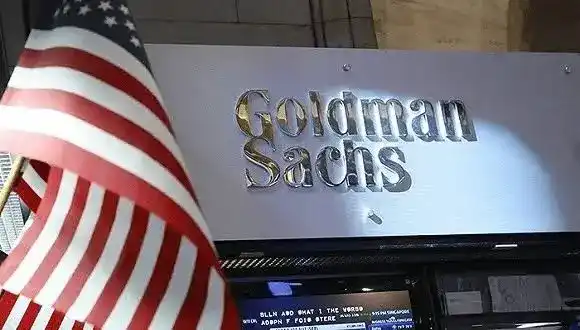
SpaceX has filed its prospectus with the SEC, targeting a $75 billion fundraising round at a valuation of $1.75 trillion. This would be the largest IPO in human history—2.5 times the size of Saudi Aramco's $29.4 billion record—and exceeds the total IPO fundraising in the U.S. for 2024 and 2025 combined. Morgan Stanley and Goldman Sachs are underwriting the offering, with a target listing date in June.

After acquiring xAI, SpaceX is now a satellite internet provider (Starlink has 9 million users and profits exceeding $8 billion), a defense contractor, and an AI infrastructure company. Its valuation has surged 38-fold in six years, from $46 billion to $1.75 trillion.

OpenAI and Anthropic are next in line. The $75 billion fundraising scale raises a bigger question than SpaceX itself: how much market liquidity will it absorb, and what valuations will the queued AI unicorns be able to secure?

(Source: Bloomberg / Axios / The Information / Barron's)

2| New Dimensions in the AI Infrastructure Race: Space GPUs, European Debt Financing, and 7.5GW of Frozen Wind Power

Starcloud has completed a $170 million Series A round, reaching an $1.1 billion valuation and becoming Y Combinator's fastest unicorn ever, just 17 months after Demo Day. Using $3 million in seed funding, the company launched its first satellite equipped with H100 GPU, aiming to build an orbital data center network of 88,000 satellites. With Earth's electricity in short supply, someone is starting to send GPUs into space.

Mistral has borrowed $830 million from seven banks to build a data center in Paris, equipped with 13,800 GB300 GPUs, set to go online in Q2. In Europe, AI funding isn't coming from VCs; it's coming from banks.

In the U.S., the Pentagon has frozen military approvals for 30 wind power projects, totaling 7.5 gigawatts. The American Clean Power Association has given the Defense Department until April 8th to respond, or face a lawsuit. While AI companies scramble to build data centers, power approvals are stuck in paperwork.

(Source: TechCrunch / SpaceNews / Reuters / Axios / American Clean Power Association)

3| Palantir Selects IRS Audit Targets, AI Enters the Core of Federal Law Enforcement

Documents obtained by Wired show the IRS paid Palantir $1.8 million last year to improve a custom tool called SNAP, which sifts through legacy systems to select "highest-value" targets for audits, tax debt collection, and potential criminal investigations. The tool extracts key information on contracts, vehicles, and suppliers from unstructured data, replacing over 700 outdated screening systems the IRS has used for decades.

A larger project is the "mega API." Palantir is working with IRS engineers to build a unified data interface layer, aiming to become the "read center for all IRS systems." Democratic senators have already demanded Palantir explain this "searchable super-database" plan, calling it a "surveillance nightmare."

Palantir has received over $180 million from the IRS since 2018 across 26 contracts. The same company that tracks immigrants for ICE, selects audit targets for the IRS, and integrates government data for the DOGE is building the federal government's data hub—a private company with a market cap exceeding $100 billion.

(Source: Wired / Tax Notes / U.S. Senate Finance Committee)

4| Day 31 of the Iran War: Trump Says "Seize the Oil," Marine Corps Already Deployed

Trump has publicly stated he would invade Iran to "seize the oil," calling opponents "fools." The Marine Corps' 31st and 11th Marine Expeditionary Units have arrived in the Middle East, with the 82nd Airborne Division en route. The Washington Post reports the Pentagon is preparing for "weeks of ground operations," including seizing the Kharg Island oil hub. The war narrative has shifted from "retaliation" to "resource control."

The IAEA has confirmed Iran's heavy-water reactor is no longer operational. Oil prices have risen to $116 per barrel, up over 50% since the war began. EIA data shows flow through the Strait of Hormuz has plummeted from a pre-war 20 million barrels per day, forcing Gulf countries to cut production by millions of barrels per day.

Macquarie analysts believe Trump is following a "TACO" timeline (Trump Always Chickens Out), expecting the conflict to end within six weeks—now in its fifth week. The economic cost: approximately $1 billion per day in spending, with over 3,000 deaths. (Continued from yesterday's report)

(Source: Al Jazeera / Fortune / CNN / The Washington Post / Military.com / EIA / IAEA)

Also Worth Knowing ↓

DeepSeek experiences its longest outage since launch, affecting 355 million users for 7 hours. China's most popular AI chatbot suffered its most severe service disruption since the R1 launch in January 2025. The cause of the outage was not disclosed. (Source: Bloomberg / Reuters)

Dell built a $25 billion AI infrastructure business from scratch in two years. The "outdated PC maker," whose stock fell by a third in 2022, reached a record total revenue of $113.5 billion in 2025 and is guiding Wall Street to expect AI server sales of $50 billion next year. Nvidia isn't the only one selling picks and shovels in the AI gold rush. (Source: Fortune)

Huayan Robotics rose 8.24% on its Hong Kong listing debut, with its public offering oversubscribed by 5,000 times. The company listed on the Hong Kong Stock Exchange at an issue price of HK$17 and a market cap of HK$9 billion, securing nearly $100 million in cornerstone investments from Hillhouse, GF Fund, Morgan Stanley, and others. The embodied intelligence capital frenzy is spilling over from the primary to the secondary market. (Source: 36Kr)

Ethereum Foundation makes a one-time stake of $42 million worth of ETH. On-chain data shows this is the Foundation's largest single staking operation to date. The Foundation had long avoided staking, making this strategic shift noteworthy. (Source: CoinDesk / The Block)

Chinese cloud providers achieve scaled profitability for the first time, as AI demand reverses industry losses. Tencent Cloud turned a profit for the first time in 2025, and Kingsoft Cloud reported positive profits for two consecutive quarters after adjustments. Cloud providers' pricing power is increasing in the AI era, potentially ending the history of low-price competition. (Source: 36Kr / Shanghai Securities News)
Связанные с этим вопросы

QWhat is the target IPO valuation and funding amount for SpaceX, and how does it compare to historical records?

ASpaceX is targeting a $75 billion IPO with a valuation of $1.75 trillion. This would be 2.5 times larger than the previous record holder, Saudi Aramco's $29.4 billion IPO, and exceeds the total of all U.S. IPOs in 2024 and 2025 combined.

QWhat is the approach of Starcloud in the AI infrastructure race and what is it unique?

AStarcloud is taking a unique approach by launching data centers into space. It completed a $170 million Series A, becoming Y Combinator's fastest unicorn, and used seed funding to launch a satellite carrying an H100 GPU. Its goal is a network of 88,000 satellites to create an orbital data center network.

QWhat role does Palantir play for the IRS, and what concerns have been raised about its work?

APalantir is working with the IRS to improve a tool called SNAP, which selects 'highest-value' targets for audits, tax collection, and criminal investigations. It is also building a 'mega API' to act as a central data interface. Democratic senators have raised concerns, calling it a 'surveillance nightmare'.

QAccording to the article, what is the current state of the conflict with Iran and its economic impact?

AThe conflict has entered its 31st day. Former President Trump has publicly advocated for invading Iran to 'seize oil,' and U.S. military units are deploying. Oil prices have surged over 50% to $116 per barrel, and the flow of oil through the Strait of Hormuz has dropped significantly from 20 million barrels per day, forcing Gulf countries to cut production.

QWhich Chinese AI company experienced a major outage, and what was the impact?

ADeepSeek experienced its longest outage since its launch, lasting 7 hours and affecting 355 million users. The cause of the outage was not publicly disclosed.

Похожее

The Era Has Arrived Where Human Writers Must Prove They Are Not Machines

The article describes an era where AI-generated content is flooding the market, forcing human authors to prove they are not machines. It begins with the example of dozens of AI-written, error-ridden biographies of Henry Kissinger appearing on Amazon within hours of his death, a pattern repeated for other deceased celebrities and even living experts who find fraudulent books under their names. This spam content has exploded, with monthly new book releases on platforms like Amazon reaching 300,000 by late 2025. The issue spans genres, from suspiciously high proportions of AI-written teen romance and self-help books to dangerous, AI-generated foraging guides containing lethal advice. The platforms' automated review systems, designed to catch plagiarism and banned words, are ill-equipped to detect AI-generated text that avoids these pitfalls while being nonsensical or fraudulent. The problem has infiltrated traditional publishing. A major publisher, Hachette, had to recall a bestselling horror novel after AI detection tools suggested 78% of its content was machine-generated. An acclaimed European philosophy book was later revealed to be entirely written by AI under a fake author persona. In response, authors are fighting back. At the 2026 London Book Fair, 10,000 writers published a blank book titled "Don't Steal This Book" containing only their signatures—using emptiness as a protest weapon in an age of AI overproduction. Initiatives like the "Human Author Certification" program have emerged, ironically placing the burden on humans to prove their work is not machine-made. The article warns of a vicious cycle: AI-generated low-quality books pollute the data used to train future AI models, leading to "model collapse" and an ever-worsening flood of digital waste, eroding trust in publishing and devaluing human creativity.

marsbit10 мин. назад

The Era Has Arrived Where Human Writers Must Prove They Are Not Machines

marsbit10 мин. назад

The King of Blind Date Attire in Korea: How SK Hynix Made a Comeback Against Samsung?

In South Korea's dating scene, SK Hynix employees are now highly sought after, a status shift fueled by the company's astronomical profits and employee bonuses, projected to reach up to 6.1 million RMB per person by 2027. This marks a dramatic reversal for the long-time second-place player in memory semiconductors, which has now surpassed its rival Samsung in annual operating profit. The turnaround story began in 2008 when a struggling Hynix, emerging from bankruptcy restructuring, took a risky bet by agreeing to develop High Bandwidth Memory (HBM) with AMD. At the time, HBM had no clear market beyond high-end graphics cards and was a costly, complex technology. Major players like Samsung, pursuing its own HMC technology, declined. For Hynix, with only memory as its core business, it was a gamble born of necessity. The pivotal moment came in 2012 when SK Group Chairman Chey Tae-won acquired Hynix. Defying industry downturns, he invested heavily in R&D and fabrication, sustaining the HBM project through over a decade of commercial uncertainty and internal challenges. A key break occurred around 2016-2017 when Samsung faced production issues supplying HBM2 for Google's TPU, allowing SK Hynix to gain a crucial foothold in the data center market. The AI explosion post-ChatGPT in 2022 was the catalyst, turning HBM into a critical bottleneck for AI accelerators like NVIDIA's GPUs. By 2025, SK Hynix captured 62% of the global HBM market, leaving Samsung at 17%. For the first time, its annual operating profit exceeded Samsung's. Analysts point to the "innovator's dilemma" to explain Samsung's miss: its vast, successful business portfolio made it risk-averse, preventing an all-in bet on the initially niche HBM technology. In contrast, SK Hynix, as a challenger with its back against the wall, had no choice but to commit fully. The story highlights how Korea's chaebol system allows for ultra-long-term bets beyond quarterly pressures. However, SK Hynix's lead isn't guaranteed. Samsung is aggressively catching up on HBM4, and challenges like customer concentration (heavy reliance on NVIDIA) and technical hurdles in advanced packaging remain. The narrative underscores a market truth: the greatest alpha often comes from betting on uncertain, long-term directions others dismiss, much like HBM in 2008.

marsbit50 мин. назад

The King of Blind Date Attire in Korea: How SK Hynix Made a Comeback Against Samsung?

marsbit50 мин. назад

Торговля

Спот
Фьючерсы
活动图片