Solana's Two Leading Lending Protocols Clash, Foundation Steps In to Mediate

Odaily星球日报Опубликовано 2025-12-08Обновлено 2025-12-08

Введение

Jupiter Lend and Kamino, the two leading lending protocols on Solana, are embroiled in a public dispute over Jupiter’s “risk isolation” claims. The conflict began when Jupiter promoted its lending product as having isolated risk between pools, but critics—led by Kamino—argue Jupiter’s design actually allows cross-contamination through rehypothecation (reusing collateral across pools). Kamino’s co-founder publicly accused Jupiter of misleading users, prompting community backlash. Jupiter later deleted earlier promotional content and acknowledged the description was inaccurate. The debate centers on differing interpretations of “risk isolation,” with Jupiter defending its model as a balance between safety and capital efficiency. Multicoin Capital, a Kamino investor, escalated the situation by accusing Jupiter of incompetence or intentional deception. In response, the Solana Foundation urged both sides to collaborate rather than compete internally, highlighting the larger opportunity in expanding the DeFi lending market overall. The clash reflects growing tension as Jupiter Lend rapidly gains market share in a shrinking TVL environment, turning former allies into rivals in Solana’s competitive lending landscape.

Original | Odaily Planet Daily (@OdailyChina)

Author | Azuma (@azuma_eth)

This past weekend, the two leading lending protocols on Solana, Jupiter Lend and Kamino, got into a public spat.

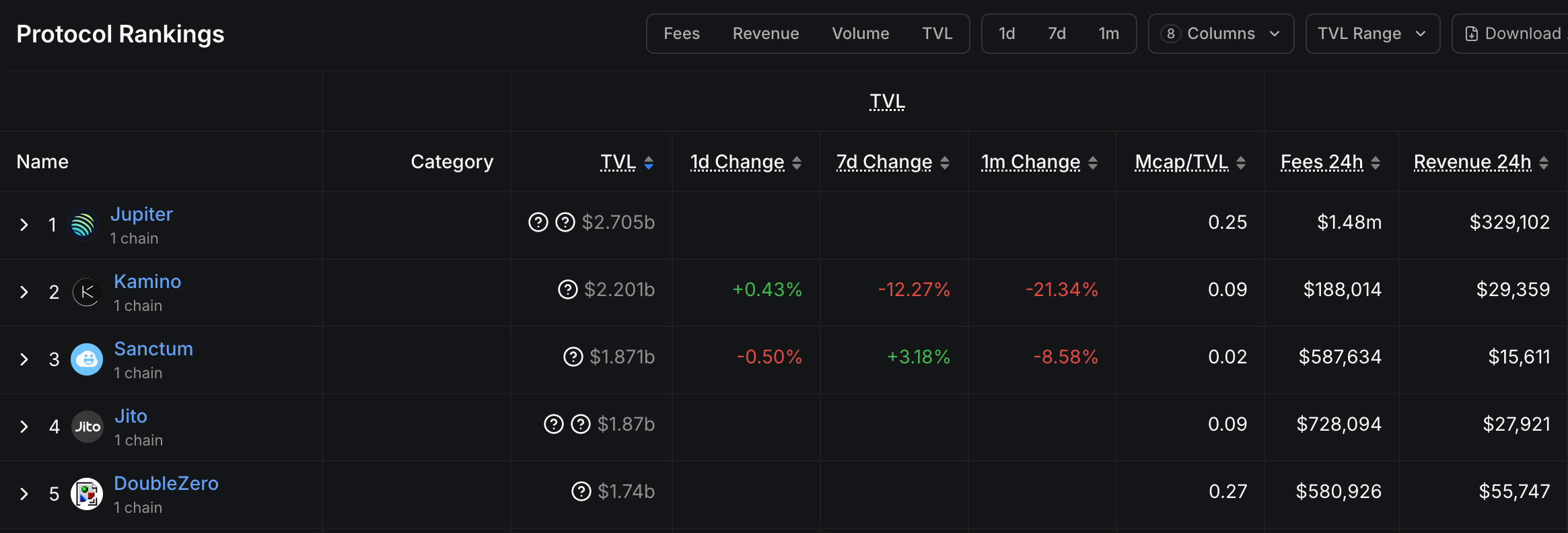
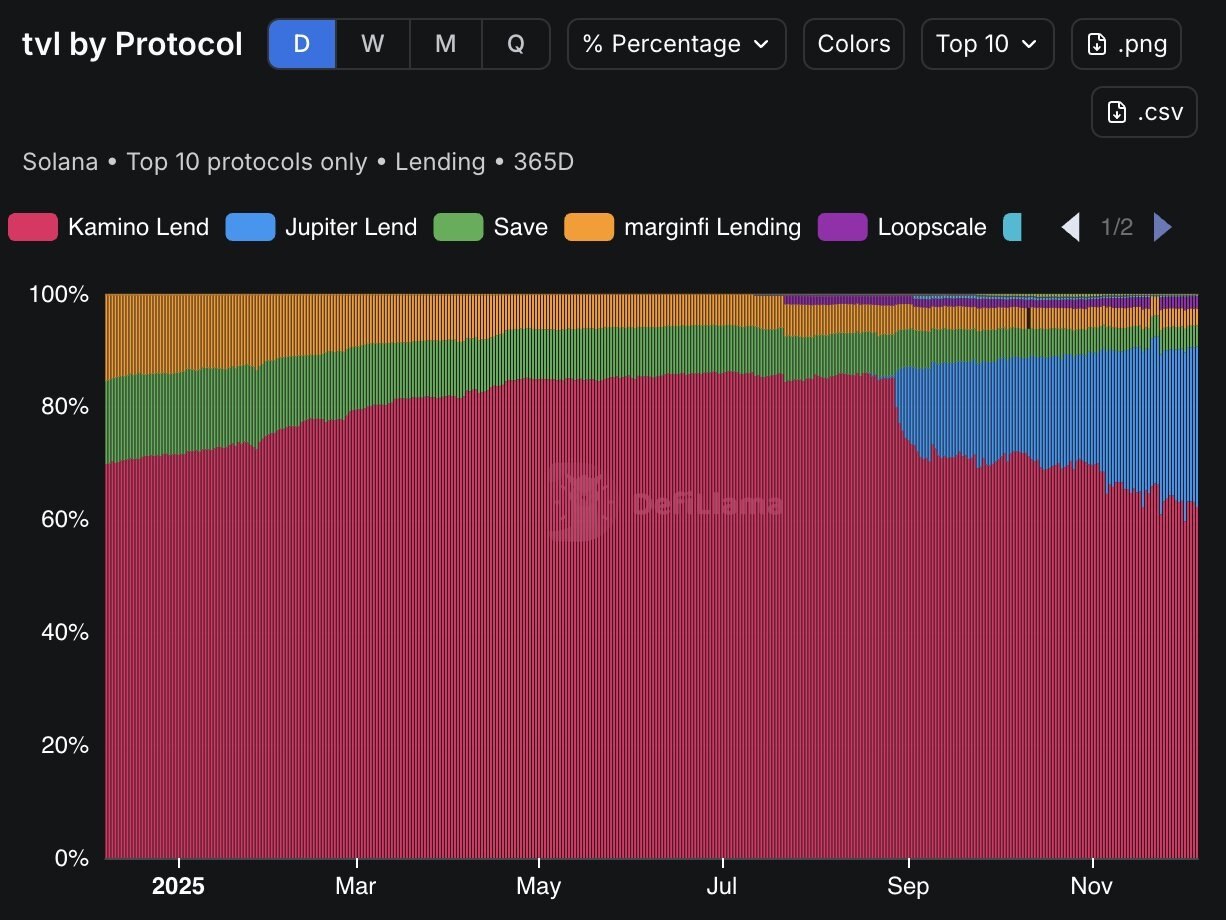
  • Odaily Note: Defillama data shows that Jupiter and Kamino are currently the two protocols with the highest TVL in the Solana ecosystem.

Origin of the Incident: The Tweet Jupiter Quietly Deleted

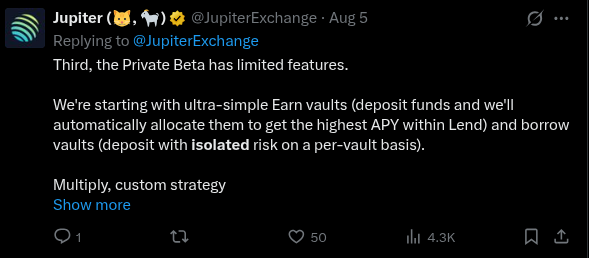
The origin of the incident can be traced back to August of this year. At that time, during the pre-launch promotion of its lending product Jupiter Lend, Jupiter's official account repeatedly emphasized that the lending product had a "risk isolation" feature (related posts have been deleted), meaning there would be no cross-contamination of risks between different lending pools.

However, the actual design of Jupiter Lend upon launch did not align with the market's common understanding of a risk isolation model. In the general market perception, a DeFi lending pool that can be called risk-isolated is a structure that, through design mechanisms, separates the risks of different assets or markets from each other, preventing a single asset default or a market crash from affecting the entire protocol. The main features of this structure include:

  • Pool Segregation: Different asset types (such as stablecoins, volatile assets, NFT collateral, etc.) are allocated to independent lending pools, each with its own liquidity, debt, and risk parameters.
  • Collateral Isolation: Users can only use assets within the same pool as collateral to borrow other assets, cutting off cross-pool risk transmission.

But in fact, Jupiter Lend's design supports rehypothecation (reusing deposited collateral elsewhere in the protocol) to improve capital efficiency, meaning the collateral deposited into the vaults is not completely isolated from each other. Jupiter co-founder Samyak Jain's explanation for this was that Jupiter Lend's lending pools are isolated "in a sense" because each pool has its own configuration, caps, liquidation thresholds, liquidation penalties, etc., and the rehypothecation mechanism is merely to better optimize capital utilization efficiency.

Although Jupiter's product documentation for Jupiter Lend provides more detailed explanations than the promotional content, objectively speaking, the "risk isolation" mentioned in its early promotions did have a certain deviation from the market's common understanding, creating a suspicion of misleading users.

Escalation: Kamino Launches an Attack

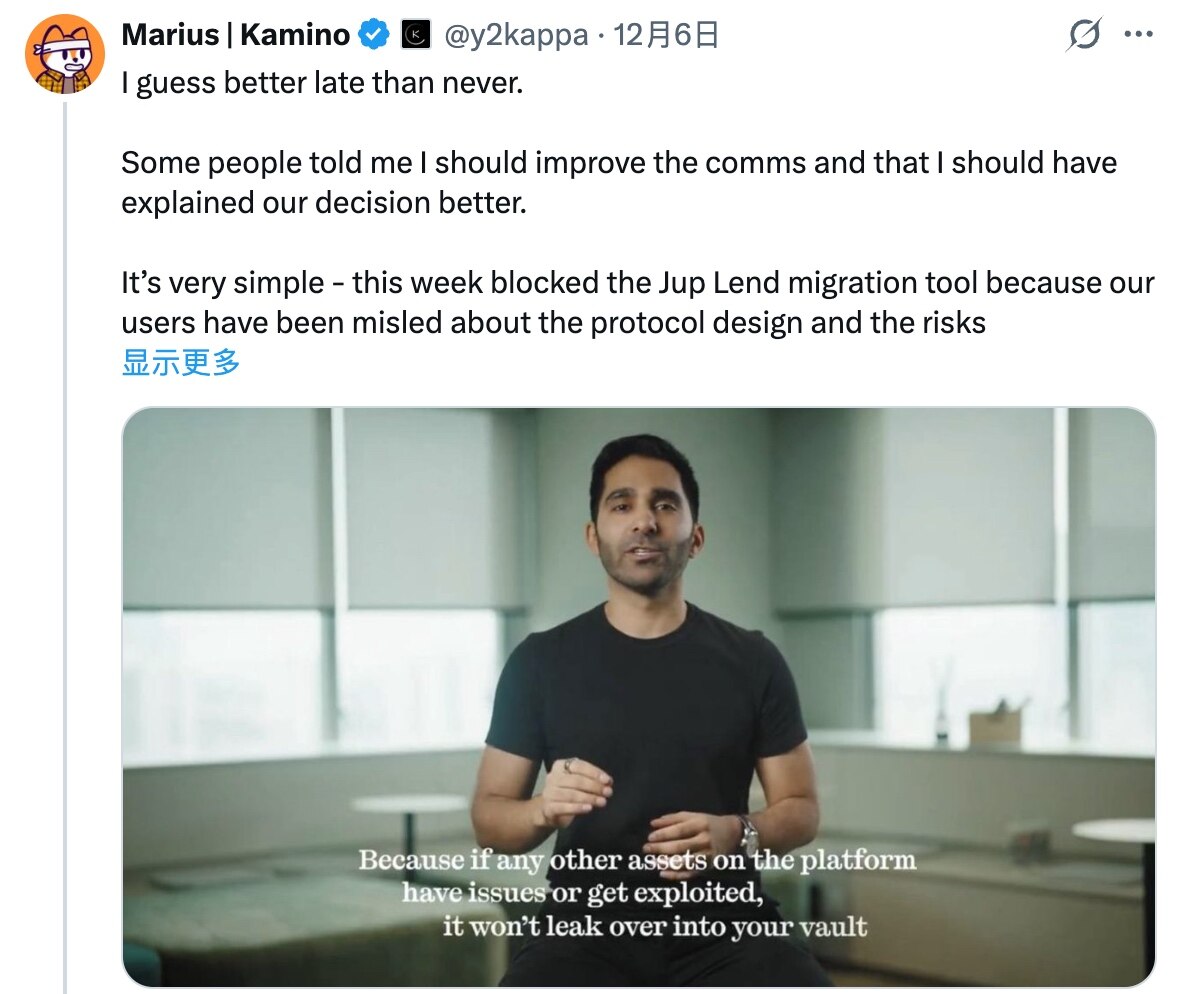
On December 6th, Kamino co-founder Marius Ciubotariu seized this opportunity to publish a post criticizing Jupiter Lend and blocked Kamino migration tools to Jupiter Lend.

Marius stated: "Jupiter Lend repeatedly claims there is no cross-contamination between assets, which is complete nonsense. In reality, in Jupiter Lend, if you deposit SOL and borrow USDC, your SOL will be lent out to other users engaging in recursive farming using JupSOL, INF, etc. You will bear all the risks of these recursive farms collapsing or the assets crashing. There is no isolation here; there is complete cross-contamination, contrary to what was advertised and what people were told... In both traditional finance (TradFi) and decentralized finance (DeFi), information about whether collateral is rehypothecated and whether there is contagion risk is material information that must be clearly disclosed, and no one should offer vague explanations for it."

After Kamino's offensive, discussions surrounding Jupiter Lend's product design quickly ignited the community. Some agreed that Jupiter was涉嫌虚假宣传 (suspected of false advertising) — for example, Penis Ventures CEO 8bitpenis.sol angrily accused Jupiter of blatantly lying from the start and deceiving users; others believed that Jupiter Lend's design model balanced safety and efficiency, and that Kamino's attack was merely for market competition with impure motives — for example, overseas KOL letsgetonchain stated: "Jupiter Lend's design achieves the capital efficiency of a pooled model while incorporating some risk management capabilities of modular lending protocols... Kamino cannot stop people from migrating to better technology."

Under pressure, the Jupiter team quietly deleted the early posts, but this triggered even larger-scale FUD. Subsequently, Jupiter Chief Operating Officer Kash Dhanda also came forward to admit that the team's previous social media claims of "zero contagion risk" for Jupiter Lend were inaccurate and apologized, stating that a correction should have been issued simultaneously with the deletion of the posts.

Core Contradiction: The Definition of "Risk Isolation"

Summarizing the current opposing attitudes, the fundamental divergence seems to lie in the different definitions different groups have for the term "risk isolation."

From the perspective of Jupiter and its supporters, "risk isolation" is not a completely static concept; there can be some design flexibility within it. Although Jupiter Lend is not the commonly understood risk isolation model, it is also not a completely open pooled model. While it shares a common liquidity layer that allows rehypothecation, each lending pool can be configured independently with its own asset caps, liquidation thresholds, and liquidation penalties.

From the perspective of Kamino and its supporters, any allowance of rehypothecation is a complete negation of "risk isolation," and as a project, one should not use vague disclosures and false advertising to deceive users.

Higher-Level Sentiment: Some Fuel the Fire, Others Mediate

Aside from the dispute between the two parties and the community, another noteworthy point in this风波 (controversy) is the attitude of various higher-level entities within the Solana ecosystem.

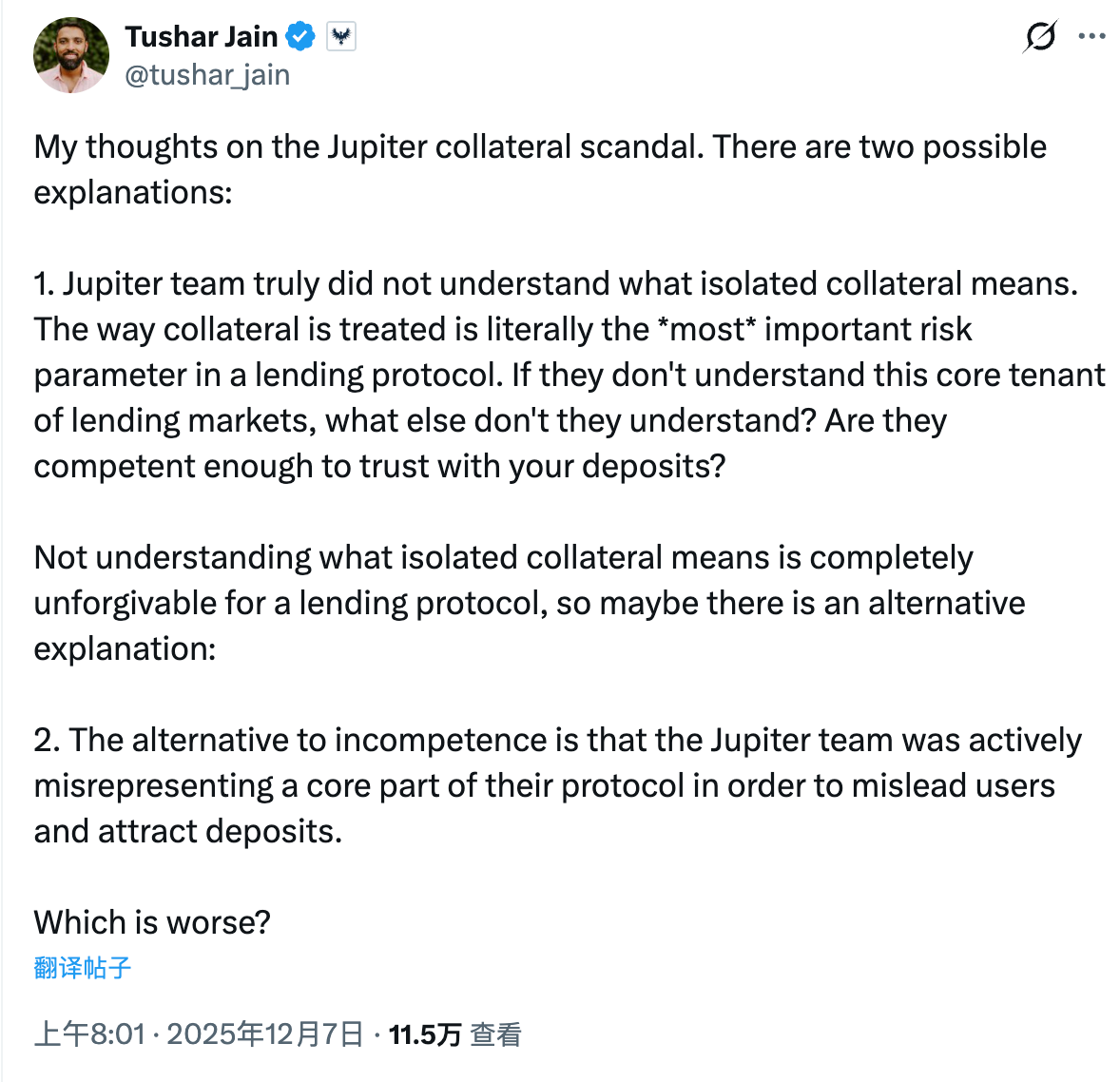
First is Multicoin Capital, the venture capital fund with arguably the most influence (perhaps without the 'arguably') in the Solana ecosystem. As an investor in Kamino, Multicoin partner Tushar Jain directly posted questioning whether Jupiter was "incompetent or malicious, but neither possibility is forgivable" — objectively speaking, his remarks significantly exacerbated the controversy.

Tushar stated: "There are two possible explanations for the controversy around Jupiter Lend. One is that the Jupiter team genuinely does not understand the meaning of isolated collateral. Collateral treatment is the most important risk parameter in a lending protocol. If they don't understand this core principle of lending markets, what else haven't they figured out? Is their expertise sufficient to reassure people to deposit funds? For a lending protocol, not understanding the meaning of isolated collateral is completely unforgivable. The other possibility is that the Jupiter team is not incompetent but actively misrepresented a core part of their protocol to mislead users and attract deposits."

Clearly, Tushar's motivation was very clear: to seize this opportunity to help Kamino打击竞争对手 (strike a blow against its competitor).

Another important higher-level statement came from the Solana Foundation. As the parent ecosystem, Solana obviously does not want to see its two leading contenders become overly antagonistic, leading to overall ecosystem infighting and inefficiency.

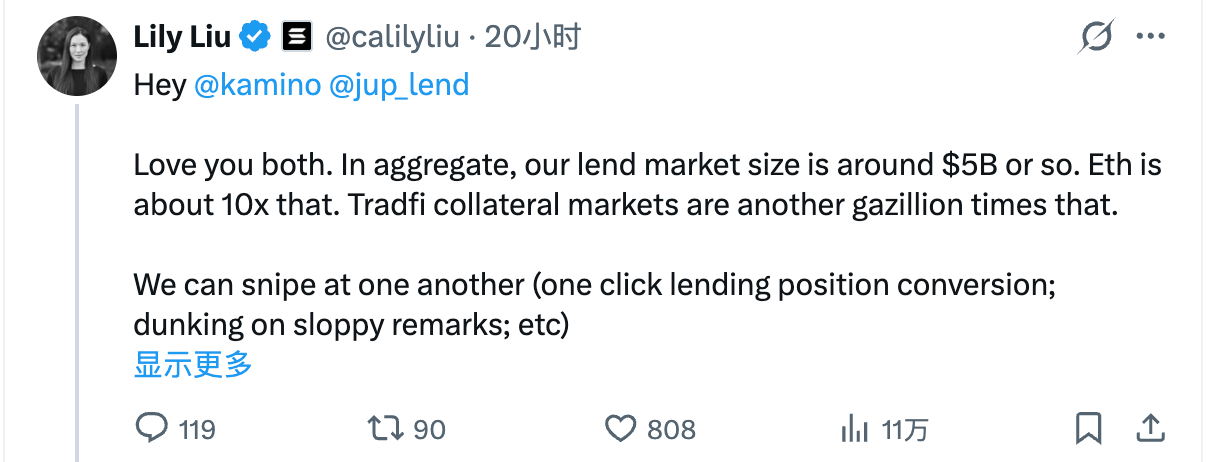
Yesterday afternoon, Solana Foundation President Lily Liu posted on X addressing both projects and mediating: "Love you both. Overall, our lending market size is currently around $5 billion, while the Ethereum ecosystem's size is about 10 times larger. As for the traditional finance collateral market, that's countless times larger than this number. We can choose to attack each other, or we can choose to set our sights further — first work together to capture share from the entire crypto market, and then jointly advance into the vast space of traditional finance.

Simple summary — Stop fighting, or Ethereum will benefit!

Underlying Logic: The Battle for Solana's Lending Leadership

Looking at the data development of Jupiter Lend and Kamino and the market environment, this controversy, though sudden, seems like an inevitable collision that was only a matter of time.

On one hand, Kamino (red in the chart below) long held the top position as the lending leader in the Solana ecosystem, but Jupiter Lend (blue in the chart below) has captured a significant market share since its launch, becoming the only entity currently capable of challenging the former within the Solana ecosystem.

On the other hand, since the major bloodbath on October 11th, market liquidity has tightened significantly, and the overall TVL of the Solana ecosystem has continued to decline; additionally, the subsequent collapse of multiple projects has made the DeFi market extremely sensitive to "security."

When the market environment was better and incremental funds were sufficient, Jupiter Lend and Kamino were relatively harmonious, as both were profitable and seemed poised to become even more so... But when the market shifted to a存量博弈 (stock game/competition for existing market share), the competitive relationship between the two became more tense and confrontational, and security issues正好又是 (happened to be) the most effective point of attack at the moment — even though Jupiter Lend has not had any security incidents historically, mere design suspicions were enough to trigger user alertness.

Perhaps from Kamino's perspective, the present was the perfect opportunity to deal a heavy blow to its opponent.

Связанные с этим вопросы

QWhat was the main reason behind the conflict between Jupiter Lend and Kamino?

AThe conflict stemmed from Jupiter Lend's early marketing claims of 'risk isolation,' which Kamino argued was misleading because Jupiter Lend's design allowed for rehypothecation (reusing deposited collateral elsewhere in the protocol), leading to potential cross-contamination risks between pools.

QHow did Jupiter respond to the accusations regarding its 'risk isolation' claims?

AJupiter's COO, Kash Dhanda, admitted that the team's earlier social media claims of 'zero contagion risk' were inaccurate and apologized for not issuing a correction immediately after deleting the posts.

QWhat role did Multicoin Capital play in the dispute?

AAs an investor in Kamino, Multicoin Capital partner Tushar Jain publicly criticized Jupiter, accusing them of either incompetence or intentional deception regarding their risk isolation claims, which escalated the controversy.

QHow did the Solana Foundation intervene in the situation?

ASolana Foundation President Lily Liu urged both projects to reconcile, emphasizing that the Solana lending market is much smaller than Ethereum's and that internal conflicts could hinder growth, suggesting they focus on expanding the ecosystem together.

QWhat market conditions contributed to the tension between Jupiter Lend and Kamino?

AThe tension was exacerbated by a sharp decline in market liquidity and Solana's TVL after the October 11 market crash, turning the lending market into a competitive存量博弈 (stock game), where Kamino saw an opportunity to attack Jupiter Lend over security concerns.

Похожее

Why Not Short Even When Bearish? Munger Did the Math on a 'Losing Trade'

Why Not Short Even When Bearish? Charlie Munger's Calculated "Loss-Making Account" Many traders, drawn to speculative tools like futures contracts, often face repeated failures. As the article notes, unless one is a genius, such instruments should be avoided for long-term profit-seeking. Similarly, the practice of short selling is viewed with caution. The author firmly states a policy of not shorting, even when bearish, preferring to simply wait. The core reason? Successful short selling requires exceptionally difficult conditions to profit. Legendary investors Warren Buffett and Charlie Munger have themselves reflected on painful short-selling experiences. Munger highlights two critical flaws in the mathematical logic of shorting: 1. Asymmetrical Risk/Reward: A long position has a maximum loss of 100% but unlimited upside. A short position caps profit at 100% (if a stock falls to zero) but carries theoretically unlimited loss potential. 2. The "Promoter" Problem: Fraudulent or struggling companies can prolong their decline. As Munger said, "You can run out of money before the promoter runs out of ideas," meaning short sellers may be forced to cover positions at a loss before the company's true fate unfolds. The article cites Stanley Druckenmiller, a famed hedge fund manager. He once shorted 12 companies that all eventually went bankrupt. However, intense market rallies forced him to cover his positions within three weeks, resulting in massive losses—$200 million of his capital plus an additional $600 million. He concluded he likely never made money shorting in his career. His experience perfectly illustrates Munger's points: facing unlimited losses and being wiped out before being proven right. The conclusion is clear: for most investors, complex instruments like short selling and derivatives are not viable paths to stable, long-term gains. Self-reflection is advised before repeatedly wasting time and capital on such speculative strategies.

marsbit14 мин. назад

Why Not Short Even When Bearish? Munger Did the Math on a 'Losing Trade'

marsbit14 мин. назад

For Hedging, Buy Gold and Oil; For Explosive Growth, Buy AI; Bitcoin, the 'Outdated' Asset, Enters a Bear Market

Bitcoin’s price has recently fallen sharply, hitting a two-month low near $66,000, with Ethereum also dropping to a three-month low. While surface explanations point to ETF outflows, geopolitical tensions, and corporate selling, a deeper issue is emerging: Bitcoin is losing a crucial asset competition. For years, Bitcoin thrived in a low-rate environment where investors sought alternatives amid inflation fears and dissatisfaction with traditional options. Now, the market landscape has shifted, leaving Bitcoin stuck in an "awkward middle ground," facing challenges on three fronts: 1. **As an inflation hedge, gold is winning.** Investors worried about persistent inflation are turning to tangible assets like gold, energy stocks, and commodity producers, which offer more direct pricing power and physical backing. 2. **For growth exposure, AI is winning.** Those seeking high growth now favor AI-related companies with actual revenues and profits, an area where Bitcoin's lack of cash flow puts it at a disadvantage. 3. **Within crypto, infrastructure and stablecoins are winning.** Even investors wanting crypto exposure have alternatives like exchanges, stablecoin issuers, and tokenization firms, whose performance is directly tied to real-world adoption and offers clearer operational leverage. The recent market reaction to inflation warnings highlights this shift. Instead of boosting Bitcoin as "digital gold," such news now drives flows toward traditional inflation-sensitive assets. Therefore, recent events like ETF outflows and corporate selling are seen not as causes, but as symptoms of this new reality. Capital has more compelling options, and investors are becoming more selective. The emerging bear case for Bitcoin is no longer about it being a fraud or failed technology, but rather that **scarcity alone is no longer enough**. It is no longer seen as the best hedge, the best growth asset, or the only crypto play.

marsbit30 мин. назад

For Hedging, Buy Gold and Oil; For Explosive Growth, Buy AI; Bitcoin, the 'Outdated' Asset, Enters a Bear Market

marsbit30 мин. назад

SaaS Battle Royale: The Survivors Who Win All Share One Common Trait

**Summary** The AI revolution has triggered a "SaaS apocalypse," forcing a brutal market shakeout. The key dividing line is the pricing model. Companies like Snowflake and Datadog, which charge based on consumption (e.g., data processed or compute used), are thriving. AI workloads actively *generate* more demand for their services, fueling growth. Datadog's accelerating revenue is a prime example. Microsoft and Palantir, as platform/ecosystem players, also benefit by acting as essential channels for AI deployment. In contrast, traditional SaaS firms built on per-seat or per-task licensing (e.g., Intuit, Adobe) face direct pressure, as AI threatens to automate the very human tasks their software supports. Companies like Salesforce, a per-seat giant, are caught in the middle. While showing strong AI monetization (e.g., its Agentforce platform) and experimenting with consumption-based "Flex Credits," its stock remains under pressure, illustrating that the market rewards *completed* transitions, not just the intent. The recent Microsoft Build conference underscored key trends: AI is evolving from an assistant to an autonomous "agent," and platform providers like Microsoft are consolidating their control. The market's recovery is highly selective, focused on identifying which companies are "fed by AI" versus "eaten by AI." Future focus will be on the diffusion of this recovery to transforming companies and the real-world adoption data of AI agents like Microsoft Copilot.

marsbit47 мин. назад

SaaS Battle Royale: The Survivors Who Win All Share One Common Trait

marsbit47 мин. назад

Торговля

Спот
Фьючерсы

Популярные статьи

Как купить S

Добро пожаловать на HTX.com! Мы сделали приобретение Sonic (S) простым и удобным. Следуйте нашему пошаговому руководству и отправляйтесь в свое крипто-путешествие.Шаг 1: Создайте аккаунт на HTXИспользуйте свой адрес электронной почты или номер телефона, чтобы зарегистрироваться и бесплатно создать аккаунт на HTX. Пройдите удобную регистрацию и откройте для себя весь функционал.Создать аккаунтШаг 2: Перейдите в Купить криптовалюту и выберите свой способ оплатыКредитная/Дебетовая Карта: Используйте свою карту Visa или Mastercard для мгновенной покупки Sonic (S).Баланс: Используйте средства с баланса вашего аккаунта HTX для простой торговли.Третьи Лица: Мы добавили популярные способы оплаты, такие как Google Pay и Apple Pay, для повышения удобства.P2P: Торгуйте напрямую с другими пользователями на HTX.Внебиржевая Торговля (OTC): Мы предлагаем индивидуальные услуги и конкурентоспособные обменные курсы для трейдеров.Шаг 3: Хранение Sonic (S)После приобретения вами Sonic (S) храните их в своем аккаунте на HTX. В качестве альтернативы вы можете отправить их куда-либо с помощью перевода в блокчейне или использовать для торговли с другими криптовалютами.Шаг 4: Торговля Sonic (S)С легкостью торгуйте Sonic (S) на спотовом рынке HTX. Просто зайдите в свой аккаунт, выберите торговую пару, совершайте сделки и следите за ними в режиме реального времени. Мы предлагаем удобный интерфейс как для начинающих, так и для опытных трейдеров.

1.4k просмотров всегоОпубликовано 2025.01.15Обновлено 2026.06.02

Как купить S

Sonic: Обновления под руководством Андре Кронье – новая звезда Layer-1 на фоне спада рынка

Он решает проблемы масштабируемости, совместимости между блокчейнами и стимулов для разработчиков с помощью технологических инноваций.

2.3k просмотров всегоОпубликовано 2025.04.09Обновлено 2025.04.09

Sonic: Обновления под руководством Андре Кронье – новая звезда Layer-1 на фоне спада рынка

HTX Learn: Пройдите обучение по "Sonic" и разделите 1000 USDT

HTX Learn — ваш проводник в мир перспективных проектов, и мы запускаем специальное мероприятие "Учитесь и Зарабатывайте", посвящённое этим проектам. Наше новое направление .

1.8k просмотров всегоОпубликовано 2025.04.10Обновлено 2025.04.10

HTX Learn: Пройдите обучение по "Sonic" и разделите 1000 USDT

Обсуждения

Добро пожаловать в Сообщество HTX. Здесь вы сможете быть в курсе последних новостей о развитии платформы и получить доступ к профессиональной аналитической информации о рынке. Мнения пользователей о цене на S (S) представлены ниже.

活动图片