Solana Tries To Turn Fear Into FOMO — Can STRIDE Really Stop The Next $300M Rug?

bitcoinistОпубликовано 2026-04-07Обновлено 2026-04-07

Введение

The Solana Foundation has launched a new security initiative called STRIDE (Solana Trust, Resilience and Infrastructure for DeFi Enterprises) in collaboration with Asymmetric Research. This framework is designed to continuously assess and oversee the security of projects built on Solana through an eight-pillar system, with results made public. Alongside STRIDE, the Solana Incident Response Network (SIRN) was introduced—a coalition of security firms focused on threat intelligence and coordinated responses to hacks. These efforts follow a recent $286 million exploit on the Drift Protocol and represent a shift toward continuous, foundation-funded security monitoring rather than one-time audits. While these measures may help restore trust, new exploits on unaudited protocols could still face severe market reactions.

The Solana Foundation has unveiled new security initiatives framed as a “new wave” of ecosystem security.

Solana Attempts To Rebuild The Trust

This Monday, the Solana Foundation announced on a blog post the launching, in collaboration with Asymmetric Research, of the STRIDE (Solana Trust, Resilience and Infrastructure for DeFi Enterprises) program. STRIDE is an organized framework designed to continuously assess and oversee the security of projects built on the ecosystem.

According to Assymetric Research’s own blog post, STRIDE works as an eight‐pillar security framework that will carry out independent reviews of ecosystem protocols to verify they comply with it. The results of these assessments will be released publicly, giving users and investors clear visibility into the safety of the platforms they use.

In parallel to STRIDE, the foundation also released the Solana Incident Response Network (SIRN), a member‐driven coalition of security companies and researchers focused exclusively on the Solana ecosystem. According to the blog post, founding participants of the membership-based network include Asymmetric Research, OtterSec, Neodyme, Squads, and ZeroShadow. SIRN is the “war room”, sharing threat intel and coordinating live hack responses across the ecosystem.

The new initiatives sit on top of existing tools like Hypernative, Range, Riverguard, Sec3, and AuditWare, which are offered free to builders to harden code from day one. This is a core shift away from one‐off audits toward continuous, foundation‐funded monitoring, public security reports and coordinated incident response.

A Shift In Security Protocols, But A Shift In Sentiment?

These moves directly follow the April 1st $286 million attack on the Solana-based Drift Protocol that ended up being attributed to North Korean hackers.

The blog post, however, makes no mention of the attack. Despite that, it does spell out the need to strengthen the security services the foundation offers.

Solana was built for security. And as the ecosystem scales, the stakes scale with it (...) Solana Foundation has a long history of dedicating resources to ensure that security services and tools are available to the ecosystem.

While it is true that security headlines and follow‐through on STRIDE/SIRN may help repair sentiment after the Drift shock, any new exploit on an unevaluated protocol could be punished harder.

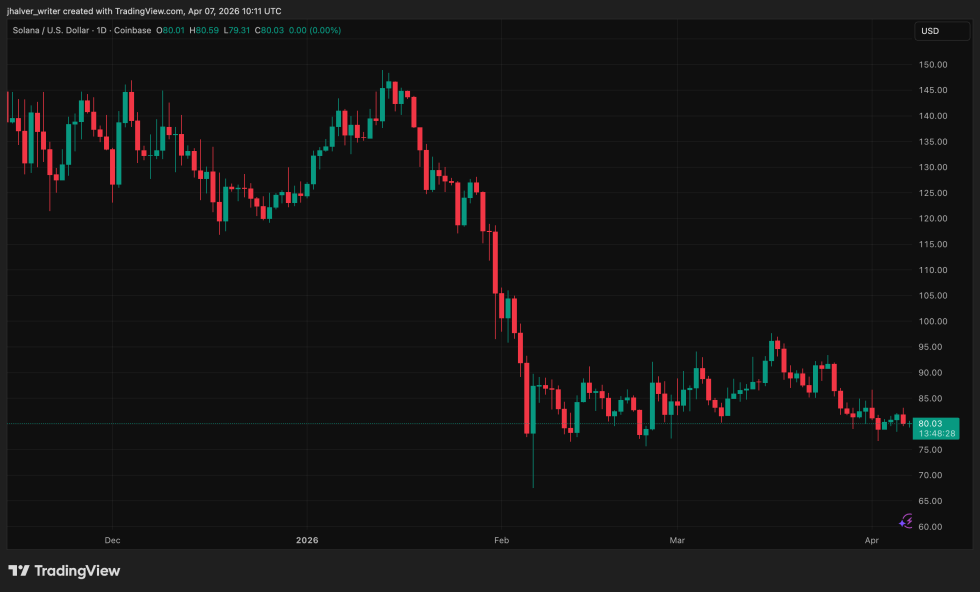
At the moment of writing, SOL trades for exactly $80 on the daily chart. Source: SOLUSD on Tradingview.

Cover image from Perplexity. SOLUSD chart from Tradingview.

Связанные с этим вопросы

QWhat is the name of the new security program launched by the Solana Foundation and Asymmetric Research?

AThe new security program is called STRIDE, which stands for Solana Trust, Resilience and Infrastructure for DeFi Enterprises.

QWhat is the primary function of the Solana Incident Response Network (SIRN)?

ASIRN is a member-driven coalition of security companies and researchers that acts as a 'war room', sharing threat intelligence and coordinating live hack responses across the Solana ecosystem.

QWhich major security incident on the Solana ecosystem preceded the announcement of these new security initiatives?

AThe initiatives directly follow the April 1st $286 million attack on the Solana-based Drift Protocol, which was attributed to North Korean hackers.

QHow does the STRIDE program aim to improve security for users and investors?

ASTRIDE conducts independent reviews of ecosystem protocols and publicly releases the results of these assessments, giving users and investors clear visibility into the safety of the platforms they use.

QWhat core shift in security approach do these new initiatives represent?

AThey represent a core shift away from one-off audits toward continuous, foundation-funded monitoring, public security reports, and coordinated incident response.

Похожее

UBS: The Crowdedness of A-Share Tech Stocks Is Far From Reaching Historical Peaks

UBS: A-share tech stocks still far from peak crowding levels A-shares' technology sector has seen a strong rebound, with trading activity hitting record highs, raising concerns about market crowding. However, UBS Securities argues that a key indicator of institutional positioning suggests the current crowding level remains well below historical peaks. While the large-cap tech sector's share of total A-share trading volume and market capitalization have reached historical highs, the overweight ratio of domestic mutual funds in this sector stood at 9.9% in Q1 2026. This is down from 11.6% in Q3 2025 and significantly lower than the historical peak of 14.1% in Q4 2015. It also pales in comparison to the historical peak overweight of 18.7% for the consumer sector. UBS notes that typical cycles from a low to a peak in fund overweighting last about three years, and the current outperformance of the tech/growth style has lasted less than two years since the policy pivot in September 2024. UBS expects A-share earnings recovery to accelerate, providing fundamental support. It forecasts 2026 A-share profit growth to rise to 11% from 3.9% in 2025. Non-financial A-share profits grew 11.8% YoY in Q1 2026, with gross and net profit margins at their highest since 2023. Persistent fund inflows, the expansion of thematic ETFs, and a recovery in private fund issuance are supporting market liquidity. In tactical allocation, UBS favors growth and cyclical styles under its "slow bull" base case, with overweight ratings on six sectors: Electronics (benefiting from semiconductor inventory recovery and AI innovation), Communications (driven by AI computing demand), Machinery (aided by domestic capex recovery), Non-ferrous Metals (due to rising copper/aluminum prices), Chemicals (supported by anti-involution policies), and Electrical Equipment (driven by policy support and AI data center power demand).

marsbit1 ч. назад

UBS: The Crowdedness of A-Share Tech Stocks Is Far From Reaching Historical Peaks

marsbit1 ч. назад

Торговля

Спот
Фьючерсы

Популярные статьи

Обсуждения

Добро пожаловать в Сообщество HTX. Здесь вы сможете быть в курсе последних новостей о развитии платформы и получить доступ к профессиональной аналитической информации о рынке. Мнения пользователей о цене на SOL (SOL) представлены ниже.

活动图片