Singapore-licensed StraitsX to bring its SGD, USD stablecoins to Solana by 2026

cointelegraphОпубликовано 2025-12-16Обновлено 2025-12-16

Введение

Singapore-based StraitsX, a licensed Major Payment Institution, plans to launch its Singapore dollar-backed stablecoin XSGD and US dollar-backed stablecoin XUSD on the Solana blockchain by early 2026. This initiative, announced with the Solana Foundation, aims to leverage Solana’s high-speed, low-cost infrastructure for transactions. Both stablecoins, which have processed over $18 billion in onchain volume, natively support the x402 interoperability standard for automated payments. The expansion targets growing demand from digital commerce and AI applications. StraitsX also collaborates with Southeast Asian super-app Grab to explore integrating stablecoin payments into everyday transactions, pending regulatory approval. Both XSGD and XUSD are recognized as compliant with Singapore’s upcoming stablecoin regulatory framework.

Singapore-based StraitsX plans to bring its Singapore dollar-backed XSGD and US dollar-backed XUSD to the Solana blockchain by early 2026.

The rollout, announced in collaboration with the Solana Foundation, will allow users to settle transactions in Singapore dollar- and US dollar-backed stablecoins using Solana’s high-speed, low-cost infrastructure, the issuer said in a Tuesday blog post.

“Launching XSGD and XUSD together on Solana will be game-changing. It unites CEX support, AMM liquidity, lending pools, and everyday payments on a single high-performance chain,” Tianwei Liu, co-founder and CEO of StraitsX, said.

StraitsX said the expansion is aimed at supporting growing demand from digital commerce platforms and AI-native applications. Solana (SOL) has increasingly been used for x402-based payments, an interoperability standard designed to enable automated transactions between software agents.

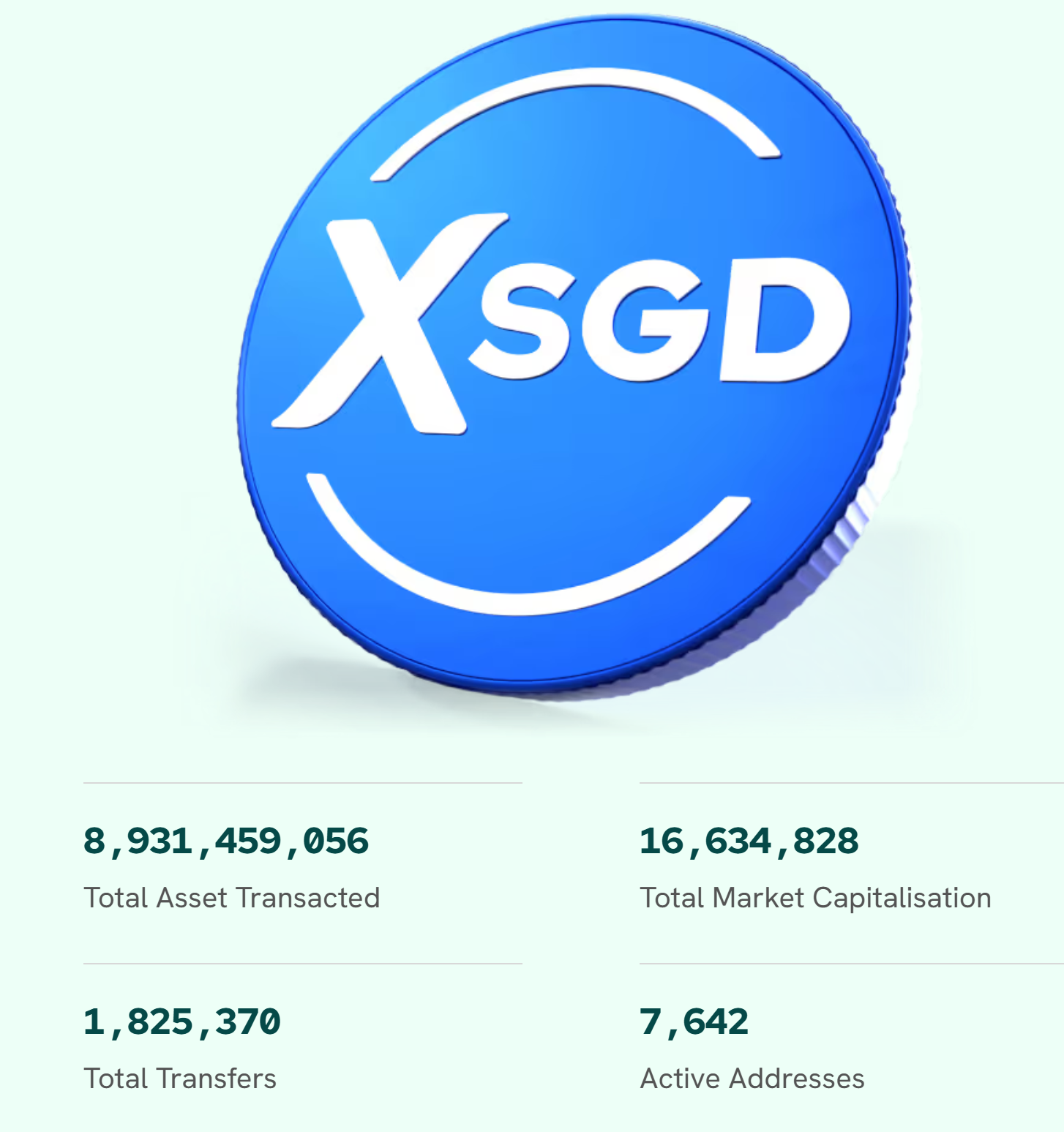
XSGD’s onchain usage metrics. Source: StraitsX

Related: Ripple pilots RLUSD on Ethereum L2s in multichain push

XSGD and XUSD top $18 billion in onchain volume

XSGD (XSGD) is already live across several blockchains, including Ether (ETH), Polygon (MATIC), Avalanche (AVAX), Arbitrum (ARB), Zilliqa (ZIL), Hedera (HBAR) and the XRP Ledger, while XUSD (XUSD) is available on Ethereum and BNB Smart Chain.

XSGD has a market cap of $13 million and a circulating supply of 16.7 million tokens, according to CoinMarketCap. XUSD has a market cap of $52 million.

The two stablecoins have processed more than $18 billion in combined onchain transaction volume, per the announcement.

Both stablecoins natively support the x402 standard. That functionality will carry over to Solana, enabling use cases such as onchain foreign exchange between SGD and USD, automated market maker liquidity, lending markets and institutional-grade payment flows.

StraitsX is a licensed Major Payment Institution operating under the Monetary Authority of Singapore (MAS)’s stablecoin framework. Both XSGD and XUSD have “been acknowledged by the MAS to be compliant with the upcoming stablecoin regulatory framework,” according to their white papers.

Related: Japan’s SBI and Startale plan regulated yen stablecoin in 2026 under new framework

Grab explores stablecoin payments with StraitsX in Southeast Asia

Last month, Grab, Southeast Asia’s largest super-app, signed an exploratory memorandum of understanding with StraitsX to build a Web3-enabled settlement layer that integrates digital wallets, programmable payments and stablecoin clearing into everyday consumer transactions.

If approved by regulators, the system would allow Grab users across Southeast Asia to hold and spend XSGD and XUSD directly within the app.

Magazine: 2026 is the year of pragmatic privacy in crypto — Canton, Zcash and more

Похожее

On-Chain Figures on the Eve of Kickoff: 1.6 Billion Traded Before the World Cup Even Begins

"On-Chain Numbers on the Eve of the World Cup: $1.6 Billion Traded Before Kick-off" Analysis of on-chain markets before the 2026 FIFA World Cup reveals significant crypto integration into football. The most striking figure is the approximately **$1.6 billion** in total trading volume on the single "World Cup Winner" contract on the Polymarket prediction market platform, accumulated before a single match was played. This represents explosive growth for a sector whose annual volume surged from ~$16B in 2024 to ~$64B in 2025. The ecosystem is maturing beyond speculation. Key developments include: 1) **Infrastructure upgrades** like Polymarket's migration to native, regulated USDC stablecoin for settlements; 2) **Reliable data oracles**, such as Chainlink, being used to resolve real-world match outcomes on-chain; and 3) **Official recognition**, with FIFA appointing its first-ever "Prediction Markets" partner. Over 100 contracts now cover everything from the outright winner to individual match results and even non-sporting risks like venue relocation. This evolution marks a fundamental shift. While crypto firms are absent from FIFA's top-tier sponsor list, the technology has deeply penetrated the tournament's financial and predictive infrastructure through regulated stablecoin settlements, decentralized oracles, and new official partnership categories. The regulatory landscape remains complex and varies by jurisdiction, but on-chain markets for the World Cup are already a multi-billion-dollar reality.

marsbit8 мин. назад

On-Chain Figures on the Eve of Kickoff: 1.6 Billion Traded Before the World Cup Even Begins

marsbit8 мин. назад

From SpaceX's IPO to the Future of Crypto: Which Crypto Sectors Will Host the Trillion-Dollar Narrative?

From the SpaceX IPO, which targets a $750 billion raise at a $1.77 trillion valuation, we can extrapolate capital flow trends relevant to crypto. The focus shifts from speculative narratives to foundational infrastructure and real-world asset (RWA) integration. Key crypto sectors poised to benefit include: 1. **AI Infrastructure**: The narrative is moving from consumer-facing AI applications to underlying, scarce resources like compute power and decentralized GPU networks (e.g., TAO, RENDER, AKT, IO). These protocols are positioning as the essential "picks and shovels" providers for the AI economy. 2. **Real-World Assets (RWA)**: Beyond tokenized treasury bonds, RWA's future lies in on-chain equity and pre-IPO assets like SpaceX. This could democratize access to high-growth assets and reshape global capital flows, benefiting infrastructure projects like ONDO, LINK, and Plume that facilitate issuance, data, and liquidity. 3. **Core Financial Infrastructure**: Stablecoins, payment networks, and DePIN (Decentralized Physical Infrastructure Networks) are critical for settling the future on-chain economy. Their role expands from internal trading tools to foundational layers for global finance, AI systems, and real-world asset networks, leading to potential value reassessment. In summary, the next cycle may prioritize long-term infrastructure value—AI compute, asset tokenization networks, and settlement layers—over short-lived application hype, mirroring the broader market's shift towards funding the foundational systems of the future.

marsbit29 мин. назад

From SpaceX's IPO to the Future of Crypto: Which Crypto Sectors Will Host the Trillion-Dollar Narrative?

marsbit29 мин. назад

Tech Stocks Plunge and Bitcoin Slumps, Retail Investors Face Ultimate Test Ahead of SpaceX IPO

Technology stocks suffered their biggest drop in months, and Bitcoin fell below the $60,000 mark, coinciding with the eve of SpaceX's massive IPO plans. The sell-off was triggered by strong U.S. jobs data, dashing hopes for Fed rate cuts and reviving fears of further hikes. High-valuation sectors like AI and semiconductors led the declines, with the Nasdaq plunging over 4%. Cryptocurrencies, sensitive to higher interest rates and a strong dollar, also tumbled sharply. This market stress test raises critical questions about the limits of retail investor capital and its next destination. SpaceX's upcoming IPO, which plans to allocate an unusually high 30% of shares to retail investors, now faces a more uncertain landscape. Analysts warn that to buy SpaceX,散户 may need to sell existing holdings, with Tesla seen as a potential source of funds. The market is saturated with speculative options—from crypto and meme stocks to zero-day options and AI-themed ETFs—all competing for the same pool of retail attention and capital. While SpaceX's listing could inject fresh excitement, it also enters a fiercely competitive environment where investor loyalty is fleeting. The ease of zero-commission trading and lower barriers to margin trading accelerate capital rotation between narratives, making it difficult for any single story, even a historic IPO like SpaceX's, to dominate for long.

华尔街日报1 ч. назад

Tech Stocks Plunge and Bitcoin Slumps, Retail Investors Face Ultimate Test Ahead of SpaceX IPO

华尔街日报1 ч. назад

Торговля

Спот
Фьючерсы

Популярные статьи

Обсуждения

Добро пожаловать в Сообщество HTX. Здесь вы сможете быть в курсе последних новостей о развитии платформы и получить доступ к профессиональной аналитической информации о рынке. Мнения пользователей о цене на SOL (SOL) представлены ниже.

活动图片