Running for Three Years Only to Get a 'Witch Verdict'! Big Players Unite to Defend Rights, Backpack Rushes to 'Put Out the Fire'

marsbitОпубликовано 2026-03-24Обновлено 2026-03-24

Введение

After three years of anticipation, Backpack Exchange finally conducted its TGE on March 23, but instead of rewards, many users—including long-term supporters and high-volume traders—were labeled as "sybils" and saw their points drastically reduced or zeroed out. The airdrop, which allocated 25% of the total token supply to the community, sparked widespread anger, especially among Chinese users, who reported heavy losses in time, fees, and trading volume. The lack of transparent sybil-detection criteria and retroactive enforcement led to a severe trust crisis. Even key community contributors and influencers were affected, with some losing referral networks due to collective penalties. In response, Backpack opened a manual appeal channel, promising to reinstate 50% of points for users with three or fewer accounts per device and to initiate a token buyback for compensation. Amid the controversy, Backpack is pursuing an IPO narrative, with plans to lock team tokens until after a potential public listing and to allow long-term stakers to convert tokens to equity. However, unclear details and the recent airdrop fallout have left community trust deeply damaged.

Author: Nancy, PANews

Running for three years, only to end up with a "witch verdict."

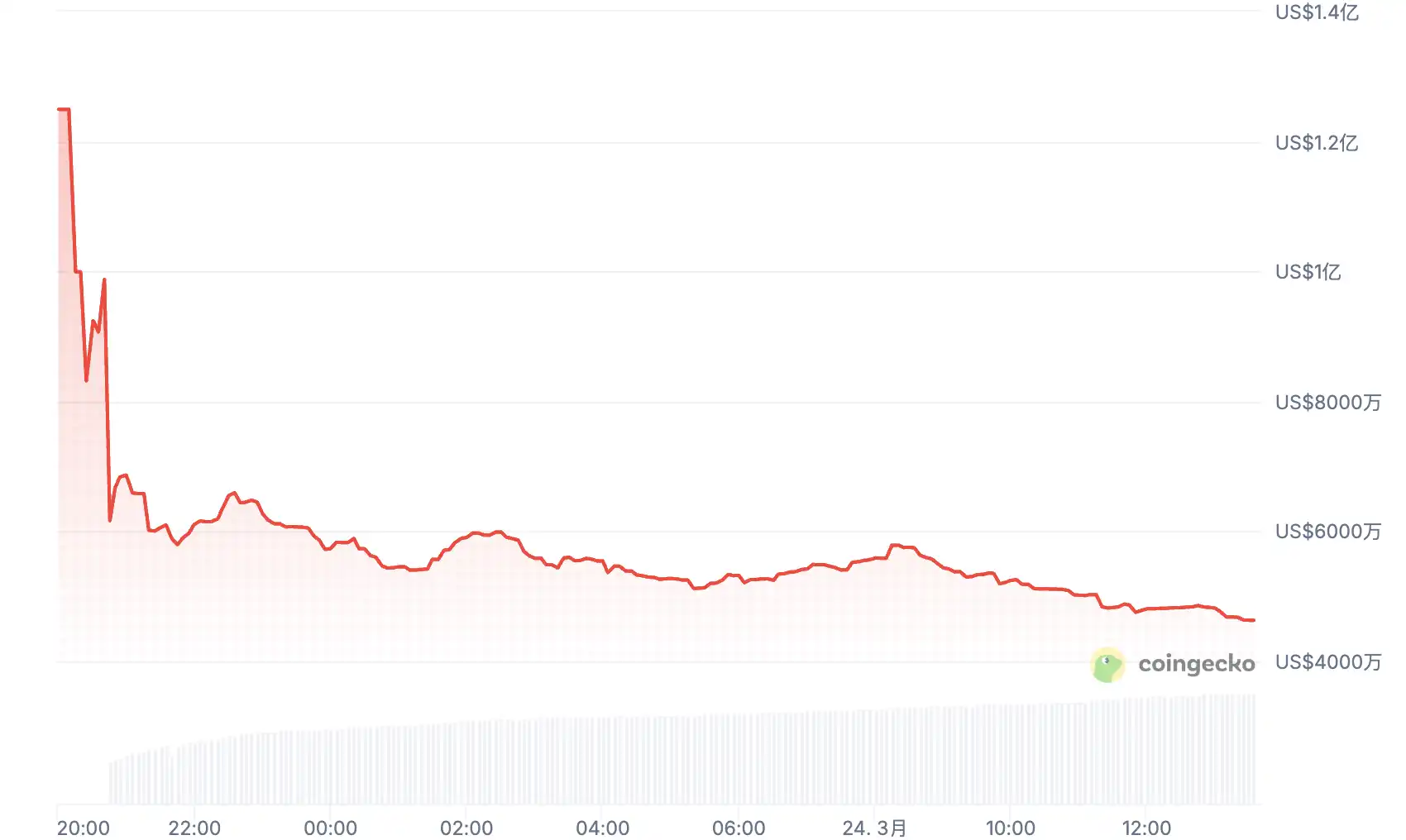
On March 23, the long-awaited trading platform Backpack finally launched its TGE. In the current deep bear market, Backpack did not bring any pleasant surprises. The token price plummeted upon listing, and as of now, the fully diluted market cap is less than $200 million. What shocked the community was the large-scale anti-sybil (anti-farming) actions. Key community members complained in group chats that both small-scale long-term interactive散户 and large players who dominated trading volumes were included in the sybil list. The rules were never disclosed, yet the judgment was unilaterally enforced. Backpack faced a severe trust crisis and had to urgently open an appeal channel on March 24.

"In a bull market, you're farming others' airdrops; in a bear market, you're farming the project's airdrops." Someone hit the nail on the head regarding the core issue. With consecutive airdrops from Opinion and Backpack leaving many farming communities empty-handed, it indirectly signaled the end of the airdrop farming track. Some veteran farmers even announced their retirement.

KOLs Also Fell Victim to Anti-Sybil Measures, Chinese Community Hit Hardest

The promise of a "pure community distribution" ultimately turned into a large-scale anti-sybil event.

Yesterday, Backpack finally opened the BP token claim channel. According to the previously announced rules, 25% of the total token supply (approximately 250 million BP) in this TGE would be allocated entirely to the community, with 24% going to points holders and 1% to Mad Lads NFT holders. The official emphasized that aside from this portion, which fully belonged to the community, no team or investor shares were involved in the initial circulation.
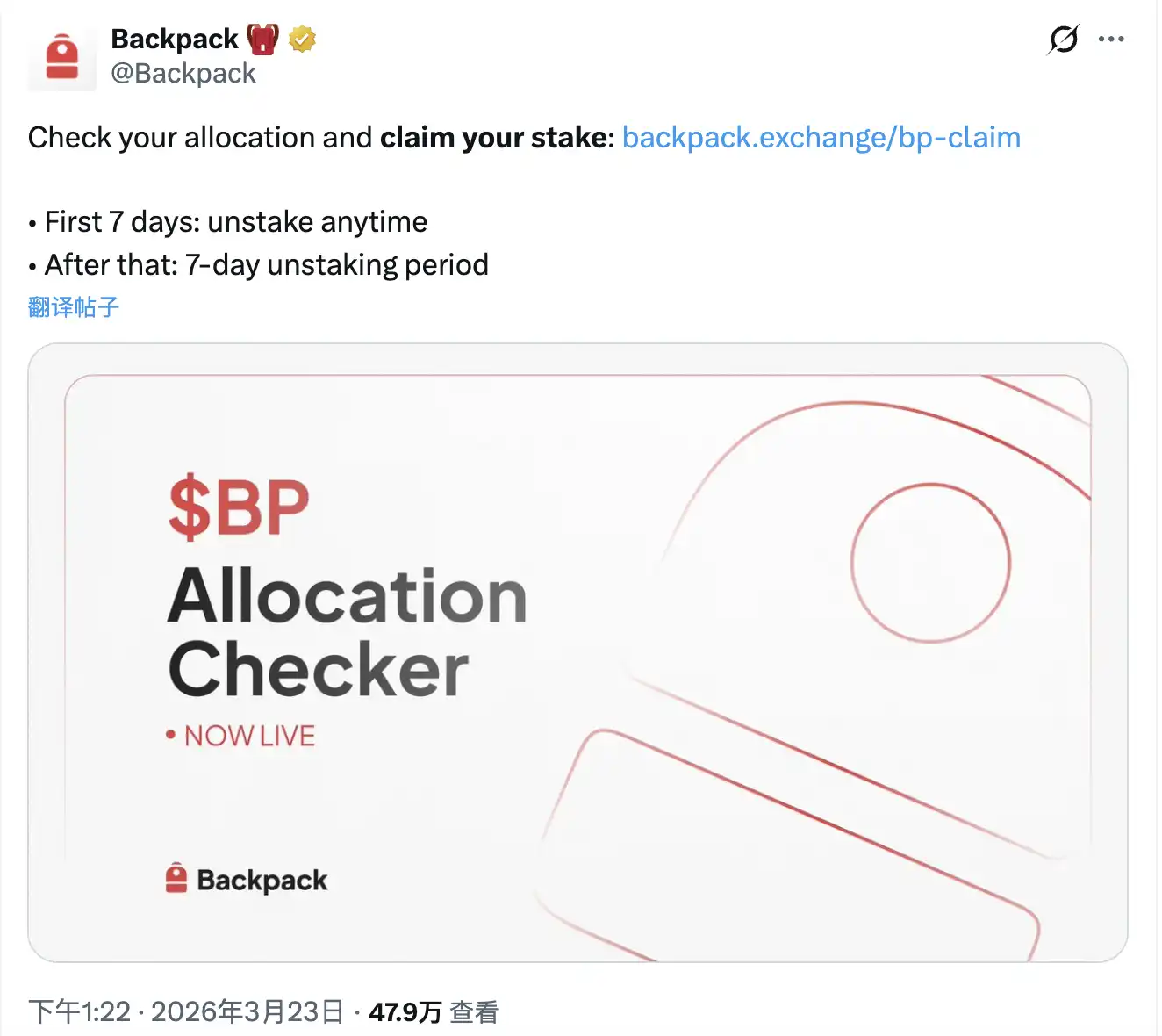
However, when the claim channel opened, it dealt a heavy blow to community users. A large number of users found their points drastically reduced or even reset to zero, ultimately receiving only a symbolic participation reward or nothing at all. What made users even more dissatisfied was that those affected were not marginal accounts but core participants, including long-term active single-wallet users, high-point farmers, and Mad Lads NFT holders.

Anger quickly spread throughout the community, especially among Chinese users, who became the hardest hit in this sybil cleanup. Complaints from major players and KOLs flooded the community: "$4 billion trading volume, 100% sybil rate," "Over $1.5 billion trading volume, 800+ hours spent, over $300,000 in fees, but airdrop halved," "330,000 points exchanged for 2,000 tokens," "Number one in global trading volume, 170,000 points only got 20,000 tokens"... Behind these numbers were real financial investments and time costs, but in the final distribution, they were uniformly classified as sybils and directly disqualified.

What amplified the dissatisfaction was not just the disparity in rewards but the negation of their contributions. Among these users, some had long maintained communication with the project team, some consistently produced content to endorse the project, and others actively participated in community growth and ecosystem expansion. However, these efforts were not factored into any weighting considerations and were instead erased.

Even more controversial was the collective punishment approach. Some community leaders responsible for growth, who recruited new users and expanded the ecosystem, were not only cleaned up but also saw their invited genuine users affected. This punishment mechanism turned the growth logic originally reliant on social裂变 into a source of risk.

Moreover, the rapid decline of the BP token after listing further magnified the overall losses and exacerbated the negative market sentiment.
All controversies pointed to the lack of transparency in Backpack's rules.

Backpack's sybil判定 criteria were never publicly disclosed. Instead, the risk control mechanisms were continuously upgraded during the process. Just before the TGE, Backpack not only required all accounts participating in the points activity to complete KYC but also conducted a large-scale review under the pretext of "purifying the environment and rewarding real users." Ultimately, over 50 million points were identified as coming from non-genuine behavior and were uniformly reclaimed for redistribution. However, for users, what constituted non-genuine behavior, the basis for judgment, and the boundaries were never clearly explained.

Returning Points and Launching Token Buybacks: Can Trust Be Restored?

Under public pressure, Backpack rushed to "put out the fire."

Backpack team member Claire tweeted in response that the Backpack Chinese team had激烈 discussed with the European and American teams overnight. The Chinese team did not want to see the interests of previously supportive users affected and had in-depth communication with the负责人 in charge of anti-sybil execution.

As an experienced compliance professional, Claire stated that in the logic of the anti-sybil team, "one person, one account" was an absolute bottom line. Under this standard, compared to other regions, more Chinese-speaking users were indeed affected, which was naturally due to different user habits. European and American users' strict adherence to rules and sensitivity to KYC information made multi-account behavior itself beyond their认知范围. In subsequent handling, Backpack founder Armani and the core team planned to immediately open an appeal channel, establish clear rules, and protect user interests to the greatest extent.

Subsequently, Backpack's Chinese account announced the opening of a manual appeal channel, allowing users to submit materials for review. It also announced adherence to the "3-account rule": if the number of accounts operated on the same device was three or fewer and were judged as sybils, upon verification through manual appeal, 50% or more of the points would be returned. Additionally, the Backpack team planned to launch a special program in the coming days to conduct token buybacks on the secondary market for定向 compensation to these eligible users.

However, for those users who had invested wholeheartedly, these remedies might compensate for some losses, but once trust is broken, it is difficult to rebuild easily.

Locking Tokens for a Year in Exchange for Equity? Backpack Bets on the IPO Narrative

From past scripts, most crypto projects often experience high openings followed by declines after token issuance, inevitably fading into obscurity. Against the backdrop of the crypto bear market, Backpack chose to bet on the IPO narrative before officially issuing tokens to boost market confidence.

In February this year, Backpack CEO Armani Ferrante stated that the company followed a core principle in its token economic model: preventing insiders from dumping on retail investors. Before the product achieves "escape velocity," no founder, executive, employee, or venture capitalist should obtain wealth through tokens. For Backpack, the answer to "escape velocity" was clear: the company planned to conduct an IPO in the United States.

This means token value capture will be re-anchored and closely tied to the company's overall valuation. On this note, according to a recent Axios report, informed sources said Backpack is negotiating a new round of financing, discussing raising $50 million in a new round at a pre-money valuation of $1 billion.

Regarding token unlocking, Backpack also showed "sincerity." Aside from 37.5% of the tokens being unlocked gradually according to key milestones before the IPO, Backpack will lock the remaining 37.5% in the company treasury until at least one year after the IPO, with team members holding only company equity.

Additionally, Backpack announced it would allocate 20% of equity, offering users who stake BP tokens for at least one year the opportunity to exchange tokens for company equity at a fixed ratio. Not long ago, Backpack also launched an on-chain IPO new share allocation function, allowing users to directly obtain IPO shares through the platform, and opened a waitlist registration.

However, specific details of the token-to-equity exchange remain undisclosed, including the form of exchange, scope of rights, and timeline. This has also raised community concerns, viewing it as a potential new round of PUA—locking users in before slowly fulfilling promises, using equity exchange to buy more survival time for the project.

Armani Ferrante also revealed that the上市 could happen soon, or not so soon, or might not happen at all. But no matter what, he and the team would go all out.


Связанные с этим вопросы

QWhat was the main controversy surrounding Backpack's TGE and airdrop distribution?

AThe main controversy was the large-scale 'anti-sybil' action where many users, including long-term small traders and high-volume whales, had their points drastically reduced or zeroed out, receiving minimal or no airdrop rewards. This was due to undisclosed sybil detection criteria, causing a severe trust crisis.

QHow did the Backpack team respond to the community backlash and trust crisis?

AThe Backpack team opened an appeal channel for manual review. They announced the '3-account rule', promising to return at least 50% of points to users who operated 3 or fewer accounts on one device after verification. They also planned a token buyback program for secondary market compensation.

QWhat unique strategy is Backpack employing to try to stand out in the crypto bear market?

ABackpack is betting on an IPO narrative. It plans to conduct an IPO in the US, anchoring token value to the company's overall valuation. Team members hold only company equity, and a portion of tokens are locked until after the IPO. They also offered users the opportunity to exchange staked BP tokens for company equity.

QWhy were Chinese community users particularly affected by the 'anti-sybil' measures?

AAccording to a Backpack team member, the sybil detection team's logic had an absolute底线 (bottom line) of 'one person, one account'. Compared to users in other regions, more Chinese-speaking users were affected due to different natural user habits, implying a higher prevalence of multi-account usage in that community.

QWhat concerns did the community have regarding Backpack's plan to offer equity for staked tokens?

AThe community was concerned about the lack of disclosed details for the token-to-equity exchange, including the form of exchange, scope of rights, and timeline. Some worried it was a new form of 'PUA' to lock up user tokens and buy the project more survival time with promises of future equity.

Похожее

Криптовалюта USCR стабилизируется на отметке $0,0022: Сможет ли мемкоин отыграть потери второго квартала?

Криптовалюта USCR, мемкоин, отслеживающий тему официальных крипторезервов США, пытается восстановиться после падения до двухмесячного минимума в $0.0022. В мае цена выросла на 65%, но в июне упала на 37%. Сейчас наблюдается потенциальный отскок, и если быкам удастся закрепиться выше ключевых скользящих средних, возможен рост до $0.0028 (уровень Фибоначчи) и далее до майского пика в $0.0036, что означает потенциал роста на 30-60%. Динамика USCR тесно связана с новостями о создании стратегического резерва биткойна в США. Майский рост совпал с увеличением вероятности этого события и внесением соответствующего законопроекта. Однако его рассмотрение застопорилось, а шансы на создание резерва к 2027 году, по данным Polymarket, упали до 18%, что давит на настроения. Несмотря на неопределённость, база держателей USCR остаётся значительной: 48 тысяч, сократившись лишь на 4 тысячи с начала 2026 года. Восстановление цены будет зависеть от позитивных новостей по законопроекту о биткойн-резерве.

ambcrypto9 мин. назад

Криптовалюта USCR стабилизируется на отметке $0,0022: Сможет ли мемкоин отыграть потери второго квартала?

ambcrypto9 мин. назад

«Богиня благотворительности» с 3 млн подписчиков целиком создана ИИ, поддельный детский дом, международный «фальшивый фонд» рухнул за одну ночь

**Шокирующий разоблачение: Астролябка «благотворительности» с 300 000 подписчиков оказалась масштабной аферой на основе ИИ** Австралийская инфлюенсерша Лили Джей, имевшая почти 3 миллиона подписчиков в Instagram, создала тщательно продуманную мошенническую схему под прикрытием своего «Фонда Лили Джей». Используя искусственный интеллект, она и ее команда генерировали фальшивые изображения и видео, изображающие строительство мечетей, раздачу хлеба в Газе и даже открытие детского дома в Уганде для привлечения пожертвований от преимущественно мусульманской аудитории. Расследование ABC News Verify выявило многочисленные подделки: видео с «открытием» детского дома полностью сгенерировано ИИ (включая детей, саму Лили и фонды), «награда» за гуманитарную деятельность оказалась фальшивкой с цифровым водяным знаком ИИ, а заявленные благотворительные проекты в Уганде и Газе не существуют. Фонд не зарегистрирован как официальная благотворительная организация, что позволяло избегать финансовой отчетности. После запросов ABC сайт фонда стал скрывать кнопки для пожертвований и предупреждения о своем неблаготворительном статусе для посетителей из Австралии, но оставил их для иностранных пользователей. Эксперты предупреждают, что эта афера — тревожный прецедент, демонстрирующий, как ИИ может эксплуатировать человеческое доверие и желание творить добро, создавая убедительные, но полностью вымышленные нарративы.

marsbit28 мин. назад

«Богиня благотворительности» с 3 млн подписчиков целиком создана ИИ, поддельный детский дом, международный «фальшивый фонд» рухнул за одну ночь

marsbit28 мин. назад

L2 «рекалибровка»: когда L1 становится собственным ролл-апом, каков финал Ethereum?

«L2 перекалибровка»: когда L1 становится собственным роллапом, каков финал Ethereum? Первоначально, роллапы (L2) рассматривались как основной путь масштабирования Ethereum, обеспечивая дешёвое и быстрое исполнение транзакций. Однако, с развитием самого L1 (повышение лимита газа, внедрение безсостоятельности и zkEVM) и объединением задач масштабирования, традиционное разделение между L1 как безопасным, но медленным «слоем урегулирования» и L2 как дешёвым «слоем исполнения» меняется. Вопрос теперь не только в увеличении пространства блоков, а в перераспределении ролей в системе с множеством исполняющих сред. Будущая роль L2 смещается от простого предоставления дешёвого газа к обеспечению уникальных функций, таких как оптимизация для конкретных приложений, приватность и гибкие модели управления. Таким образом, L2 станет скорее спектром исполняющих сред с разной степенью наследования безопасности Ethereum, чем единым техническим классом. Ключевой задачей становится решение фрагментации. Разделённая ликвидность и состояние пользователя ухудшают опыт. Усилия концентрируются на улучшении взаимодействия (интероперабельности) через системы на основе намерений (intents) и нативные протоколы, такие как Ethereum Interoperability Layer (EIL), чтобы Ethereum вновь «ощущался как единая цепь». Сокращение времени до финальности транзакций L1 также имеет решающее значение для доверия между цепями. Ещё более радикальная идея — с появлением систем доказательств (zkEVM) внутри L1 сама Ethereum может стать своего рода «собственным роллапом», где высокопроизводительные узлы исполняют транзакции, а валидаторы проверяют криптографические доказательства. Это размывает классические границы между слоями и открывает путь к архитектуре, где множество исполняющих доменов (специализированных L2) сосуществуют, разделяя общую безопасность, ликвидность и систему урегулирования Ethereum. В итоге, будущее Ethereum видится не как победа L1 над L2 или наоборот, а как экосистема взаимосвязанных исполняющих сред, которые, будучи «разобранными» для масштабирования, вновь объединяются в единое, безопасное и удобное для пользователя целое.

marsbit30 мин. назад

L2 «рекалибровка»: когда L1 становится собственным ролл-апом, каков финал Ethereum?

marsbit30 мин. назад

Grayscale подает первую заявку на спотовый ETF Worldcoin в SEC под тикером GWLD

Компания Grayscale Investments подала заявку в Комиссию по ценным бумагам и биржам США (SEC) на запуск биржевого фонда (ETF), ориентированного на криптовалюту Worldcoin (WLD), под тикером GWLD. Заявка подана в момент, когда WLD торгуется на исторически низких уровнях, но новость вызвала рост его цены более чем на 8%. В документах подчеркиваются потенциальные риски для инвесторов, включая высокую концентрацию токенов (около 90% предложения в руках 100 крупнейших кошельков) и плановую разблокировку токенов командами проекта до 2028 года, что может оказывать давление на курс. Также отмечены регуляторные вопросы, связанные с биометрическим сбором данных через сканирование сетчатки глаза в проекте Worldcoin. Несмотря на то, что запуск ETF на бирже запланирован только на конец 2026 года, Grayscale активно расширяет линейку регулируемых криптовалютных продуктов, стремясь укрепить свои позиции на зарождающемся рынке ETF.

TheNewsCrypto44 мин. назад

Grayscale подает первую заявку на спотовый ETF Worldcoin в SEC под тикером GWLD

TheNewsCrypto44 мин. назад

Вечные фрагменты денег: У третьих сторон нет первоосновы в платежах

**Автор: Зоя Вебсан** В статье рассматривается текущее состояние и будущее индустрии платежей через призму возможного поглощения PayPal компанией Stripe. Автор отмечает, что Stripe, упустив окно для IPO во время бума на рынке, теперь стремится к росту за счет приобретений, пытаясь дополнить свои сильные стороны в работе с разработчиками (B2B) клиентской базой PayPal (C2C). Однако основная проблема PayPal видится не в отставании от новых трендов, а в структурной устарелости всей организации. В статье подчеркиваются две ключевые особенности, ограничивающие рост в платежной сфере: крайняя фрагментация рынка (можно выжить, обслуживая узкую нишу) и зависимость от традиционной банковской системы. Попытки Stripe выйти на рынок стейблкоинов (через покупки таких компаний, как Bridge, Privy, Tempo и OpenUSD) и занять нишу в зарождающейся «экономике агентов» (AI-агентов) пока не принесли прорыва. Стейблкоины еще не стали повседневным платежным средством, а агенты в основном используются для накрутки объемов и не интегрированы в основную бизнес-среду. Автор предполагает, что для Stripe поглощение PayPal — это способ расширить масштаб и нарратив перед возможным IPO. Компания представлена как своего рода опцион: ее максимальная оценка в $100 млрд возможна только в случае успеха ее стратегии со стейблкоинами и агентами. В противном случае она останется в рамках разумной оценки финтех-компании (~$50 млрд). В заключительной части прогнозируется возможное будущее для таких игроков, как Stripe и Circle. После этапа конкуренции через разделение доходов от стейблкоинов следующим логическим шагом и источником прибыли могут стать высокоэффективные клиринговые сети на базе их собственных блокчейнов (Tempo, Arc). Получив банковские лицензии, эти компании потенциально смогут частично обойти традиционную банковскую систему, оставляя прибыль от расчетов себе. Таким образом, война в сфере платежей превращается в позиционную «битву за Верден», где невозможно быстро уничтожить всех мелких игроков, а будущее за теми, кто сможет монетизировать инфраструктуру расчетов нового поколения.

marsbit53 мин. назад

Вечные фрагменты денег: У третьих сторон нет первоосновы в платежах

marsbit53 мин. назад

Торговля

Спот
活动图片