Pricing OpenAI Pre-IPO: A New, Life-or-Death Business on Hyperliquid Lasting Half a Year

marsbitОпубликовано 2026-06-16Обновлено 2026-06-16

Введение

Pricing OpenAI Pre-IPO: Hyperliquid's High-Stakes, Six-Month Business Venture The article analyzes the nascent market for pre-IPO perpetual contracts on the Hyperliquid blockchain, exemplified by two contrasting teams: Trade.xyz and Ventuals. Trade.xyz, an anonymous team, successfully built the largest pre-market on Hyperliquid. Its strategy focused on near-term events, like the SpaceX IPO. By listing a SpaceX contract with a known launch date and price, the market had a tangible "anchor" (the eventual Nasdaq opening price) to converge upon, which kept speculation in check. This approach fueled significant growth. In stark contrast, Ventuals, backed by Paradigm, failed despite holding coveted contracts for OpenAI and Anthropic. Its critical flaw was its pricing mechanism for these companies, which have no imminent IPO. Ventuals' oracle price was half-derived from infrequent private market transactions and half from its own contract's moving average. This created a self-reinforcing loop where buying pressure artificially inflated the price, disconnecting it from real supply and demand. The market became illiquid and structurally skewed. Ventuals shut down nine months after launch, reportedly through an acquisition. Its final settlement prices—OpenAI at ~$1,341 and Anthropic at ~$1,618—were thus partially products of its flawed model. Ironically, some company employees and late-stage VCs reportedly used these prices for valuation reference, highlighting the desperate demand...

Author: Curry, TechFlow Shenchao

During SpaceX's listing days, the pre-IPO price of SPCX on Hyperliquid flooded social feeds, but few took a closer look at who was deploying this market behind the scenes.

Actually, it's a team called Trade.xyz. Anonymous, emerging only this year, and now it alone accounts for over 90% of the open interest in pre-IPO contracts on Hyperliquid. The hype around SpaceX's on-chain Pre-IPO was largely driven by this single entity.

And just three days after SpaceX's bell ringing, on June 15th, another team in the same business announced it was shutting down.

This one was called Ventuals, backed by Paradigm, and it also offered SpaceX pre-IPO contracts, plus ones for OpenAI and Anthropic. It launched earlier this year and lasted only nine months from start to finish.
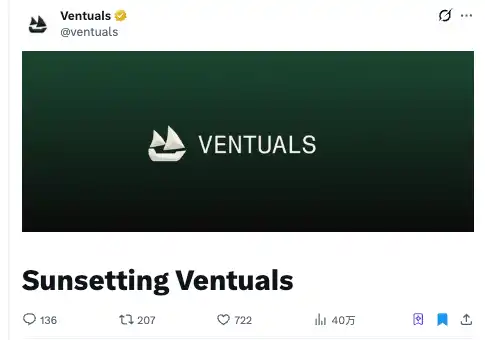
The same chain, the same HIP-3 play, the same track. One made SpaceX the largest market on the platform, while the other held OpenAI and Anthropic in its hands, only to end up failing.

What's noteworthy is the way Ventuals exited. According to its official social media posts, it wasn't a case of running away after losing too much; the announcement stated it was acquired, with the team integrated into another project within the Hyperliquid ecosystem. User principal was returned 1:1, marking a respectable exit.

The paradox lies right here. Holding the two most coveted brands, OpenAI and Anthropic, it should have been the last one to fail. What went wrong?

Trade XYZ vs. Ventuals

The successful one, Trade.xyz, remains anonymous to this day.

The project founder only gave a glimpse of his background in an interview with Hyperliquid founder Jeff Yan, saying he bought his first Bitcoin for $66 in 2013, had been an investor since, never built a project before, and would have left the crypto space long ago if not for meeting Jeff.

It was this relative newcomer who built the largest pre-IPO market on Hyperliquid. According to Colossus, Trade.xyz has grown 38% weekly since last October, with cumulative trading volume exceeding $130 billion.

It started with silver, then crude oil, then the S&P 500, and finally SpaceX.
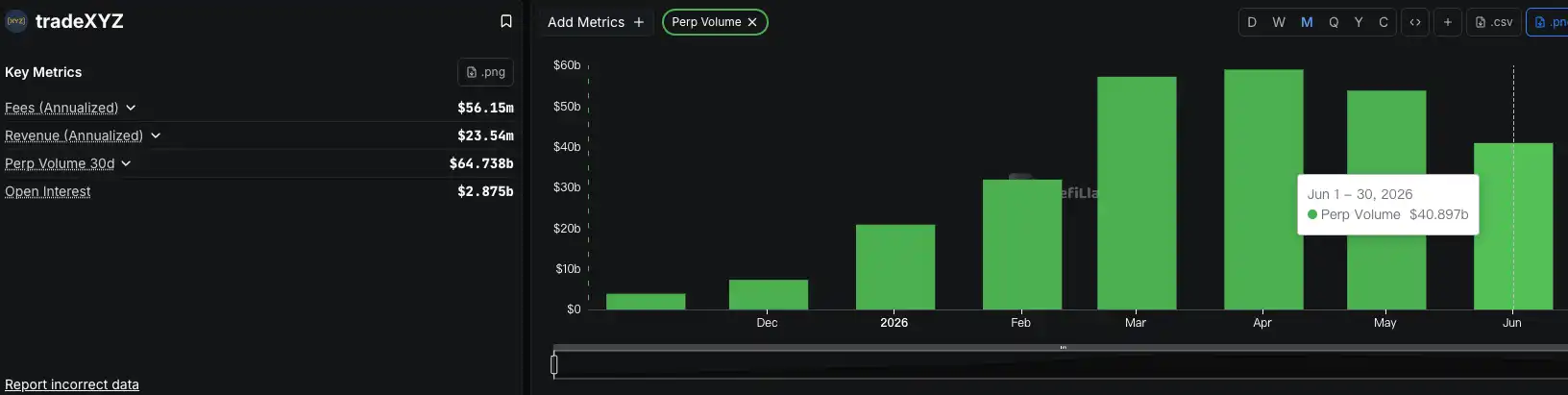
Its choice of SpaceX was shrewd.

SpaceX was set to ring the bell on Nasdaq on June 12th, with its IPO price and listing date already fixed. By listing pre-IPO contracts, Trade.xyz was essentially betting on an event with a certain outcome; the Nasdaq would provide a real price on listing day. This real price acted like an anchor, preventing the pre-IPO price from straying too far. Even if the quote deviated in between, it would snap back at the moment of listing.

This is exactly what happened. SPCX traded between $154 and $172 in the days before listing, betting on a premium above the $135 IPO price, and indeed surged on debut, proving the bet correct.

Ventuals chose a different type of asset.

Backed by Paradigm, one of crypto's top-tier VCs, its pedigree was far more respectable than the anonymous Trade.xyz. Its chosen assets were also bigger names: OpenAI and Anthropic, the two most coveted targets.

However, these two companies have no imminent listing date.

It's not that there's no external reference price. According to Bloomberg, Anthropic allowed employees to sell shares this year at a $350 billion valuation, and OpenAI does similar periodically. But such prices are set behind closed doors; often in secondary share transactions, buyers and sellers are existing major shareholders, and the asset hasn't genuinely changed hands in a public market.

This pricing might be precise at times, but it lacks a public order book where everyone can participate to correct errors.

By putting such prices on-chain as contracts, Ventuals essentially hung the entire market on a couple of off-chain price feeds. Even more problematic, it added a mechanism that pits the price against itself.

Some on-chain analysts have dissected Ventuals' pricing logic:

Its oracle price, half came from external secondary transactions and funding round valuations, and the other half came from a moving average of its own contract price. In other words, half the price was referencing itself. When buy orders pushed the price up, the moving average was pulled higher, the oracle followed suit, raising the price ceiling further, inviting more buying pressure.

The result was that contracts for OpenAI, Anthropic, etc., were perpetually pinned near their upper limits, with sell orders and liquidations difficult to execute. The chart looked like a steady uptrend, but in reality, it was structurally stuck, having little to do with real supply and demand.
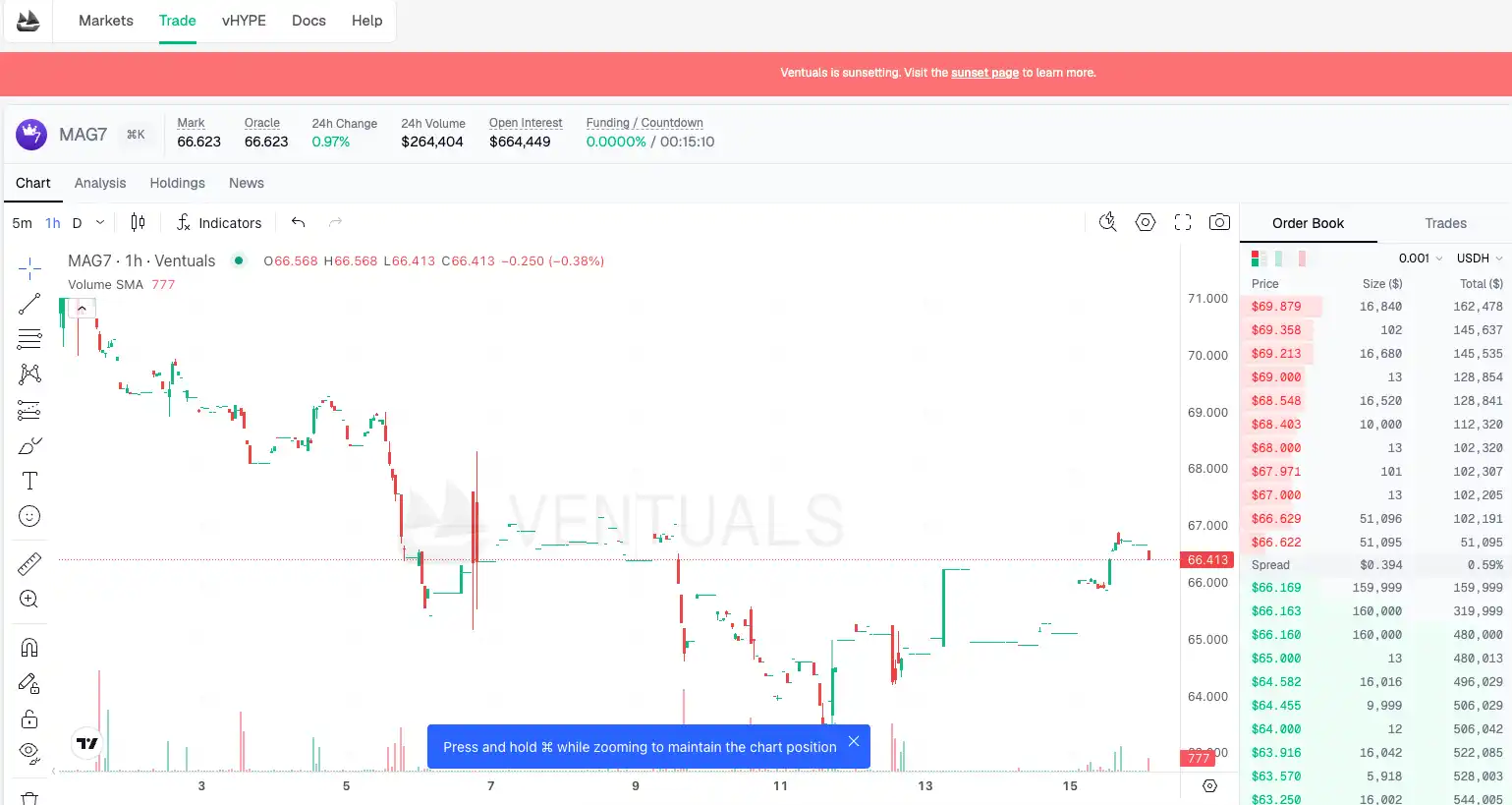
Source: Chart for MAG7 targets on Ventuals, showing intermittent candlesticks with no trades in some periods

So this kind of Pre-IPO trading wasn't so much the market telling you OpenAI's value, but rather a machine pushing the price up and then climbing higher based on the price it had already elevated.

Trade.xyz bet on an asset that would inevitably be settled by Nasdaq, with the real price as a backstop; Ventuals bet on assets existing only in internal valuations, then layered a self-referential price feed on top, leaving the price suspended in mid-air with no floor.

Shutdown Reference Prices: OpenAI $1300, Anthropic $1600

When it came time to shut down, did the last quoted price count?

To settle all positions upon closure, Ventuals needed a final price for its contracts. Its method was to freeze the 24-hour average price. OpenAI was ultimately set at $1,341.80 per share, Anthropic at $1,618.90.

These two numbers are now etched into the settlement records, becoming the final on-chain quotes for these companies.

As mentioned earlier, this price was half external reference, half moving average of its own price, perpetually climbing along the ceiling. In other words, a significant portion of $1,341.80 resulted from the machine lifting the price further based on the price it had already inflated.

It's precise down to two decimal places, but it may not be true.

The ultimate irony is that some people outside actually took this price seriously.

According to Bloomberg, employees of SpaceX, OpenAI, Anthropic, and some late-stage venture capitalists approached Ventuals, saying they used the platform to value their own equity holdings.

This needs to be examined carefully.

These individuals hold real, valuable equity; in theory, they should know best what their stock is worth. But private market valuations are only updated once a year like squeezing toothpaste; between funding rounds is a void, with no indication of price movement.

Meanwhile, a place like Ventuals, however unreliable, at least quotes a number 24/7 and shows price movements.

Thus, a paradoxical situation emerged. Those who should have the most pricing power were instead looking to a number from a retail-facing trading table for some psychological comfort.

This is the most twisted aspect of the pre-IPO pricing business.

The most coveted assets lack a fair price the most; the greater this lack, the more people are willing to grasp at anything that resembles a price, even if it's a machine-generated, self-referential figure.

Ventuals is gone, and those final prices are frozen. But the demand for such reference points likely hasn't diminished one bit.

The Pre-IPO Pricing Business: Players Flocking In

Demand hasn't waned, yet supply is increasing, and becoming more formalized.

In the same week Ventuals shut down, Coinbase launched its own pre-IPO perpetual contracts, with SpaceX as the first target, available to users outside the US.

Not just Coinbase. Polymarket uses Nasdaq data to open prediction markets for private company valuations; Citi introduced tokenized private company stock for wealth and institutional clients. The crypto side is doing it, and traditional investment banks are too.

This is no longer just small-scale experiments by a few anonymous teams on Hyperliquid. Providing a continuously tradeable price for pre-public companies is becoming a legitimate business everyone wants a piece of.

For readers in China, this demand isn't unfamiliar. IPO subscriptions involve long queues, private market shares are only allocated among institutions and high-net-worth individuals, leaving ordinary people shut out. Now, someone is posting prices for companies like OpenAI and SpaceX, allowing 24/7 trading; for many, it's the first time they can touch such assets. The demand is real.

But Ventuals' shutdown over these past six months also laid bare the Achilles' heel of this business.

A price isn't enough just because people are willing to trade it; it requires a public, open market where anyone can participate and oppose to continuously correct errors. If Coinbase takes over, this fundamental issue doesn't magically disappear. It just swaps the credibility of an anonymous team for the credibility of a bigger brand. The underlying company still isn't public, and that fair, consensus price still doesn't exist.

Will the next entity tasked with pricing it be more accurate than Ventuals? The answer might only be revealed when OpenAI actually stands before the bell on its listing day.


Связанные с этим вопросы

QWhat is the main topic discussed in the article regarding the Hyperliquid pre-market?

AThe article discusses the business of pre-market pricing for private companies like SpaceX and OpenAI on the Hyperliquid platform. It contrasts the success of an anonymous team, Trade.xyz, with the failure of the well-funded Ventuals, which handled OpenAI and Anthropic contracts, highlighting the challenges of pricing companies without a near-term IPO date and the reliance on self-referential or illiquid external price feeds.

QWhy did Ventuals fail despite having high-profile assets like OpenAI and Anthropic?

AVentuals failed primarily because its pricing mechanism was flawed. For assets like OpenAI and Anthropic, which have no imminent IPO date, it relied on a hybrid oracle: half from external private share transactions and half from its own contract's price moving average. This created a self-reinforcing loop where buy pressure would raise the average, which then raised the oracle price, pushing the price ceiling higher artificially. This led to illiquid markets with prices detached from real supply and demand, unlike Trade.xyz's successful SpaceX contracts which were anchored to a definitive public Nasdaq listing price.

QWhat were the final settlement prices for OpenAI and Anthropic on Ventuals, and what is the article's critique of these prices?

AThe final settlement prices on Ventuals were $1,341.80 per share for OpenAI and $1,618.90 per share for Anthropic, based on a 24-hour average before shutdown. The article criticizes these prices as potentially unreliable because they were significantly influenced by Ventuals' own self-referential pricing mechanism, where the contract's price moving average fed back into the oracle. Thus, while precise, these numbers may not reflect a true market consensus or fair value.

QAccording to the article, what ironic behavior did some SpaceX, OpenAI, and Anthropic insiders exhibit regarding Ventuals?

AIronically, some employees and late-stage venture capitalists of SpaceX, OpenAI, and Anthropic reportedly used Ventuals' platform to gauge the value of their own private holdings. This is ironic because these insiders, who possess the actual private shares and should have the most informed view of their value, turned to a potentially flawed and illiquid public derivatives market for price discovery, seeking psychological comfort due to the lack of frequent, transparent pricing in the private primary market.

QHow is the broader landscape for pre-market pricing of private companies evolving beyond platforms like Hyperliquid?

AThe landscape is expanding and becoming more institutional. Major players like Coinbase have launched pre-market perpetual contracts (starting with SpaceX for non-US users). Polymarket uses Nasdaq data for prediction markets on private company valuations, and traditional institutions like Citi are offering tokenized private company shares to wealth and institutional clients. This indicates that providing tradable prices for pre-IPO companies is becoming a serious, mainstream business opportunity, moving beyond niche crypto platforms to attract established financial entities.

Похожее

BitMine добавляет 7 430 ETH и тратит $86 млн на выкуп акций – Почему?

Компания Bitmine на прошлой неделе значительно сократила закупки Ethereum (ETH), приобретя лишь 7430 ETH — это минимальный еженедельный объем с мая. Вместо наращивания криптовалютного резерва компания направила примерно 86 млн долларов на обратный выкуп 5,5 млн своих обыкновенных акций по средней цене 15,62 доллара, чтобы повысить акционерную стоимость. Несмотря на замедление темпов покупки, резерв Bitmine по-прежнему огромен и составляет 5 777 468 ETH (около 4,8% от общего объема эмиссии ETH). Компания близка к достижению своей долгосрочной цели — владению 5% всех ETH. Уже через 12 месяцев после запуска стратегии фонд почти достиг этого показателя. Кроме того, Bitmine разместила в стейкинге через свою платформу MAVAN около 4,92 млн ETH (85% своих активов). Это может приносить примерно 247 млн долларов годового дохода при текущей доходности в 2,67%, а после стейкинга всего резерва доход может вырасти до 290 млн долларов. Параллельно в статье отмечается, что пока Bitmine фокусируется на Ethereum, компания MicroStrategy Майкла Сэйлора продолжает агрессивно накапливать Bitcoin (BTC), несмотря на финансовое давление и недавние продажи части активов.

ambcrypto16 мин. назад

BitMine добавляет 7 430 ETH и тратит $86 млн на выкуп акций – Почему?

ambcrypto16 мин. назад

9,42 миллиона частных инвесторов бросились покупать акции Changxin Technology, кто же выиграл в лотерее?

Результаты размещения акций Changxin Technology привлекли огромное внимание инвесторов. Всего в онлайн-подписке для частных инвесторов участвовало около 9,4288 миллиона человек, было подано 816,92 миллиарда заявок на акции, сгенерировано примерно 7,7 миллиона выигрышных лотерейных номеров, а итоговая ставка онлайн-подписки составила около 0,4714%, что является рекордно высоким показателем для новых акций на рынке STAR. Из-за высокого спроса компания активировала механизм обратного перевода, увеличив количество акций, размещаемых онлайн, до 3,851 миллиарда. Среди институциональных инвесторов 285 организаций, управляющих 10907 счетами, подали заявки на сумму около 12,38 триллиона акций, получив в итоге 2,173 миллиарда акций при коэффициенте распределения около 0,1756%. Taikang Asset Management стал институциональным инвестором, получившим наибольшее распределение. Среди публичных фондов лидерами по объему размещения стали E Fund, Southern Fund и ICBC Credit Suisse. Основатель ведущей китайской компании в области больших моделей DeepSeek, Лян Вэньфэн, через свои хедж-фонды Ningbo幻方量化 и Zhejiang九章资产 получил самое большое распределение среди частных фондов — акций на общую сумму примерно 1,75 миллиарда юаней. Ожидается, что Changxin Technology официально выйдет на биржу 27 июля. По оценкам рынка, её стоимость после IPO может превысить 1 триллион юаней, а некоторые аналитики дают прогноз до 2-3 триллионов юаней. Однако недавняя коррекция на глобальном технологическом рынке может оказать определенное влияние на цену акций компании после листинга.

marsbit41 мин. назад

9,42 миллиона частных инвесторов бросились покупать акции Changxin Technology, кто же выиграл в лотерее?

marsbit41 мин. назад

Криптовалюта USCR стабилизируется на отметке $0,0022: Сможет ли мемкоин отыграть потери второго квартала?

Криптовалюта USCR, мемкоин, отслеживающий тему официальных крипторезервов США, пытается восстановиться после падения до двухмесячного минимума в $0.0022. В мае цена выросла на 65%, но в июне упала на 37%. Сейчас наблюдается потенциальный отскок, и если быкам удастся закрепиться выше ключевых скользящих средних, возможен рост до $0.0028 (уровень Фибоначчи) и далее до майского пика в $0.0036, что означает потенциал роста на 30-60%. Динамика USCR тесно связана с новостями о создании стратегического резерва биткойна в США. Майский рост совпал с увеличением вероятности этого события и внесением соответствующего законопроекта. Однако его рассмотрение застопорилось, а шансы на создание резерва к 2027 году, по данным Polymarket, упали до 18%, что давит на настроения. Несмотря на неопределённость, база держателей USCR остаётся значительной: 48 тысяч, сократившись лишь на 4 тысячи с начала 2026 года. Восстановление цены будет зависеть от позитивных новостей по законопроекту о биткойн-резерве.

ambcrypto1 ч. назад

Криптовалюта USCR стабилизируется на отметке $0,0022: Сможет ли мемкоин отыграть потери второго квартала?

ambcrypto1 ч. назад

«Богиня благотворительности» с 3 млн подписчиков целиком создана ИИ, поддельный детский дом, международный «фальшивый фонд» рухнул за одну ночь

**Шокирующий разоблачение: Астролябка «благотворительности» с 300 000 подписчиков оказалась масштабной аферой на основе ИИ** Австралийская инфлюенсерша Лили Джей, имевшая почти 3 миллиона подписчиков в Instagram, создала тщательно продуманную мошенническую схему под прикрытием своего «Фонда Лили Джей». Используя искусственный интеллект, она и ее команда генерировали фальшивые изображения и видео, изображающие строительство мечетей, раздачу хлеба в Газе и даже открытие детского дома в Уганде для привлечения пожертвований от преимущественно мусульманской аудитории. Расследование ABC News Verify выявило многочисленные подделки: видео с «открытием» детского дома полностью сгенерировано ИИ (включая детей, саму Лили и фонды), «награда» за гуманитарную деятельность оказалась фальшивкой с цифровым водяным знаком ИИ, а заявленные благотворительные проекты в Уганде и Газе не существуют. Фонд не зарегистрирован как официальная благотворительная организация, что позволяло избегать финансовой отчетности. После запросов ABC сайт фонда стал скрывать кнопки для пожертвований и предупреждения о своем неблаготворительном статусе для посетителей из Австралии, но оставил их для иностранных пользователей. Эксперты предупреждают, что эта афера — тревожный прецедент, демонстрирующий, как ИИ может эксплуатировать человеческое доверие и желание творить добро, создавая убедительные, но полностью вымышленные нарративы.

marsbit1 ч. назад

«Богиня благотворительности» с 3 млн подписчиков целиком создана ИИ, поддельный детский дом, международный «фальшивый фонд» рухнул за одну ночь

marsbit1 ч. назад

L2 «рекалибровка»: когда L1 становится собственным ролл-апом, каков финал Ethereum?

«L2 перекалибровка»: когда L1 становится собственным роллапом, каков финал Ethereum? Первоначально, роллапы (L2) рассматривались как основной путь масштабирования Ethereum, обеспечивая дешёвое и быстрое исполнение транзакций. Однако, с развитием самого L1 (повышение лимита газа, внедрение безсостоятельности и zkEVM) и объединением задач масштабирования, традиционное разделение между L1 как безопасным, но медленным «слоем урегулирования» и L2 как дешёвым «слоем исполнения» меняется. Вопрос теперь не только в увеличении пространства блоков, а в перераспределении ролей в системе с множеством исполняющих сред. Будущая роль L2 смещается от простого предоставления дешёвого газа к обеспечению уникальных функций, таких как оптимизация для конкретных приложений, приватность и гибкие модели управления. Таким образом, L2 станет скорее спектром исполняющих сред с разной степенью наследования безопасности Ethereum, чем единым техническим классом. Ключевой задачей становится решение фрагментации. Разделённая ликвидность и состояние пользователя ухудшают опыт. Усилия концентрируются на улучшении взаимодействия (интероперабельности) через системы на основе намерений (intents) и нативные протоколы, такие как Ethereum Interoperability Layer (EIL), чтобы Ethereum вновь «ощущался как единая цепь». Сокращение времени до финальности транзакций L1 также имеет решающее значение для доверия между цепями. Ещё более радикальная идея — с появлением систем доказательств (zkEVM) внутри L1 сама Ethereum может стать своего рода «собственным роллапом», где высокопроизводительные узлы исполняют транзакции, а валидаторы проверяют криптографические доказательства. Это размывает классические границы между слоями и открывает путь к архитектуре, где множество исполняющих доменов (специализированных L2) сосуществуют, разделяя общую безопасность, ликвидность и систему урегулирования Ethereum. В итоге, будущее Ethereum видится не как победа L1 над L2 или наоборот, а как экосистема взаимосвязанных исполняющих сред, которые, будучи «разобранными» для масштабирования, вновь объединяются в единое, безопасное и удобное для пользователя целое.

marsbit1 ч. назад

L2 «рекалибровка»: когда L1 становится собственным ролл-апом, каков финал Ethereum?

marsbit1 ч. назад

Торговля

Спот
活动图片




