Автор: Deep Tide TechFlow
8 мая, акции поставщика облачных вычислений для ИИ CoreWeave (CRWV) упали на 11,4%, закрывшись на уровне 114,15 долларов. Это очередное падение акций компании после IPO в марте прошлого года. Но на этот раз падение усугубляется более ярким контрастом: Дуань Юнпин, известный в китайских кругах как ученик Уоррена Баффета, только что в четвертом квартале 2025 года впервые открыл позицию в CoreWeave примерно на 20 миллионов долларов. Судя по точке входа и средней цене за квартал, позиция была открыта близко к минимальному за год уровню CoreWeave в декабре 2025 года.
CoreWeave — один из самых поляризованных активов в секторе ИИ на американском рынке. С одной стороны — история о «продавце лопат» с резервом заказов почти на 1000 миллиардов долларов и тесными связями с NVIDIA; с другой — финансовая реальность, где рост масштабов приводит к увеличению убытков, и постоянная продажа акций инсайдерами. Отчет за первый квартал, как призма, ярко высвечивает это противоречие.
Отчет за Q1: выручка удвоилась, но убытки расширились. Прогноз на Q2 обрушивает оценку
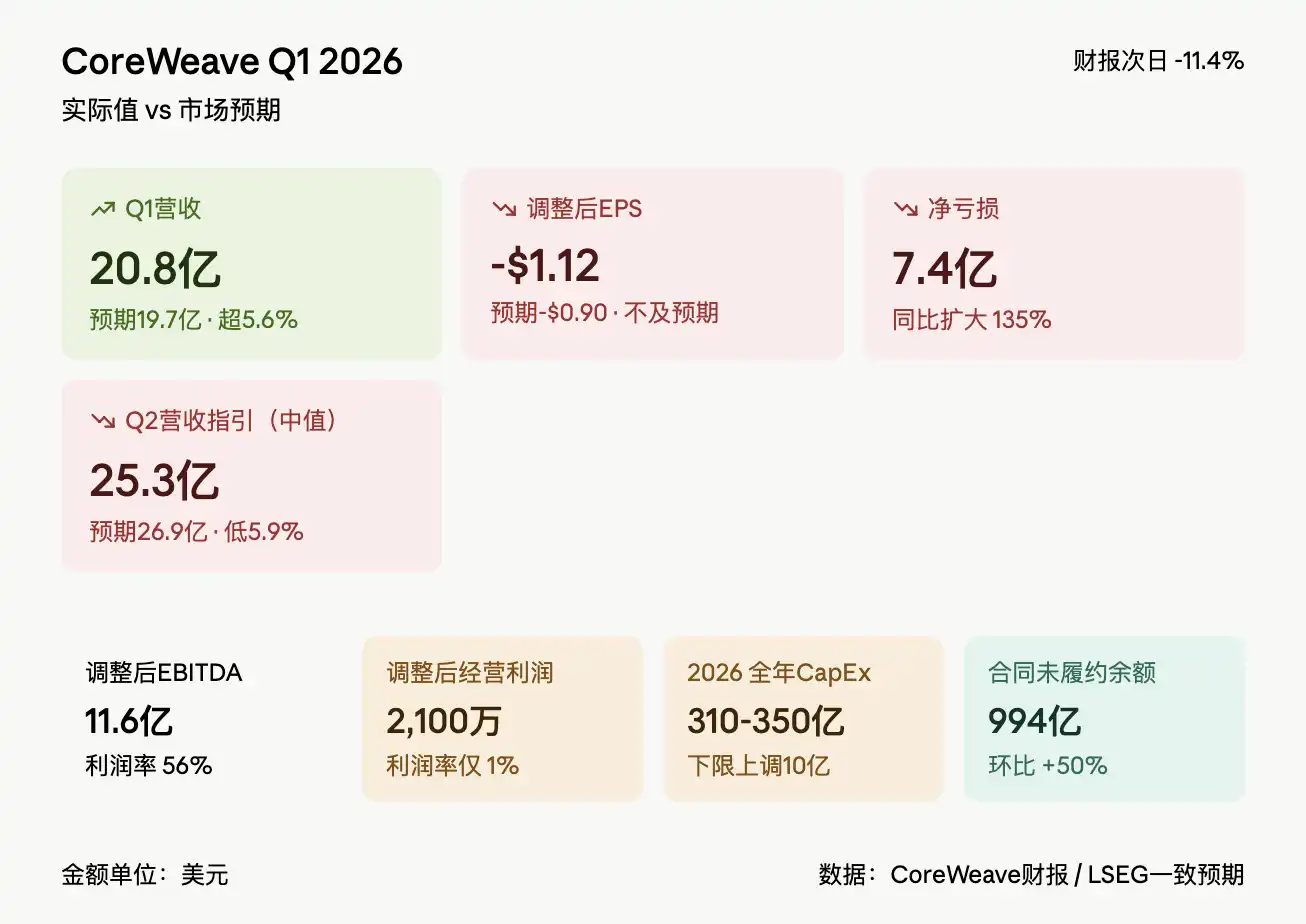
Выручка CoreWeave в первом квартале составила 2,08 миллиарда долларов, что на 112% больше, чем годом ранее, и на 32% больше, чем в предыдущем квартале, превысив рыночные ожидания LSEG в 1,97 миллиарда долларов. Однако скорректированный убыток на акцию составил 1,12 доллара, что хуже ожидаемого убытка в 0,90 доллара; чистый убыток расширился до 740 миллионов долларов, что более чем вдвое превышает убыток в 315 миллионов долларов годом ранее.
По-настоящему спровоцировал распродажу прогноз компании. Компания дала прогноз выручки на второй квартал в диапазоне от 2,45 до 2,6 миллиарда долларов, со средним значением 2,53 миллиарда, что значительно ниже рыночных ожиданий в 2,69 миллиарда. В то же время нижняя граница капитальных затрат на полный 2026 год была повышена с 30 миллиардов до 31 миллиарда долларов. Финансовый директор Нитин Агравал объяснил это ростом цен на комплектующие.
Хрупкость структуры прибыли стала очевидной. Скорректированный показатель EBITDA за первый квартал достиг 1,16 миллиарда долларов (маржа 56%), что выглядит впечатляюще; но скорректированная операционная прибыль составила всего 21 миллион долларов, а операционная маржа сократилась до 1%. Причина в том, что расходы на технологии и инфраструктуру выросли на 127% в годовом исчислении, до 1,27 миллиарда долларов, а коммерческие и маркетинговые расходы выросли более чем в 6 раз до 69 миллионов долларов. Доходы растут, но расходы растут быстрее.
Генеральный директор Майкл Интратор подчеркнул во время телеконференции: «Мы достигли гипермасштаба (hyperscale)». Он сообщил, что в настоящее время у компании есть 10 клиентов, взявших на себя обязательства тратить более 1 миллиарда долларов каждый, что значительно улучшает риск концентрации по сравнению с 2024 годом, когда 62% выручки зависело от одного клиента — Microsoft. Интратор также ожидает, что к концу 2027 года годовая выручка CoreWeave превысит 30 миллиардов долларов.
Сюжет быков: заказы на 100 миллиардов долларов и тесная связь с NVIDIA
Основой логики быков является резерв заказов. На конец первого квартала невыполненный объем контрактов (RPO) CoreWeave достиг 99,4 миллиарда долларов, увеличившись примерно на 33 миллиарда долларов по сравнению с предыдущим кварталом и почти в четыре раза по сравнению с прошлым годом. Интратор заявил, что в первом квартале было заключено новых контрактов более чем на 40 миллиардов долларов.
Список клиентов также меняет рыночное восприятие. В первом квартале в качестве клиента появилась Anthropic, предоставляющая вычислительные мощности для серии моделей Claude; была подписана сделка на 2,1 миллиарда долларов по облачным услугам для ИИ с Meta; торговая компания Jane Street взяла на себя обязательства на заказы около 6 миллиардов долларов и отдельно осуществила инвестиции в акционерный капитал на 1 миллиард долларов. NVIDIA в этом квартале снова купила привилегированные акции класса А CoreWeave на 2 миллиарда долларов. Этот крупнейший в мире поставщик графических процессоров одновременно является инвестором и важным клиентом CoreWeave. Эта тройная связь называется «любимым сыном» NVIDIA.
Что касается структуры финансирования, CoreWeave в первом квартале завершила размещение обеспеченного инвестиционного уровня отсроченного кредита на 8,5 миллиардов долларов под высокопроизводительные вычисления (DDTL) с ценой ниже 6%, что, по словам руководства, является «инновацией». С начала года компания привлекла совокупное долговое и долевое финансирование на сумму более 20 миллиардов долларов, а средневзвешенная стоимость долга снизилась примерно на 80 базисных пунктов. Рейтинговое агентство S&P Global Ratings одновременно повысило прогноз по кредитному рейтингу CoreWeave со «стабильного» до «позитивного».
Логика медведей: чем больше масштаб, тем меньше прибыль, долговой снежный ком катится
Но в отчете есть и другая группа цифр, вызывающих беспокойство. Капитальные расходы в первом квартале составили 6,8 миллиарда долларов, и компания ожидает, что во втором квартале они вырастут до 7-9 миллиардов долларов. Прогноз расходов на проценты во втором квартале находится в диапазоне от 650 до 730 миллионов долларов, что отражает быстрое увеличение размера долга.
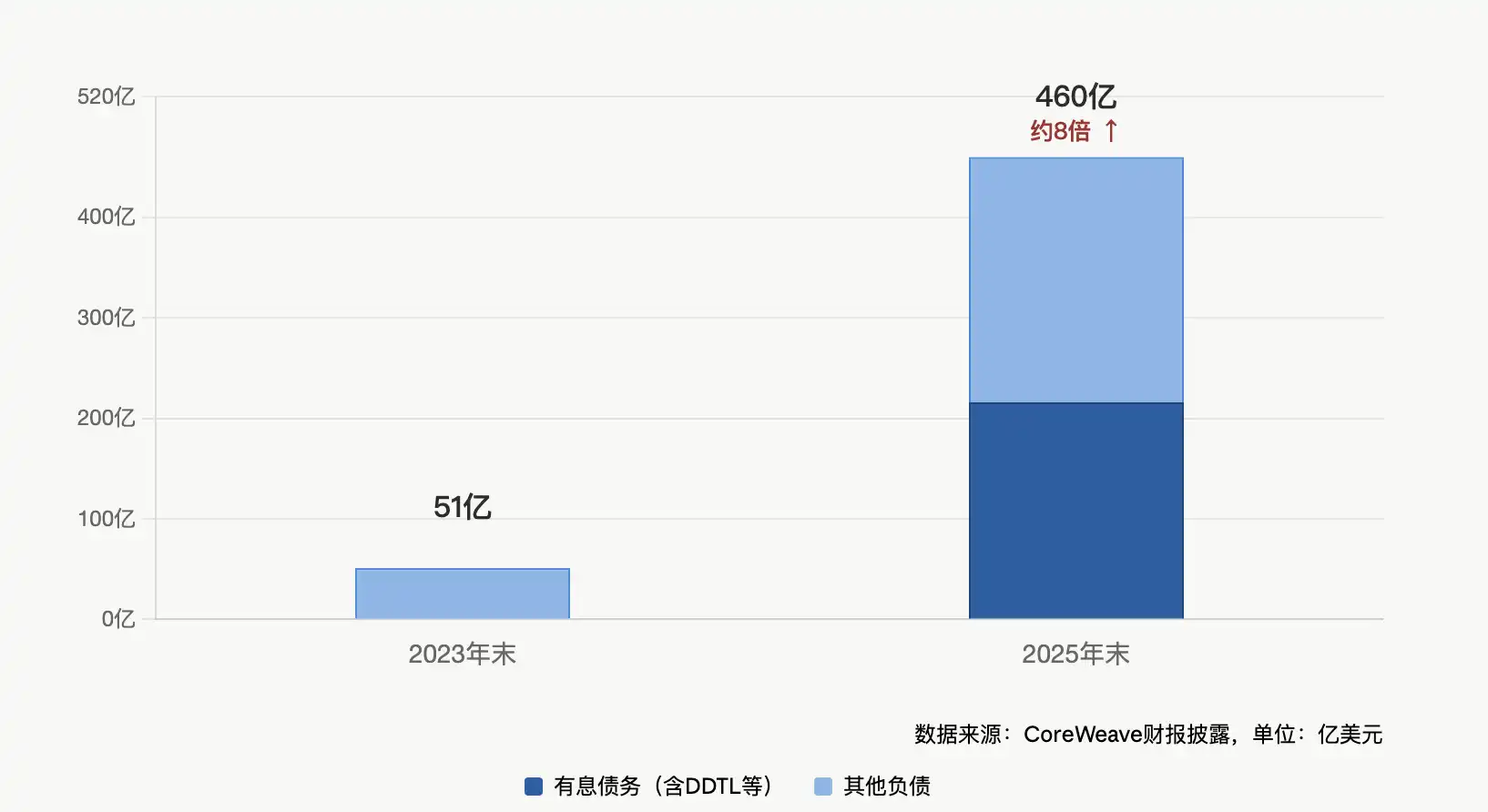
Общий объем долга уже впечатляет. На конец первого квартала общий долг CoreWeave составляет около 25 миллиардов долларов. По сравнению с текущим годовым уровнем выручки компании, уровень левериджа значительно выше, чем у традиционных облачных провайдеров. По данным Morgan Stanley, в 2025 году объем долгового финансирования CoreWeave составил около 11,8 миллиарда долларов, что значительно превышает объем долевого финансирования примерно в 1,5 миллиарда долларов за тот же период. Основным инструментом расширения компании является DDTL — модель «сначала контракт, потом финансирование», при которой контракты используются в качестве залога для банковского финансирования закупок графических процессоров.
Самое острое сомнение касается качества прибыли. Хотя руководство неоднократно подчеркивало маржу EBITDA в 56%, скорректированная операционная маржа составляет всего 1%, а «реальная» валовая маржа после вычета затрат на технологии и инфраструктуру составляет около 4%, демонстрируя сжатие как в квартальном исчислении, так и по сравнению с рыночными ожиданиями. Интратор во время телеконференции объяснил это этапным эффектом масштабного расширения: когда компания резко увеличивает масштабы с 1 гигаватта, эффект разбавления прибыльности новыми мощностями огромен. Он пообещал, что это «низшая точка прибыльности», и в будущих кварталах она будет постепенно восстанавливаться.
Но рынок пока не готов платить за это обещание. Аналитики Morgan Stanley и Jefferies, хотя и дали положительные оценки, акции CoreWeave после каждого предыдущего отчета о прибылях и убытках демонстрировали краткосрочную коррекцию, и текущее падение является одним из самых глубоких за всю историю после публикации отчетности.
Продолжающаяся продажа инсайдерами и контраст с покупкой Дуань Юнпина
Вокруг публикации отчета темпы продаж инсайдерами CoreWeave не прекращались. Генеральный директор Майкл Интратор продал 307 693 акций в конце апреля; сооснователи Брайан Вентуру и Чен Голдберг также зафиксировали продажи; институциональный акционер Magnetar Financial ранее продал более чем на 300 миллионов долларов акций. Согласно последним данным, один из основных акционеров недавно снова продал около 1,2 миллиона акций.
Это создает резкий контраст с действиями Дуань Юнпина по открытию позиции в четвертом квартале. Согласно документу 13F, раскрытому H&H International Investment в феврале 2026 года, Дуань Юнпин в четвертом квартале 2025 года впервые открыл позицию в CoreWeave на 299 900 акций. В то время акции компании отступили более чем на 65% от пика, а опасения по поводу ее долговой структуры достигли максимума.
Стоит отметить, что CoreWeave составляет всего 0,12% от общего портфеля H&H Дуань Юнпина, что носит характер «пробной легкой позиции». В то же время Дуань Юнпин значительно увеличил свою позицию в NVIDIA на 1110% и открыл новые позиции в Credo Technology (высокоскоростные интерконнекты) и Tempus AI (ИИ в медицине). В совокупности эти три новые позиции в сфере ИИ составляют менее 0,3% портфеля. Это означает, что настоящая крупная ставка Дуань Юнпина сделана на саму NVIDIA, а CoreWeave больше похожа на небольшое расширение позиции вниз по цепочке поставок ИИ-вычислений.
Главный вопрос на данный момент: переломный момент или ловушка?
Интратор в сессии вопросов и ответов во время телеконференции бросил эмоциональную риторическую реплику: «Мне всегда казалось, что все смотрят на дерево цен на акции и упускают из виду лес в целом».
Эта фраза как раз резюмирует текущее противостояние быков и медведей. Быки видят лес в виде резерва контрактов почти на 100 миллиардов долларов, диверсифицированной клиентской базы, тройной связи с NVIDIA и повышении кредитного рейтинга; медведи видят дерево в виде операционной маржи в 1%, растущих чистых убытков, агрессивных капитальных затратах и продолжающих продавать инсайдеров.
Акции CoreWeave с начала года все еще выросли почти на 80%, а с момента IPO — более чем на 200%. Но когда аргументы быков основаны на далекой перспективе, а аргументы медведей — на текущих цифрах, каждый отчет о прибылях и убытках становится кровавой бойней между этими двумя нарративами. Ранее Дуань Юнпин в интервью Фан Саньвэню заявил: «ИИ — это огромная революция, вызванная качественным скачком в вычислительной мощности, ее влияние может превзойти Интернет и промышленную революцию. В настоящее время пузырь ИИ очевиден, 90% компаний могут быть ликвидированы, но те, кто выживет, станут гигантами следующего поколения». Его легкая позиция в 0,12% сама по себе признает неопределенность этой игры.
Следующая контрольная точка уже ясна: отчет за второй квартал. Если к тому времени операционная маржа не восстановится, как обещает руководство, доверие к нарративу о «лесе» столкнется с настоящим стресс-тестом.