Ландшафт криптоинвестиций продолжает расширяться. Ежегодно на рынок выходят сотни новых токенов, увеличивается количество акций, связанных с цифровыми активами, а технологии токенизации постепенно выводят на блокчейн традиционные активы, такие как акции и сырьевые товары. В то время как выбор для инвестиций становится все более разнообразным, рыночный капитал также становится все более разборчивым.
Доля доминирования биткойна на рынке восстановилась до примерно 65%, достигнув самого высокого уровня с начала 2021 года; в то же время доля рыночной капитализации стейблкоинов и ончейн-деривативов (таких как упакованные токены, стейкинг-токены, токены мостов) в общей капитализации крипторынка приблизилась к 12,5%. Таким образом, альткойны сталкиваются с двойным давлением: несмотря на растущее количество токенов, их общая доля на рынке сокращается.
В этом выпуске отчета «Состояние сетевого рынка» мы исследуем, переживает ли крипторынок структурный сдвиг в сторону концентрации капитала. Мы проанализируем тенденции в доле доминирования и доходности активов из разных сегментов рыночной капитализации и различных направлений, чтобы выяснить, продолжает ли капитал концентрироваться в меньшем количестве более крупных и зрелых токенов или инвестиционные возможности по-прежнему широко распределены.
Эволюция тенденций доминирования по рыночной капитализации
Сначала мы проанализируем долю доминирования по рыночной капитализации. Доля доминирования биткойна (т.е. доля рыночной капитализации биткойна относительно общей капитализации крипторынка) в 2025 году выросла до 65%, достигнув нового максимума с 2021 года. Важно отметить, что этот рост не был кратковременным всплеском, а с момента достижения дна в 2022 году демонстрировал долгосрочную устойчивую восходящую тенденцию.
Запуск спотовых биткойн-ETF углубил процесс институционализации, привлекши более 1,5 трлн долларов долгосрочного капитала, что further способствовало continued росту его доли доминирования. Эта тенденция укрепила позицию биткойна как «убежища» на крипторынке и сделала его высоколиквидным, регулируемым входом для традиционных институциональных инвесторов на крипторынок. По сравнению с предыдущими бычьими циклами, где «альткойн-сезоны» быстро размывали долю биткойна, нынешнее доминирование биткойна является более устойчивым.
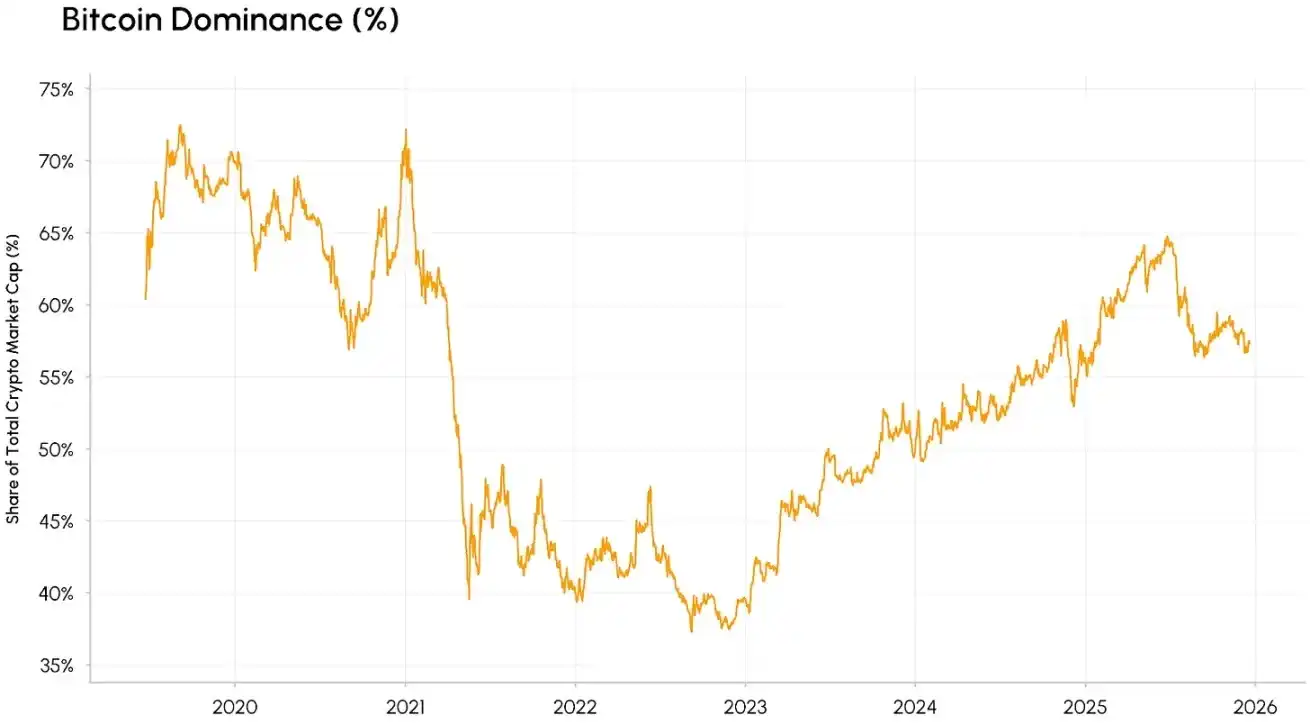
Доля доминирования биткойна. Источник данных: Coin Metrics
Структура других активов на крипторынке также претерпевает изменения. Доля стейблкоинов с текущей капитализацией более 300 млрд долларов и ончейн-деривативов в общей рыночной капитализации продолжает расти. Эти токены выполняют различные функции в криптоэкосистеме: стейблкоины являются основным средством обмена на рынке, а ончейн-деривативы предоставляют инвесторам права на доходность базовых активов или создают каналы для получения процентного дохода.
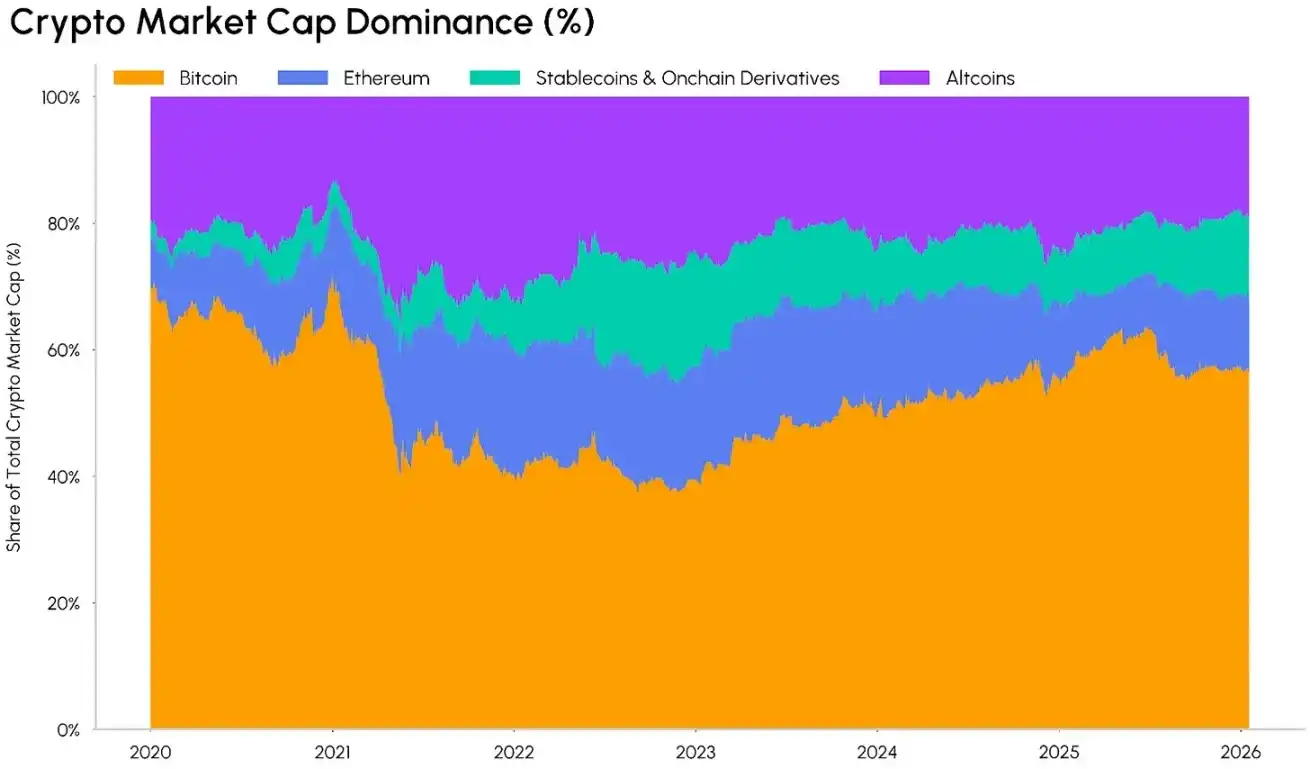
Распределение долей доминирования на крипторынке. Источник данных: Coin Metrics
Под влиянием этого рынок альткойнов сталкивается с дилеммой. Диапазон оставшихся пригодных для инвестиций активов постоянно сужается, и эффект концентрации в верхней части усиливается: рыночная стоимость продолжает концентрироваться в более ликвидных и зрелых активах, которые часто имеют четкие варианты использования, ясный регуляторный путь развития и могут в полной мере受益ствовать от развития стейблкоинов, децентрализованных финансов (DeFi) и волны токенизации активов.
В отличие от предыдущих рыночных циклов, скорость ротации капитала от основных монет к альткойнам в этом цикле значительно замедлилась, ETF и различные институциональные инвестиционные инструменты прочно заблокировали рыночную ликвидность в топовых активах. Однако с внедрением унифицированных стандартов листинга, запуском альткойн и мульти-активных ETF, которые расширяют инвестиционные каналы для более крупных альткойнов, а также с продвижением законодательства, связанного с рыночной структурой, эта рыночная格局 может измениться.
Тенденция «монополии гигантов» внутри сегмента альткойнов
Даже внутри сегмента альткойнов тенденция к концентрации капитала продолжает усиливаться. Текущая доля топ-10 альткойнов (исключая биткойн) в общей капитализации сегмента составляет около 82%, что значительно выше, чем 64% в период бычьего рынка 2021 года. В прошлом бычьем цикле множество малокапитализированных альткойнов, которые временно создавали стоимость, постепенно ушли с рынка, уступив место более концентрированной структуре сектора с усиленным эффектом лидерства, при этом жизненный цикл различных краткосрочных рыночных нарративов постоянно сокращается, не способный поддерживать устойчивый рост стоимости активов.
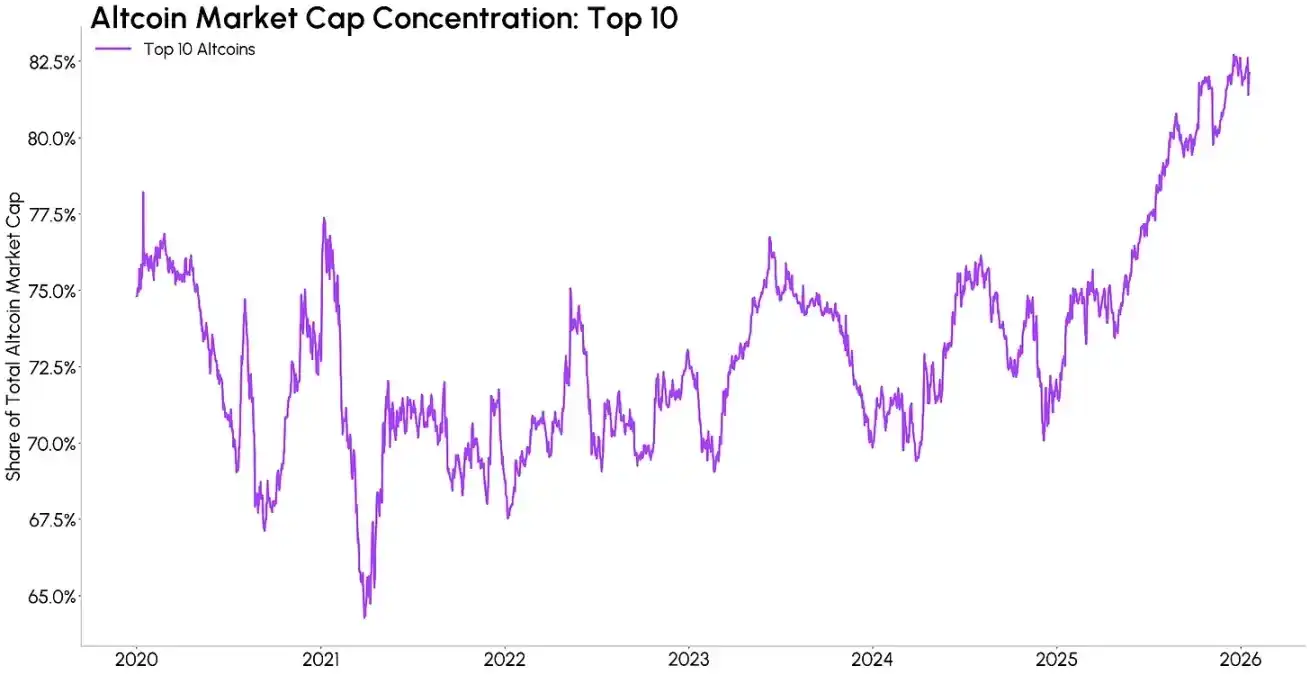
Доля рыночной капитализации топ-10 альткойнов. Источник данных: Coin Metrics
Мы также можем наблюдать эту тенденцию концентрации по количеству токенов, преодолевших определенный порог рыночной капитализации. Несмотря на то, что общая рыночная капитализация крипторынка неоднократно обновляла исторические максимумы, количество альткойнов с капитализацией более 1 млрд долларов сократилось с пикового значения около 105 в 2021 году до примерно 58 в настоящее время. Это означает, что даже при росте общего количества активов на рынке, количество действительно «пригодных для инвестиций» альткойнов постоянно сокращается. Хотя это не означает упадка сегмента альткойнов, фокус внимания рыночных средств, вероятно, будет further концентрироваться на активах с прочными фундаментальными показателями и более высокой устойчивостью к рискам.
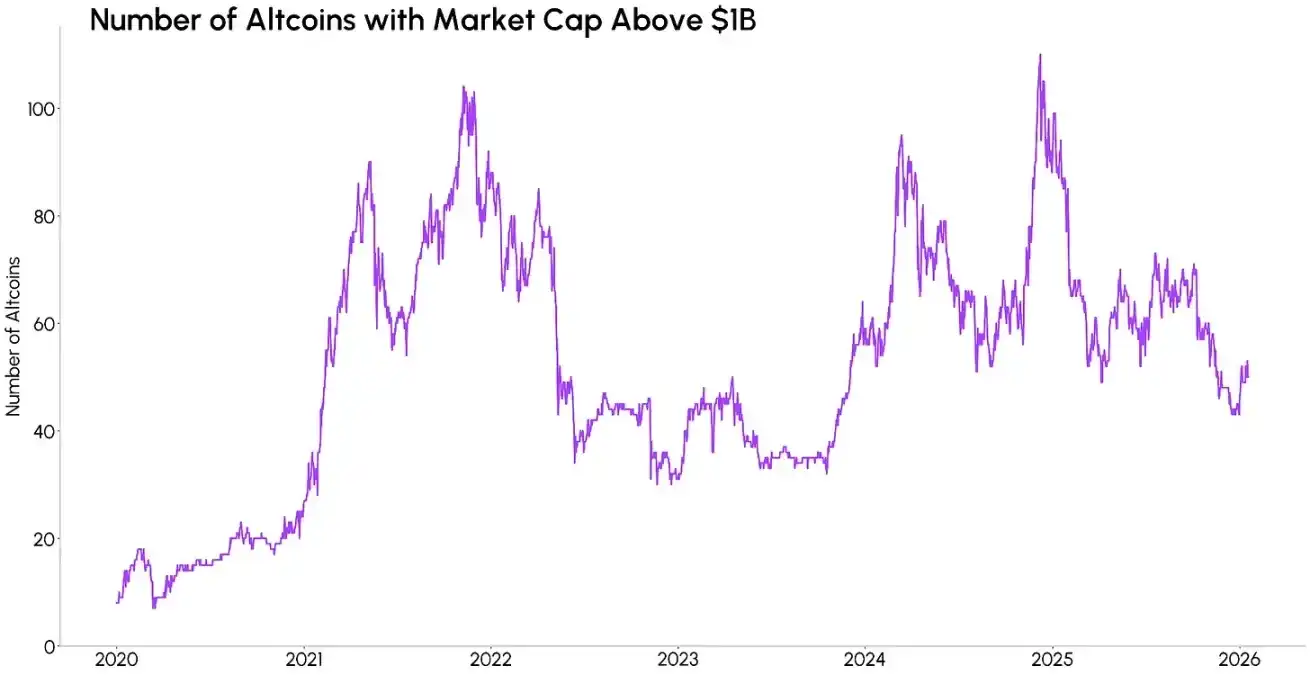
Количество альткойнов с рыночной капитализацией свыше 1 млрд долларов. Источник данных: Coin Metrics
В таблице ниже summarized ежегодные особенности эволюции указанных рыночных тенденций. Некоторые показатели по-прежнему демонстрируют циклический характер, например, доля доминирования биткойна снижается на бычьем рынке и растет на медвежьем, но доля рынка топ-10 альткойнов показала другую тенденцию: в 2020-2024 годах, независимо от рыночной конъюнктуры, этот показатель стабильно составлял 69%-73%, а в 2025 году резко вырос до 82%. Это изменение указывает на структурный сдвиг рынка в сторону зрелых龙头 активов, а не на простое краткосрочное «преследование качественных активов».
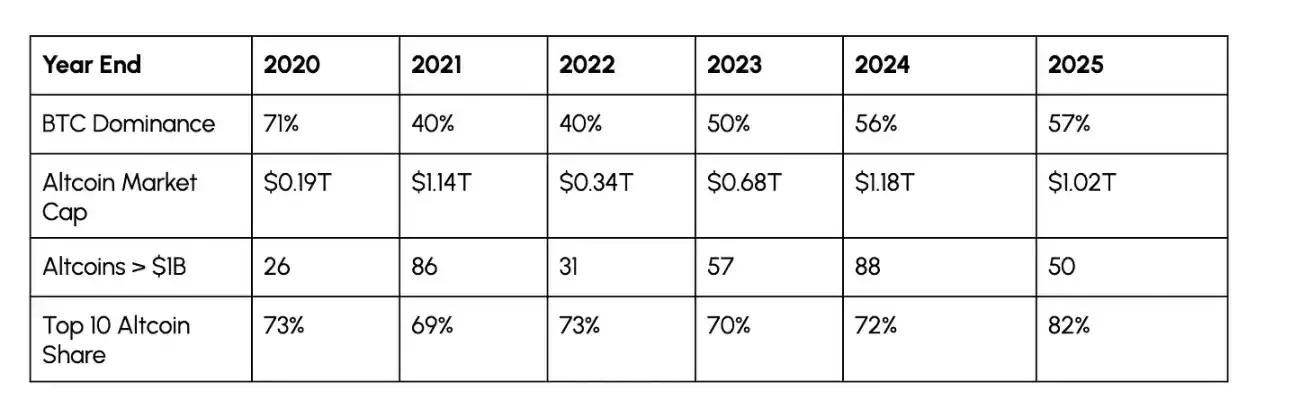
Источник данных: Coin Metrics
Переток капитала в основные монеты
Эта тенденция концентрации капитала также отражается в доходности активов. С 2023 года монеты (капитализация 1-10 млрд долларов), и особенно малые монеты (капитализация менее 1 млрд долларов), в начале и конце 2024 года опережали по доходности крупные монеты (капитализация свыше 10 млрд долларов), но в 2025 году произошел резкий разворот этой тенденции, причиной чего стало быстрое затухание рыночных настроений вокруг мемкоинов и других краткосрочных нарративов.
При расчете по равному весу, совокупная доходность крупных криптомонет с января 2023 года по настоящее время составила approximately 365%, в то время как доходность средних и малых монет составила only approximately 70% и 55% соответственно, большая часть ранее накопленного роста была отдана. Это явление дивергенции доходности наглядно демонстрирует, что рыночная доходность все больше смещается в сторону зрелых, высоколиквидных активов, и рост малокапитализированных токенов难以 повторить устойчивость предыдущих циклов.
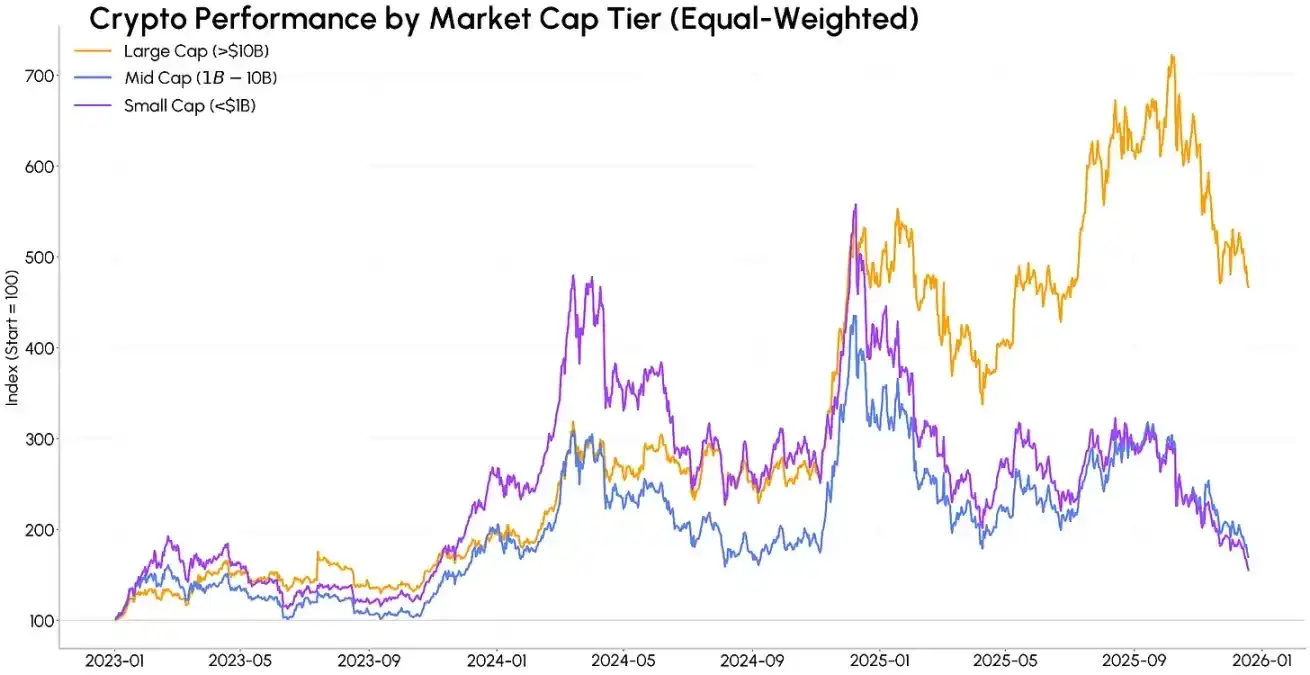
Рыночные показатели токенов разной капитализации. Источник данных: Coin Metrics
10 октября 2025 года на рынке произошло масштабное событие ликвидаций, вызванное высоким левериджем и истощением ликвидности. Это событие может further усилить тенденцию смещения капитала в защитные активы, инвесторы будут все больше предпочитать высоколиквидные активы, а не активы с significantly более высокой волатильностью.
Заключение
Различные данные указывают на то, что крипторынок находится на этапе изменения格局, постепенного созревания и консолидации. Хотя количество активов на крипторынке продолжает расти, и, будучи базовой инфраструктурой, он поддерживает все более богатые типы традиционных активов, общий объем ликвидности на рынке ограничен. В то же время, в мульти-активных инвестиционных портфелях криптоактивам еще предстоит конкурировать за место с热门 инвестиционными темами фондового рынка, традиционными активами-убежищами, такими как золото.
В настоящее время капитал продолжает концентрироваться в крупных криптомонетах, а также в инфраструктурных направлениях, поддерживающих развитие стейблкоинов, токенизированных активов и децентрализованных финансов. Важность ликвидности и масштаба возросла по сравнению с прошлым, и порог привлечения долгосрочного капитала для альткойнов также significantly повысился.
Конечно, если правила, связанные с рыночной структурой, станут более четкими, альткойн и мульти-активные ETF будут продолжать распространяться, а также улучшится環境 рыночной ликвидности, все еще возможно возникновение нового альткойн-сезона. Однако можно预见, что бенефициары этого цикла среди альткойнов будут более концентрированными, а выбор капитала будет более разборчивым, чем в любом предыдущем цикле.