National-Level Players Enter the Game: The 2025 Revelation of Cryptocurrency Crime Spiraling Out of Control

marsbitОпубликовано 2026-01-10Обновлено 2026-01-10

Введение

Summary: In 2025, state-level cryptocurrency activity surged, marking a new phase in the maturation of illicit on-chain ecosystems. Illicit addresses received at least $154 billion, a 162% year-over-year increase, largely driven by a 694% spike in transactions involving sanctioned entities. Stablecoins dominated these flows, accounting for 84% of all illicit transaction volume. Key trends include North Korean hackers stealing a record $2 billion, including the largest crypto theft in history from Bybit. Russia launched the ruble-backed A7A5 token, which saw $93.3 billion in transaction volume within a year, facilitating large-scale evasion. Chinese money laundering networks emerged as dominant, sophisticated operators offering full-service criminal enterprises. Iran-linked proxy networks moved over $2 billion for activities including oil sales and weapons procurement. Illicit actors and nations increasingly rely on full-stack infrastructure providers resistant to takedowns and sanctions. Furthermore, the connection between crypto and real-world violent crime is growing, with increased use in human trafficking and a rise in violent coercion attacks to seize crypto assets during price peaks. Collaboration between law enforcement, regulators, and crypto firms is crucial to counter these evolving, interconnected threats.

Original Author: Chainalysis

Original Compilation: Chopper, Foresight News

In 2025, we observed a significant increase in cryptocurrency-related activities at the national level, marking a new mature stage in the development of the illegal on-chain ecosystem. Over the past few years, the professionalization of the cryptocurrency crime sector has deepened; illegal organizations have now established large-scale on-chain infrastructure to support transnational criminal networks in procuring goods and services and laundering proceeds from crypto crimes. Against this backdrop, governments have also begun to enter this field, leveraging these mature professional service providers on one hand, while building their own customized infrastructure on the other to evade sanctions on a large scale. As governments connect to this cryptocurrency supply chain originally built for cybercriminals and organized crime groups, government agencies, compliance, and security teams now face severe challenges in terms of consumer rights protection and national security.
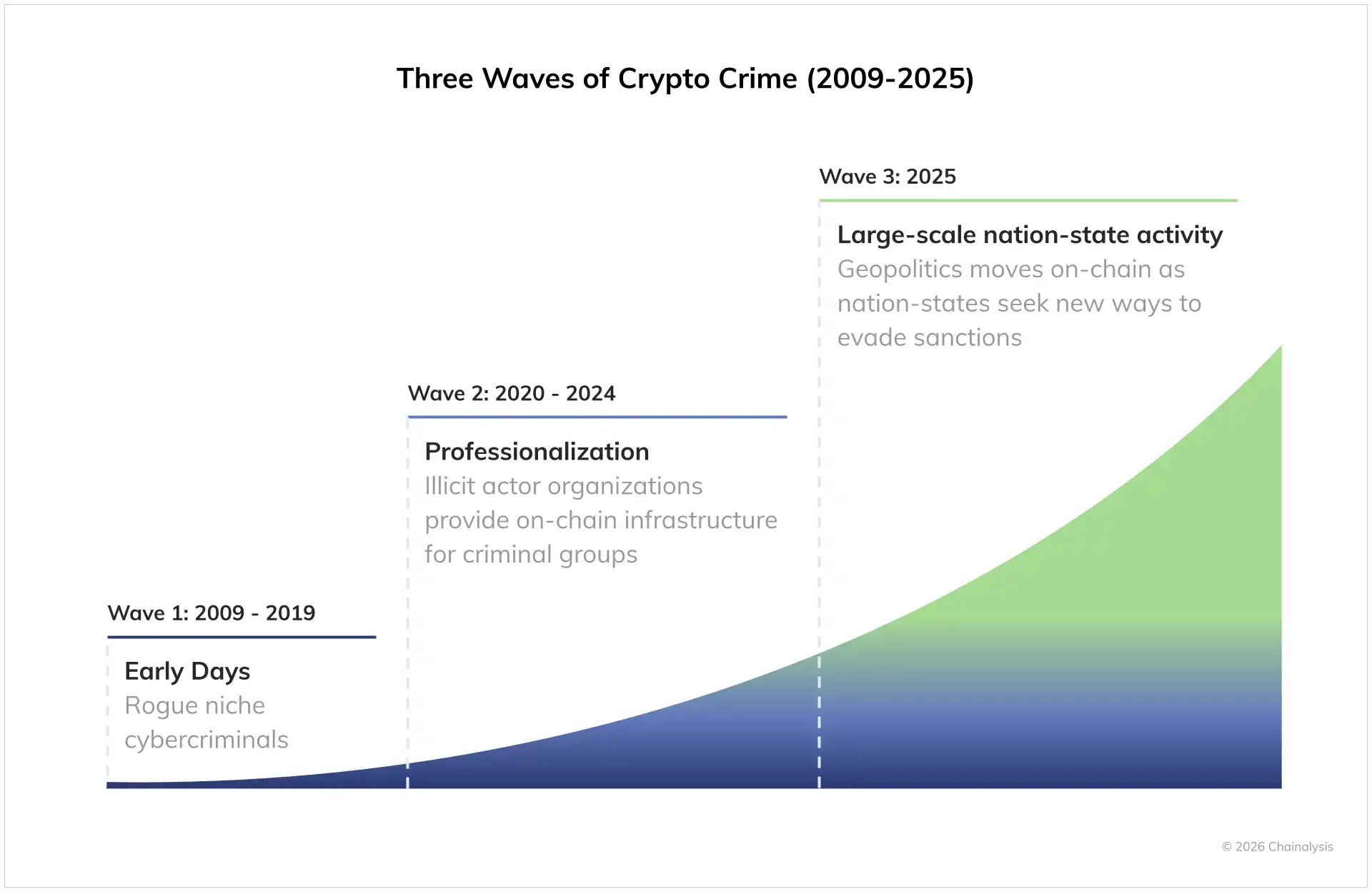
What are the specific on-chain manifestations of these trends and other industry changes? Next, we will analyze them by combining data and macro trends.
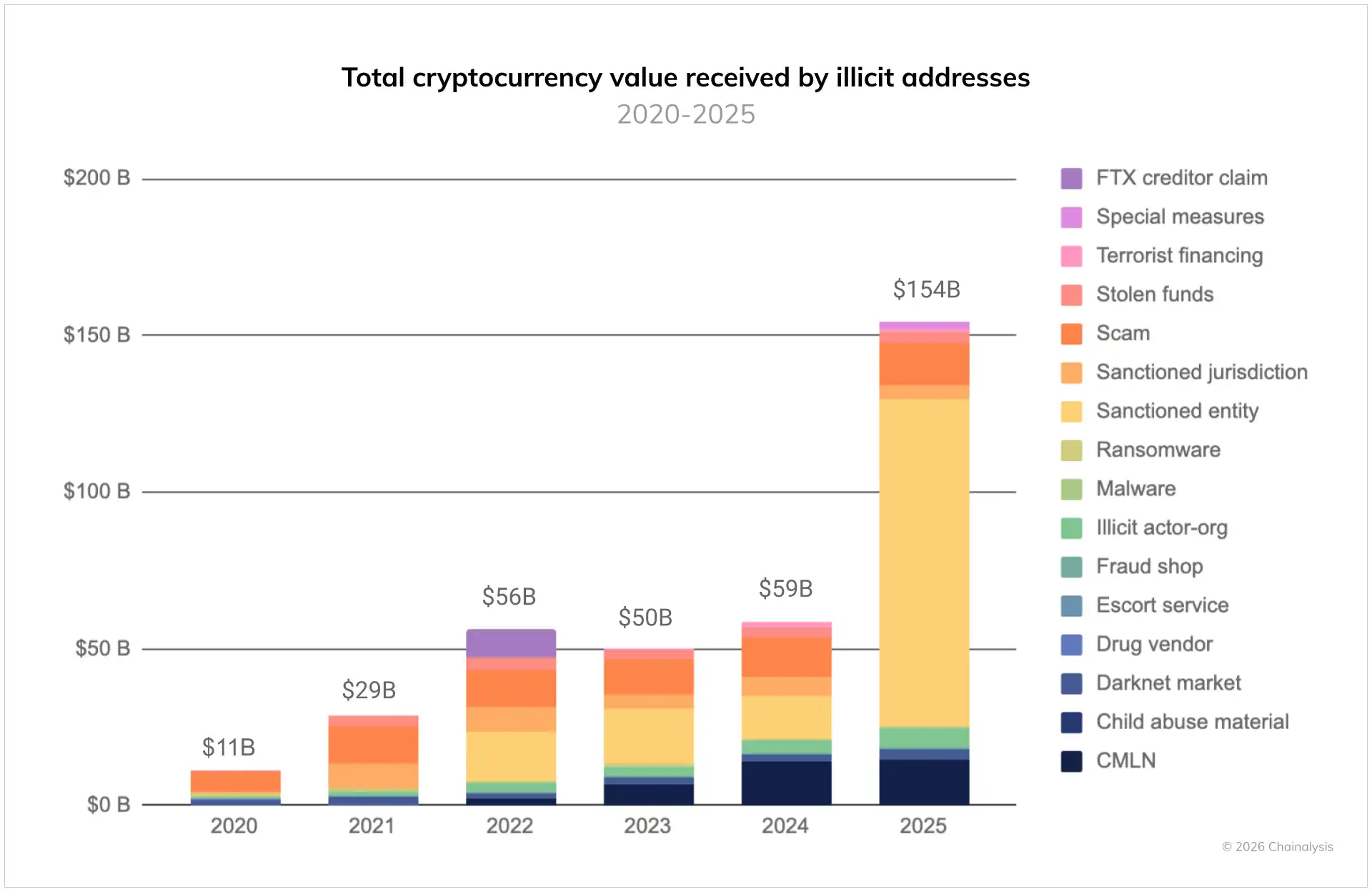
According to our monitoring data, the scale of funds flowing into illegal cryptocurrency addresses in 2025 reached at least $154 billion, a sharp increase of 162% year-on-year. This growth was primarily driven by a surge in fund inflows to sanctioned entities, which soared by 694% year-on-year. However, even excluding the growth from sanctioned entities, 2025 was still a record year for cryptocurrency crime, as the scale of the vast majority of illegal activities increased.

Nevertheless, the scale of these illegal transactions still pales in comparison to the overall cryptocurrency economy, as the main participants in the cryptocurrency market remain legitimate transactions. According to our estimates, although the proportion of illegal transactions in the total traceable cryptocurrency transaction volume in 2025 increased slightly compared to 2024, it remained below 1%.

As shown in the figure below, we also observed a continuous shift in the types of assets involved in cryptocurrency crimes.
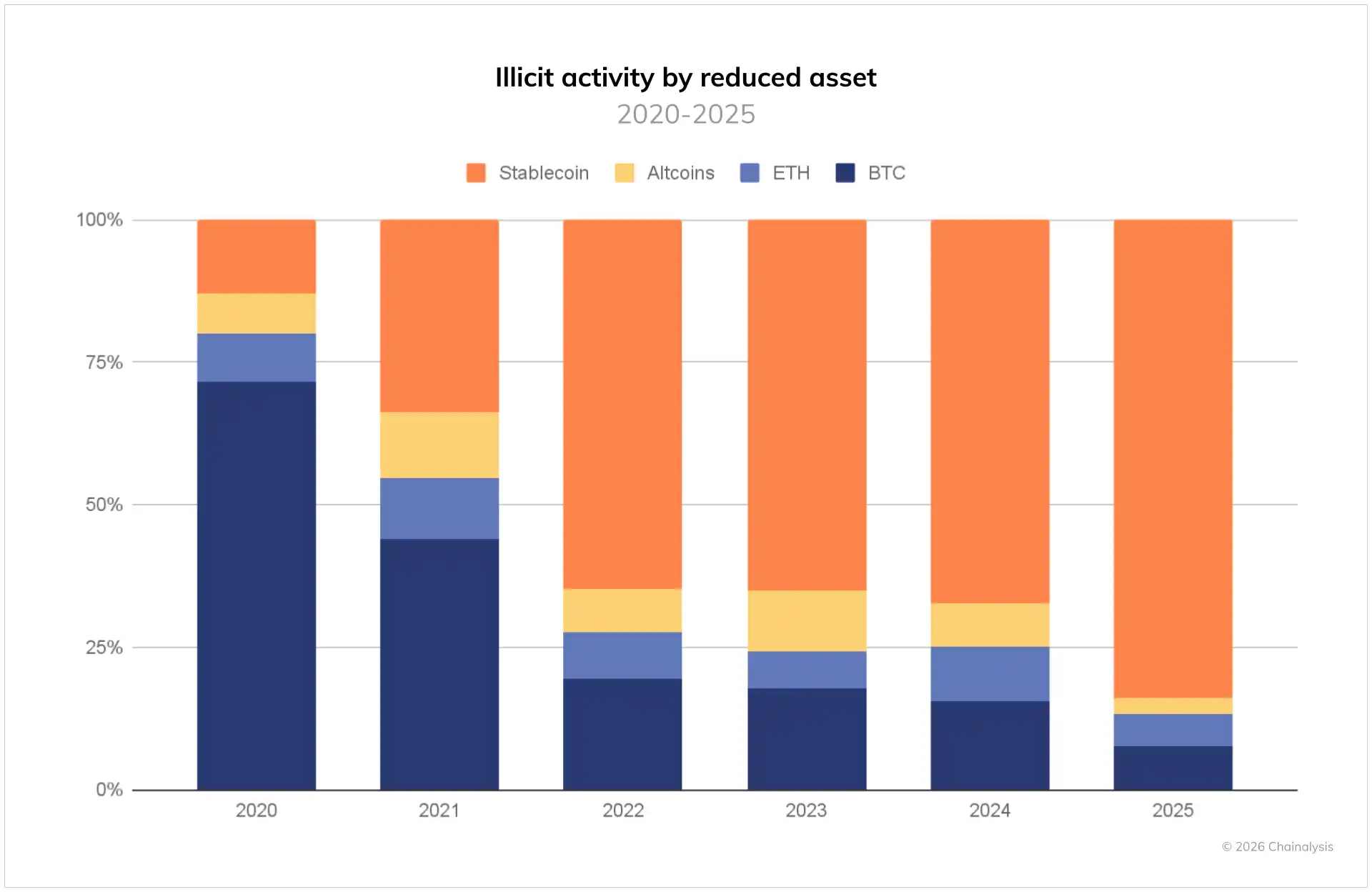
Over the past few years, stablecoins have gradually become the dominant asset in illegal transactions, currently accounting for 84% of the total illegal transaction volume. This trend aligns with the overall development characteristics of the cryptocurrency ecosystem: with advantages such as convenient cross-border transfers, low volatility, and wide application scenarios, stablecoins continue to expand their share in the overall cryptocurrency transactions.

The following sections will delve into the core trends that defined the cryptocurrency crime landscape in 2025, which remain worthy of attention in the future.

National-Level Threats Drive Transaction Scale: North Korea Sets New Record in Theft, Russia's A7A5 Token Facilitates Large-Scale Sanction Evasion

In 2025, stolen funds remained a major threat to the cryptocurrency ecosystem, with hacking groups linked to North Korea alone stealing $2 billion. This figure was primarily driven by several highly destructive large-scale hacking incidents, the most notable of which was the attack on the Bybit exchange in February. The incident involved nearly $1.5 billion, making it the largest digital asset theft in the history of cryptocurrency. Although North Korean hackers have long been a major force threatening the cryptocurrency ecosystem, the past year set new records both in terms of the amount stolen and the sophistication of intrusion and money laundering methods.

Particularly noteworthy is that the scale of on-chain activities by governments reached unprecedented levels in 2025. Russia introduced relevant legislation in 2024 to promote the use of cryptocurrencies to evade sanctions, and this measure was officially implemented in February 2025. The country launched the ruble-backed token A7A5, which achieved a transaction volume of over $93.3 billion in less than a year since its launch.

Meanwhile, over the past few years, Iran's proxy networks have conducted money laundering, illegal oil transactions, and bulk commodity procurement for weapons through confirmed wallet addresses that have been placed on the sanctions list, with a cumulative transaction volume exceeding $2 billion. Despite multiple military strikes, Iran-supported terrorist groups such as Hezbollah, Hamas, and the Houthis continue to use cryptocurrencies on an unprecedented scale.

In 2025, Chinese money laundering networks emerged as a dominant force in the illegal on-chain ecosystem. These organizations operate with high precision, greatly driving the diversification and professionalization of cryptocurrency crimes, offering specialized criminal services including "money laundering services." Building on early illegal operation models such as "Huiyin Guarantee," these networks have established full-service criminal enterprises, covering areas such as fraud, scams, laundering proceeds from North Korean hacking thefts, sanction evasion, and terrorism financing.

Full-Stack Illegal Infrastructure Providers Fuel Malicious Network Activities

While governments are increasing their use of cryptocurrencies, traditional cybercrime activities remain rampant: ransomware operators, child sexual abuse and cybercrime platforms, malware distributors, scammers, and illegal trading markets still rely on extensive support networks to maintain operations. Illegal actors and governments are increasingly dependent on full-stack on-chain infrastructure providers, including domain registrars, secure and reliable hosting services, and other technical infrastructure that can be used to carry out malicious network activities.

These infrastructure providers have evolved into comprehensive infrastructure platforms capable of resisting platform takedowns, abuse complaints, and sanction enforcement. As the scale of these services continues to expand, they may become key drivers in expanding the scope of malicious network activities for economic crime and state-supported forces.

The Increasing Correlation Between Cryptocurrency and Violent Crime

In the perception of many, cryptocurrency crime is still confined to the virtual world. The masterminds are merely anonymous figures hiding behind keyboards, posing no real-world threat. However, in reality, the connection between on-chain activities and violent crime is deepening. Human trafficking groups are increasingly using cryptocurrencies for transactions; at the same time, disturbingly, the number of violent coercion attacks has risen significantly, with criminals using violent means to force victims to transfer crypto assets, and such assaults often occur during peak cryptocurrency price periods.

Looking ahead, collaboration between law enforcement agencies, regulatory bodies, and cryptocurrency companies will be key to addressing these complex, ever-changing, and interconnected threats. Although the proportion of illegal transactions in legitimate cryptocurrency transaction volume remains limited, maintaining the integrity and security of the cryptocurrency ecosystem has never been more important.


Связанные с этим вопросы

QWhat was the total value of illicit cryptocurrency transactions in 2025, and what was the primary driver of this growth?

AThe total value of illicit cryptocurrency transactions in 2025 reached at least $154 billion, representing a 162% year-over-year increase. This growth was primarily driven by a massive 694% surge in transaction volume from sanctioned entities.

QWhich asset has become the dominant currency for illicit transactions and what percentage of the total illicit volume does it represent?

AStablecoins have become the dominant asset for illicit transactions, currently accounting for 84% of the total illicit transaction volume.

QWhat significant role did nation-states play in the 2025 crypto crime landscape according to the article?

ANation-states significantly escalated their involvement in 2025. Russia launched the ruble-backed A7A5 token, which processed over $93.3 billion in volume to circumvent sanctions. North Korean hacking groups stole a record $2 billion, and Chinese money laundering networks emerged as dominant, sophisticated players in the illicit ecosystem.

QWhat new concerning trend connects cryptocurrency to real-world physical violence?

AA concerning trend is the rise in violent coercion attacks, where criminals use physical violence to force victims to transfer their cryptocurrency assets. These attacks often occur during periods of peak cryptocurrency prices.

QDespite the growth in illicit activity, how does its scale compare to the overall cryptocurrency economy?

ADespite the significant growth, illicit transactions still represent less than 1% of the total traceable cryptocurrency transaction volume, meaning the vast majority of cryptocurrency market activity remains legitimate.

Похожее

human.tech запускает Clean SDK для приватных Web3-приложений

Компания human.tech представила Clean SDK — набор инструментов для разработки приложений в Web3, в которых по умолчанию соблюдаются конфиденциальность и прозрачная подотчетность. Этот комплект, выпущенный одновременно с версией 5 Aztec, предоставляет разработчикам готовые компоненты для внедрения в их приложения проверки личности с нулевым разглашением (zero-knowledge), скрининга санкционных списков и приватных транзакций, без необходимости самостоятельно работать с конфиденциальными пользовательскими данными или создавать инфраструктуру для соответствия нормативным требованиям. Clean SDK решает ключевую проблему Web3, сочетая приватность с подотчетностью. С помощью zero-knowledge доказательств и программируемой верификации приложения могут подтверждать легитимность пользователей и прохождение средств проверки на санкции, не раскрывая при этом личную информацию. Таким образом, разработчикам больше не нужно выбирать между конфиденциальностью пользователей и регуляторными требованиями. Первый продукт на основе SDK — приложение Shield (мост между Ethereum и Aztec), которое было запущено одновременно с ним. Shield позволяет пользователям и автономным агентам переводить активы в Aztec, сохраняя анонимность, но при этом криптографически доказывая, что за каждой операцией стоит уникальный реальный человек, а средства проверены. Аудит Nethermind в мае 2026 года подтвердил надежность смарт-контрактов Shield. Как отметил сооснователь human.tech Шади Эль Дамати, «приватность без подотчетности ведет к злоупотреблениям, а подотчетность без приватности превращается в слежку. Clean SDK устраняет этот ложный выбор». Комплект предлагает три основных метода верификации: скрининг санкций (Proof of Innocence), подтверждение личности человека (Proof of Personhood, в том числе через Human Passport) и верификация личности с нулевым разглашением для операций с высокой стоимостью (Proof of Clean Hands). Данные хранятся в зашифрованном виде вне блокчейна, а проверки происходят как при входе, так и при выходе средств. В целом, Clean SDK, предназначенный в первую очередь для разработчиков в экосистеме Aztec, призван стимулировать создание разнообразных приватных финансовых приложений и сервисов, которые обеспечивают видимую подотчетность с помощью криптографических доказательств, не требуя от разработчиков создания сложной инфраструктуры с нуля. Этот запуск отражает растущий спрос на институциональные решения, которые прозрачно балансируют между приватностью и соответствием требованиям.

TheNewsCrypto3 мин. назад

human.tech запускает Clean SDK для приватных Web3-приложений

TheNewsCrypto3 мин. назад

Высвобождение ликвидности на $100 млн? Новая политика Pump.fun тестирует «5-минутную накачку»

21 июля платформа Pump.fun объявила о запуске режима BOOST, ставшего новой стандартной механикой запуска токенов. Его цель — решить проблему «мёртвой ликвидности». Когда токен переходит с bonding curve в ликвидный пул PumpSwap, около 20% средств навсегда блокируются в LP, становясь недоступными. По оценкам платформы, это приводит к ежегодным потерям ликвидности на сумму более $1 млрд. Механика BOOST меняет это: вместо блокировки, эти 20% средств (например, ~17.6 SOL для SOL-пар) используются в первые 5 минут после миграции токена для его скупки по методу TWAP (средневзвешенная цена по времени). Все выкупленные токены немедленно сжигаются. Это создаёт кратковременный искусственный покупательский спрос и одновременно сокращает предложение токена. Режим автоматически применяется для всех токенов, мигрирующих после 21 июля. Ранее выпущенные токены и токены, запущенные через Mayhem (AI Agent Lab), не участвуют. Цель BOOST — оживить торговлю в критические первые минуты после выпуска, чтобы удержать трейдеров и повысить общий объём торгов на платформе. Однако критики отмечают риски: после 5-минутного «фейерверка» токен может резко обрушиться при крупных продажах, а упрощённый старт может поощрить выпуск более низкокачественных мем-токенов.

marsbit10 мин. назад

Высвобождение ликвидности на $100 млн? Новая политика Pump.fun тестирует «5-минутную накачку»

marsbit10 мин. назад

Продажа блочного пространства умерла: публичные блокчейны должны найти новый способ существования

Статья "Продажа блок-пространства мертва: публичным блокчейнам нужно найти новый путь" утверждает, что традиционная бизнес-модель публичных блокчейнов, основанная на продаже пространства в блоках, больше не работает. Из 14 криптокомпаний, заработавших более $200 млн за два года, только Hyperliquid является блокчейном, чей месячный доход ($58 млн) в 100 раз превышает доход Arbitrum ($430 тыс.). Чтобы выжить, блокчейны должны превращаться в продуктовые студии, агрегаторы приложений или вертикальные SaaS-решения, отходя от роли нейтральной инфраструктуры. В статье также разбираются три ключевых события: 1. **Взлом Ostium**: Атака на LP-пулы протокола привела к потере более 40% TVL ($23,7 млн) из-за уязвимости в офф-чейн инфраструктуре, поставляющей цены. Это подчеркивает критическую важность контроля для протоколов, работающих с офф-чейн активами. 2. **Будущее опционов**: Чтобы достичь массового принятия, мощные возможности опционов должны быть абстрагированы от сложной терминологии и представлены через понятные продукты: структурированные продукты, vaultы для получения дохода, бинарные опционы и прогнозные рынки. 3. **На радаре**: Отмечаются тренды, такие как фиксированные займы (Yearn's Flex), смена стратегии Base после неудач с социальными токенами, запуск перпетуальных контрактов на индекс доллара (Plether) и фокус Starknet на приватности и защите от квантовых угроз.

marsbit30 мин. назад

Продажа блочного пространства умерла: публичные блокчейны должны найти новый способ существования

marsbit30 мин. назад

Заметки подкаста|Диалог с управляющим активами GSR: Чтобы определить, настоящий ли этот крипто-ралли, просто взгляните на процентные ставки по кредитам на Aave

Заметки из подкаста: интервью с управляющим директором по управлению активами GSR Энди Бэром. В центре обсуждения — текущий крипторынок и его перспективы. Бэр описывает рынок как находящийся в состоянии «нерешительности» (ambivalence), где краткосрочные отскоки быстро теряют импульс. Для оценки истинной силы восстановления он предлагает три ключевых сигнала: 1. **Процентные ставки в DeFi (особенно на Aave):** Текущие ставки по USDC (~3,75%) близки к безрисковой ставке (SOFR), что указывает на отсутствие ажиотажного спроса на кредитное плечо. Устойчивый рост начнется, когда ставки резко вырастут, отражая всплеск спроса на заемные средства. 2. **Формирование консенсуса о «пике жесткости» ФРС:** Рынкам необходим четкий сигнал о том, где закончится цикл повышения ставок при новом председателе Кевине Уорше. Пока этой ясности нет, трудно ожидать устойчивого бычьего тренда. 3. **Закон CLARITY:** Его принятие до 7 августа, которое сейчас оценивается Polymarket менее чем в 40%, стало бы для рынка позитивным сюрпризом и могло бы дать импульс для роста. Бэр также отмечает, что фонды ETF не являются долгосрочным капиталом, а корпоративные казначейства (DAT) пока неактивны в покупках. Вместе с сокращением предложения стейблкоинов это лишает рынок структурных покупателей. В итоге, для подтверждения подлинности роста следует следить не только за макростатистикой (например, CPI), но и за цепной активностью, прежде всего за ставками кредитования в DeFi.

marsbit41 мин. назад

Заметки подкаста|Диалог с управляющим активами GSR: Чтобы определить, настоящий ли этот крипто-ралли, просто взгляните на процентные ставки по кредитам на Aave

marsbit41 мин. назад

Отправляй сообщения и переводи монеты? Telegram этим летом «встроит» криптокошелек для 1 млрд пользователей

Создатель Telegram Павел Дуров объявил о запуске летом этого года собственного встроенного некастодиального криптокошелька Gram для более чем 1 млрд пользователей приложения. Кошелек позволит совершать мгновенные переводы без комиссий. В отличие от текущего сервиса @wallet, которым управляет сторонняя компания, новый кошелек будет родной функцией Telegram, где пользователи будут самостоятельно контролировать свои приватные ключи. После анонса цена токена GRAM (ранее Toncoin) выросла примерно на 8%, хотя все еще значительно ниже исторических максимумов. Это событие знаменует возвращение Дурова к проекту TON после урегулирования с SEC в 2020 году и является частью его дорожной карты «Make TON Great Again». Запуск происходит в период усиления конкуренции между суперприложениями в сфере платежей: X Money Илона Маска развивает фиатные переводы, а Meta изучает интеграцию стейблкоинов. Telegram делает ставку на криптонативное решение, используя свою огромную аудиторию и близость к криптосообществу. Однако остаются неясными ключевые детали, такие как техническая реализация «нулевых комиссий», поддержка активов помимо GRAM, а также конкретные сроки запуска, помимо обещания «летом».

marsbit1 ч. назад

Отправляй сообщения и переводи монеты? Telegram этим летом «встроит» криптокошелек для 1 млрд пользователей

marsbit1 ч. назад

Торговля

Спот
活动图片




