Market Liquidity Survey: Under Diminishing Liquidity, Retail Investors 'Buy Lottery Tickets', Main Players 'Purchase Insurance'

marsbitОпубликовано 2025-12-15Обновлено 2025-12-15

Введение

Following the sharp market decline on October 11, the crypto market has entered a period of low activity and structural divergence. Analysis of order book depth, derivatives data, and stablecoin flows reveals a clear trend: liquidity is deteriorating, institutional players are adopting defensive strategies, while retail investors remain in a wait-and-see mode. Order book depth on major exchanges like Binance has weakened significantly, with both bid and ask liquidity thinning out. Altcoin open interest and trading volumes have also declined, indicating a lack of retail participation and speculative interest. A notable shift is observed in the options market. Bitcoin options now dominate trading activity, with put options—particularly those concentrated around the $85,000 strike—carrying significantly higher premiums than calls. This suggests that while retail traders are buying cheap, out-of-the-money call options (like “lottery tickets”), institutions are paying high premiums for downside protection, reflecting a bearish or defensive stance. The max pain point for December is around $100,000, indicating a key level where option sellers would profit most. Stablecoin data further highlights this divide. USDT reserves on exchanges have reached an all-time high, suggesting available capital from retail and non-compliant players waiting to enter. In contrast, USDC—predominantly used by U.S. institutions—has seen a sharp 40% withdrawal from exchanges, signaling institutional ex...

Author: Frank, PANews

After the sharp downturn in the crypto market on October 11th, the market seems to have entered a prolonged "cooling-off period." For most investors, rather than predicting price movements, it might be more important to understand how much the current market liquidity has recovered since the heavy blow on 10.11. Additionally, how do the dominant funds in the market view the future direction?

In response, PANews attempts to analyze the current capital structure of the market through several data points, including order book depth, the options market, and stablecoins. The final conclusion is: the market does not seem to have truly recovered; instead, it has fallen into a state of structural fragmentation with continuously diminishing liquidity and accelerated defensive moves by institutional funds.

Micro Liquidity: Fragile Balance and Disappearing Support Orders

To understand the current liquidity situation, the order depth difference is the most direct indicator.

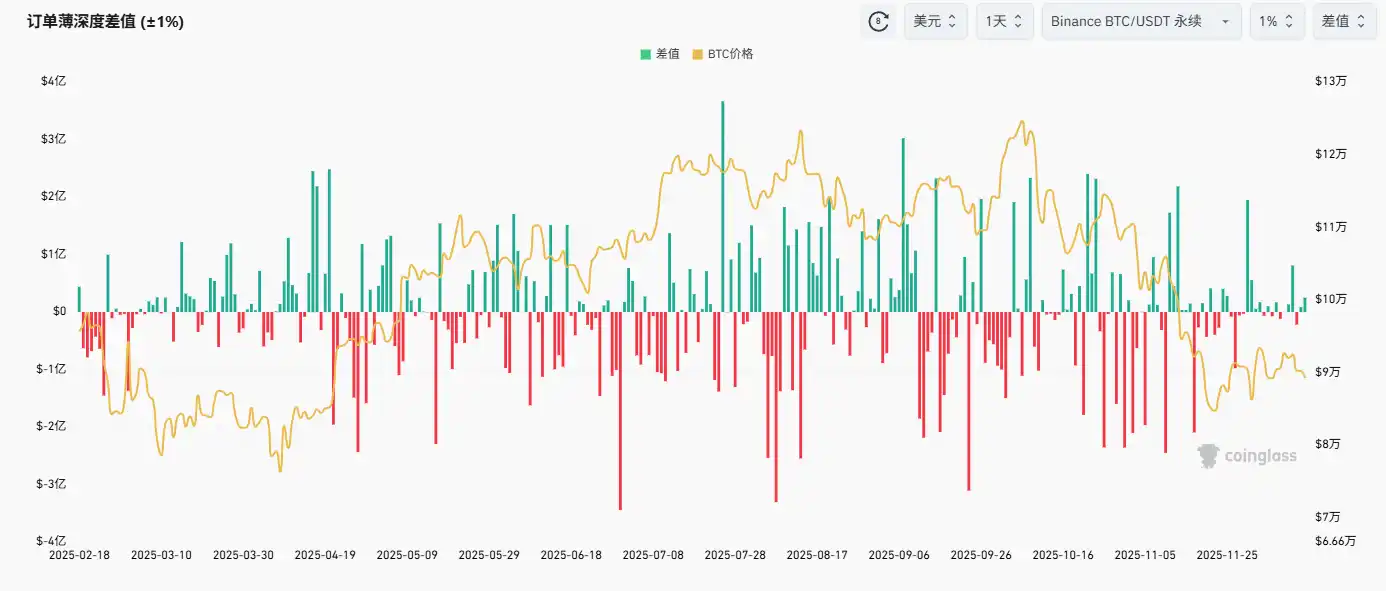
Taking the depth chart of the Binance BTC/USDT perpetual trading pair as an example, it is clear that since October, the depth of the buy order book has been decreasing, dropping from previously普遍 above $200 million to the $100–200 million range. The depth of sell orders has similarly decreased significantly, remaining below $200 million.
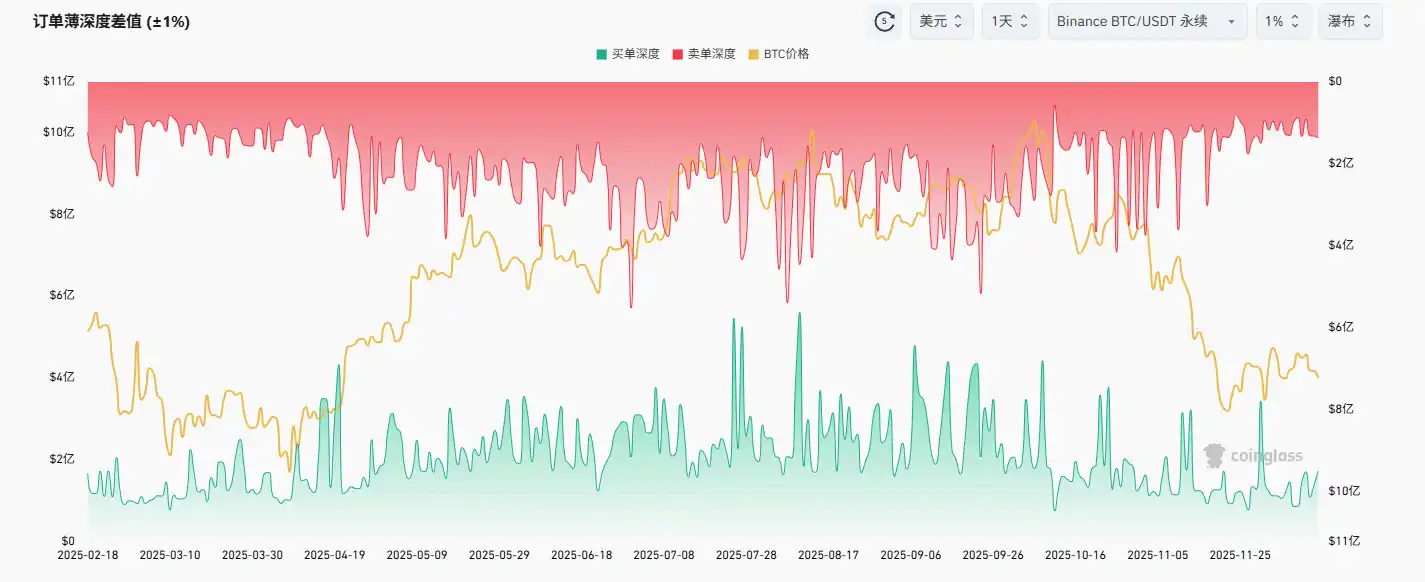
In terms of the difference, the gap between long and short order depths has recently become more balanced, with the difference on many days in November being only around $10 million. These data indicate that the entire market has entered a state of relative balance between long and short positions, but with continuously diminishing liquidity.
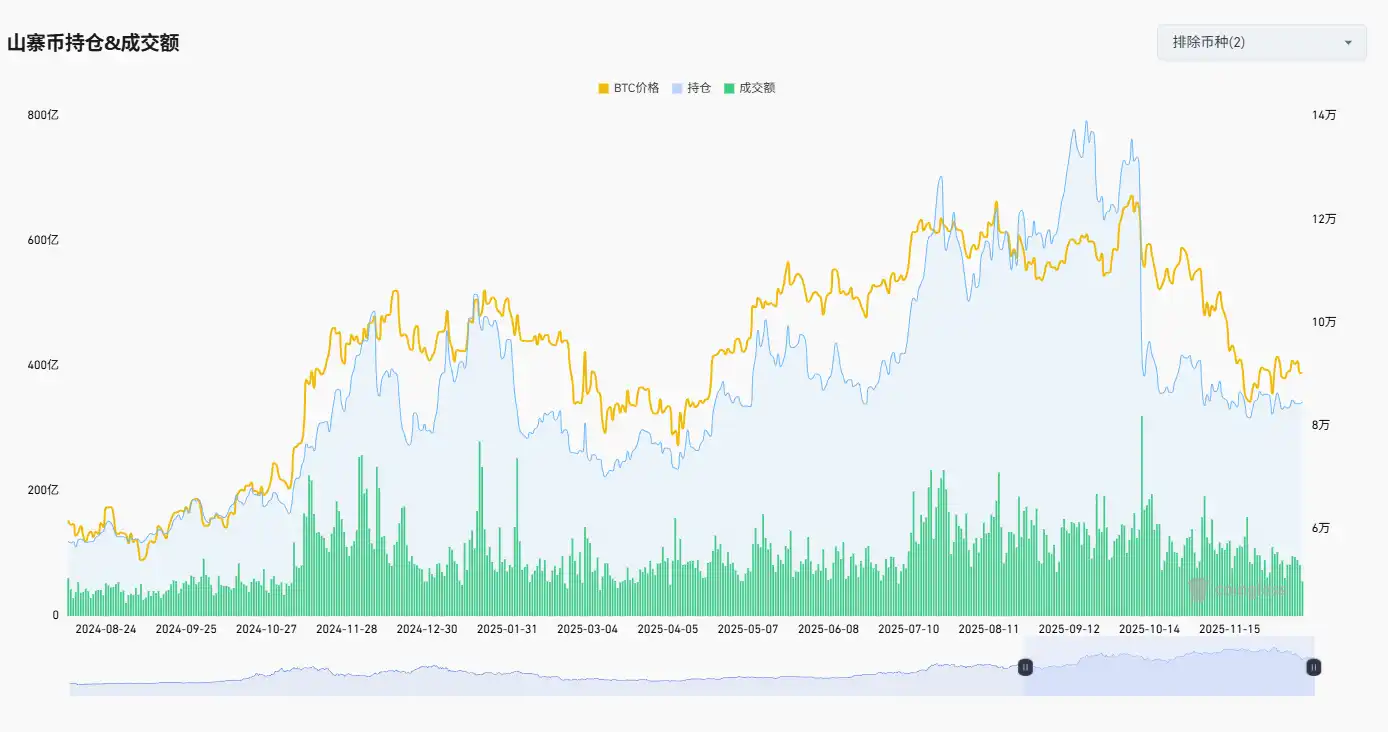
In terms of open interest, the total open interest of altcoins (excluding BTC and ETH) has not shown growth as prices hit lows but has instead also been declining. In contrast, the entire market experienced a deep correction in April, but at that time, after prices hit lows, the market's open interest saw a significant rebound (and this rebound even occurred提前 before prices reached the lowest point).

At the same time, the trading volume in the altcoin futures market is also shrinking, with no significant increase in volume triggered by bottom-fishing. From these data, the altcoin market seems to have entered a state of neglect.
Options Market: Retail Buys Lottery Tickets, Main Players Bet on Decline

Another set of data is quite interesting. The crypto options/crypto futures open interest ratio shows that the proportion of BTC options has been soaring since the beginning of the year, even exceeding 100% at its peak, and currently remains around 90%. Before this, the proportion of BTC options had long been maintained at around 60%. In other words, the BTC market has completely shifted from being dominated by futures contracts to being dominated by options contracts. However, the crypto options/crypto futures open interest ratio for ETH has dropped to a very low level this year, around 30%.
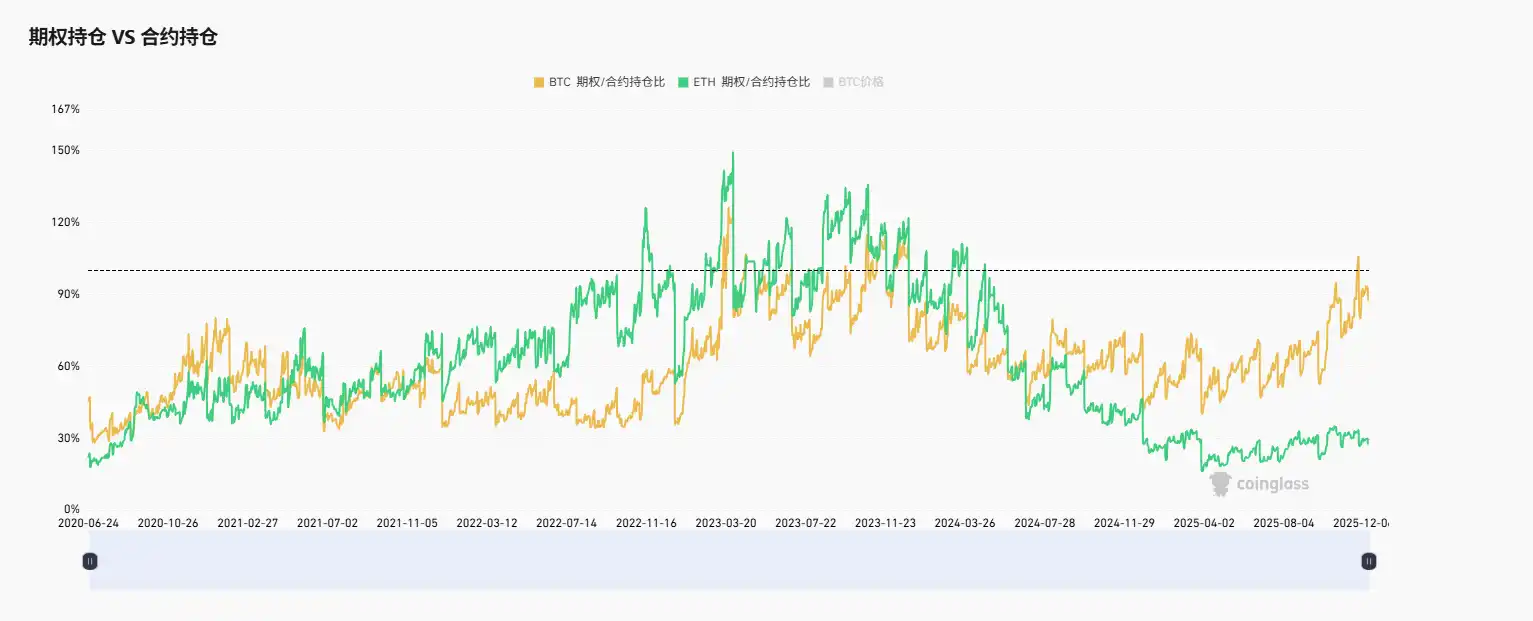
Behind this data, two issues are confirmed. One is that the dominance of the BTC market has been completely seized by institutions and hedge funds, while ETH and other altcoins no longer seem to be trading options for these institutions and hedge funds. Another key point is that in predicting the BTC market, options market data has become more important. We can also see this trend from the total open interest of BTC options; even as prices fall, open interest remains high.
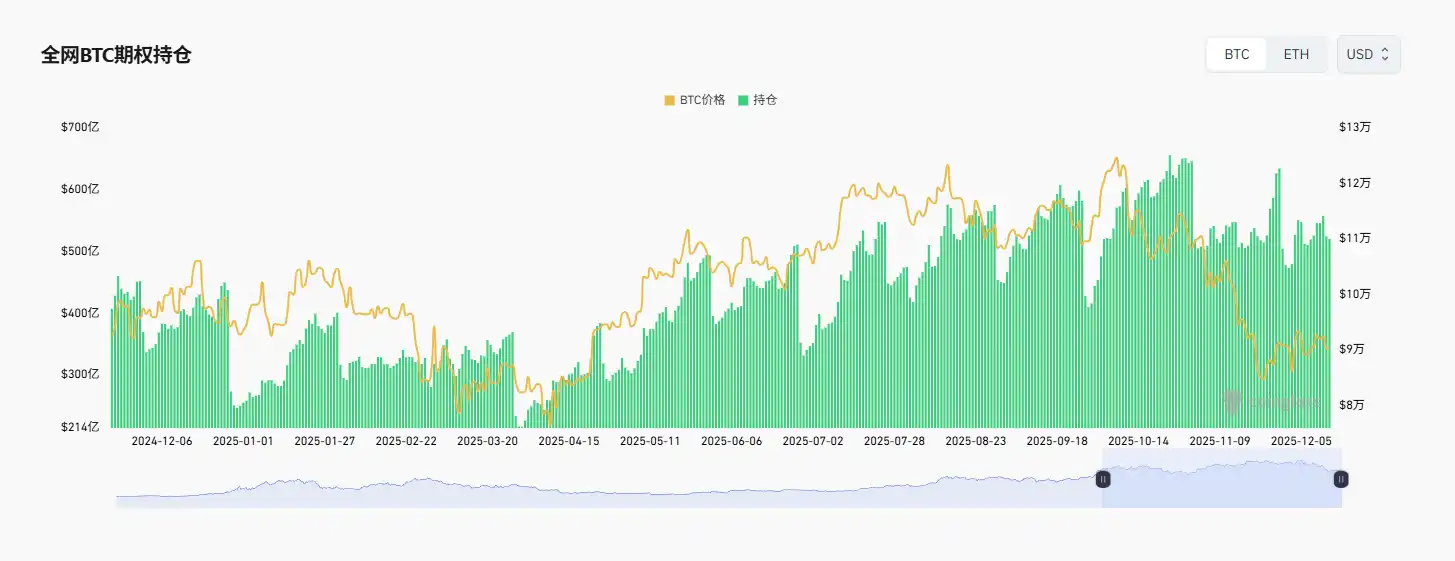
Therefore, options expiration dates and max pain points have become important reference indicators for the current BTC market. According to current data, the next important options expiration date is December 26th. At this point, the total volume of call options reaches 192,000, while the total volume of put options is only 74,200. However, the total notional value of these put options is as high as $508 million, while the total notional value of call options is only $71.25 million. This inverted data indicates that current call options are very cheap (about $370), while put options are very expensive (up to $6800).
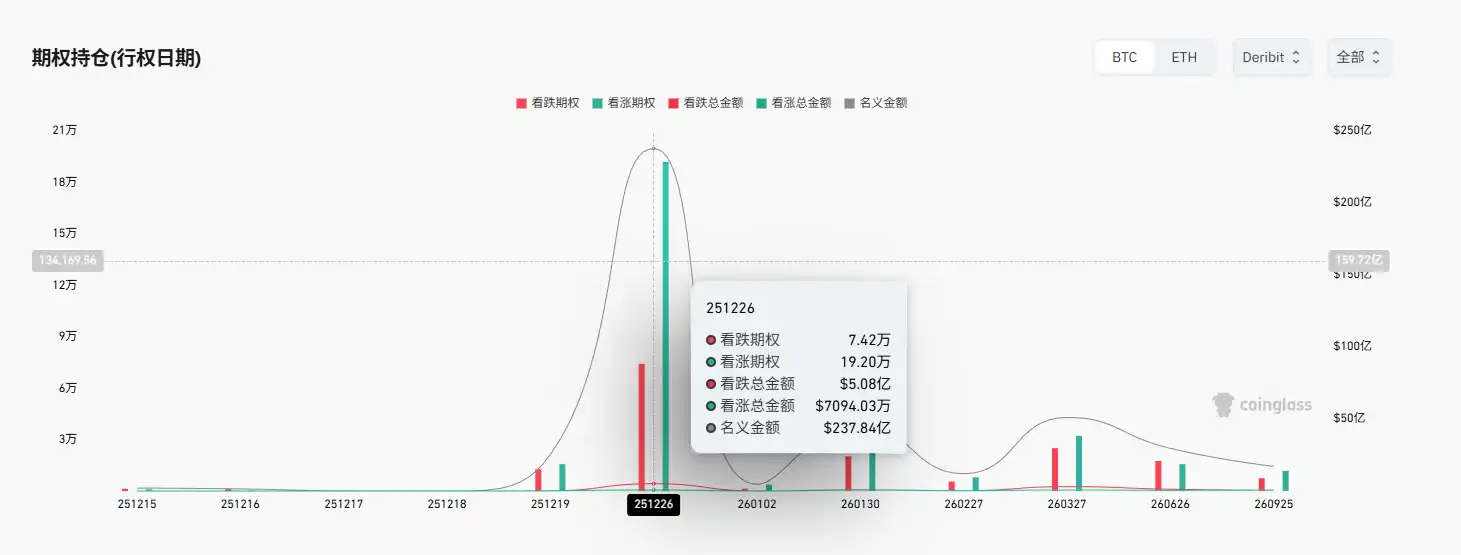
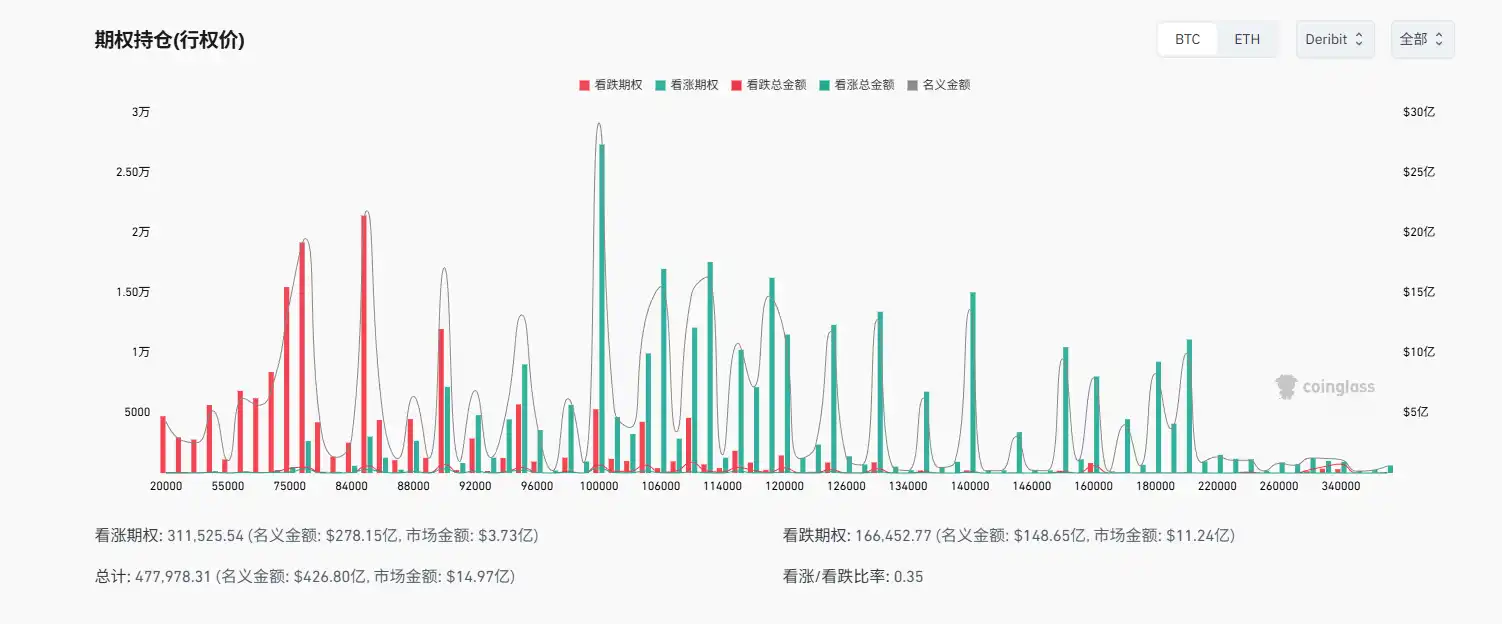
Combined with the distribution of strike prices, we can see that most call options are distributed above the $100,000 price, which makes it very unlikely that these options will be exercised on December 26th. Therefore, although the number of call options is large, they are more偏向于 "lottery ticket"-style speculative targets. A large number of put options have strike prices concentrated at $85,000 and below. At the same time, the market value of put options reached $1.124 billion, while the market value of call options was only $373 million (the premium paid by investors to purchase options). In summary, although there are more people betting on a rise,实际上 more funds (about 75%) are betting on or hedging against a decline.
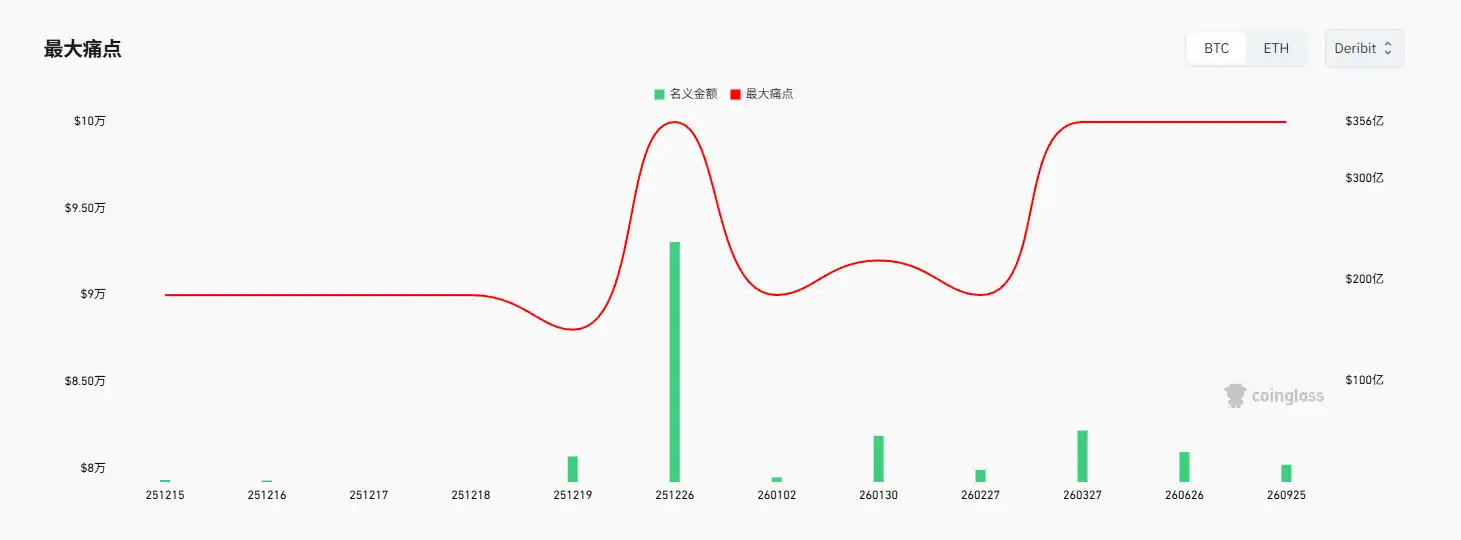
Additionally, the current max pain point is the $100,000 mark. This also indicates that the $100,000 price may become the focus of competition between option sellers and buyers this month. For market makers (option sellers), they are likely the main bulls in the current market; as long as the price can be pushed to around $100,000, they will be the biggest winners.

However, for institutions that have heavily invested in purchasing put options, most may be hedging against the downside risk of their spot holdings. Although本质上 they are mostly defensive in choosing to bet on a decline, the fact that they still put funds into put options despite the high cost indicates that their sentiment towards the future market trend is significantly pessimistic.
Stablecoins: Compliant Retreat, Hot Money Watches and Waits

Besides options data and order book data, stablecoin data is also an important indicator for judging current market liquidity and direction. Especially the flow of stablecoins to exchanges. However, this data also reveals significant divergences in the market.

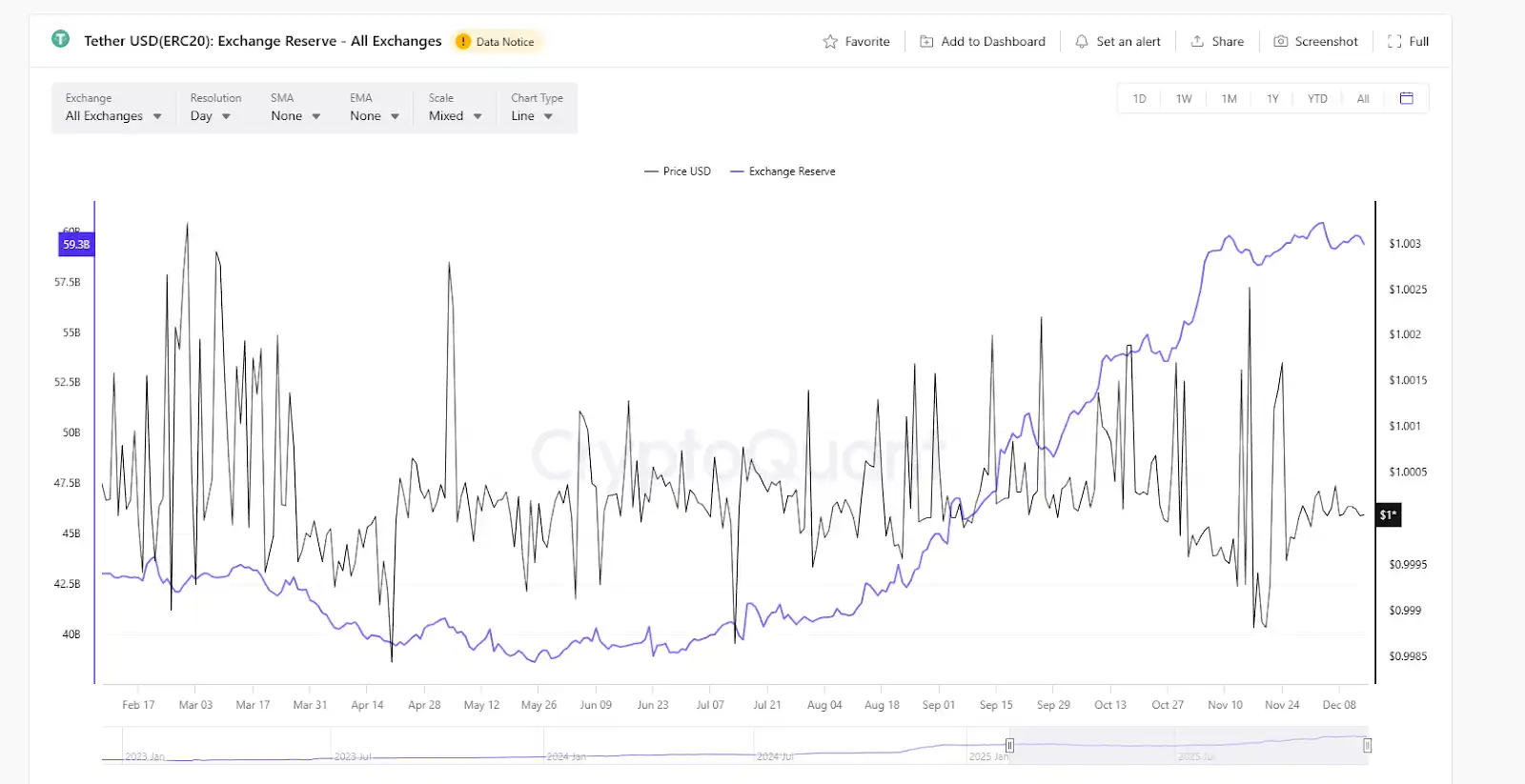
According to CryptoQuant data, the exchange reserves of USDT have been on an upward trend this year and have maintained this momentum recently. On December 4th, USDT reserves on exchanges reached a historical peak of $60.4 billion. And they currently remain near the high of $60 billion. As the main pricing benchmark for non-compliant exchanges within the market, the continuous growth of USDT exchange reserves indicates that a large amount of speculative capital remains in a state of betting or preparing to buy the dip. Combined with the current decline in open interest, it can be felt that a large amount of speculative capital is in a wait-and-see mode.
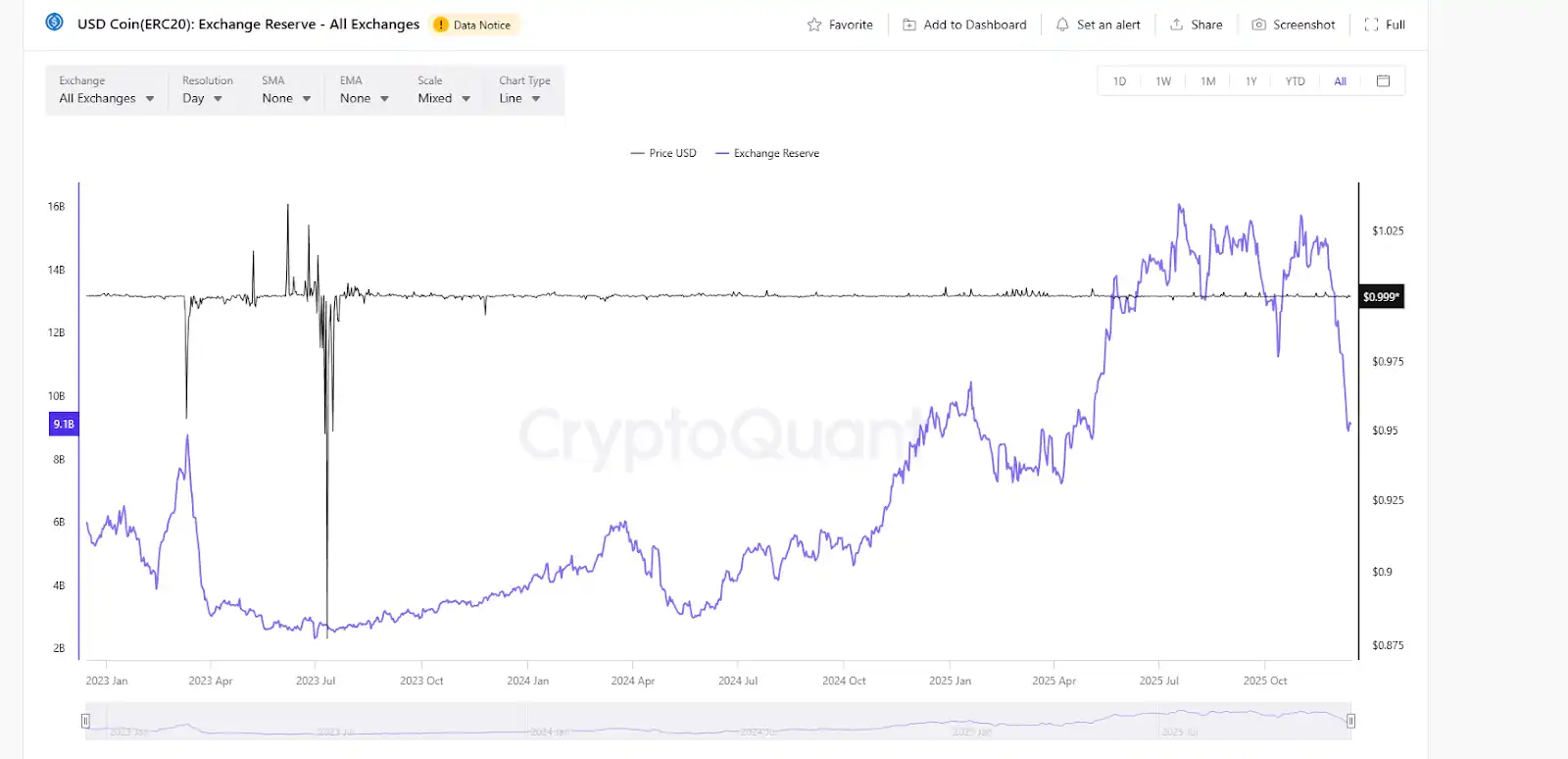
USDC shows a completely different picture. Since the end of November, a large amount of USDC has been withdrawn from exchanges, with exchange reserves plummeting from $15 billion to around $9 billion, a drop of 40%. As the leading compliant stablecoin, USDC's main users are来自 US institutions, compliant funds, etc. They are the representatives of the institutional faction in the market. Currently, it is clear that this group is accelerating their exit.
From the contrasting changes of these two, the current market seems to have retail investors and hot money waiting to buy the dip, while compliant institutions are retreating. This point also forms a similar conclusion to the changes in the BTC options market described earlier. Of course, another possibility is that under the downward risk of the market, a large amount of funds are converting crypto asset holdings into stablecoins for避险.

In fact, there are far more data and indicators to judge the market than those mentioned above, but overall, they almost all lead to similar conclusions. That is, the market after the 10.11 crash has not truly recovered; what we are seeing is a market with insufficient liquidity and significant divergence between main players and retail investors. Retail investors and hot money hold筹码观望 within the market, while compliant institutions or main funds are accelerating their withdrawal on the spot side and building short defenses in the options market by paying high premiums.

The current market does not seem to be a bottom gathering momentum for a takeoff, but更像 a defensive battle of "institutions exiting, hot money gambling." At this time, paying attention to whether the institutional defense line below $85,000 is breached is far more practical than expecting a breakthrough above $100,000.


Связанные с этим вопросы

QWhat does the article suggest about the current state of market liquidity after the October 11 crash?

AThe article indicates that the market has not truly recovered but is in a state of continuous liquidity decay, with structural fragmentation where institutional funds are accelerating defensive strategies.

QHow has the order book depth for BTC/USDT perpetual contracts on Binance changed recently?

AThe order book depth for both buy and sell orders has significantly decreased, with buy order depth dropping from over $200 million to the $100-200 million range, and sell order depth also falling below $200 million, indicating reduced liquidity.

QWhat trend is observed in the options market for BTC, and what does it imply about institutional sentiment?

ABTC options now dominate the market with an options/open interest ratio around 90%, up from 60%, showing institutional dominance. However, 75% of the capital in options is betting on or hedging against a decline, reflecting a pessimistic and defensive institutional sentiment.

QWhat divergence is seen in stablecoin flows between USDT and USDC on exchanges?

AUSDT reserves on exchanges have reached a historical high of over $60 billion, indicating speculative capital is waiting on the sidelines, while USDC reserves have dropped 40% from $15 billion to $9 billion, showing compliant institutions are withdrawing from the market.

QWhat is the maximum pain point for BTC options expiring on December 26, and why is it important?

AThe maximum pain point is $100,000, which is a key price level where option sellers (market makers) would profit the most if the market moves to that point, making it a focal point for buyer-seller competition in the options market.

Похожее

Lumentum перешагнул через 10 миллиардов долларов выручки, откуда взялся убыток в 71 миллиард долларов

11 августа компания Lumentum, производитель оптических компонентов, опубликовала результаты за 4-й квартал и весь 2026 финансовый год. Квартальная выручка впервые превысила 1 млрд долларов, что связывается с растущим спросом на высокоскоростные оптические соединения в ЦОД для ИИ. Однако по стандартам GAAP компания показала чистый убыток в 7,162 млрд долларов. Основной причиной указан разовый неденежный убыток от погашения конвертируемых облигаций акциями. При этом операционная прибыль по GAAP составила 279 млн долларов. Выручка росла восемь кварталов подряд. Рост обеспечивают два сегмента: компоненты (лазерные чипы, модули) и готовые системы (оптические трансиверы, коммутаторы). Сегмент систем растет быстрее. Нормы прибыли улучшаются: не-GAAP валовая маржа выросла с 37,8% до 50,4%, а операционная маржа — с 15,0% до 36,6% за год, что указывает на повышение эффективности. Итог: отчет показывает сильный операционный рост, движимый спросом на технологии для ИИ, при этом крупный убыток по GAAP в основном связан с бухгалтерскими корректировками, а не с основной деятельностью.

marsbit8 мин. назад

Lumentum перешагнул через 10 миллиардов долларов выручки, откуда взялся убыток в 71 миллиард долларов

marsbit8 мин. назад

Генеральный директор Strategy заявил о возобновлении покупок BTC в этом году: объем покупок в 25 раз превышает продажи

Генеральный директор Strategy (NASDAQ: MSTR) Фонг Ле заявил в интервью FOX Business, что компания возобновит покупку биткойнов до конца этого года. Это положит конец паузе в накоплении, длившейся с мая. Несмотря на недавние продажи, с начала года Strategy остаётся чистым покупателем: приобретено около 175 000 BTC, продано лишь около 7000 BTC. Таким образом, объём чистых покупок в 25 раз превысил объём продаж. По словам Ле, компания теперь является крупнейшим институциональным держателем биткойнов в мире, владея 840 447 BTC (около 4% от общего предложения). Продажи, начавшиеся в мае, были связаны с капитальными обязательствами, такими как выплата дивидендов по привилегированным акциям и выкуп собственных акций, в рамках утверждённой «Рамочной программы цифрового кредитного капитала». Компания значительно увеличила свои долларовые резервы (до примерно $4,7 млрд), чтобы покрыть эти расходы на ближайшие два года. Решение о продаже части биткойнов нарушило прежний принцип «никогда не продавать», что вызвало негативную реакцию рынка и снижение рейтинга от JPMorgan. Акции MSTR в этом году упали сильнее, чем сам биткойн. Возобновление покупок Strategy, крупнейшего публичного покупателя, может стать важным фактором поддержки рынка и микроиндикатором восстановления институционального доверия. Как отметил Ле, долгосрочная цель компании — продолжать увеличивать количество биткойнов, приходящихся на одну акцию MSTR.

marsbit17 мин. назад

Генеральный директор Strategy заявил о возобновлении покупок BTC в этом году: объем покупок в 25 раз превышает продажи

marsbit17 мин. назад

Статья Артура Хейза: Ставка на укрепление иены, ENA может вырасти в 5-10 раз в ближайшие месяцы

Артур Хейз в своей статье «Йен-шок» утверждает, что курс иены к доллару готовится к значительному росту. Наиболее вероятным механизмом он считает использование Японией механизма FIMA (репо-операции ФРС для иностранных центральных банков). Это позволит Минфину Японии заложить американские гособлигации в ФРС, получить доллары и выбросить их на рынок для скупки иены, что укрепит японскую валюту. Хейз выделяет три возможных пути укрепления иены, но отвергает первые два (резкое повышение ставки Банком Японии и продажу зарубежных активов японскими институтами) из-за их разрушительных политических и экономических последствий. Третий путь через FIMA он считает предпочтительным для властей США и Японии, так как он создаст огромную долларовую ликвидность, не требуя продажи японцами американских активов. Автор предсказывает, что масштабная печать долларов через FIMA для поддержки иены приведет к резкому росту таких активов, как биткоин и золото. Он также выражает уверенность, что для запуска этого сценария председатель ФРС Джон Уош должен будет созвать соответствующий комитет и снять лимиты по механизму FIMA, чего Хейз ожидает в ближайшее время. В качестве конкретных инвестиционных идей на фоне грядущей ликвидности Хейз, помимо биткоина и недооцененного эфира, называет альткойн Ethena (ENA). Он полагает, что даже небольшой приток ликвидности может восстановить привлекательность стейблкоина USDe (основного продукта протокола Ethena), что способно привести к росту цены ENA в 5-10 раз в течение следующих нескольких месяцев.

marsbit28 мин. назад

Статья Артура Хейза: Ставка на укрепление иены, ENA может вырасти в 5-10 раз в ближайшие месяцы

marsbit28 мин. назад

Китайская команда по генерации данных впервые публикуется в журнале Nature

Гонконгская стартап-компания Vena AI стала первой в Китае и четвертой в мире компанией по генерации данных, опубликовавшей исследование в престижном журнале Nature (за последние 3 года, IF>10). Основатель компании, профессор Лю Цифэн, ранее создал в Гонконгском университете науки и технологий первый в мире кластер H800 SuperPod на тысячу чипов и участвовал в обучении третьей в Китае крупной языковой модели с параметрами в сотни миллиардов. Исследование Vena AI, опубликованное в Nature Communications, посвящено использованию ИИ для прогнозирования рисков и помощи в принятии решений при хирургическом лечении рака почки. Эта работа иллюстрирует ключевую идею компании: развитие ИИ должно идти не только в сторону улучшения способности «отвечать», но и способности «задавать вопросы». Vena AI фокусируется на генерации высококачественных рассуждающих данных (формат cQrA: контекст, вопрос, рассуждение, ответ) для профессиональных областей, что является основой для автономного обучения ИИ. Компания ставит целью создание «большого цикла обратной связи»: данные → модель → токен → данные. В этом цикле агенты ИИ, подобно команде экспертов, автоматически генерируют данные с цепочкой рассуждений, которые затем используются для улучшения моделей. Этот подход преодолевает ограничения традиционной ручной разметки данных. Основанная в июле 2024 года, Vena AI уже привлекла начальное финансирование в размере 50 млн гонконгских долларов под руководством Lenovo Capital. Компания успешно применила свою технологию в четырёх различных отраслях с высокими требованиями к точности (безопасность ценностей, госуправление, страхование, скачки), доказывая её универсальность. По мнению Лю Цифэна, будущее ИИ определяется не самими моделями или данными, а именно такими механизмами самообучения и обратной связи. Эта логика применима как к цифровым агентам, так и к воплощённому интеллекту (роботам), где данные формата cQrA эволюционируют в cTrA (контекст, задача, рассуждение, действие). Миссия Vena AI — сделать так, чтобы ИИ не только «учился по учебнику», но и «решал задачи», создавая основу для следующего этапа эволюции искусственного интеллекта.

marsbit36 мин. назад

Китайская команда по генерации данных впервые публикуется в журнале Nature

marsbit36 мин. назад

Торговля

Спот
活动图片