Kraken is Also Issuing Tokens? A Comprehensive Guide to Ink Season 1 Points Program

Odaily星球日报Опубликовано 2026-04-15Обновлено 2026-04-15

Введение

Kraken Pro, the professional trading platform of the major cryptocurrency exchange Kraken, has launched the first season of its Ink Points program. Ink is Kraken’s Ethereum Layer 2 blockchain, introduced in October 2024, designed to simplify user onboarding into DeFi by addressing common pain points like complex wallet setups and high gas fees. The article explains the differences between Kraken's three service tiers: the basic Kraken for beginners, the subscription-based Kraken+ offering fee-free tiers, and Kraken Pro for advanced traders with lower fees and professional tools. All versions share the same account and funds. A step-by-step guide is provided for interacting with Kraken Pro: users must register, complete KYC, navigate to the "Promos" section to access Ink Points, deposit funds, and start trading to earn points. Ink Points serve as a loyalty incentive within the Ink Layer 2 ecosystem. Points are earned through trading, staking, and referrals on Kraken Pro, with an affiliate program offering 10% commission on referrals. Points are calculated daily, distributed weekly, and accumulated over four-week seasons. A ranked, tiered competition system is in place, though points currently have no monetary value or tokenization capability. The program is not accessible in all regions.

Original | Odaily Planet Daily (@OdailyChina)

Author | Asher (@Asher_ 0210)

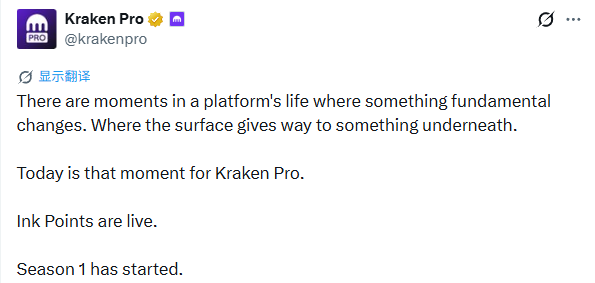
Last night, the Korean cryptocurrency exchange Kraken announced via its Kraken Pro official account that the Ink Season 1 points program is now live.

Kraken Pro officially announces the launch of the Ink points program

Kraken officially announced the launch of the Ink chain (an Ethereum Layer 2 designed to simplify user entry into DeFi) in October 2024, aiming to seamlessly bridge Kraken's over 10 million centralized exchange users to the on-chain DeFi ecosystem, addressing the pain points of traditional DeFi (such as complex wallet setup, high gas fees, fragmented liquidity, etc.). Although Ink is not the Kraken exchange itself, but an independent on-chain infrastructure, it is deeply integrated with Kraken's infrastructure (such as Kraken Wallet, zero withdrawal fee support, etc.).

At the end of last year, Kraken's valuation in the primary market once reached $20 billion. However, due to the cooling IPO environment in the crypto industry, its CEO subsequently chose to postpone the planned US listing originally scheduled for 2026. Therefore, it is more likely that Kraken will prioritize promoting the Ink chain to complete its token issuance before going public.

Below, Odaily Planet Daily provides a breakdown of the relationship between Kraken Pro and Kraken, a Kraken Pro interaction tutorial, and the Ink points rules.

Differences Between the 3 Versions of Kraken Exchange

This event takes place on Kraken Pro. Since Kraken currently has three versions, Odaily Planet Daily has compiled the differences between them as follows:

  • Kraken (Basic Version): Focuses on simplicity and ease of use, with a very intuitive interface, suitable for beginners or small-volume users with low trading frequency. Offers a standalone mobile app, low operational barrier, and leans towards a "buy-and-use" experience.
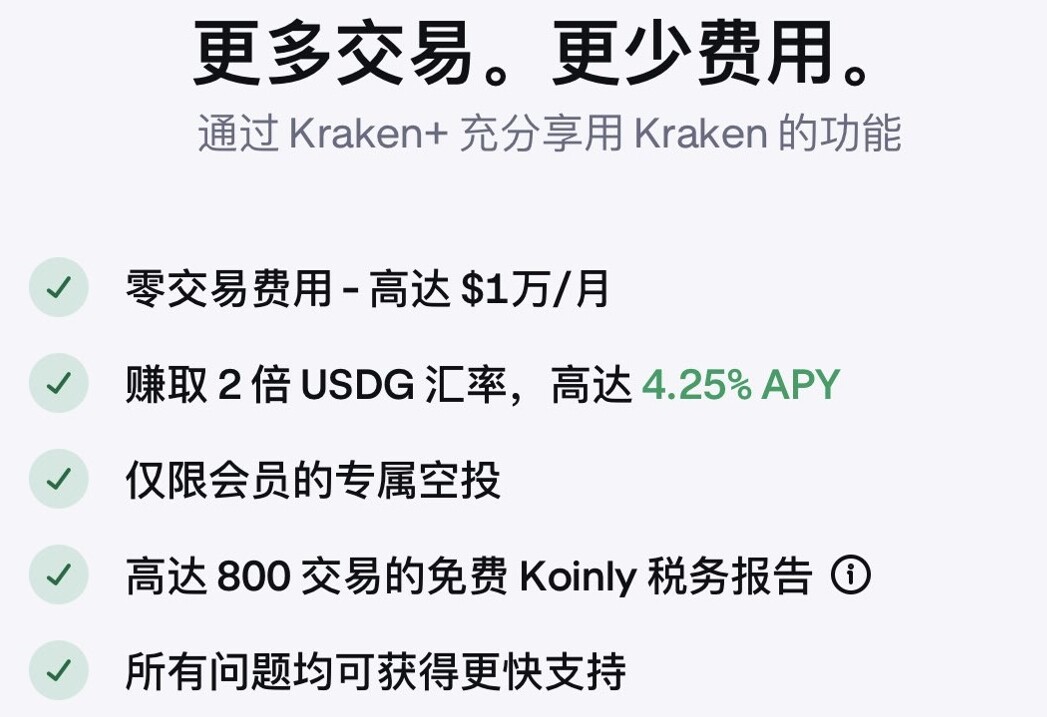
  • Kraken+ (Subscription/Membership Version): Builds upon the basic version with a subscription mechanism where users pay monthly for additional benefits. The core advantage is zero fees on the first $10,000 of trading volume per month, along with some additional perks. Suitable for users with certain trading needs looking to reduce costs.
  • Kraken Pro (Professional Version): Targets experienced traders, offering a standalone app and web interface. Features include more professional candlestick charts, a variety of order types (like limit, stop-loss, etc.), and a lower fee structure. Although it has a separate interface, it shares the same account and funds as the basic version, allowing users to switch between the regular version and Pro at any time.

Difference between Kraken and Kraken+

Step-by-Step Guide to Interacting with Kraken Pro

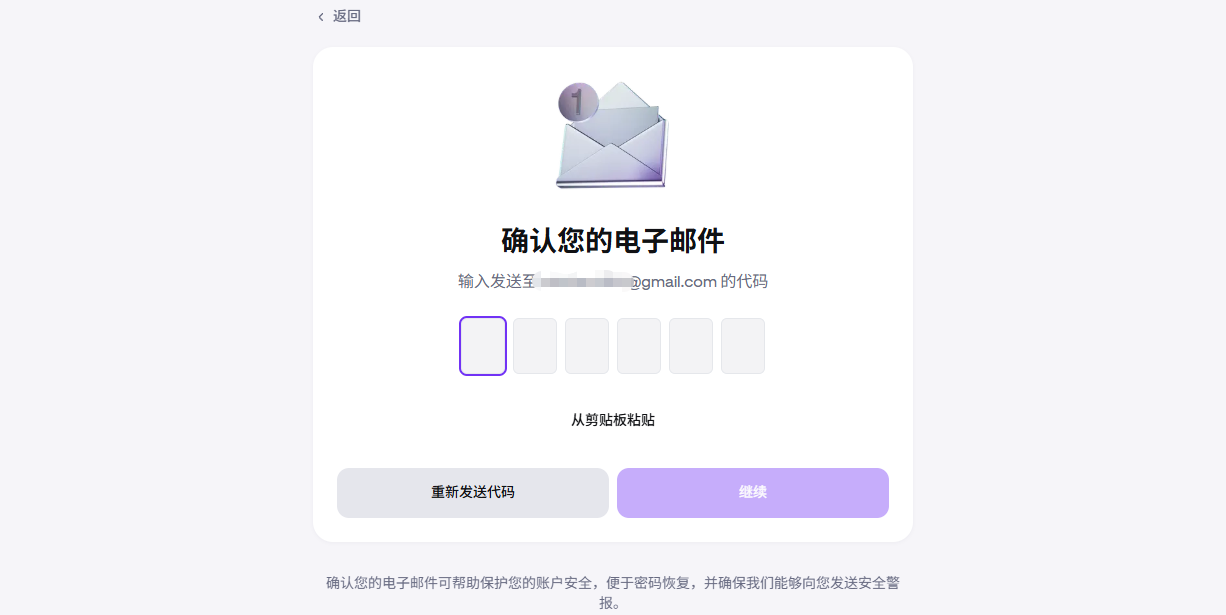
STEP 1. Go to the Kraken Pro website (link: https://pro.kraken.com/) and complete account registration using your email.

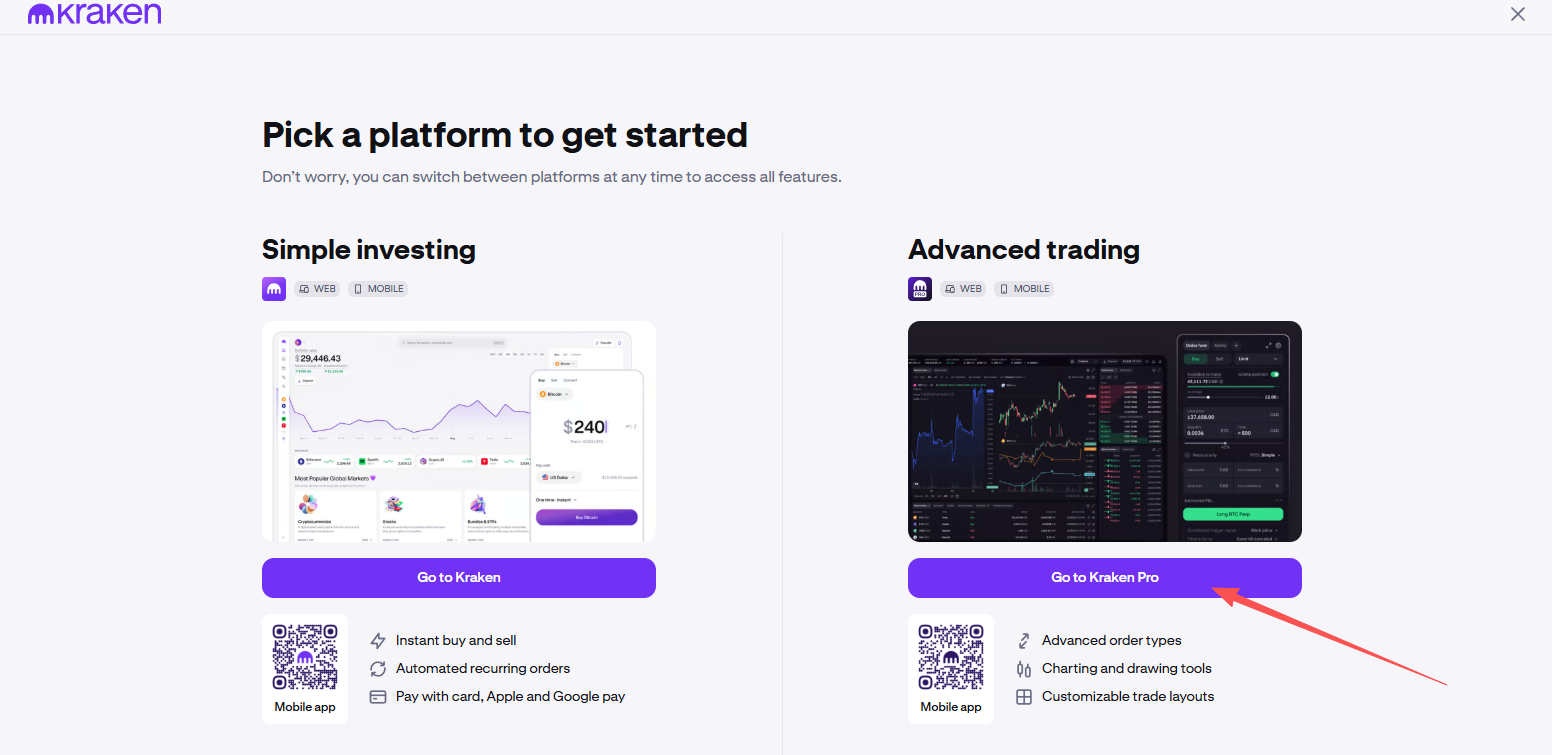
STEP 2. Select the Kraken Pro version. If using a mobile device, simply download the Kraken Pro app from your app store. Additionally, after accessing Kraken Pro, you need to complete KYC verification.

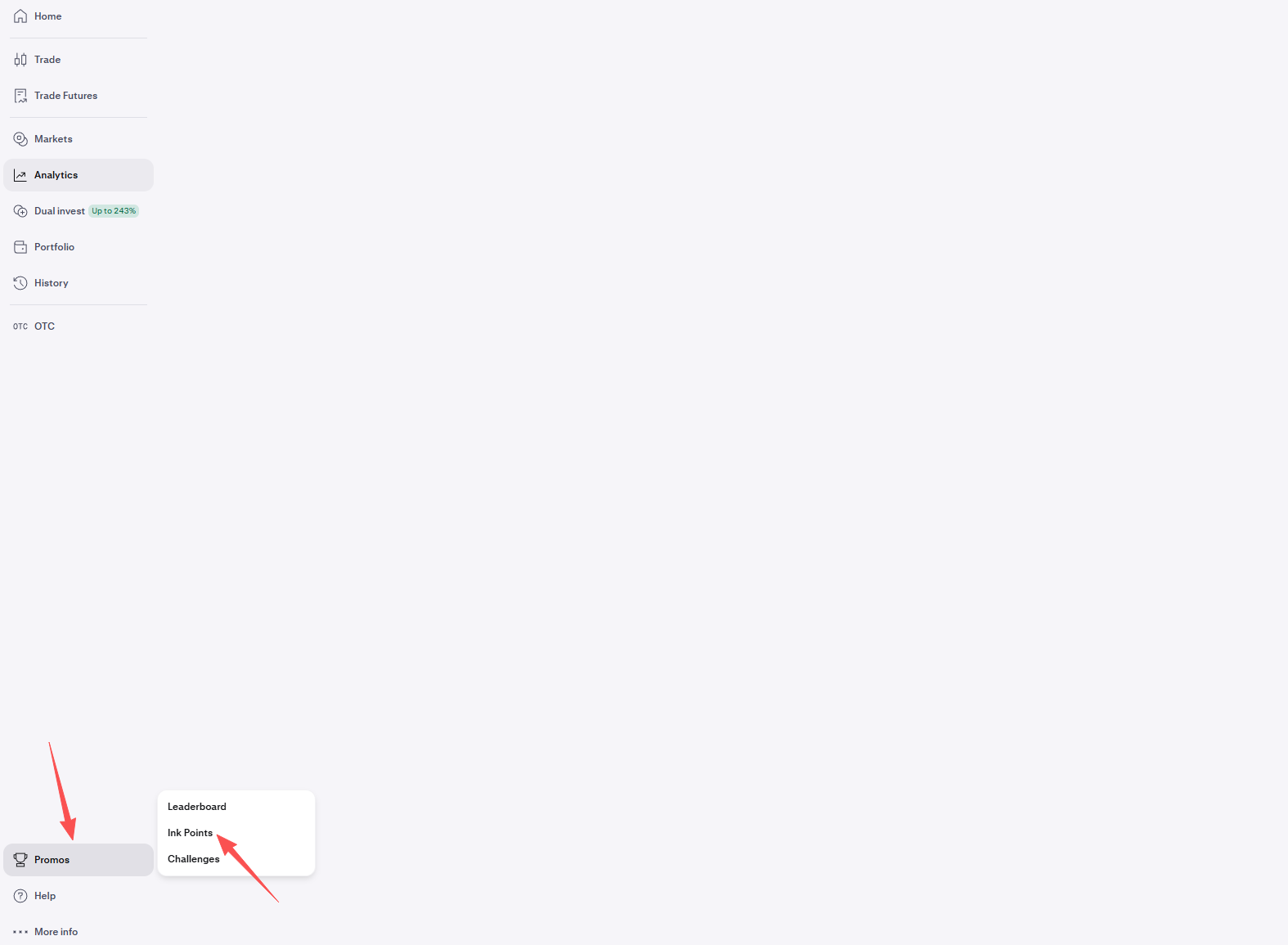
STEP 3. Click on "Promos" at the bottom and select "Ink Points" to enter the points interface.

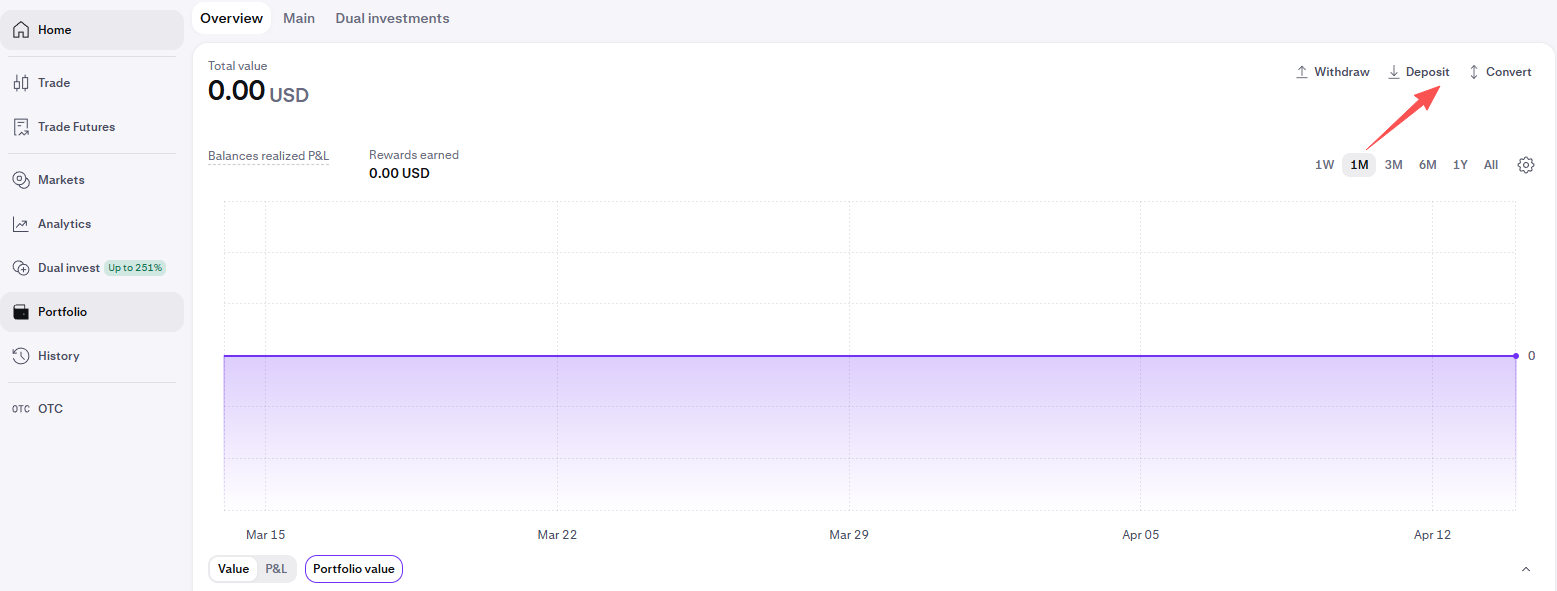
STEP 4. Click on "Portfolio" and then "Deposit" to fund your account, then you can start trading and earning points.

Detailed Explanation of Ink Points Rules

What are Ink Points

  • Ink Points are the points system for the Ink Layer2, connecting real user interactions with incentive mechanisms;
  • The Kraken Pro version will also adopt this points system as a loyalty program.

How to Earn Ink Points

  • Performing actions like trading, staking, and referring new users on Kraken Pro can earn Ink Points;
  • Joining the Kraken Alliance Program can earn a 10% Ink points rebate from referrals;

Additionally, the official encourages genuine user interaction: the earlier you start, the more active you are, and the more Kraken Pro products you use, the more points you will earn.

Ink Points Update Instructions

  • Points Calculation: Points are calculated daily, the system settles automatically every week, and points are distributed every Monday;
  • Season Structure: Every 4 weeks is a season, points for each season are calculated separately, total points are retained for life;
  • Acceleration Mechanism: Point multiplier events will be launched regularly, users should pay attention to official announcements;
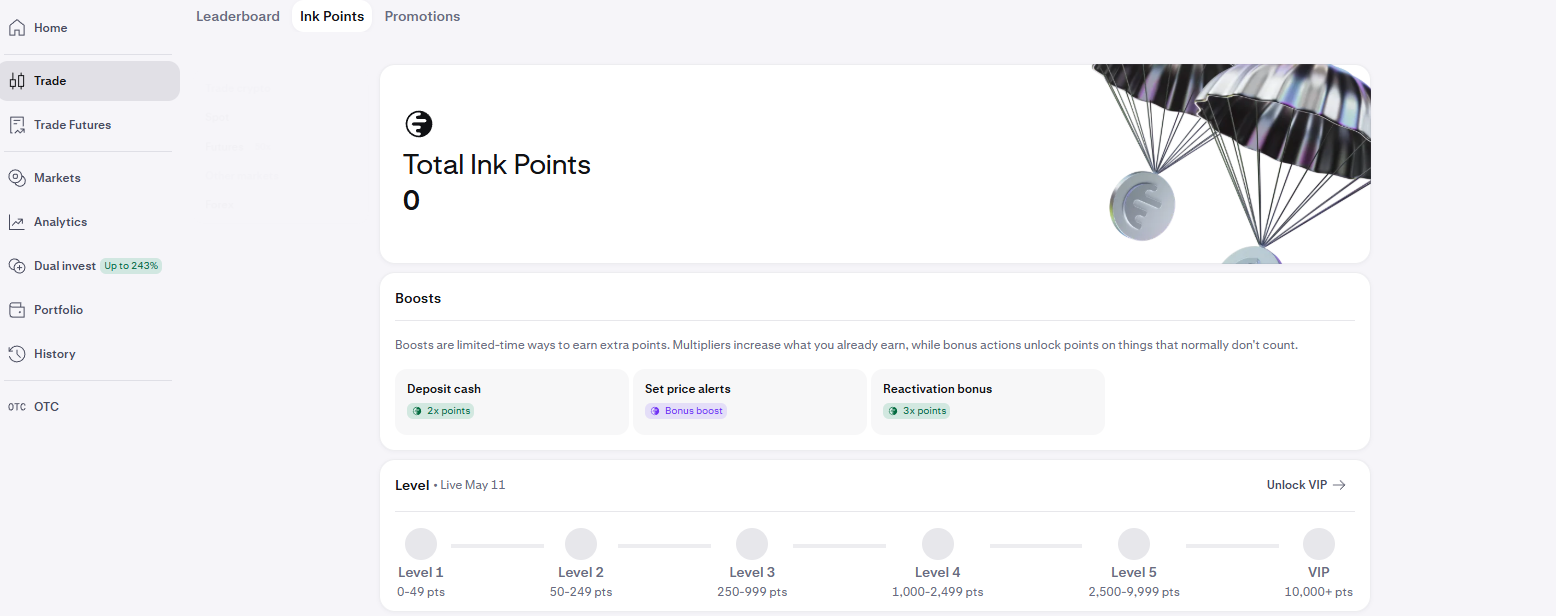
  • Leaderboard + Tiers: Rankings are updated weekly, with six tiers based on current points (Tiers 1 to 5 and VIP). The exclusive "Tier System" means you compete only with traders in the same tier. Except for VIP, other tiers currently offer no additional benefits, but plans are to gradually open them up in the future.

Furthermore, the official notes that Ink Points are not tokenizable, not redeemable, have no cash value, and are temporarily unavailable in some regions.

Связанные с этим вопросы

QWhat is the Ink Points program announced by Kraken Pro?

AThe Ink Points program is a loyalty and incentive system for Kraken Pro users, designed to reward activities like trading, staking, and referrals. It is part of the Ink Layer2 ecosystem and aims to encourage user engagement.

QWhat are the key differences between Kraken, Kraken+, and Kraken Pro?

AKraken is the basic version for beginners with a simple interface. Kraken+ is a subscription-based version offering benefits like zero fees on the first $10,000 in monthly trading volume. Kraken Pro is the advanced version for experienced traders, featuring professional charts, lower fees, and more order types, while sharing the same account and funds as the basic version.

QHow can users earn Ink Points on Kraken Pro?

AUsers can earn Ink Points by trading, staking, and referring new users on Kraken Pro. Additionally, joining the Kraken Alliance Program allows users to earn a 10% rebate on Ink Points from referred users.

QWhat is the relationship between Ink Chain and Kraken exchange?

AInk Chain is an independent Ethereum Layer2 infrastructure designed to simplify user entry into DeFi, but it is deeply integrated with Kraken's infrastructure, such as Kraken Wallet and zero withdrawal fees. It is not the Kraken exchange itself.

QWhat are the rules for Ink Points distribution and calculation?

AInk Points are calculated daily and distributed automatically every Monday. The program runs in 4-week seasons, with points accumulated per season but lifetime totals retained. There are six user levels (1 to 5 and VIP), and rankings are updated weekly. Points cannot be tokenized, exchanged, or cashed out.

Похожее

ETFs Are Just the Ticket: The True Institutionalization of Bitcoin Is Happening Where You Can't See It

Beyond the Bitcoin ETF spotlight, a deeper institutionalization is underway, leveraging Bitcoin as a foundational financial primitive. Institutions are using Bitcoin for purposes long reserved for assets like U.S. Treasuries and gold: as collateral for loans, insurance reserves, and the backbone of rated bonds. Examples include a Barbados-based insurer capitalizing with $40M in Bitcoin reserves and Ledn's $188M securitization of Bitcoin-backed loans, which received the first-ever investment-grade rating (BBB-) from S&P for a digital asset-backed security. This structure was stress-tested during a 27% price drop in early 2026, triggering automatic liquidations that functioned as designed but revealed the systemic risk of synchronized selling across leveraged positions. Infrastructure is evolving to support this, with platforms like Anchorage Digital's Atlas network enabling secure, institutional-grade settlement and collateral management. Strategies like basis trades and corporate treasuries (exemplified by companies like MicroStrategy issuing billions in equity and debt to fund Bitcoin acquisitions) further integrate Bitcoin into financial mechanics. While ETFs solved "how to own" Bitcoin, these developments answer "what to do with it," embedding the asset into the working machinery of finance—as collateral upon which loans, derivatives, and structured products are built. The real, enduring institutional shift is happening in these largely invisible plumbing and financing systems.

marsbit2 мин. назад

ETFs Are Just the Ticket: The True Institutionalization of Bitcoin Is Happening Where You Can't See It

marsbit2 мин. назад

ZEC Co-Founder Responds to Orchard Vulnerability: No Signs of Theft, Orchard Pool to Be Sealed

ZEC Co-Founder Addresses Orchard Vulnerability: No Signs of Theft, Plans to Sunset Orchard Pool A security vulnerability was recently discovered in Zcash's Orchard shielded pool, raising key concerns. The primary questions are whether the flaw was exploited, if user funds are safe, whether users can verify the total ZEC supply, and if other similar vulnerabilities exist. Analysis suggests the vulnerability was likely not exploited prior to its discovery. It was found proactively by a researcher using specialized tools, not due to an active breach. The development team and mining pools acted quickly to contain the issue. Typical financially-motivated attacks would likely have left visible on-chain evidence, which has not been observed. User funds in Orchard are considered safe and should be recoverable, assuming no prior exploitation. If the flaw was never used, all legitimate funds can be withdrawn. The article outlines risks associated with moving funds to transparent addresses or other pools, but concludes that leaving assets in place is a reasonable option. Currently, users cannot independently verify that the total ZEC supply hasn't been inflated due to this bug. However, the planned Ironwood network upgrade is designed to resolve this. It will permanently close the Orchard pool to new deposits and internal transfers, allowing only withdrawals. This mechanism will cap total withdrawals at the amount of legitimately deposited funds, enabling anyone to cryptographically verify the supply post-upgrade. Multiple teams, including Shielded Labs, have conducted extensive audits focused on counterfeiting vulnerabilities, assisted by advanced AI tools. No additional flaws of this type have been found so far, increasing confidence that no other similar undisclosed vulnerabilities exist. In summary, evidence indicates the Orchard bug was probably not used, user funds are secure, and no other counterfeiting flaws are currently known. The upcoming Ironwood upgrade will restore users' ability to independently verify the total ZEC supply, closing this chapter.

Foresight News7 мин. назад

ZEC Co-Founder Responds to Orchard Vulnerability: No Signs of Theft, Orchard Pool to Be Sealed

Foresight News7 мин. назад

Microsoft Announces Commercial-Grade Quantum Computer to be Completed in Three Years: Will the Boots Land?

Microsoft announces plans to build a commercially viable quantum computer by 2029, a significant acceleration from the previous industry consensus of a decade. The breakthrough is fueled by their new Majorana 2 quantum chip, which boasts a record-breaking average qubit lifetime of 20 seconds—a 1,000-fold reliability improvement over its predecessor. This leap was achieved by leveraging topological qubits, a theoretically more stable technology using Majorana zero modes, and switching the core superconducting material from aluminum to lead. Crucially, Microsoft's "Discovery" agentic AI platform accelerated the R&D process. AI agents autonomously analyzed vast experimental data, optimized manufacturing parameters (like the lead alloy composition), and solved issues like "ghost noise," dramatically speeding up experimentation. While the 20-second coherence time is a landmark, challenges remain: scaling from 12 qubits to the millions needed for practical applications, managing compilation costs, and verifying quantum results. Skeptics call for peer-reviewed data, and questions persist about whether even 20 seconds is sufficient for complex algorithms like breaking RSA encryption. The race is on with other approaches (superconducting, trapped ions), but Microsoft's confidence in its topological roadmap signals a potential shortcut to a scalable quantum future.

marsbit25 мин. назад

Microsoft Announces Commercial-Grade Quantum Computer to be Completed in Three Years: Will the Boots Land?

marsbit25 мин. назад

Торговля

Спот
Фьючерсы
活动图片