Jensen Huang Joins Tsinghua, But Did Musk Actually Arrive Ten Years Ago?

marsbitОпубликовано 2026-05-29Обновлено 2026-05-29

Введение

Jensen Huang, founder of NVIDIA, is set to join the Advisory Board of Tsinghua University's School of Economics and Management. This marks his first appointment to an advisory body at a mainland Chinese university, following similar roles at institutions like National Taiwan University, Stanford, and Harvard. The article explores why his entry comes now, a decade after Elon Musk joined the same prestigious committee in 2015. The Tsinghua advisory board, established in 2000, is a high-level strategic body comprising global business elites like Apple's Tim Cook (Chair), Tesla's Elon Musk, Microsoft's Satya Nadella, and Meta's Mark Zuckerberg, alongside financial giants and leading Chinese entrepreneurs. The timing is attributed to a confluence of factors: Huang's current eligibility driven by NVIDIA's dominant role in AI, a recent vacancy on the board, the rising challenge from domestic Chinese chips necessitating stronger local ties, and a recent thaw in U.S.-China relations following high-level diplomatic visits. In contrast, Musk's 2015 entry occurred during a period of warmer bilateral ties, where his disruptive innovation profile aligned well with the board's needs without significant political friction. Huang is noted for his active engagement with academia, holding several honorary doctorates and advisory roles at other universities. His appointment is framed as a reflection of shifting geopolitics, market dynamics, and strategic recalculations over the past decade, u...

Author: Think AI, Aaron

Recently, NVIDIA founder Jensen Huang has been stealing the spotlight. Just after dominating the trending charts for treating a whole night market in Taipei to supper, he is again reported by the Financial Times today:

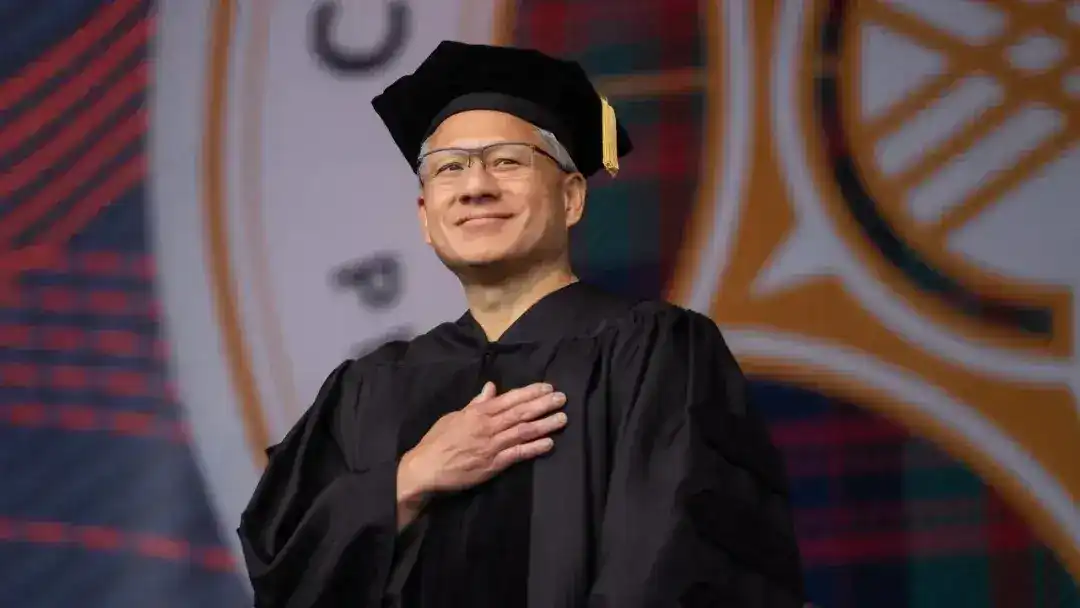
Jensen Huang will join the Advisory Committee of the School of Economics and Management at Tsinghua University, welcoming a new "teacher" to Tsinghua.

This also marks Huang's first appointment to an advisory body at a mainland Chinese university. Previously, he has served in similar institutions at National Taiwan University, Stanford University, and Harvard University in the US, but entry into mainland China had been delayed until now.
What are the "unspoken difficulties" in between?

It's important to know that this committee currently has 65 members, including major figures from the US financial and tech sectors. Our familiar friend Elon Musk joined as early as ten years ago. Why has Jensen Huang been unable to join until now?

Firstly, of course, is the exceptionally high caliber of Tsinghua's SEM Advisory Committee.

The "Weight" of "Joining"

The Tsinghua SEM Advisory Committee was established in 2000, with then Dean Premier Zhu Rongji actively promoting the formation of this top-tier think tank.

The committee's core mission is to provide high-level guidance on the school's development strategy, international cooperation, faculty building, etc., while also building a dialogue bridge between China and global business elites.

Not only are the members top-tier talents from various industries, but during the annual meetings, state leaders also cordially meet with the attending members. President Xi Jinping has met with them in person twice and delivered a video address once.

The current committee chairman is former Apple CEO Tim Cook, who currently serves as chairman.

With Huang's addition, the five major US tech giants are now formally assembled. The other three are Tesla's Elon Musk, Microsoft's Satya Nadella, and Meta's Mark Zuckerberg.
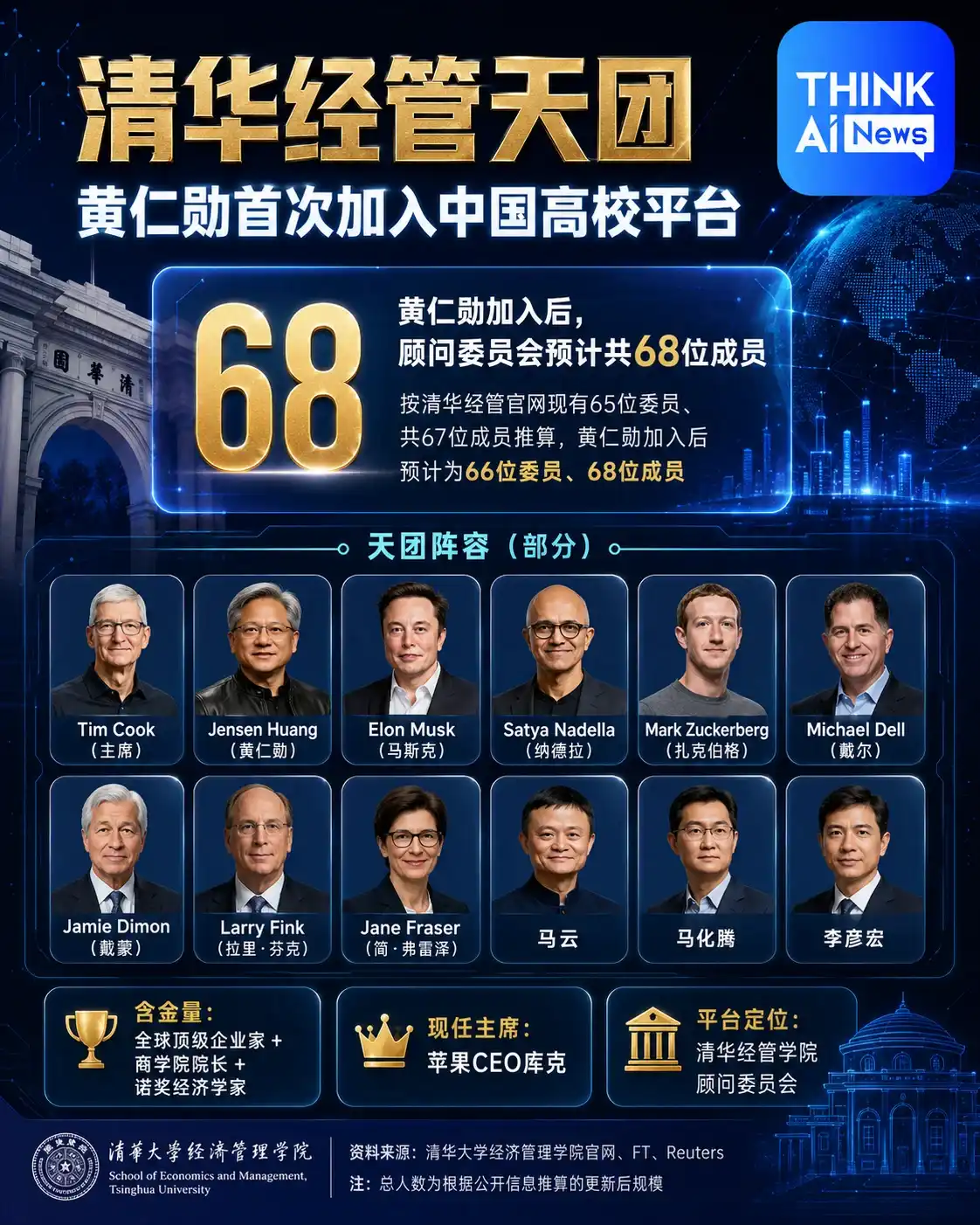
The finance sector is represented by Wall Street's top giants: Jamie Dimon of JPMorgan Chase, Stephen Schwarzman of Blackstone, Larry Fink of BlackRock, and Ray Dalio, founder of Bridgewater Associates.

There are also leaders from other globally renowned leading companies, such as BMW, Siemens, Coca-Cola, and so on.

Domestic heavyweights include Jack Ma, Pony Ma (Ma Huateng), Robin Li (Li Yanhong), Terry Gou (Guo Taiming), and others.

As can be seen from the list above, this is not an ordinary academic advisory panel but one of the highest-caliber and most influential circles of global business elites.

Why Now?

Both are tech giant CEOs. Why could Musk join in 2015, while Huang had to wait until now?

There were indeed many twists and turns in between, but now Huang's entry feels like a natural progression.

Looking back to 2015, US-China relations were relatively relaxed, and technological cooperation was in a honeymoon phase. Musk's entry had the right timing, location, and conditions.

At that time, the committee's tech sector already had Cook and Ballmer (former Microsoft CEO), but it lacked leaders in new energy and aerospace. Musk's Tesla and SpaceX正好 filled that gap;

Furthermore, in 2015, Tesla had not yet built a factory in China, but Musk was actively optimistic about the Chinese market, frequently expressing goodwill publicly, with no policy friction;

Coinciding with the committee's 2015-2016 academic year membership renewal, two new seats were added, and Musk became the sole new addition from the tech field;

Musk's "innovative disruptor" persona highly aligned with Tsinghua's goal of cultivating top talent, posing no political risk.

However, NVIDIA's strategic importance was not as pivotal as it is today, and the AI field had not yet demonstrated disruptive potential. In other words, Huang simply did not have the qualifications at that time.
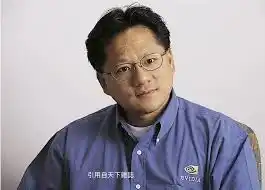
Following 2018, US-China relations gradually became tense. Even as NVIDIA developed rapidly and Huang's wealth surged, it became more difficult to find a good opportunity amidst the climate.

US sanctions against China targeted NVIDIA as a core entity, forcing both Tsinghua and NVIDIA to be swayed by the broader environment.

Additionally, spots on the Tsinghua SEM Committee are highly limited. The tech circle has long been full, with only minor adjustments made annually. A vacancy恰好opened up earlier this year.

Market-wise, even without exporting high-end chips previously, NVIDIA maintained a monopoly position in China's AI chip sector until domestic chips强势崛起 in recent years, prompting Huang to seek new connections and circles to reopen the Chinese market.

Shortly after Trump's recent visit to China, US-China relations saw an easing. Huang accompanied the visit, partially mitigating political risks, allowing him to send more friendly signals towards China.

Huang's "Academic" Moves

It must be said that within the current tech circle, Jensen Huang is one of the tech founders most keen on joining university academic circles, which also makes his committee appointment feel一点也不违和.

It should be noted that while Huang本人已经确认 this news about joining Tsinghua, NVIDIA and Tsinghua have not officially announced it yet. Further official updates can be followed.

Huang himself holds a Master's degree in Electrical Engineering from Stanford University.

He has also received a total of 7 honorary doctorates to date, from universities across the globe including Taiwan, the US, Hong Kong, and Sweden, awarded in recognition of his industry achievements.

Regarding university advisory roles similar to Tsinghua's SEM Committee, Huang has also joined the Harvard Business School Dean's Advisory Board, the Stanford University Advisory Council, and the National Taiwan University College of Management Advisory Board, among others.
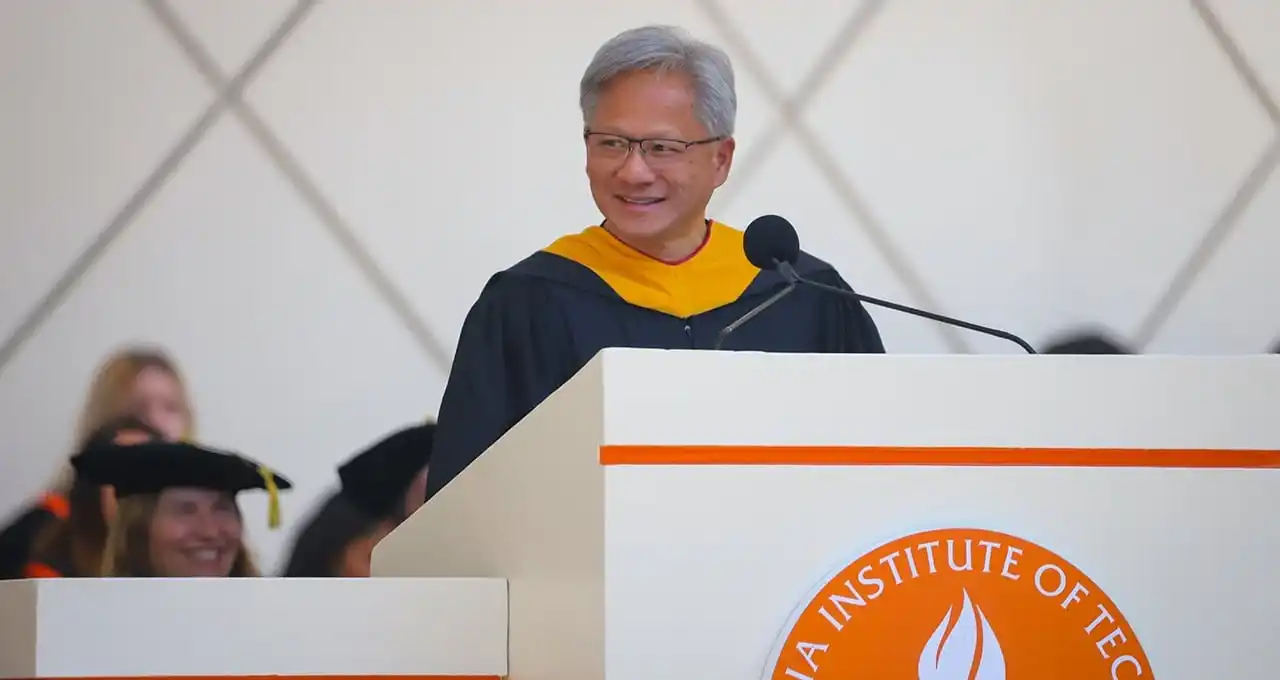
Huang's university speeches in recent years have also been full of quotable lines.

He pointed out, "You are not replaced by AI, but by those who use AI." He also strongly驳斥 the notion that AI leads to job cuts.

He stated, "AI only started to have an impact six months ago, yet they were laying people off because of AI two years ago? How is that possible? It makes no sense."

Overall, Huang's加入委员会 is a microcosm of a decade of geopolitical博弈, market变迁, and利益重构.

The Chinese market remains the重中之重 that Jensen Huang is迫切想要打开.

Связанные с этим вопросы

QWhy has Huang Renxun joined Tsinghua University's School of Economics and Management Advisory Committee now, compared to Elon Musk who joined a decade ago?

AHuang Renxun's recent entry is a result of evolving circumstances. In 2015, when Musk joined, US-China relations were warmer, and his innovative profile in new energy and aerospace filled a gap in the committee. Nvidia's strategic importance in AI was not as dominant then. Post-2018, US-China tensions and US sanctions on Nvidia, a key target, made the timing unfavorable. Recently, a committee seat opened up, US-China relations showed signs of easing after Trump's visit, and with the rise of domestic chips in China, Huang seeks to strengthen his network and access to the Chinese market.

QWhat is the significance and mission of the Tsinghua School of Economics and Management Advisory Committee?

AThe Tsinghua School of Economics and Management Advisory Committee, established in 2000 under then-Dean Premier Zhu Rongji, is a top-tier advisory body. Its core mission is to provide high-level strategic guidance on the school's development, international cooperation, and faculty development. It also serves as a bridge for dialogue between China and global business leaders. The committee is notable for its high-profile members, including top CEOs, and its annual meetings are sometimes attended by Chinese national leaders, including President Xi Jinping.

QWhich other prominent global business leaders are members of this Tsinghua committee alongside Huang Renxun?

AThe committee features a 'who's who' of global business elites. In tech, it includes Apple's Tim Cook (Chair), Tesla's Elon Musk, Microsoft's Satya Nadella, and Meta's Mark Zuckerberg. The finance sector is represented by figures like Jamie Dimon (JPMorgan Chase), Stephen Schwarzman (Blackstone), Larry Fink (BlackRock), and Ray Dalio (Bridgewater). Other members lead major corporations like BMW, Siemens, and Coca-Cola, alongside Chinese leaders such as Jack Ma, Pony Ma, Robin Li, and Terry Gou.

QAccording to the article, what was Huang Renxun's main motivation for seeking to join this committee at this time?

AHuang Renxun's primary motivation is to strengthen his ties and network within the Chinese market. The article states that despite Nvidia's previous dominance in China's AI chip sector, domestic chips have recently seen a strong rise. Therefore, joining this prestigious committee provides Huang with a crucial platform to build new relationships and 'open the Chinese market,' which remains a 'top priority' for him.

QWhat are some of Huang Renxun's views on AI and employment, as mentioned in his university speeches?

AIn his recent university speeches, Huang Renxun emphasized that 'You are not replaced by AI, but by people who use AI.' He also strongly refuted claims that AI leads to job losses, arguing it's illogical: 'AI only started to work six months ago, and they were laying off people because of AI two years ago? How is that possible? That doesn't make any sense at all.'

Похожее

Why More AI Agents Does Not Equal Higher Productivity?

Editor's Note: As AI Agents become cheaper and easier to use, a new constraint emerges: the cost isn't in launching more Agents, but in the human attention required to manage, judge, and integrate their outputs. This hidden cost is called the "orchestration tax." The article argues that a developer's cognitive bandwidth is the key bottleneck—a serial, non-parallelizable resource akin to a Global Interpreter Lock (GIL). While many Agents can run concurrently, their results ultimately require human judgment for review, conflict resolution, and final integration. Therefore, more Agents don't automatically mean higher productivity; they can simply create longer queues, lead to cognitive fatigue, and create the illusion of busyness without real output. The core solution is to design workflows around this scarce human attention. Key strategies include: scaling the number of Agents to match review capacity (not UI capacity), categorizing tasks (delegating independent ones, keeping complex judgment-heavy ones serial), batch reviewing results to minimize context-switching costs, automating verifiable checks to reserve human judgment for critical decisions, and protecting focused, uninterrupted thinking time. Ultimately, the critical skill is not launching many Agents, but architecting systems that respect the fundamental limit of human attention. Unpaid "orchestration tax" accumulates as both technical and cognitive debt, undermining system understanding and quality. True productivity comes from thoughtfully managing the single-threaded resource—your focus.

marsbit37 мин. назад

Why More AI Agents Does Not Equal Higher Productivity?

marsbit37 мин. назад

Three Years Later: Looking Back at My Predictions About ChatGPT in 2023

Three Years Later: Revisiting My 2023 Predictions on ChatGPT In March 2023, shortly after ChatGPT's launch, I made 20 predictions about its future. Now, in mid-2026, I've used AI agents to fact-check each one against the latest data. Overall, most major directional forecasts were correct, with only one outright error (incorrectly stating GPT-4 had 100 trillion parameters). Key successes included predicting that RAG and retrieval architectures would become the standard for handling knowledge and hallucinations, that natural language interfaces (LUI) would create a massive new industry layer beyond the models themselves, and that China would develop viable large language models, significantly closing the performance gap with Western counterparts within about three years. Predictions about the absence of mass unemployment, the rise of a new "robot network" for agent communication, and ChatGPT not possessing consciousness also held true in their core arguments. However, the "devil was in the details." Errors frequently involved specific numbers, timelines, or overlooking distributional effects. I tended to overestimate the speed of adoption (e.g., for agent networks) while underestimating the ultimate scale of capabilities or costs (e.g., AI winning IMO gold without tools, or the extreme capital required for frontier models). Other misjudgments included: underestimating how AI would reinforce, not dissolve, information filter bubbles; incorrectly assuming AI-generated content would easily circumvent copyright (it has instead triggered record-breaking settlements); and misidentifying where value would be captured (it accrued overwhelmingly to the compute layer, like Nvidia, not just the application or model layers). Key lessons from reviewing these predictions are: 1) Directional and mechanistic insights are far more reliable than precise numbers or absolute statements. 2) There's a consistent bias to overestimate short-term speed but underestimate long-term magnitude. 3) Errors often lie in missing distributional impacts within a generally correct aggregate trend. 4) Predictions phrased with nuance and caveats aged the best. 5) Some fundamental debates (e.g., on machine consciousness or the ultimate value chain) remain unresolved even after three years. This exercise is less about scoring the past and more about establishing rules for clearer thinking about the next three years of AI.

marsbit7 ч. назад

Three Years Later: Looking Back at My Predictions About ChatGPT in 2023

marsbit7 ч. назад

Three Years Later: Looking Back on My 2023 Predictions for ChatGPT

Looking Back After Three Years: Revisiting My 2023 Predictions on ChatGPT In March 2023, shortly after ChatGPT's debut and before GPT-4's release, I made over twenty predictions about AI's future based on limited information and intuition. Now, in May 2026, I revisited those forecasts using an AI-driven analysis with 41 Opus 4.8 agents to cross-reference them with the latest data. The assessment used symbols: ✅ Correct, 🟢 Mostly Correct, 🟡 Partially Correct, ❌ Incorrect. Overall, the directional judgments held up well, with only one major factual error regarding GPT-4's rumored parameter size (incorrectly cited as 100T). However, nuances and degrees of accuracy revealed more. **What Was Largely Correct:** Predictions about mechanisms and directions proved accurate. The rise of RAG (Retrieval-Augmented Generation) as the standard architecture for combating AI hallucination was confirmed, as was the transformative potential of LUI (Language User Interface) in creating a new industry layer atop GUIs. The emergence of "robot networks" (agent-to-agent communication protocols) and China's rapid catch-up in developing capable large models (closing the performance gap with top models to ~2.7%) were also on point. The analysis affirmed that LLMs lack consciousness and that the Turing Test merely measures perceived intelligence. **What Was Off Target:** Errors often involved specific numbers, over-optimistic timelines, or misjudged distributions. The prediction that value would primarily accrue to the application layer was half-right but missed NVIDIA's dominance as the profitable infrastructure layer. Forecasts about AI circumventing copyright issues and fostering a "global common ground" by averaging human viewpoints were incorrect; instead, major copyright settlements occurred and AI personalization is increasing. Estimates for model training costs ("$5-10 billion cap") were significantly off, underestimating frontier costs and overestimating replication costs. The notion that LLMs could never do complex math without tools was disproven by later models winning IMO gold. **Key Patterns from the Review:** 1. **Direction over precision:** Judgments about mechanisms and trends were more reliable than specific numbers or definitive statements. 2. **Timing bias:** There was a tendency to overestimate short-term speed but underestimate long-term magnitude and transformation. 3. **The distribution blind spot:** Aggregate-level correctness often masked uneven impacts (e.g., on young professionals' employment). 4. **The value of qualifiers:** Predictions framed with caution (e.g., "reportedly," "for now," "prototype in 2-3 years") aged better. 5. **Some debates continue:** Issues like the nature of "emergent abilities" or machine consciousness remain unresolved. This three-year review highlights that while seeing the big picture is crucial, humility regarding specifics, timelines, and disparate impacts is essential for future forecasting.

链捕手9 ч. назад

Three Years Later: Looking Back on My 2023 Predictions for ChatGPT

链捕手9 ч. назад

AI Bubble Warning: AI Investments Are Negative Returns for Most Tech Giants

The article issues a stark warning about a potential AI investment bubble. It notes that while the AI boom shares similarities with the TMT bubble of the late 1990s, its scale is vastly larger, currently driving 93% of U.S. GDP growth. Major hyperscale cloud providers like Microsoft, Alphabet, Amazon, Meta, and Oracle are planning to invest trillions in AI data centers over the coming years. However, calculations based on analyst projections for 2025-2030 reveal a concerning math problem: expected capital expenditure growth far outpaces projected revenue growth. Even under an extremely optimistic scenario of zero costs, the implied return on investment for most of these tech giants (except Amazon) is deeply negative. This suggests that the current trajectory could lead to one of history's largest shareholder value destruction events. The piece outlines two potential escapes: AI generating vastly more revenue than currently anticipated—a near-impossible task—or a significant cutback in the planned investment splurge. The latter scenario could trigger a domino effect, severely impacting the entire tech supply chain (from Nvidia to TSMC), potentially pushing the U.S. economy into recession, and causing a major stock market downturn. The author suggests upcoming high-profile IPOs by companies like OpenAI and Anthropic might represent a transfer of risk from early investors to public market participants. While the peak of the hype cycle might sustain investment through 2026, the fundamental financial dilemma remains unresolved, setting the stage for a potential market correction in 2027 or 2028, similar to the years following Alan Greenspan's "irrational exuberance" warning.

marsbit10 ч. назад

AI Bubble Warning: AI Investments Are Negative Returns for Most Tech Giants

marsbit10 ч. назад

From Tokens to Machine Labor: AI is Shifting from Tool to "Worker"

The article "From Token to Machine Labor: AI is Evolving from Tool to 'Worker'" argues that the business model for AI is shifting beyond simply selling computational resources (tokens, GPU hours) or model access. Instead, a new "machine labor market" is emerging, where the core economic transaction is the purchase of economically useful work directly performed by software. The central thesis is that AI pricing will evolve through four stages: 1) raw tokens, 2) standardized LLM capabilities (e.g., text generation), 3) industry-specific labor markets (e.g., legal review, radiology), and finally 4) a programmable results market where tasks like resolving a support ticket are bid on and priced based on outcome. In this future, buyers will care less about *which* model or GPU completes a task and more about whether the work meets specified standards for accuracy, latency, and cost. This transition reframes the impact of AI on human labor. Rather than simple replacement, it suggests a re-coordination where machines handle standardized, verifiable work, freeing humans for roles involving oversight, context management, responsibility, and final judgment. In some cases, this "last 1%" of human input becomes more valuable as it enables the other 99% to be automated. Furthermore, as AI reduces the cost of work, demand may expand, creating larger markets (e.g., 24/7 customer service) rather than just cheaper versions of existing ones. The article concludes that while infrastructure (GPUs, models, tokens) remains crucial upstream, the market is converging on a simpler, tradeable unit: machine labor that can be defined, measured, priced, and procured based on contractible specifications.

marsbit10 ч. назад

From Tokens to Machine Labor: AI is Shifting from Tool to "Worker"

marsbit10 ч. назад

Торговля

Спот
Фьючерсы

Популярные статьи

Неделя обучения по популярным токенам (2): 2026 может стать годом приложений реального времени, сектор AI продолжает оставаться в тренде

2025 год — год институциональных инвесторов, в будущем он будет доминировать в приложениях реального времени.

1.8k просмотров всегоОпубликовано 2025.12.16Обновлено 2025.12.16

Неделя обучения по популярным токенам (2): 2026 может стать годом приложений реального времени, сектор AI продолжает оставаться в тренде

Обсуждения

Добро пожаловать в Сообщество HTX. Здесь вы сможете быть в курсе последних новостей о развитии платформы и получить доступ к профессиональной аналитической информации о рынке. Мнения пользователей о цене на AI (AI) представлены ниже.

活动图片