Japan’s LDP Calls For Crypto ETF Framework, Yen Stablecoin Push In New Proposal

bitcoinistОпубликовано 2026-06-02Обновлено 2026-06-02

Введение

Japan's ruling Liberal Democratic Party (LDP) has proposed establishing a legal framework for cryptocurrency-based exchange-traded funds (ETFs) to boost the country's digital asset sector. The party's blockchain promotion panel submitted the proposal to Finance Minister Satsuki Katayama, arguing that crypto ETFs would provide accessible investment options and should be recognized as official financial products. While Japan's Financial Services Agency (FSA) has historically been cautious, recent reports suggest potential regulatory amendments could allow the first crypto ETFs within two years. Separately, the LDP urged the government to promote the use of yen-denominated stablecoins for settlements in Asia, aiming to leverage Japan's upcoming hosting of the Asian Development Bank's annual meeting. Japan's stablecoin regulations, established in 2022, permit issuance only by licensed financial institutions. Recent legal changes have also eased rules for certain foreign trust-backed stablecoins and classified crypto assets as financial instruments.

Japan’s ruling party has called for the creation of the long-awaited rules for crypto exchange-traded funds (ETFs) and promotion of yen-denominated stablecoins in the region in a new proposal to the government.

Japan’s Ruling Party Pushes For Crypto ETF Rules

On Monday, Japan’s Liberal Democratic Party (LDP) asked the government to develop a legal framework to allow crypto-based ETFs in the country, seeking to strengthen the local digital assets sector, Reuters reported.

In a proposal ‌to the government, the ruling party affirmed that “Crypto-ETFs would provide investors with easy-to-understand ways of investment,” urging the government to “position the product as an official means of ​investment in the financial market.”

According to the report, LDP’s panel on the promotion of ​blockchain technology submitted its proposal to Finance Minister Satsuki Katayama, ⁠who oversees the Financial Services Agency (FSA).

It’s worth noting that Japanese authorities have been cautious about crypto-based investment products over the past few years, with the main financial regulator repeatedly expressing its reservations about the funds.

Earlier this year, reports indicated that the FSA plans to amend the Investment Trust Act’s enforcement order to add cryptocurrencies to the list of specified assets for ETFs, with stronger safeguards to protect investors.

Reportedly, the country will likely approve and list its first wave of crypto ETFs in the next two years, with some industry leaders affirming that the rollout could come as early as next year if the law’s revision allows it.

In an April interview, Hiromi Yamaji, CEO of Japan Exchange Group (JPX), the parent company of the Tokyo Stock Exchange, stated that asset management firms are interested in creating crypto investment products.

“We’re ready to work on it once legislation and tax treatment are made clear,” JPX CEO told Bloomberg, but noted that listings could come in 2028, if progress on the law’s amendments stalls.

Lawmakers Eye Yen-Stablecoin Boost In Asia

After Monday’s meeting with Katayama, Junichi Kanda, a lawmaker on the panel, told reporters that the ruling party had also pushed the government to boost the use of yen stablecoins in the region.

“We urged the government to take steps to promote ​yen stablecoins for settlement in Asia in the future,” he said, adding that Japan could promote yen stablecoins and its efforts on blockchain innovation next year, when the country hosts the Asian Development Bank’s annual meeting.

Japan’s legal framework for stablecoins was established through the 2022 amendment to the Payment Services Act. Under these rules, only licensed money transfer companies, trust companies, and banks are allowed to issue yen-denominated tokens.

Last year, Tokyo fintech company JPYC launched the first yen-pegged stablecoin, backed by Japanese yen reserves, including bank deposits and government debt. The FSA also endorsed a project by three major Japanese banks to jointly issue a yen-backed token.

This May, the financial regulator expanded the Cabinet Office Ordinance to recognize certain trust-type stablecoins issued by foreign trust banks and similar entities as “electronic payment instruments” under the Payment Services Act, starting June 1.

The revisions remove foreign trust-backed stablecoins from the Financial Instruments and Exchange Act (FIEA) “securities” classification, allowing domestic registered operators to manage them legally.

Similarly, authorities amended the FIEA earlier this year to classify crypto assets as financial instruments and outlined compliance requirements for the use of crypto in real estate deals.

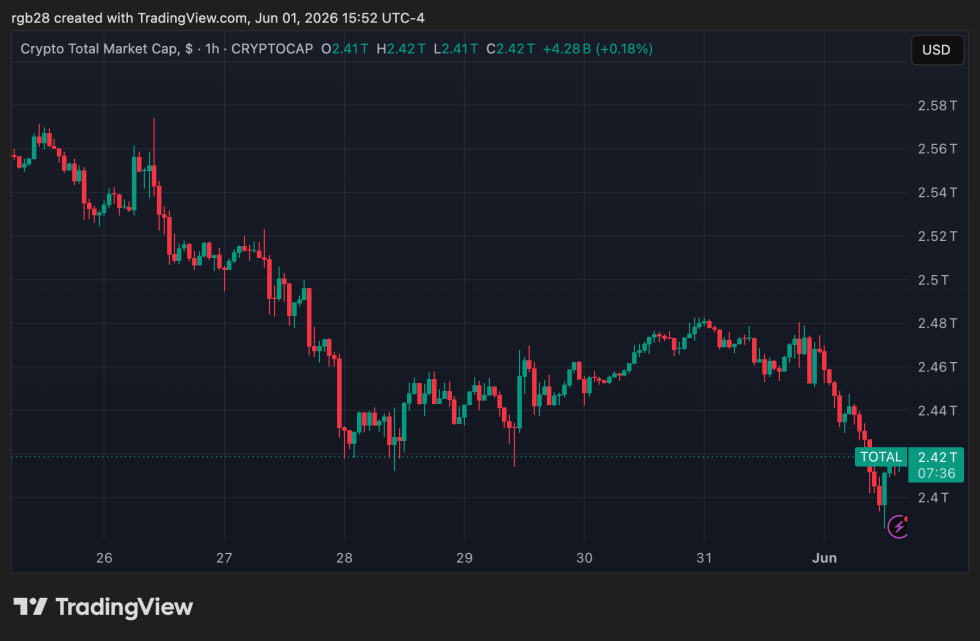
The total crypto market capitalization is at $2.42 trillion in the one-week chart. Source: TOTAL on TradingView

Связанные с этим вопросы

QWhat are the two main proposals Japan's Liberal Democratic Party (LDP) has submitted to the government regarding digital assets?

AJapan's Liberal Democratic Party (LDP) has submitted two main proposals. First, it called for the government to develop a legal framework to allow crypto-based Exchange-Traded Funds (ETFs) in the country. Second, it urged the government to promote the use of yen-denominated stablecoins for settlement within Asia.

QWhat is the status of the legal framework for stablecoins in Japan, and who is allowed to issue yen-denominated stablecoins?

AJapan established its legal framework for stablecoins through a 2022 amendment to the Payment Services Act. Under these rules, only licensed money transfer companies, trust companies, and banks are permitted to issue yen-denominated stablecoins.

QWhat are the potential timelines for the approval and listing of the first crypto ETFs in Japan according to the article?

AThe article mentions that the first wave of crypto ETFs in Japan could be approved and listed within the next two years. Some industry leaders believe the rollout could happen as early as next year if legal revisions allow. However, the CEO of JPX also noted that listings might be delayed until 2028 if progress on amending the law stalls.

QWhat recent regulatory change did Japan's FSA make regarding foreign stablecoins, effective from June 1?

AIn May, Japan's Financial Services Agency (FSA) expanded the Cabinet Office Ordinance to recognize certain trust-type stablecoins issued by foreign trust banks and similar entities as 'electronic payment instruments' under the Payment Services Act, starting June 1. This change removes these foreign trust-backed stablecoins from the 'securities' classification under the Financial Instruments and Exchange Act (FIEA).

QWhat are the stated benefits of crypto ETFs according to the LDP's proposal?

AAccording to the LDP's proposal, 'Crypto-ETFs would provide investors with easy-to-understand ways of investment.' The party urged the government to position such products as an official means of investment in the financial market.

Похожее

Reddit Crypto Discussion: Tech Stocks Surge for 8 Months, Is the Crypto Community Starting to 'Accept Fate'?

Reddit Crypto Discussion: Has the Community 'Given Up' as Tech Stocks Soar? A recent post on Reddit's r/CryptoMarkets asking if the crypto market feels "dead" compared to surging tech stocks has sparked intense debate. The discussion highlights a community grappling with underperformance: Bitcoin is down ~44% from its October 2025 high and ~20% YTD in 2026, while the S&P 500 and Nasdaq 100 have gained significantly. The debate features classic opposing views. Some users, citing Bitcoin's history, are "cycle believers" who anticipate a return to form, arguing it has "died" many times before. Others counter that crypto's narratives keep shifting without delivering a stable, compelling real-world use case beyond speculation. A prevalent third view pinpoints AI as the core issue: the tech sector's transformative boom is absorbing all attention and capital, while crypto lacks a comparable, impactful utility. Data supports the pessimistic mood. Bitcoin spot ETFs saw their largest monthly net outflow in May 2026 (~$2.3B), indicating institutional de-risking. The Crypto Fear & Greed Index has fallen to "Fear" levels. When asked about the timing of a potential market rotation back to crypto, answers are uncertain. A key practical point raised is the current high-interest-rate environment, which makes stable yields from cash and bonds attractive, reducing incentive to move into volatile assets like crypto. The underlying anxiety, as one user summarized, is "opportunity cost"—the worry about missing gains elsewhere while waiting for a crypto revival.

marsbit39 мин. назад

Reddit Crypto Discussion: Tech Stocks Surge for 8 Months, Is the Crypto Community Starting to 'Accept Fate'?

marsbit39 мин. назад

Chatbot has been burning money for three years, is it still the 'New Continent' of the AI era?

For years, the AI industry has been guided by a singular "map" — the belief that the AI era's "new continent" would be found in the Chatbot, a super-app akin to the mobile internet's super-apps. This belief was fueled by ChatGPT's explosive 2022 debut. However, three years of heavy investment reveal a different reality: the Chatbot-as-ultimate-entry-point model is struggling. The core issue is economic. Chatbots defy traditional internet economics. Unlike apps with near-zero marginal cost, each AI query consumes significant, expensive compute. More users mean higher costs, not profits. OpenAI, despite ~900M weekly active users, reportedly loses money. The expected network effects and data flywheels that power internet giants are weak in Chatbots, as one user's interactions don't improve another's experience. Monetization is a major hurdle. The subscription model faces low conversion rates, especially in China where users expect AI to be free. The "free + ads" model also struggles. Chatbot interactions often lack commercial intent, and inserting ads compromises the trust essential for an answer engine. Perplexity's minimal ad revenue and subsequent pivot away from ads highlight this difficulty. Switching between Chatbots is easy, making user loyalty low and competition a potential race to the bottom on price. Data suggests the standalone Chatbot's growth is slowing, and user engagement (avg. ~6 mins/day) pales compared to apps like TikTok. The product form itself is limiting; studies show nearly half of interactions are simple Q&A, trapping AI's potential in a passive, single-turn "cage." A contrasting, more successful path is emerging, exemplified by Anthropic. With over 85% of its ~$30B annualized revenue from enterprises, it focuses on AI as a productivity tool, not a companion. The rise of AI Agents (like OpenClaw) and the integration of AI into existing workflows (e.g., Google's AI Overviews, Apple Intelligence in OS) signal a shift. The future may not be a dominant Chatbot app, but AI embedded seamlessly into social apps, operating systems, and hardware — a capability-layer revolution, not a new distribution container. The conclusion is clear: the old "map" centered on a standalone Chatbot super-app is leading to a dead end. To find the true valuable "continent" of the AI era, the industry must update its navigation to prioritize deep integration, practical utility, and sustainable economics over a generic conversation window.

marsbit53 мин. назад

Chatbot has been burning money for three years, is it still the 'New Continent' of the AI era?

marsbit53 мин. назад

Торговля

Спот
Фьючерсы

Популярные статьи

Как купить PUSH

Добро пожаловать на HTX.com! Мы сделали приобретение Push Protocol (PUSH) простым и удобным. Следуйте нашему пошаговому руководству и отправляйтесь в свое крипто-путешествие.Шаг 1: Создайте аккаунт на HTXИспользуйте свой адрес электронной почты или номер телефона, чтобы зарегистрироваться и бесплатно создать аккаунт на HTX. Пройдите удобную регистрацию и откройте для себя весь функционал.Создать аккаунтШаг 2: Перейдите в Купить криптовалюту и выберите свой способ оплатыКредитная/Дебетовая Карта: Используйте свою карту Visa или Mastercard для мгновенной покупки Push Protocol (PUSH).Баланс: Используйте средства с баланса вашего аккаунта HTX для простой торговли.Третьи Лица: Мы добавили популярные способы оплаты, такие как Google Pay и Apple Pay, для повышения удобства.P2P: Торгуйте напрямую с другими пользователями на HTX.Внебиржевая Торговля (OTC): Мы предлагаем индивидуальные услуги и конкурентоспособные обменные курсы для трейдеров.Шаг 3: Хранение Push Protocol (PUSH)После приобретения вами Push Protocol (PUSH) храните их в своем аккаунте на HTX. В качестве альтернативы вы можете отправить их куда-либо с помощью перевода в блокчейне или использовать для торговли с другими криптовалютами.Шаг 4: Торговля Push Protocol (PUSH)С легкостью торгуйте Push Protocol (PUSH) на спотовом рынке HTX. Просто зайдите в свой аккаунт, выберите торговую пару, совершайте сделки и следите за ними в режиме реального времени. Мы предлагаем удобный интерфейс как для начинающих, так и для опытных трейдеров.

828 просмотров всегоОпубликовано 2024.03.29Обновлено 2026.06.02

Как купить PUSH

Обсуждения

Добро пожаловать в Сообщество HTX. Здесь вы сможете быть в курсе последних новостей о развитии платформы и получить доступ к профессиональной аналитической информации о рынке. Мнения пользователей о цене на PUSH (PUSH) представлены ниже.

活动图片