Interactive Brokers Opens 'Stablecoin Deposits': Why Is the Wall Street Giant Tearing Down the 'Payment Berlin Wall' at This Moment?

marsbitОпубликовано 2025-12-16Обновлено 2025-12-16

Введение

Interactive Brokers (IBKR), a major global electronic brokerage, has announced a landmark update allowing clients to deposit funds using stablecoins—primarily USDC—to trade traditional assets like stocks, futures, and forex. This move effectively bridges a significant gap between crypto and traditional finance (TradFi), addressing long-standing inefficiencies in fiat payment channels. Traditionally, cross-border wire transfers via SWIFT are slow (taking 1-3 business days), costly, and limited to banking hours. By leveraging blockchain technology, IBKR enables near-instant, 24/7 settlements, drastically reducing friction and improving capital efficiency for traders. Behind the scenes, IBKR likely partners with regulated entities like Paxos or Circle to convert USDC to USD seamlessly, ensuring compliance while using the blockchain as a new settlement layer. This strategic shift aims to attract crypto-native high-net-worth clients and institutions holding significant wealth in stablecoins, offering them a secure, compliant path to invest in traditional markets. It also signals the evolution of stablecoins from mere trading instruments to a foundational global payment infrastructure. However, challenges remain, including stringent KYC/AML requirements, address screening, and enhanced tax transparency. Despite these hurdles, IBKR’s move is a decisive step toward erasing the boundaries between crypto wallets and securities accounts, setting a new standard for the industry.

Author: BlockWeeks

Between the cryptocurrency market and the traditional financial market (TradFi), there has long been an invisible wall: the friction cost of fiat currency channels.

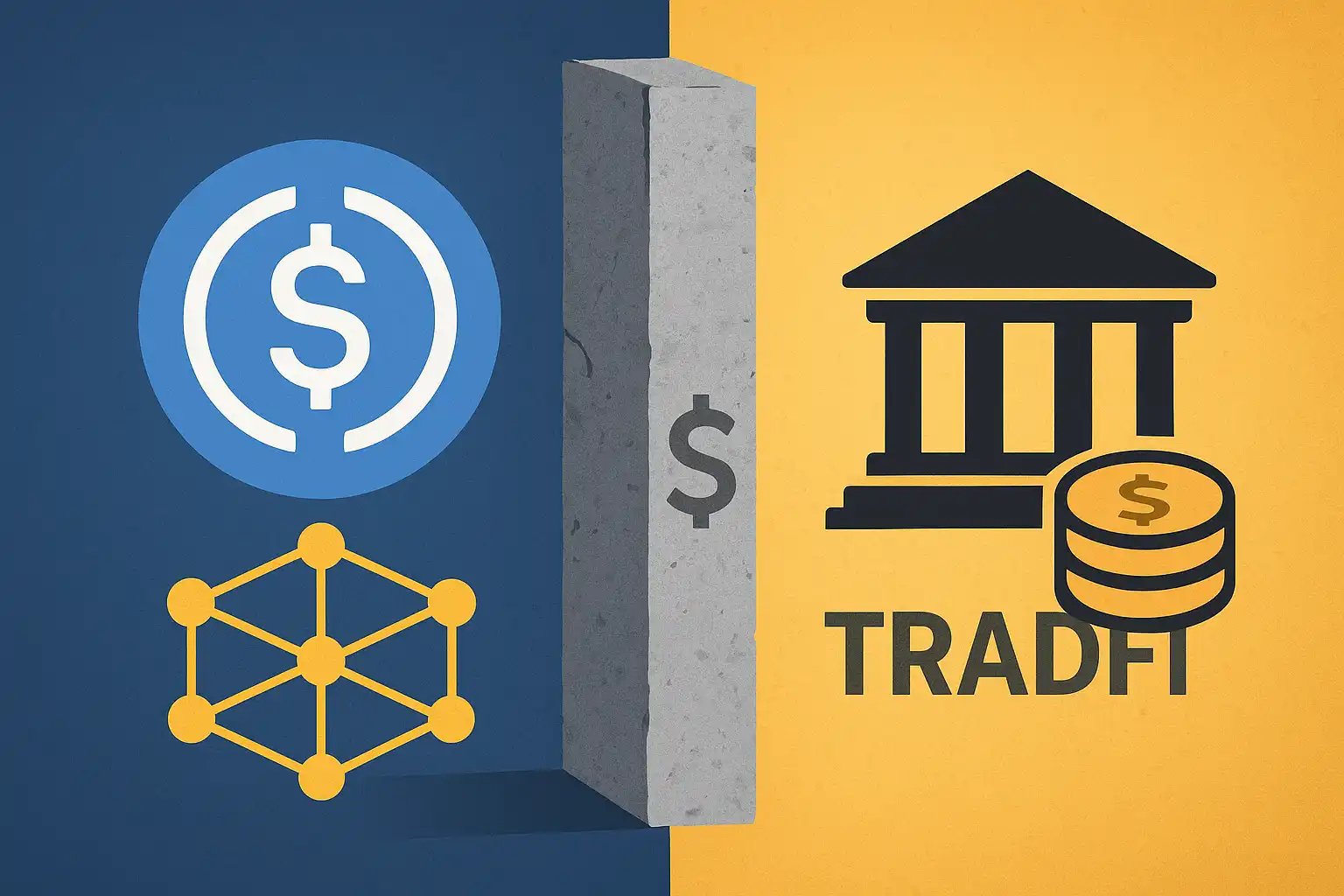
Recently, the globally renowned electronic broker Interactive Brokers (IBKR) announced a milestone update: it now officially supports clients using stablecoins (primarily USDC) to deposit funds into their accounts for trading traditional assets such as stocks, futures, and foreign exchange.

At first glance, this might seem like a simple payment function update. But to observers well-versed in the transformation of financial infrastructure, this is a substantive acknowledgment of the "on-chain settlement network" by a top-tier Wall Street broker. When the US Dollar becomes USDC, and when SWIFT becomes ERC-20, it reflects a paradigm shift in the efficiency of global capital flow.

I. Breaking the Wall: A Dimensional Reduction Strike from "T+N" to "7×24"

For a long time, the biggest pain point for global investors (especially non-U.S. investors) using U.S. stock brokers has been depositing funds.

The traditional wire transfer path is: local bank foreign exchange purchase -> SWIFT cross-border transfer -> intermediary bank -> U.S. receiving bank -> broker account crediting. This process not only involves high fees (wire transfer fee + intermediary fee) but is also limited by bank working hours and the inefficiency of the SWIFT system, typically taking 1-3 business days.

Interactive Brokers' introduction of stablecoin deposits is essentially using blockchain as a "new clearing layer" to launch a dimensional reduction strike against traditional bank wire transfers:

  1. 24/7 Liquidity: On-chain transfers have no concept of "bank closing time." A deposit on Friday night no longer has to wait until Monday morning to be processed.

  2. Instant Settlement: Compared to the multi-layer confirmation of SWIFT, on-chain confirmation of USDC takes only seconds to minutes.

  3. Capital Efficiency Revolution: For high-frequency traders and cross-market arbitrageurs, the seamless transfer of funds between on-chain (Web3) and securities accounts (Web2) means a drastic reduction in capital occupancy costs.

Technical Black Box Revealed: It is important to clarify that Interactive Brokers does not directly "hold" these tokens for stock settlement. Its backend logic likely involves cooperation with compliant institutions like Paxos or Circle: users transfer in USDC -> the partner exchanges it 1:1 for USD -> instantly transfers it to the IBKR client's fiat balance. Superficially, it's coins; fundamentally, it's still money, but the channel has become the chain.

II. Open Strategy: Competing for the Asset Pricing Power of "Web3 Nouveau Riche"

Interactive Brokers is known for serving professional traders and institutions, with famously strict risk control. Why would such a conservative giant take the first step?

The answer lies in the competition for incremental wealth.

The past two bull markets have created a large number of "Crypto Natives" and Web3 institutions holding millions or even billions of dollars in assets. The wealth of this group primarily exists on-chain in the form of USDT/USDC or ETH.

In the past, if they wanted to allocate to U.S. stocks (such as buying NVIDIA or Coinbase stock), they had to go through a painful "off-ramp" process, facing not only the risk of bank risk control freezing their accounts but also enduring significant exchange rate losses.

Interactive Brokers' move is a typical "capital attraction open strategy":

  • For users: It is the safest "off-ramp channel." Depositing USDC into IBKR to buy U.S. Treasuries or the S&P 500 is currently the most compliant path for "traditionalizing crypto assets."

  • For IBKR: It directly locks in a group of high-net-worth clients with the most abundant liquidity and highest risk appetite globally. This is not just to earn commissions but also to accumulate huge amounts of client margin (Float).

III. Signal: Stablecoins Are Evolving into a "Supranational Version of SWIFT"

Zooming out, this event is a reverse mapping of the RWA (Real World Assets) narrative.

If RWA is about "moving" U.S. Treasuries onto the chain, then Interactive Brokers supporting stablecoin deposits is about "moving" liquidity from the chain back to traditional finance. This marks a qualitative change in the historical positioning of stablecoins (Stablecoin):

  • Era 1.0: Trading chips on exchanges.

  • Era 2.0: Safe-haven assets in DeFi protocols.

  • Era 3.0 (Now): A true global payment and settlement infrastructure.

When a Nasdaq-listed brokerage giant starts using a blockchain network instead of the SWIFT network to handle client funds, it indicates that the security, compliance, and efficiency of blockchain as a "payment pipeline" have passed the most stringent stress tests on Wall Street.

IV. Concerns and Games: The Sword of Damocles of Compliance

Despite the bright prospects, we cannot ignore the regulatory games involved.

  • KYC/AML Penetration Challenges: Interactive Brokers supporting stablecoin deposits will inevitably require extremely strict on-chain address reviews. Has the user's deposit address interacted with sanctioned entities (like Tornado Cash)? How to identify "black U"? This will test IBKR's compliance technology capabilities.

  • Tax Transparency: The opening of this channel also means a strong binding between on-chain assets and real-name securities accounts. For users hoping to avoid taxes through cryptocurrency, this channel is tantamount to "surrendering" to the tax authorities. This could be a double-edged sword.

Conclusion: The First Brick in Tearing Down the Berlin Wall

The small step taken by Interactive Brokers is a big step for financial integration.

It预示着 that within the next five years, the boundary between "securities accounts" and "crypto wallets" will completely blur. Future investors may not need to care whether they hold dollars in a bank ledger or USDC on the chain; they will only care about the appreciation of their assets.

For other brokers (such as Charles Schwab, Futu, etc.), the time left to follow suit is running out. In an era where liquidity is justice, whoever masters the stablecoin channel holds the key to the Web3 wealth vault.

Связанные с этим вопросы

QWhat is the significance of Interactive Brokers (IBKR) announcing support for stablecoin deposits?

AIt represents a major step in bridging the gap between crypto and traditional finance by allowing clients to use stablecoins like USDC for funding accounts to trade stocks, futures, and forex, leveraging blockchain for faster, cheaper, and more efficient settlements compared to traditional banking systems like SWIFT.

QHow does using stablecoins for deposits improve upon traditional wire transfers?

AStablecoin deposits offer near-instant settlement (seconds to minutes), 24/7 availability without banking hours restrictions, and lower transaction costs, eliminating the delays and fees associated with multi-day SWIFT transfers and intermediary banks.

QWhy is Interactive Brokers targeting crypto-native users with this feature?

ATo attract high-net-worth individuals and institutions from the Web3 space who hold significant wealth in stablecoins, providing them a compliant and efficient path to invest in traditional assets like stocks and bonds, thereby capturing new sources of liquidity and client assets.

QWhat does the move signal about the evolution of stablecoins?

AIt indicates that stablecoins are transitioning from being mere trading instruments or DeFi assets to becoming a global payment and settlement infrastructure, capable of handling cross-border transactions with efficiency that meets Wall Street's rigorous standards.

QWhat are the regulatory challenges associated with stablecoin deposits in traditional finance?

AKey challenges include ensuring robust KYC/AML compliance to prevent interactions with sanctioned addresses or illicit funds, and addressing tax transparency issues as stablecoin transactions linked to verified accounts increase visibility for tax authorities.

Похожее

Will the Next Crypto Bull Run Start with On-Chain Trading of SpaceX?

This article presents a scenario-based forecast for the crypto industry from 2026 to 2029, arguing that the next major cycle will be driven not by technological narratives but by legal access to real-world assets. The author predicts that by mid-2026, pre-IPO perpetual contracts for top private companies like SpaceX, OpenAI, and Anthropic on platforms like Hyperliquid will become the primary gateway for accessing quality assets, as most crypto-native tokens fail to capture real value. The much-hyped AI x Crypto intersection largely fails except for prediction markets, which thrive on betting on AI model supremacy. By 2027, public blockchain foundations are forced to choose between catering to retail speculation or building compliant infrastructure for institutions, with many opting for the latter. Growth in stablecoins and tokenized private credit/equity hits a "triple ceiling" due to regulatory and political uncertainty rather than market demand. The pivotal shift is forecast for 2028. A major liquidation event in pre-IPO perpetuals exposes the structural flaw of synthetic markets lacking a real underlying asset anchor. In response, regulatory changes finally allow the public solicitation of private securities resales to verified accredited investors. This creates a legitimate secondary market for real company equity, which then becomes the core asset class of the new bull market, relegating synthetic perps to a niche role. By 2029, the industry becomes "boring" but foundational. Tokens without claims on real cash flows or assets cease trading. Stablecoin growth is steady but politically capped. Crypto infrastructure fades from view as it gets absorbed into traditional finance backends. The article's central thesis is that the key bottleneck for crypto's next phase is legal and regulatory channels for real asset ownership, not technology.

marsbit39 мин. назад

Will the Next Crypto Bull Run Start with On-Chain Trading of SpaceX?

marsbit39 мин. назад

The Value Distribution of Stablecoins

**Summary: The Value Distribution of Stablecoins** The article argues that stablecoins are evolving from mere trading tools into broader channels for dollar access. It divides the stablecoin ecosystem into four layers to analyze how value is distributed: 1. **Issuance Layer:** Mints stablecoins, holds reserve assets, and captures the spread between reserve yield and user costs (e.g., Tether, Circle). This layer currently earns the largest profit margin. 2. **Infrastructure Layer:** Connects stablecoins to the traditional financial system, handling fiat on/off-ramps, banking integration, compliance (KYC/AML), and asset management (e.g., Bridge, BVNK). This is the "unglamorous" but critical work, building the essential bridges between crypto and real-world finance. 3. **Acquiring/Distribution Layer:** Integrates stablecoins into merchant systems, manages payment flows, and provides enterprise financial software (e.g., Stripe, Coinbase). They act as the access point for businesses. 4. **Application Layer:** The end-users and businesses that ultimately use stablecoins for payments, settlements, or as a store of value. They benefit from convenience but have little pricing power. The core thesis is that while the issuance layer currently dominates profits, the often-overlooked **infrastructure layer holds significant long-term potential**. The real challenge and barrier to mass adoption is not the on-chain transfer of stablecoins (which is simple), but the complex "last mile" integration into existing business workflows, banking systems, and regulatory frameworks across different countries. Companies in this layer are currently in a "land grab" phase, investing heavily to build networks, secure bank partnerships, and establish compliance pathways. While their position is currently pressured by the profitable issuers above and distribution platforms below, the article suggests that if stablecoins become a default financial rail for businesses, the infrastructure providers who have done the hard work of integration will ultimately gain strong pricing power and become entrenched, essential players.

marsbit7 ч. назад

The Value Distribution of Stablecoins

marsbit7 ч. назад

The Value Distribution of Stablecoins

The Value Distribution of Stablecoins The article argues that stablecoins are evolving from a mere trading tool into a broad "dollar channel." It analyzes the industry's value chain through four layers: 1. **Issuance Layer (e.g., Tether, Circle):** The top layer that mints stablecoins, holds reserve assets, and captures the thickest interest rate spread. 2. **Infrastructure Layer (e.g., Bridge, BVNK):** Connects stablecoins to the traditional financial system, handling critical but complex "dirty work" like fiat on/off-ramps, banking integration, compliance (KYC/AML), and cross-border settlement. 3. **Acquiring/Distribution Layer (e.g., Stripe, Coinbase):** Embeds stablecoins into merchant systems, manages payment flows, and integrates with enterprise software. 4. **Application Layer:** End-users and businesses that ultimately use stablecoins for payments, settlement, or storing value. The author posits that while the issuance layer currently captures the most profit, the most overlooked and potentially critical layer is infrastructure. The core challenge for stablecoin adoption isn't the on-chain transfer (which is simple), but bridging the gap between blockchain and the real-world financial system. This involves solving practical problems for businesses: fiat conversion, reconciliation, tax handling, and user onboarding. Infrastructure companies are currently in a difficult "land-grab" phase—building networks, securing banking relationships, and achieving compliance country-by-country. They face pressure from both the profitable issuance layer above and distribution platforms below. However, the author suggests this layer is building a crucial moat. Once stablecoins become a default business rail, the infrastructure players who have done the hard work of integration may gain significant, durable value and pricing power.

链捕手7 ч. назад

The Value Distribution of Stablecoins

链捕手7 ч. назад

Торговля

Спот
Фьючерсы
活动图片