Hyperliquid, Wall Street's All-Day Trading Convenience Store

foresightnews_apiОпубликовано 2026-06-05Обновлено 2026-06-05

Введение

**Hyperliquid: Wall Street's 24/7 Trading Convenience Store** Written by Vicky Ge Huang, Wall Street Journal. Hyperliquid, a decentralized crypto trading platform, has become a go-to venue for Wall Street traders, especially during weekends when traditional U.S. markets are closed. Operating 24/7, it allows traders to pre-position or close trades ahead of market opens, capitalizing on events like geopolitical news. The platform, founded by former Hudson River Trading quant Jeff Yan, offers perpetual contracts on a wide range of assets, including Bitcoin, the S&P 500, oil, and even pre-IPO companies like SpaceX. Its growth exemplifies the merging of traditional finance and crypto markets, attracting significant volume from professional traders seeking leverage and constant access. A key differentiator, according to Yan, is user self-custody of assets—a necessity highlighted by the FTX collapse. Despite U.S. regulatory restrictions, some American users reportedly access the platform via VPN, drawn by its ease of use, lack of stringent KYC, and strong community culture on platforms like Discord and X. The platform is not without risks. Perpetual contracts are complex and highly leveraged, leading to massive liquidations during market volatility. Hyperliquid itself saw $10 billion in liquidations during a market crash in October last year. Regulatory warnings emphasize insufficient risk disclosure for retail investors. With about 11 employees, Hyperliquid and its associated...


By: Vicky Ge Huang, The Wall Street Journal

Compiled by: Luffy, Foresight News


One Saturday in February, when hedge fund commodity trader Vala Zeinali's phone lit up with news of President Trump announcing airstrikes on Iran, he immediately opened the Hyperliquid website.


As a decentralized crypto trading platform, Hyperliquid is open 24/7, 365 days a year. Since the beginning of this year, it has become the preferred battleground for short-term traders on Wall Street. On weekends when U.S. stock markets are closed, investors can open or close positions here early, locking in profits before the stock market opens on Monday.


Back in early 2026, when predicting a possible geopolitical conflict in the Middle East, Zeinali deployed a four-figure sum into crude oil derivatives. After the airstrike news broke and oil prices surged, he closed his positions on Hyperliquid, earning a hefty 243% return.


"I was particularly grateful at the time. Typically, oil price spikes from such geopolitical news tend to retract by the time U.S. markets open on Monday," Zeinali said. "Fortunately, I was able to exit in time, and most positions were successfully cashed out."


More and more traditional finance and crypto traders are flooding into the platform, trading a vast array of assets: Bitcoin, the S&P 500, crude oil, and even pre-IPO star companies like SpaceX. They primarily trade perpetual contracts—derivatives with no expiry, tradable around the clock, and capable of amplifying gains and losses with high leverage.


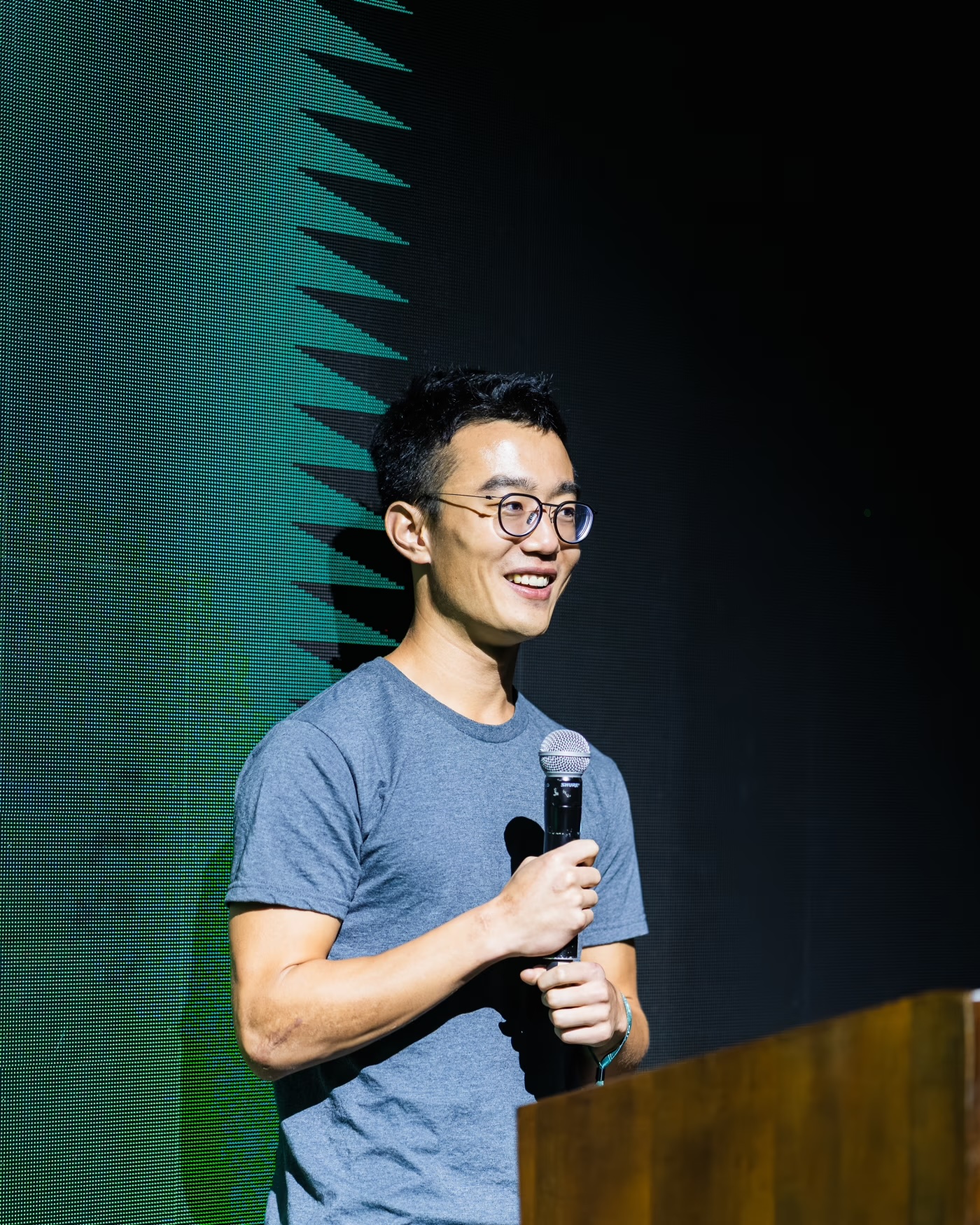
Hyperliquid founder Jeff Yan, appearing at an event, stated that the platform's ultimate goal is to host all financial activity.


Hyperliquid was founded three years ago by Jeff Yan, a former quant trader at high-frequency trading firm Hudson River Trading. The FTX implosion inspired him: the crypto market urgently needed a high-performance trading system where users self-custody their assets.


"Self-custody is not some abstract academic concept; it's a user necessity," Jeff Yan said in an interview. "More users should have paid attention to this after the FTX incident. The core principle is holding your own assets."


The company behind Hyperliquid has only 11 employees. According to Blockworks Research data, the platform and its associated blockchain generated approximately $8 billion in revenue last year; the chain's native token, HYPE, has surged over 100% since its launch in late 2024, with a current market cap of about $16 billion.


The rapid rise of Hyperliquid is a microcosm of the accelerating convergence between traditional finance and crypto markets. Perpetual contracts linked to U.S. stocks and commodities have firmly captured the attention of Wall Street capital.


Recently, Eric Vishria, a general partner at venture capital firm Benchmark, shared a picture on platform X showing a banker monitoring the price of perpetual futures linked to AI chipmaker Cerebras. Earlier this year, Trade [XYZ], an authorized partner of S&P Dow Jones Indices, launched S&P 500 index perpetual products on Hyperliquid, which have also become one of the platform's popular contracts.


Significant capital is betting on pre-IPO companies. According to Hyperdash data, perpetual contracts for SpaceX have seen a cumulative trading volume of $280 million on Hyperliquid.


Currently, U.S.-based users still cannot access the platform compliantly, but the situation may be about to change. Last Friday, the U.S. Commodity Futures Trading Commission (CFTC) introduced a new regulatory framework allowing licensed domestic platforms to list perpetual contracts; it also approved Kalshi to list Bitcoin perpetual products, and Coinbase U.S. users can access its global perpetual products through an affiliated entity.


Perpetual contracts come with high leverage and high risk, amplifying profits and losses. For instance, on October 10 last year, when Trump suddenly announced 100% tariffs on China, markets crashed violently, with over $19 billion in leveraged positions liquidated across the market—$10 billion of that on Hyperliquid alone.


Jeff Yan stated that the actual industry losses were far higher than $19 billion. Hyperliquid was singled out in statistics only because its liquidation data is fully transparent and its system operated normally throughout the extreme volatility, while several competing platforms experienced downtime and could not function properly.


Benjamin Schiffrin, Securities Policy Director at financial watchdog Better Markets, issued a warning: "Perpetual contracts are structurally complex; even seasoned financial professionals struggle to fully grasp them. The current level of risk disclosure to retail investors is severely inadequate, creating a potentially dangerous combination."


Even with restrictions, U.S. and barred-region traders still participate via VPNs. The key attraction is that the platform requires no real-name verification, a stark contrast to the rigorous due diligence of traditional brokerages. However, the platform's user agreement explicitly prohibits U.S. users from accessing the service and forbids using VPNs to circumvent restrictions.


A clean and user-friendly interface, a rich variety of trading products, and a strong community atmosphere are other major advantages that retain users.


Geneva-based trader Pascal Lin started in late 2023 and quickly became a heavy user. What impressed him most was that users can directly provide product feedback to founder Jeff Yan and the team in the Discord community.


"The sense of participation is incredibly strong. It feels like you're building the product yourself," said Pascal, who also heads proprietary trading at ARES Capital Management, mainly trading HYPE and crude oil perpetuals. Previously, he accurately caught the crude oil bull run as prices surged from $67 per barrel to nearly $100.


He is so immersed in Hyperliquid that he even set up real-time price alerts on his Apple Watch, admitting he wouldn't recommend average traders to follow suit. "I wake up at night, open the app with one click, and check the HYPE price."


He is not the only fervent user. The platform's unique community culture is a core driver of traffic. On platform X, users habitually tag Hyperliquid at the end of posts regardless of the topic. Many users adopt the green-coated smiling cat meme, Hypurr, as their social media avatar. Beyond memes, third-party developers continuously build supporting ecosystem tools like market data trackers and dashboards.


Lawrence Wu, co-founder of Hyperdash, said: "I think the reason it has such a large community is that it tries to fulfill the original vision of cryptocurrency—a meritocratic, permissionless system. It's very idealistic."


Jeff Yan stated that Hyperliquid's ultimate goal is to consolidate all financial resources. Hyperliquid's next step is to venture into prediction markets and options trading. Its first contracts tracking Bitcoin prices, launched in early May, have already generated millions in trading volume.

Связанные с этим вопросы

QWhat is Hyperliquid and what is its main advantage for Wall Street traders?

AHyperliquid is a decentralized cryptocurrency trading platform that operates 24/7, 365 days a year. Its main advantage for Wall Street traders is that it allows them to open or close positions during weekends when U.S. stock markets are closed, enabling them to lock in profits or hedge risks ahead of the market open.

QWhat inspired Jeff Yan to found Hyperliquid?

AJeff Yan was inspired to found Hyperliquid by the collapse of FTX. This event highlighted the need for a high-performance trading system in the crypto market where users have self-custody of their assets, a core principle he identified as a critical user demand.

QWhat is a key regulatory development mentioned that could impact Hyperliquid's U.S. operations?

AA key development is the U.S. Commodity Futures Trading Commission (CFTC) introducing a new regulatory framework that allows licensed domestic platforms to list perpetual contracts. It also approved Kalshi's Bitcoin perpetual product, and U.S. users can access global perpetual offerings through a Coinbase affiliate.

QAccording to the article, why did Hyperliquid alone account for $10 billion of the estimated $19 billion in liquidations during a market crash on October 10th?

AHyperliquid accounted for such a large portion of the liquidations because its liquidation data is fully transparent, and its system continued to operate normally during the extreme volatility, while several competing platforms suffered outages and could not function properly.

QBesides 24/7 trading, what other features are cited as key to Hyperliquid's user retention?

AKey features for user retention include a simple and user-friendly interface, a wide variety of trading assets (like Bitcoin, S&P 500, crude oil, and pre-IPO companies), and a strong community culture where users can interact directly with the founders on Discord, fostering a sense of participation and product co-creation.

Похожее

Agents Take Over Traffic Distribution Power: What Are Tencent, ByteDance, and Alibaba Competing For?

In the race to dominate the AI era's entry point, China's tech giants—Tencent, ByteDance, and Alibaba—are aggressively deploying AI Agents to control the future of traffic distribution. Alibaba is pursuing a dual-track "closed loop + openness" strategy. Its Qianwen app is evolving into a super-Agent integrated across its ecosystem (Taobao, Alipay, etc.) to handle complex tasks like travel planning. Concurrently, it is opening its platform to external brands (Luckin Coffee, KFC) and has launched a B2B Agent platform, "Wukong," targeting enterprise automation. Its other flagship, Quark, aims to be an "AI super search box" for information and tasks. ByteDance is executing an omnipresent "sprawl strategy." Its Doubao app boasts over 300 million monthly active users and is evolving into a default AI entry point for daily life, with plans for paid versions and e-commerce integration. Its core weapon is the Kouzi platform, a visual "AI assembly factory" for developers to build custom Agents. ByteDance is also pushing hardware integration, collaborating on AI phones and developing smart glasses to embed Doubao everywhere. Tencent is playing its long-held "ultimate card" by quietly embedding an AI Agent directly into WeChat. This Agent, accessible via a swipe, can understand user commands and automatically execute tasks by calling upon WeChat's millions of mini-programs (e.g., finding and ordering coffee). This leverages WeChat's unparalleled 1.4-billion-user ecosystem to position the app as an AI-powered "service operating system," a move that could dramatically reshape the competitive landscape. The core battleground is shifting from competing for "user screen time" to competing to be the "default execution layer" for user intent. The business model is evolving from an "attention economy" to an "intent economy," where the Agent that can most efficiently fulfill a user's need gains control over service access and token flow. This represents a fundamental change in how users connect with digital services, making the fight for the Agent入口 (entry point) a pivotal moment for redefining industry leadership in the AI age.

marsbit1 ч. назад

Agents Take Over Traffic Distribution Power: What Are Tencent, ByteDance, and Alibaba Competing For?

marsbit1 ч. назад

From Banning Doubao to Embracing Honor: Why Did WeChat Suddenly 'Change Its Face'?

The article explores the sudden shift in WeChat's strategy towards AI assistants from mobile phone manufacturers, transitioning from strict opposition to active collaboration. For over a year, WeChat fiercely resisted attempts by phone AI assistants (like ByteDance's Doubao in late 2025) to control its features via GUI automation ("simulated clicking"), citing security and data control concerns. This stance created a significant barrier for system-level AI integration. Now, Tencent has initiated A2A (Agent-to-Agent) partnerships with major phone brands like Honor, Xiaomi, OPPO, and vivo. This model allows a phone's system AI (e.g., Honor's YOYO) to parse a user's voice command and send a structured request directly to WeChat's own internal AI agent via secure APIs. WeChat then executes the action (e.g., sending a message) and returns the result. The article attributes Tencent's "change of face" to strategic pressure. While leading in social app usage, Tencent trails rivals like ByteDance and Alibaba in standalone AI app popularity. WeChat, with its vast mini-program ecosystem, is Tencent's key asset for an AI comeback. The upcoming WeChat AI agent aims to handle tasks like booking and payments within the app. However, phone system assistants remain the primary AI entry point for most users. The A2A collaboration allows Tencent to extend WeChat's AI reach to this crucial system layer while maintaining control over its core functions and data. For phone manufacturers, embracing A2A is a pragmatic move. The GUI route proved unviable due to WeChat's blocks. A2A offers a compliant path to integrate a vital service, enhancing their AI assistants' usefulness. It allows them to focus on developing their own AI ecosystems for other services while cooperating on WeChat access. The collaboration is framed as a mutual, strategic necessity: Tencent gains a distribution channel, and manufacturers gain a key functionality. The partnership relies on a "dual authorization" mechanism for security, requiring both user and app consent for each action. While questions about long-term data privacy practices remain, experts note A2A is more secure and compliant than GUI automation. Ultimately, this cooperation is seen as a tentative, calculated truce. Tencent's long-term goal is to make WeChat an AI-powered "service OS." Phone manufacturers aim to make their system AI the central user interface. Their paths may converge or clash in the future, but for now, the A2A deal represents the opening chapter in the battle for the AI-era user入口, driven by necessity and strategic calculus on both sides.

marsbit3 ч. назад

From Banning Doubao to Embracing Honor: Why Did WeChat Suddenly 'Change Its Face'?

marsbit3 ч. назад

Торговля

Спот
Фьючерсы

Популярные статьи

Как купить S

Добро пожаловать на HTX.com! Мы сделали приобретение Sonic (S) простым и удобным. Следуйте нашему пошаговому руководству и отправляйтесь в свое крипто-путешествие.Шаг 1: Создайте аккаунт на HTXИспользуйте свой адрес электронной почты или номер телефона, чтобы зарегистрироваться и бесплатно создать аккаунт на HTX. Пройдите удобную регистрацию и откройте для себя весь функционал.Создать аккаунтШаг 2: Перейдите в Купить криптовалюту и выберите свой способ оплатыКредитная/Дебетовая Карта: Используйте свою карту Visa или Mastercard для мгновенной покупки Sonic (S).Баланс: Используйте средства с баланса вашего аккаунта HTX для простой торговли.Третьи Лица: Мы добавили популярные способы оплаты, такие как Google Pay и Apple Pay, для повышения удобства.P2P: Торгуйте напрямую с другими пользователями на HTX.Внебиржевая Торговля (OTC): Мы предлагаем индивидуальные услуги и конкурентоспособные обменные курсы для трейдеров.Шаг 3: Хранение Sonic (S)После приобретения вами Sonic (S) храните их в своем аккаунте на HTX. В качестве альтернативы вы можете отправить их куда-либо с помощью перевода в блокчейне или использовать для торговли с другими криптовалютами.Шаг 4: Торговля Sonic (S)С легкостью торгуйте Sonic (S) на спотовом рынке HTX. Просто зайдите в свой аккаунт, выберите торговую пару, совершайте сделки и следите за ними в режиме реального времени. Мы предлагаем удобный интерфейс как для начинающих, так и для опытных трейдеров.

1.4k просмотров всегоОпубликовано 2025.01.15Обновлено 2026.06.02

Как купить S

Sonic: Обновления под руководством Андре Кронье – новая звезда Layer-1 на фоне спада рынка

Он решает проблемы масштабируемости, совместимости между блокчейнами и стимулов для разработчиков с помощью технологических инноваций.

2.3k просмотров всегоОпубликовано 2025.04.09Обновлено 2025.04.09

Sonic: Обновления под руководством Андре Кронье – новая звезда Layer-1 на фоне спада рынка

HTX Learn: Пройдите обучение по "Sonic" и разделите 1000 USDT

HTX Learn — ваш проводник в мир перспективных проектов, и мы запускаем специальное мероприятие "Учитесь и Зарабатывайте", посвящённое этим проектам. Наше новое направление .

1.8k просмотров всегоОпубликовано 2025.04.10Обновлено 2025.04.10

HTX Learn: Пройдите обучение по "Sonic" и разделите 1000 USDT

Обсуждения

Добро пожаловать в Сообщество HTX. Здесь вы сможете быть в курсе последних новостей о развитии платформы и получить доступ к профессиональной аналитической информации о рынке. Мнения пользователей о цене на S (S) представлены ниже.

活动图片