У Bitcoin и Ethereum на бумаге была сильная неделя, но по ценам этого не скажешь.
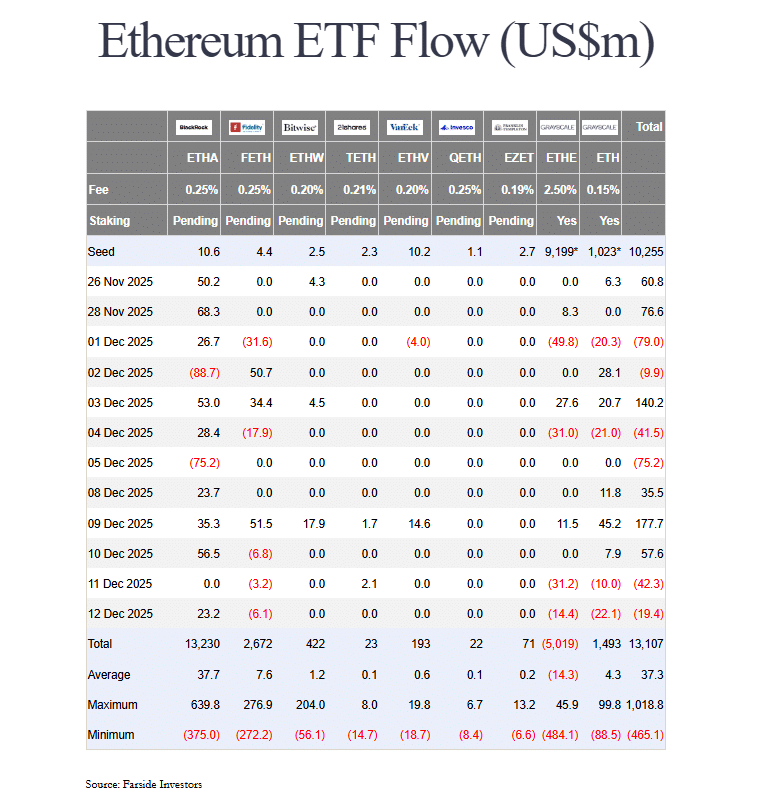
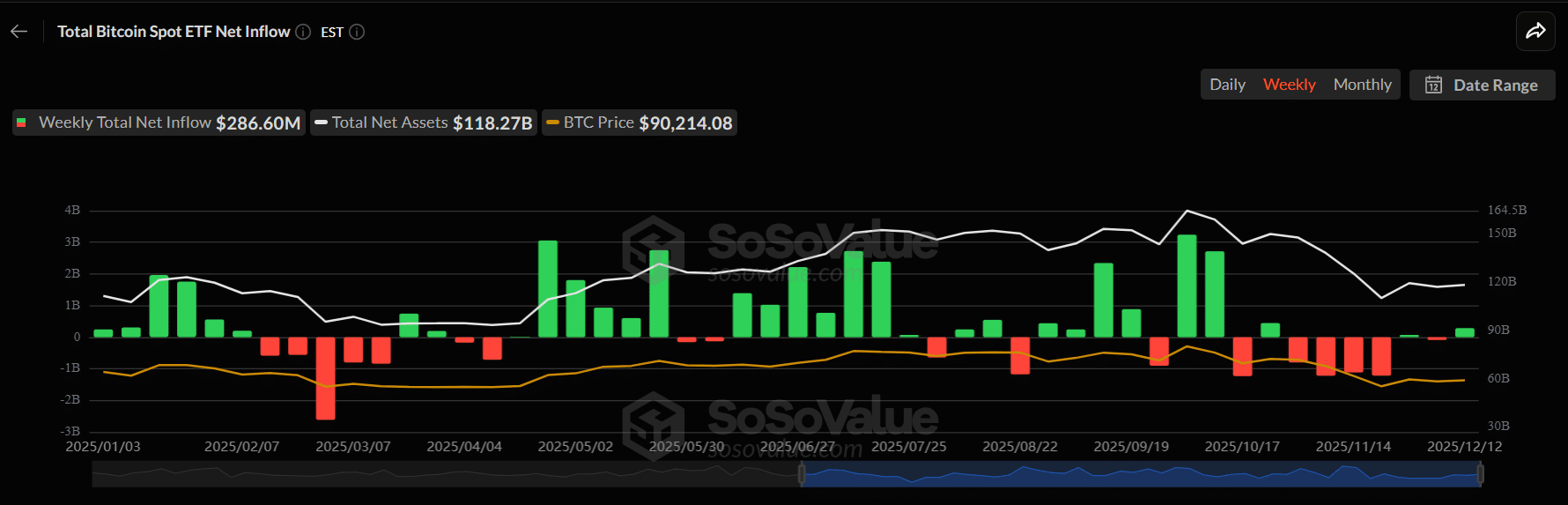
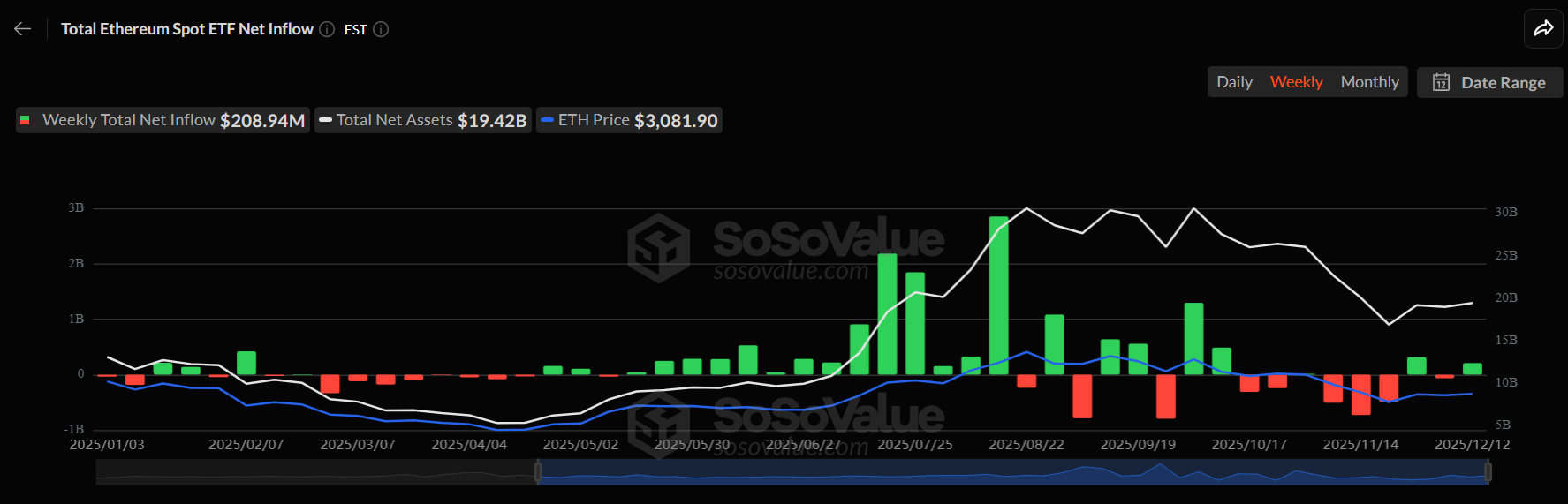
С 8 по 12 декабря спотовые ETF на Bitcoin и Ethereum совокупно привлекли чуть более 500 миллионов долларов чистого притока средств! И все же оба актива почти не сдвинулись с места.
Это странно. Постоянно поступают деньги, но цены остаются на месте.
Деньги в ETF продолжали поступать, цены – нет
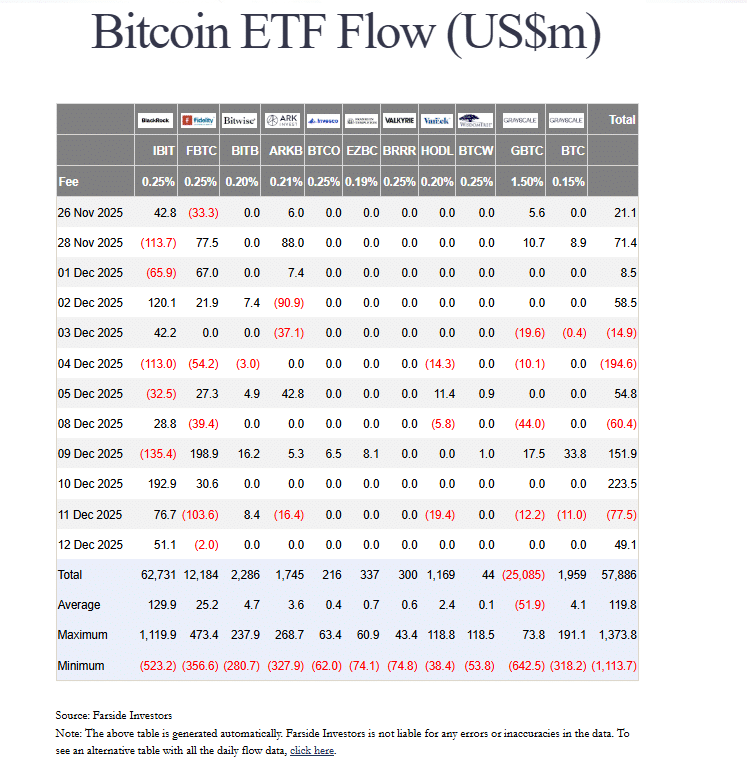
Источник: Farside Investors

- Поделиться
- Твитнуть 极
-
极
Трендовые криптовалюты












Связанные с этим вопросы
QСколько чистого притока средств получили биткоин и Ethereum ETF на прошлой неделе, и почему это не привело к росту цен?
AНа прошлой неделе, с 8 по 12 декабря, биткоин и Ethereum ETF совокупно привлекли чуть более 500 миллионов долларов чистого притока средств. Однако цены остались практически без изменений из-за того, что рынок уже учел ожидаемое снижение ставки ФРС, биткоин столкнулся с сопротивлением в диапазоне 92-94 тысяч долларов, а общие настроения инвесторов оставались осторожными.
QКакие ETF-провайдеры лидировали по притоку средств для биткоина и Ethereum?
AДля биткоина лидером по притоку средств стал ETF IBIT от BlackRock. Для Ethereum основными драйверами спроса были ETHA от BlackRock и FETH от Fidelity.
QНа каких уровнях торговались биткоин и Ethereum в течение недели, и как изменилась их рыночная капитализация?
AБиткоин торговался около отметки 89,6 тысяч долларов, потеряв 2,16% за неделю, с рыночной капитализацией примерно в 1,78 триллиона долларов. Ethereum торговался около 3127 долларов, незначительно снизившись на 0,23%, с рыночной стоимостью около 377 миллиардов долларов.
QКаковы общие активы под управлением (AUM) у спотовых биткоин и Ethereum ETF на данный момент?
AСпотовые биткоин ETF в настоящее время управляют активами на сумму около 118,3 миллиарда долларов. Ethereum ETF управляют активами на сумму около 19,4 миллиарда долларов.
QЧто, согласно автору, может означать устойчивый приток средств в ETF при вялом движении цен?
AАвтор предполагает, что эта ситуация означает, что цена больше не является немедленным индикатором спроса. Устойчивый приток средств при низкой волатильности свидетельствует о том, что спрос все больше исходит от долгосрочных инвесторов, а не от импульсных трейдеров. Владельцы активов могут меняться, пока рынок отвлечен, и следующее значительное движение цены может произойти быстро и неожиданно.
Похожее




Торговля
Популярные статьи
HTX Learn: Изучайте TradFi и разделите токены стоимостью 1000 USDT
Чтобы вы лучше поняли TradFi, мы запускаем серию вознаграждающих мероприятий. Присоединяйтесь сейчас и получайте щедрые награды через обучение и торговлю.
753 просмотров всегоОпубликовано 2026.07.01Обновлено 2026.07.01

Что такое ANSEM
I. Введение в проектЧёрный Бык ($ANSEM) — это прозрачная, управляемая сообществом мемкоин на Solana, основанная на одном кредо: двигаться вперёд, несмотря ни на что. Проект ориентирован на фронтенд и полностью поддаётся проверке — его веб-сайт отображает данные в реальном времени с блокчейна и рынка напрямую из Solana, включая цену, ликвидность, объём, рыночную капитализацию и распределение держателей, так что любой может проверить утверждения без входа в систему и без сбора пользовательских данных. Кроме токена, он предлагает Ansem-call Radar, некустодиальные пулы ликвидности сообщества на PumpSwap и браузерный мем-терминал. $ANSEM — это стандартный токен Pump.fun SPL (6 знаков после запятой), торгующийся против SOL и USDC.II. Информация о токенеСимвол токена: ANSEM (Чёрный Бык)III. Связанные ссылкиВебсайт:https://www.blackbullsol.com/X: https://x.com/blknoiz06Адрес контракта: https://solscan.io/token/9cRCn9rGT8V2imeM2BaKs13yhMEais3ruM3rPvTGpumpПримечание: Введение в проект основано на материалах, опубликованных или предоставленных официальной командой проекта, и предназначено только для справки и не является инвестиционной рекомендацией. HTX не несёт ответственности за любые прямые или косвенные убытки, возникшие в результате.
840 просмотров всегоОпубликовано 2026.07.01Обновлено 2026.07.01

Как купить ANSEM
Добро пожаловать на HTX.com! Мы сделали приобретение The Black Bull (ANSEM) простым и удобным. Следуйте нашему пошаговому руководству и отправляйтесь в свое крипто-путешествие.Шаг 1: Создайте аккаунт на HTXИспользуйте свой адрес электронной почты или номер телефона, чтобы зарегистрироваться и бесплатно создать аккаунт на HTX. Пройдите удобную регистрацию и откройте для себя весь функционал.Создать аккаунтШаг 2: Перейдите в Купить криптовалюту и выберите свой способ оплатыКредитная/Дебетовая Карта: Используйте свою карту Visa или Mastercard для мгновенной покупки The Black Bull (ANSEM).Баланс: Используйте средства с баланса вашего аккаунта HTX для простой торговли.Третьи Лица: Мы добавили популярные способы оплаты, такие как Google Pay и Apple Pay, для повышения удобства.P2P: Торгуйте напрямую с другими пользователями на HTX.Внебиржевая Торговля (OTC): Мы предлагаем индивидуальные услуги и конкурентоспособные обменные курсы для трейдеров.Шаг 3: Хранение The Black Bull (ANSEM)После приобретения вами The Black Bull (ANSEM) храните их в своем аккаунте на HTX. В качестве альтернативы вы можете отправить их куда-либо с помощью перевода в блокчейне или использовать для торговли с другими криптовалютами.Шаг 4: Торговля The Black Bull (ANSEM)С легкостью торгуйте The Black Bull (ANSEM) на спотовом рынке HTX. Просто зайдите в свой аккаунт, выберите торговую пару, совершайте сделки и следите за ними в режиме реального времени. Мы предлагаем удобный интерфейс как для начинающих, так и для опытных трейдеров.
382 просмотров всегоОпубликовано 2026.07.01Обновлено 2026.07.01


