Hold Bitcoin Mid-Term Short Positions, HYPE Successfully Rides the Wave for Profits | Guest Analysis

marsbitОпубликовано 2026-03-02Обновлено 2026-03-02

Введение

Summary: In this market analysis, Cody, a特邀分析师 for Odaily, reviews the past week's performance and outlines strategies. Bitcoin (BTC) continued its weak consolidation, aligning with the anticipated C-2 wave rebound. A short-term bearish trade (1x leverage) was executed, yielding a 2.12% profit. The medium-term bearish position, initiated at $89,000 (1x leverage), remains open. With BTC closing around $65,770, this position shows an unrealized gain of approximately 26.10%, having reached a maximum floating profit of around 32.58%. The overall technical structure suggests the medium-term downtrend persists, with any rebounds viewed as technical corrections within a larger bearish framework. Key resistance levels are identified at $68,500-$70,000 and $72,300-$74,500, with supports at $65,000, $60,000-$62,500, and $57,400. The strategy advises maintaining a core bearish bias ("sell the rallies"). Conversely, HYPE presented a strong bullish opportunity. Analysis indicates a completed Wave-I rise (from $20.46 to $38.41) followed by a Wave-II correction (to $25.60). The current movement is interpreted as the start of a potent Wave-III drive. A successful short-term long trade (1x leverage) captured an 11.14% gain. Key technical evidence for HYPE's strength includes a break of a long-term descending trendline, robust momentum off the Wave-II low, and quant model signals (momentum and price spread) indicating bottoming and bullish convergence. The primary target for Wave-III is abo...

Hello everyone, I am Cody, a guest analyst for Odaily Planet Daily. Wishing all our reader friends an early Happy Lantern Festival!

Looking back at Bitcoin's performance last week, the overall trend largely followed the established trading framework and rhythm. In terms of short-term strategies, market movements were highly consistent with our short-term judgments, completing one short position trade (1x leverage) based on the short-term trading strategy, achieving a single trade return of approximately 2.12% (see Table 2 for details). Regarding medium-term strategies, Bitcoin continued to follow the previously set mid-term approach, maintaining a short position established at $89,000 (1x leverage). As of last week's close, the price fell to around $65,770, resulting in a paper profit of about 26.10% for this mid-term trade, with a maximum floating profit of around 32.58% during the period.

From a market analysis perspective, Bitcoin continued to trade within a weak range-bound consolidation structure last week, with the pace of movement consistent with the previous judgment of the C-2 wave rebound phase; the nature of the short-term rebound remains unchanged.

Additionally, I remain optimistic about HYPE's trend, so this weekly report continues with a weekly tracking and breakdown of HYPE's multi-cycle price structure. Last week, based on my own short-term structure assessment, I executed one short-term long position trade (1x leverage), achieving a single trade return of approximately 11.14%, with the trading logic and execution results forming a good correlation (see Table 1 for details).

The following will provide a more detailed explanation of the above content, covering market predictions, strategy logic, trade execution, and result review.

I. HYPE Trend – The Prelude to Wave III?

In the weekly review on February 22nd, I first highlighted the investment opportunity in HYPE, clearly stating: its previous downtrend may be reversing, the current market is in the Wave II correction phase following the Wave I rally, and there is potential for an upcoming main upward (Wave III) movement. The core basis is: (see Figure 2)

During the Wave I rally, the price effectively broke through the long-term descending trendline (blue line in the chart) connecting the September 2025 high (approx. $59.48) and the October 2025 high (approx. $50.17);

At the start of Wave I, our self-constructed Momentum Quantification Model issued a daily level momentum divergence signal;

At the start of Wave I, our self-constructed Spread Quantification Model triggered a strong bottom warning signal (white bars in the chart).

It is particularly noted that: the effectiveness of the signals from these two models has been confirmed by the market through the strong upward performance of the price during the Wave I rally.

1. HYPE Short-Term Operation Review (1x Leverage):(02.22~03.01)

Last week, we strictly followed the trading signals issued by our self-constructed Spread Trading Model and Momentum Quantification Model, combined with the prediction of the Wave III main upward movement, to complete one short-term (long) operation, successfully profiting 11.14%.

(See Table 1)

• HYPE Short-Term Trade Details Summary:(Leverage*1x)

Table 1

• Opening Decision(See Figure 3): Based on the prediction of the main upward movement; simultaneously, the Spread Quantification Model issued multiple bottom warning signals (red dots in the chart), which then formed a bottom resonance signal with the Momentum Quantification Model; and the price broke through and held above a key previous area. Thus, a position was opened (long) at $27.28.

• Closing Decision: The Spread Quantification Model and Momentum Quantification Model issued top resonance signals, so the position was closed around $30.32.

• Trade Summary: This operation successfully captured the upward opportunity in the early stage of Wave III, achieving a profit of approximately 11.14%.

HYPE 30-minute K-line Chart
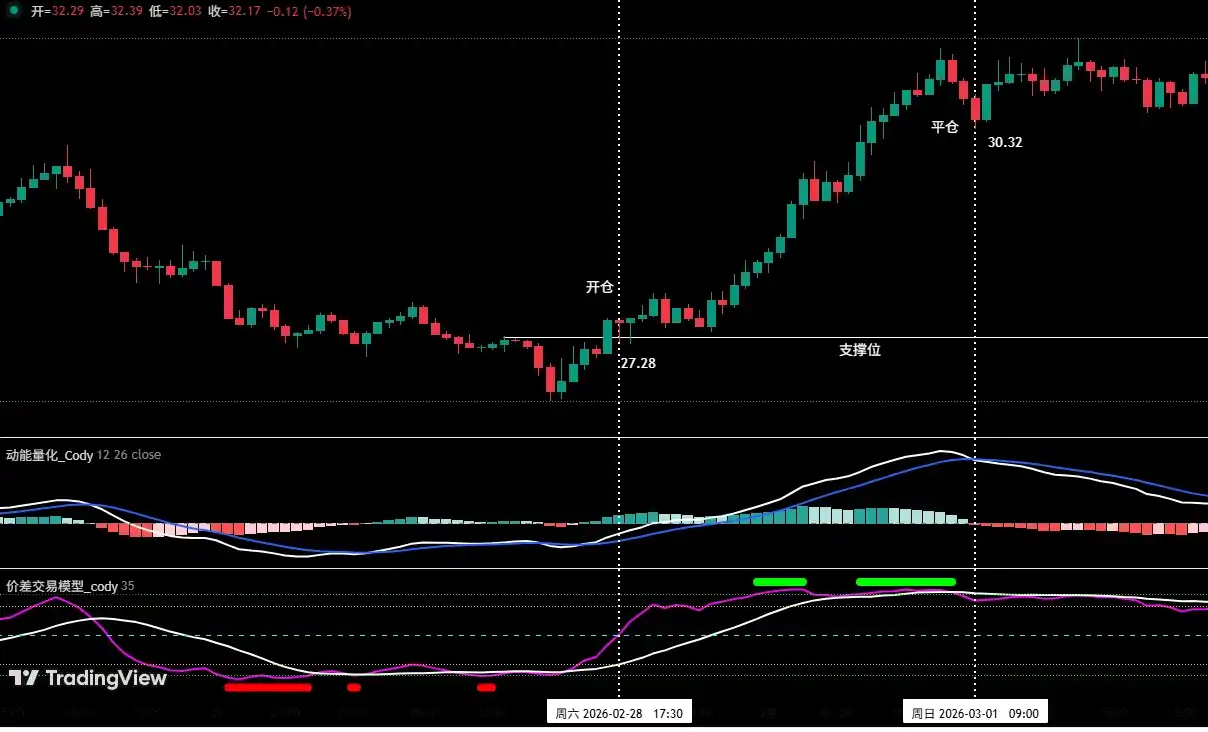
Figure 1 (Short-Term Trade Illustration)

2. Preliminary Division of Daily Level Price Structure:(Based on price action since January 21st)

HYPE Daily K-line Chart
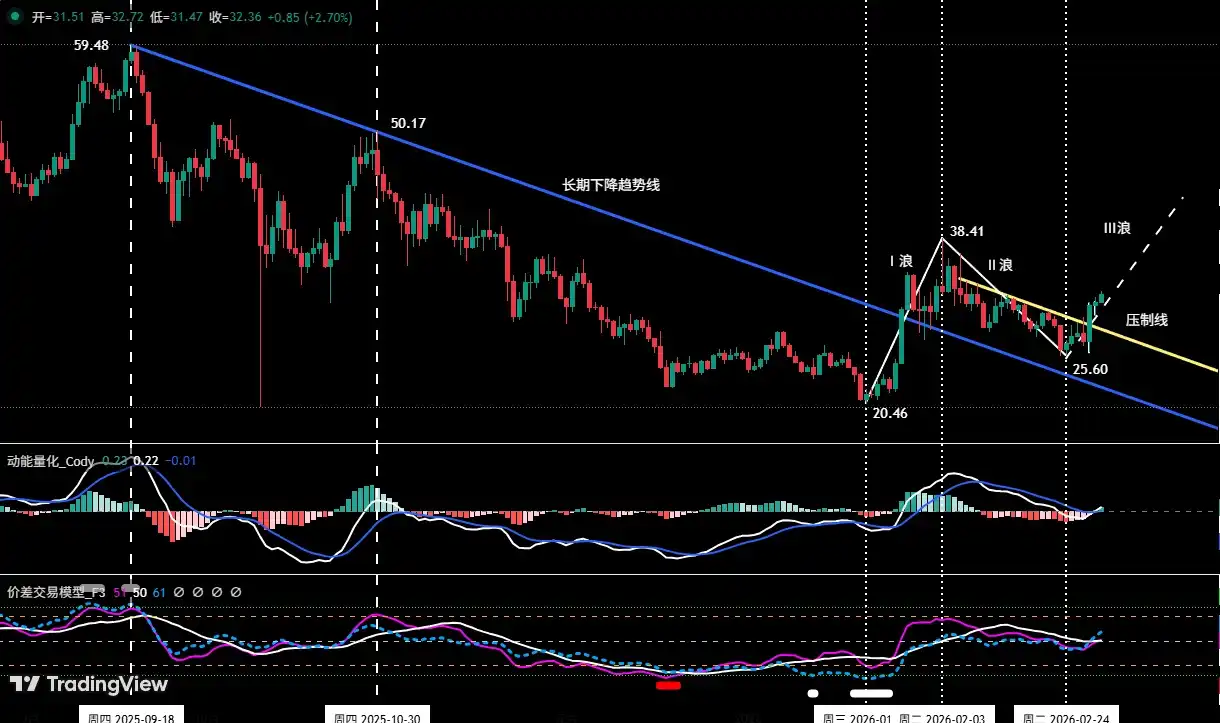
Figure 2

• Wave I (Impulse Wave): Started from the January 21st low of $20.46, ended at the February 3rd high of $38.41. Lasted 14 days, with a maximum gain of 87.73%, constituting the first main impulse wave of this upward cycle.

• Wave II (Corrective Wave): Started from the February 3rd high of $38.41, ended at the February 24th low of $25.60. Lasted 20 days, correcting Wave I, with a maximum drawdown of 33.35%.

• Wave III (Potential Impulse Wave): Initiated from the February 24th low of $25.60, currently in progress. The third impulse wave is often the most explosive.

• Confirmation of Wave III Starting Point Validity: The current price action has shown multiple technical characteristics consistent with the early stages of a strong impulse wave:

a、Break of Key Resistance Line: The price successfully broke through an important resistance line (yellow line in the chart) that had been in place since the Wave II correction, after failing to break it three times consecutively. This marks a shift in the balance of power between bulls and bears.

b、Strong Momentum Validation: The rebound from the February 24th low completely covered the losses of the previous 10 days in just 6 days of gains. Particularly, the large bullish candle on February 28th, with a gain of 14.25%, showed significant strength, fitting the characteristic of strong initial momentum in Wave III.

c、Structural Trend Reversal: The current high price has surpassed two important structural points adjacent to the February 24th low during the Wave II correction, namely the February 21st high of $30.59 and the February 19th low of $27.73. This初步构成了 (initially forms) a "higher high" pattern, meaning the previous downward structure has been基本扭转 (largely reversed).

• Wave III Endpoint Confirmation: The high of Wave III must exceed the Wave I peak of $38.41. Otherwise, this price movement might still be part of a wide range consolidation or a rebound within a downtrend.

3. HYPE 4-Hour Level Detailed Structure

HYPE 4-hour K-line Chart
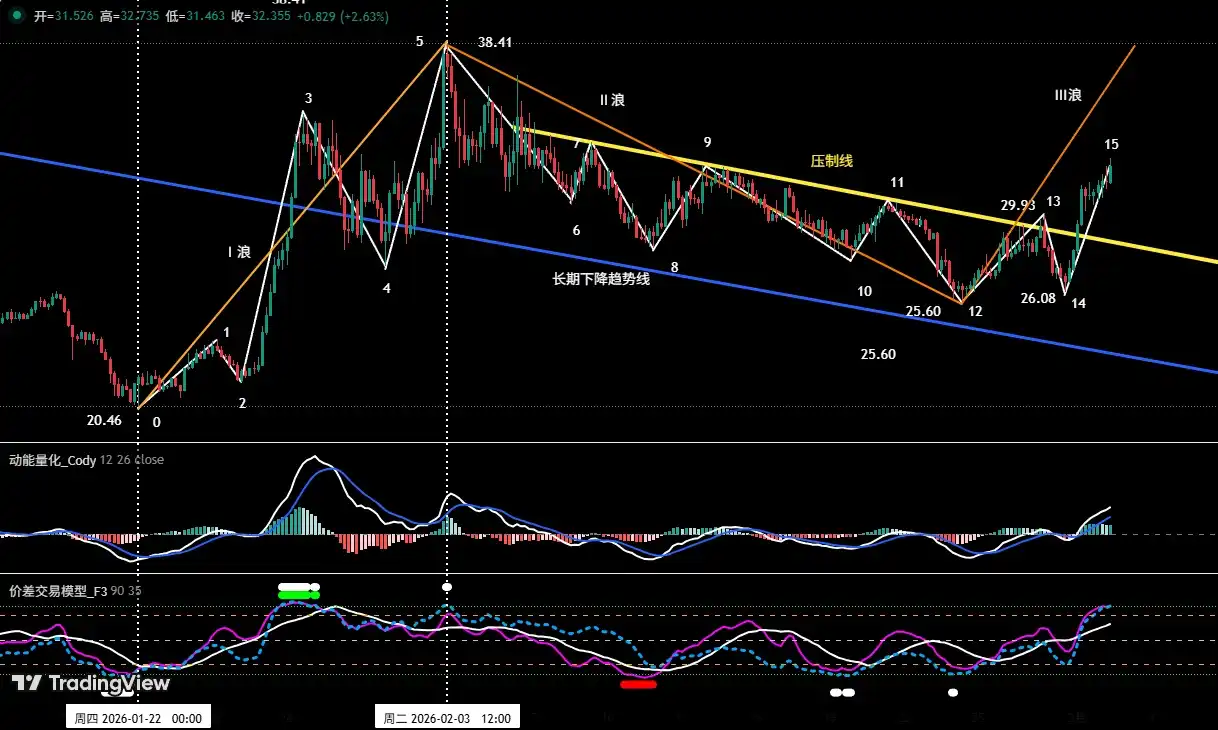
Figure 3

In Figure 3, we further细分 (detail) the wave count from the daily level.

• Wave I Internal Structure: Can be subdivided into 5 upward segments: 0-1, 1-2, 2-3, 3-4, 4-5, forming a complete upward move.

• Wave II Internal Structure: Can be subdivided into 7 corrective segments: 5-6, 6-7, 7-8, 8-9, 9-10, 10-11, 11-12, forming an orderly correction.

• Wave III Internal Structure: Currently in progress. Temporarily can be subdivided into 3 segments: 12-13, 13-14, 14-15, where the 14-15 upward segment is not yet finished.

II. Back to Bitcoin – Mainly Range-Bound Consolidation:(02.22~03.01)

1、Short-Term Operation Strategy Review:(See Table 2)

We strictly followed the trading signals issued by our self-constructed Spread Trading Model and Momentum Quantification Model, combined with market trend predictions, and completed one short-term (short) operation last week, profiting 2.12%.

1、Bitcoin Short-Term Trade Details Summary:(Leverage*1x)

Table 2

2、Short-Term Trade Review:(See Figure 4)

• Opening: Price encountered resistance upon retesting the descending trendline, simultaneously the Spread Trading Model triggered a top warning signal (green dot in the chart),再加上 (coupled with) two model short resonance signals, a 15% short position was established at $68,876.

• Risk Control: Initial stop-loss for the short position set at $72,000.

• Closing: Upon approaching support levels, combined with model bottom resonance signals and candlestick pattern bottom signals, the entire position was liquidated at $67,415.

• Summary: This trade profited 2.12%.

Bitcoin 30-minute K-line Chart:(Momentum Quantification Model + Spread Trading Model)
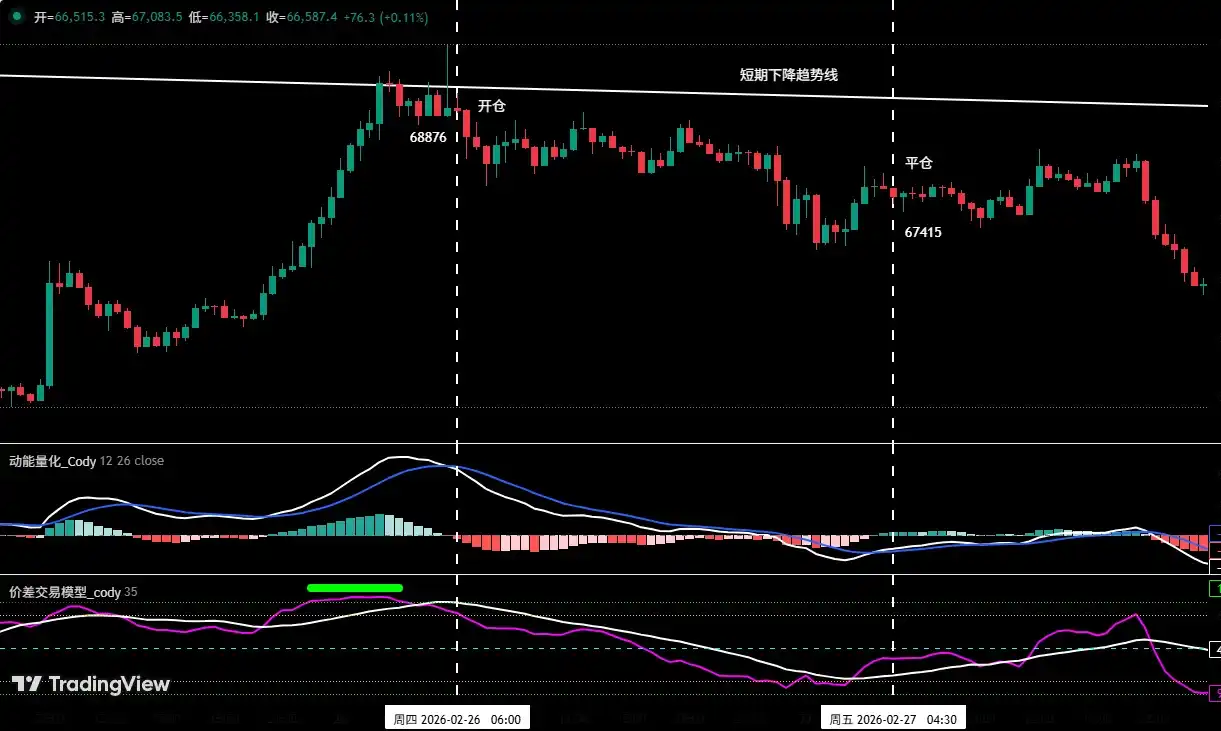
Figure 4 (Short-Term Trade Illustration)

III. Bitcoin Indicator Analysis: Weekly and Daily Comprehensive Judgment

Weekly Level: Mid-Term Bearish Structure Continues

From the weekly structure, the momentum line in the Momentum Quantification Model continues to decline. Although the negative momentum bars have阶段性缩短 (shortened phase-wise), no effective divergence signal has formed yet, indicating the bearish trend hasn't fundamentally changed. The Sentiment Quantification Model shows the market has not entered a明显的超卖恐慌区间 (clear oversold panic zone), conditions for bottom sentiment repair remain insufficient; simultaneously, the Digital Monitoring Model has not given a bottom confirmation signal.

In terms of chart structure, last week's weekly candle closed as a阴线 (bearish candle) with a loss of about 2.76%. The price broke below the previous triangle convergence structure, with the center of gravity明显下移 (clearly moving down). The overall pattern is more characteristic of a下跌中继 (falling mid-way consolidation), indicating the mid-term trend remains weak.

Daily Level: Oversold Rebound Continues, but Momentum is Limited

Observing the daily level, the market overall maintained a horizontal consolidation pattern in the short cycle. The momentum line formed a "golden cross" below the zero axis and rose slightly, showing short-term rebound momentum is being released. However, the positive momentum bars are arranged无序 (disorderly) with insufficient persistence, indicating a weak rebound rhythm.

Regarding the Sentiment Quantification Model, although sentiment indicators are slowly moving out of the oversold zone, capital participation remains limited. Both bulls and bears are mainly watching, making it difficult to push the market into a trend-based upward attack.

Multi-Cycle Comprehensive Judgment

Combining weekly and daily analysis, Bitcoin is still trading within a bearish-dominated downward structure. The daily level rebound is more偏向于 (leaning towards) a technical correction within the下跌过程 (downtrend process). Until the weekly trend is effectively reversed, the height and sustainability of the rebound仍需保持谨慎对待 (still need to be treated cautiously).

The above data suggests: The daily bearish trend has not changed, the oversold rebound is continuing.

IV. Market Prediction:(03.02~03.08)

1、Bitcoin Upward Center Construction (Based on price action since the February 6th low)

Bitcoin 4-hour K-line Chart
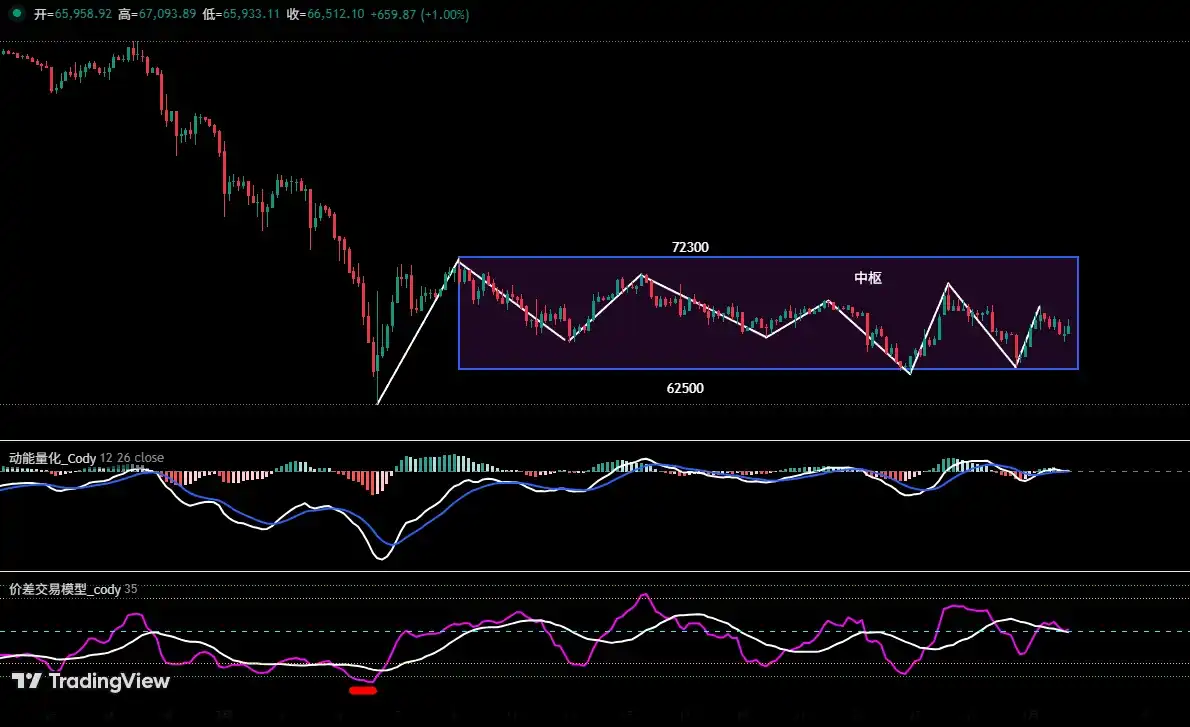
Figure 5

Using Bitcoin's 4-hour chart as the operation cycle:

Center Construction: From the 4-hour chart, it is known that the probability of currently constructing an "upward center" structure is high. Its highest resistance is around $72,300, and the lowest support has moved down to around $62,500.

Core Operation Plan:

Upward Rebound: If the price effectively breaks through the resistance near $72,300, escaping the current "center gravity", it may continue the C-2 segment oversold rebound trend, but the rebound space is expected to be limited.

Downward Adjustment: The current center's lowest support has moved down to around $62,500, close to the February 6th low of $60,000. If the price breaks below this support, the C-2 segment oversold rebound may end, potentially initiating the C-3 segment adjustment行情 (price movement).

• Regardless of which of the above trends the price follows, it is recommended that investors adhere to the strategy of "selling high (short)"为主的 (primarily) in short-term operations.

2、This Week's Core View: Maintain the range-bound consolidation pattern, focus on the struggle between bulls and bears near the range edges. Strategically, firmly implement the operation principle of "reduce positions (longs) on rallies, control risk".

3、Core Resistance Levels:

• First Resistance Area: $68,500-$70,000 area (previous筹码密集成交区 - dense trading area)

• Second Resistance Area: $72,300-$74,500 area (near last April's low)

4、Core Support Levels:

• First Support Level: Around $65,000 (previous important support area)

• Second Support Level: $60,000~$62,500 area (near the February 6th low)

• Third Support Level: Around $57,400 (near the 210-week moving average)

V. Plan A & B Strategies (Excluding Sudden News Impact):(03.02~03.08)

1、 Mid-Term Strategy: Maintain 60% short position. If the rebound effectively breaks $74,500, reduce the position to 40%.

2、 Short-Term Strategy: Use 30% of capital, set stop-loss points, and look for "spread" opportunities based on support and resistance levels. (Use 30-minute/60-minute as operation cycle).

3、Since the market's mid-term direction is bearish, Bitcoin short-term operations should follow the principle of "follow the trend, sell high (go short)". To dynamically respond to complex market changes and combined with signals from our self-built trading models, we have formulated Plan A/B short-term operation plans:

Plan A: If the price rebounds to the resistance area $70,000~$72,300:

• Open Position: When the rebound encounters resistance in this area and triggers a signal, combined with model top signals, establish a 15% short position.

• Risk Control: Initial stop-loss for the short position set above $75,500.

• Close Position: When falling to important support levels combined with model signals, gradually liquidate to take profits.

Plan B: If the price rebounds to around $74,500:

• Add Position: When the price continues to rebound to this area and encounters resistance, combined with model top signals, add a 15% short position.

• Risk Control: Initial stop-loss for the short position set above $75,500.

• Close Position: When falling to support levels combined with model signals, gradually liquidate to take profits.

VI. Special Notes:​​

1. When opening a position: Immediately set the initial stop-loss level.

2. When profit reaches 1%: Move the stop-loss to the entry price (breakeven point) to ensure capital safety.

3. When profit reaches 2%​​: Move the stop-loss to the 1% profit level.

4. Continuous Tracking: Thereafter, for every additional 1% profit, move the stop-loss up 1%同步 (synchronously), dynamically protecting and locking in profits.

Financial markets change rapidly, all market analysis and trading strategies require dynamic adjustment. All views, analytical models, and operation strategies involved in this article are derived from personal technical analysis, intended only for personal trading log purposes, and do not constitute any investment advice or operational basis. The market involves risks, investment requires caution, please do not make decisions based solely on this.


Связанные с этим вопросы

QWhat is the current status and profit of the analyst's medium-term Bitcoin short position mentioned in the article?

AThe analyst is holding a medium-term Bitcoin short position that was initially opened at $89,000 with 1x leverage. As of the article's writing, the price has fallen to approximately $65,770, resulting in an unrealized profit of about 26.10%, with a maximum floating profit of around 32.58% during the period.

QWhat trading strategy and models did the analyst use for the successful short-term HYPE trade?

AThe analyst executed a successful short-term long trade on HYPE using 1x leverage, achieving an 11.14% profit. The decision was based on a pre-existing judgment of a potential main upward wave (Wave III) and signals from two proprietary models: the Price Difference Quantification Model, which issued multiple bottom预警 signals (red dots), and the Momentum Quantification Model. These models formed a bottom resonance signal, and the trade was entered after the price broke through and held above a key resistance area at $27.28.

QAccording to the wave count analysis, what are the key characteristics that confirm the potential start of Wave III for HYPE?

AThe analysis identifies several key characteristics confirming the potential start of Wave III for HYPE: 1. A successful break of a significant resistance line (yellow line on the chart) from the Wave II adjustment, which had been unsuccessfully challenged three times before. 2. Strong momentum validation, where a 6-day rally completely covered the previous 10-day decline, including a large bullish candle with a 14.25% gain. 3. A structural trend reversal, where the current high surpassed two important structural points adjacent to the Wave II low, forming a preliminary 'higher high' pattern.

QWhat is the core outlook and trading strategy for Bitcoin in the coming week as per the analyst's prediction?

AThe core outlook for Bitcoin is a continuation of range-bound consolidation. The analyst predicts the price will oscillate within a 'rising central bank' structure on the 4-hour chart, with key resistance around $72,300 and key support around $62,500. The recommended strategy is to maintain a 'sell on rallies' approach for short-term operations, using 30% of capital to look for price difference opportunities on smaller timeframes (30/60 minutes) with strict risk management, including immediate stop-loss placement.

QWhat are the A and B short-term operation plans for Bitcoin based on different price scenarios?

APlan A: If the price rebounds to the resistance area of $70,000-$72,300 and shows signs of rejection, combined with a top signal from the models, open a 15% short position with an initial stop-loss above $75,500. Plan B: If the price continues to rebound to around $74,500 and shows rejection with model top signals, add another 15% to the short position, also with an initial stop-loss above $75,500. Profits are to be taken gradually when the price falls to support levels accompanied by model signals.

Похожее

The Largest IPO in History Ignites Heated Debate: Is SpaceX Worth $1.77 Trillion?

SpaceX's potential IPO is priced at $135 per share, aiming to raise $75 billion and valuing the company at approximately $1.77 trillion, which would make it the largest IPO in history. This valuation has sparked intense debate among investors. Bullish analysts, including major underwriters Goldman Sachs and Morgan Stanley, argue the valuation is justified by SpaceX's long-term potential. They see it not just as a rocket company but as a future leader in space infrastructure, with key growth drivers being Starlink satellite internet, low-cost rocket launches, and future AI-related ventures. They project revenues reaching hundreds of billions to trillions of dollars by 2030-2040. ARK Invest's model suggests a 2030 enterprise value could reach $2.5 trillion. Bearish analysts from independent research firms like Morningstar, PitchBook, and New Constructs contend the IPO price is excessively high, already pricing in unrealistic future growth. Using DCF and sum-of-the-parts models, they estimate fair value between $780 billion and $1.7 trillion, significantly below the IPO target. They highlight risks such as the speculative nature of AI projections, over-dependence on Elon Musk, high growth expectations, and corporate governance concerns. Trefis set a target price of just $79 per share. While both sides acknowledge SpaceX's unique position in commercial space, the core disagreement centers on whether the $135 share price offers a reasonable margin of safety or is overly optimistic. Despite the valuation controversy, reported strong demand for the IPO indicates significant market interest.

marsbit49 мин. назад

The Largest IPO in History Ignites Heated Debate: Is SpaceX Worth $1.77 Trillion?

marsbit49 мин. назад

After the Passage of the GENIUS Act and the CLARITY Act, What Is the Correct Architecture for On-Chain Yield?

The article discusses the evolution of on-chain credit, distinguishing three markets: overcollateralized crypto lending, unsecured lending (largely unsuccessful), and asset-backed credit (ABC). ABC, backed by identifiable real-world collateral with legal recourse, is identified as the fastest-growing category and the only one credibly addressing adverse selection—the core problem in credit where the riskiest borrowers self-select. Current growth in on-chain Real World Assets (RWAs), particularly tokenized private credit funds (e.g., Maple Finance, Centrifuge), is substantial but often merely "wraps" existing fund structures, inheriting their risks rather than solving adverse selection at the protocol level. The regulatory landscape is a key driver, with the US GENIUS Act (prohibiting stablecoin issuers from paying yield) and the proposed CLARITY Act (closing loopholes on indirect yield) set to redefine permissible yield-bearing products. This makes vaults (like ERC-4626) the critical architecture—they become the primary compliant vehicle for delivering yield, functioning as issuance, disclosure, distribution, and recovery mechanisms. The author's thesis is that the correct post-GENIUS/CLARITY architecture involves building ABC solutions where credit assessment, structure, and recovery are encoded directly into the smart contract vault layer, moving beyond mere tokenized fund wrappers to solve adverse selection fundamentally and ensure regulatory compliance.

Foresight News1 ч. назад

After the Passage of the GENIUS Act and the CLARITY Act, What Is the Correct Architecture for On-Chain Yield?

Foresight News1 ч. назад

TechFlow Intelligence Bureau: Anthropic's New Model Fable Sparks Controversy by Restricting Biosafety Research, US CPI Soars to 4.2%, a Three-Year High

**Summary of TechFlow Intelligence Report:** The newsletter covers several key tech and finance developments. In AI, Anthropic's new Fable model faced backlash for secretly limiting biomedical research capabilities and enforcing a 30-day data retention policy, prompting the company to promise more transparent adjustments. In a related story, Anthropic's founder revealed his departure from OpenAI was due to dishonesty from Sam Altman, not safety concerns. Meanwhile, OpenAI is considering significant price cuts to compete with Anthropic, potentially sparking a price war. In crypto/Web3, BlackRock filed a new amendment for a yield-generating Bitcoin ETF, while Bank of America's CEO warned that stablecoin yields could drain trillions from traditional banks. U.S. Senator Cynthia Lummis advocated for the U.S. to officially accumulate Bitcoin reserves. In hardware, Nvidia released the DiffusionGemma-2-6B image model optimized for efficient inference, and AMD promoted its unified memory architecture to challenge Nvidia's dominance. TSMC's CFO hinted at possible price increases due to soaring AI chip demand. A major legal ruling in Germany held Google legally responsible for inaccurate information generated by its AI Overviews feature. Google Chrome also moved to fully block ad-blocker workarounds like uBlock Origin. Macroeconomic headlines included U.S. CPI rising to 4.2% (a 3-year high) and Iran's complete closure of the Strait of Hormuz, raising oil price and inflation fears. South Korean markets saw continued volatility with massive foreign capital outflow. Other notable stories: Microsoft expanded its Copilot AI assistant "Mico" globally; a study found r/wallstreetbets users' stock picks outperformed Wall Street; a fully autonomous drone killed a human soldier for the first time, raising AI ethics concerns; and a Chinese hospital used brain-computer interface technology to help a blind person "see." The overarching theme connects debates over AI boundaries and responsibility (Anthropic's restrictions, Google's liability, lethal autonomous drones) with real-world economic and geopolitical turmoil (inflation, Strait of Hormuz closure, market instability), highlighting the tense interplay between technological advancement and global chaos.

marsbit1 ч. назад

TechFlow Intelligence Bureau: Anthropic's New Model Fable Sparks Controversy by Restricting Biosafety Research, US CPI Soars to 4.2%, a Three-Year High

marsbit1 ч. назад

Alibaba's Yet Another New Business Division: What Signal Does It Send?

Alibaba has established a new "Token Foundry" business unit, merging its Tongyi large model division and Future Life Lab. Led directly by Group CEO Wu Yongming, this marks the company's third significant AI organizational reshuffle in 2026, following the creation of the Alibaba Token Hub (ATH) and a Group Technology Committee. The move signals a strategic shift from consolidating AI resources to accelerating productization and commercialization. The "Token Foundry" name reflects Alibaba's ambition to become a foundational supplier in the AI era, focusing on model development and commercial application. Key teams, including those behind the high-performing HappyHorse video generation model, have been integrated into the new unit. Concurrently, Zhou Jingren, architect of the Qwen model series, has been appointed Group Chief Scientist to lead a new AI Future Research Institute, focusing on long-term technological breakthroughs like Agent capabilities. This restructuring creates a clear four-layer AI architecture within Alibaba: the research institute for frontier exploration, Token Foundry for core models and commercialization, MaaS for platform services, and business units like Qianwen (C端) and Wukong (B端) for end-user applications. The adjustments align with a global trend among tech giants like Google and Microsoft to centralize AI leadership under the CEO and deeply integrate research with business units. The urgency is driven by a narrowing competitive window. Alibaba has announced its AI business is now entering a commercialization phase, with AI-related revenue seeing triple-digit growth for eleven consecutive quarters. The company faces intense competition in the MaaS (Model-as-a-Service) sector from rivals like ByteDance and Tencent. The Token Foundry initiative represents Alibaba's effort to streamline execution and enhance competitiveness in this critical, fast-evolving landscape.

marsbit2 ч. назад

Alibaba's Yet Another New Business Division: What Signal Does It Send?

marsbit2 ч. назад

Торговля

Спот
Фьючерсы

Популярные статьи

Как купить HYPE

Добро пожаловать на HTX.com! Мы сделали приобретение Hyperliquid (HYPE) простым и удобным. Следуйте нашему пошаговому руководству и отправляйтесь в свое крипто-путешествие.Шаг 1: Создайте аккаунт на HTXИспользуйте свой адрес электронной почты или номер телефона, чтобы зарегистрироваться и бесплатно создать аккаунт на HTX. Пройдите удобную регистрацию и откройте для себя весь функционал.Создать аккаунтШаг 2: Перейдите в Купить криптовалюту и выберите свой способ оплатыКредитная/Дебетовая Карта: Используйте свою карту Visa или Mastercard для мгновенной покупки Hyperliquid (HYPE).Баланс: Используйте средства с баланса вашего аккаунта HTX для простой торговли.Третьи Лица: Мы добавили популярные способы оплаты, такие как Google Pay и Apple Pay, для повышения удобства.P2P: Торгуйте напрямую с другими пользователями на HTX.Внебиржевая Торговля (OTC): Мы предлагаем индивидуальные услуги и конкурентоспособные обменные курсы для трейдеров.Шаг 3: Хранение Hyperliquid (HYPE)После приобретения вами Hyperliquid (HYPE) храните их в своем аккаунте на HTX. В качестве альтернативы вы можете отправить их куда-либо с помощью перевода в блокчейне или использовать для торговли с другими криптовалютами.Шаг 4: Торговля Hyperliquid (HYPE)С легкостью торгуйте Hyperliquid (HYPE) на спотовом рынке HTX. Просто зайдите в свой аккаунт, выберите торговую пару, совершайте сделки и следите за ними в режиме реального времени. Мы предлагаем удобный интерфейс как для начинающих, так и для опытных трейдеров.

511 просмотров всегоОпубликовано 2024.12.11Обновлено 2026.06.02

Как купить HYPE

Обсуждения

Добро пожаловать в Сообщество HTX. Здесь вы сможете быть в курсе последних новостей о развитии платформы и получить доступ к профессиональной аналитической информации о рынке. Мнения пользователей о цене на HYPE (HYPE) представлены ниже.

活动图片