Hackers Targeting Your Crypto Just Got An AI Upgrade — Google’s Report Is A Wake-Up Call

bitcoinistОпубликовано 2026-05-12Обновлено 2026-05-12

Введение

Google's Threat Intelligence Group warns that AI is now being weaponized by hackers at an industrial scale, posing a direct threat to cryptocurrency users. The report details a major escalation: threat actors, including state-linked groups, are using AI to develop zero-day exploits and polymorphic malware that evades detection. A key threat is PROMPTSPY, AI-enabled malware capable of autonomous, real-time attacks that can bypass standard two-factor authentication (2FA) by observing and manipulating live authentication sessions. The findings indicate that conventional security measures like 2FA are becoming insufficient against these AI-driven tools. The report recommends advanced protections like hardware security keys and multi-signature wallets as essential for crypto users facing this new threat landscape.

Google’s Threat Intelligence Group (GTIG) has published a major security report warning that artificial intelligence is now being weaponized by state-linked hackers and criminal threat actors at industrial scale — with autonomous malware, AI-generated zero-day exploits, and credential-targeting operations posing a direct and escalating threat to crypto users relying on standard security measures.

The May 11 report, published on the Google Cloud blog by GTIG and drawing on Mandiant incident response engagements, marks a significant escalation from the group’s February 2026 findings. Where that earlier report identified AI-assisted adversarial activity as nascent and experimental, the latest assessment describes a mature transition — one where generative models are now embedded in offensive workflows at scale, not as a curiosity but as operational infrastructure.

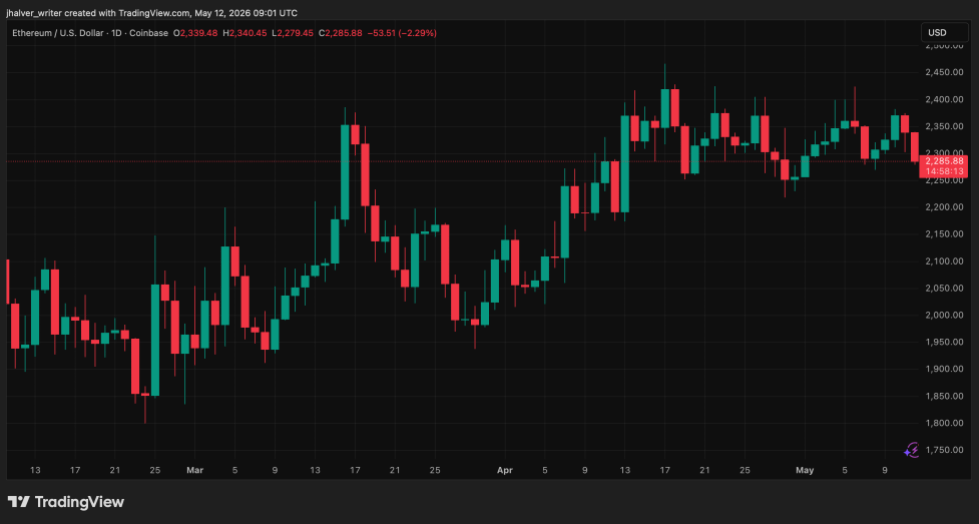
ETH's price records some losses on the daily chart. Source: ETHUSD on Tradingview 

AI Writes Its First Zero-Day Exploit

The most significant disclosure in the report is unprecedented. For the first time, GTIG has identified a threat actor using a zero-day exploit believed to have been developed with AI assistance. According to the report, a criminal threat actor had planned to deploy the exploit in a mass exploitation event — a scenario that GTIG’s proactive counter-discovery may have prevented.

The report notes that state-linked actors associated with China and North Korea have separately demonstrated significant interest in using AI for vulnerability discovery. The implications for crypto users are direct: wallet interfaces, exchange login portals, and browser extension-based authentication tools all depend on the same underlying software layers that zero-day exploits target.

Polymorphic Malware And The Limits Of 2FA For Crypto Users

Beyond zero-day development, the report documents AI-accelerated development of polymorphic malware — code that rewrites its own structure to evade detection — linked to suspected Russia-nexus threat actors, per GTIG’s analysis. AI-generated decoy logic is being embedded in malware payloads to defeat signature-based security systems.

The most direct threat to crypto users, however, comes through a capability GTIG calls PROMPTSPY — an AI-enabled malware that signals a shift toward autonomous attack orchestration. According to the report, PROMPTSPY interprets system states dynamically and generates commands in real time to manipulate victim environments. Applied to credential theft, this class of malware can observe and respond to authentication flows in ways that static attack tools cannot — including timing attacks against SMS-based and app-based two-factor authentication systems during live sessions.

Standard 2FA, long considered a reliable security baseline for exchange and wallet access, operates on the assumption that an attacker cannot observe and respond to the authentication window in real time. Autonomous, AI-driven malware capable of interpreting system states changes that assumption materially.

A Threat Environment That Has Shifted

GTIG’s report frames the current moment as a dual-use inflection point — AI is simultaneously becoming a high-value target for attacks and a sophisticated engine driving them. For participants in the nascent digital asset sector, where a single compromised seed phrase or session token represents an irreversible loss, the implications are substantial.

The security practices that adequately protected crypto users two years ago are increasingly insufficient against an adversarial toolkit that now includes AI-generated exploits, self-modifying malware, and autonomous credential-harvesting operations operating faster than human defenders can respond.

Hardware security keys, air-gapped signing devices, and multi-signature wallet architectures represent the current frontier of meaningful protection — and the distance between those measures and standard 2FA has never been wider.

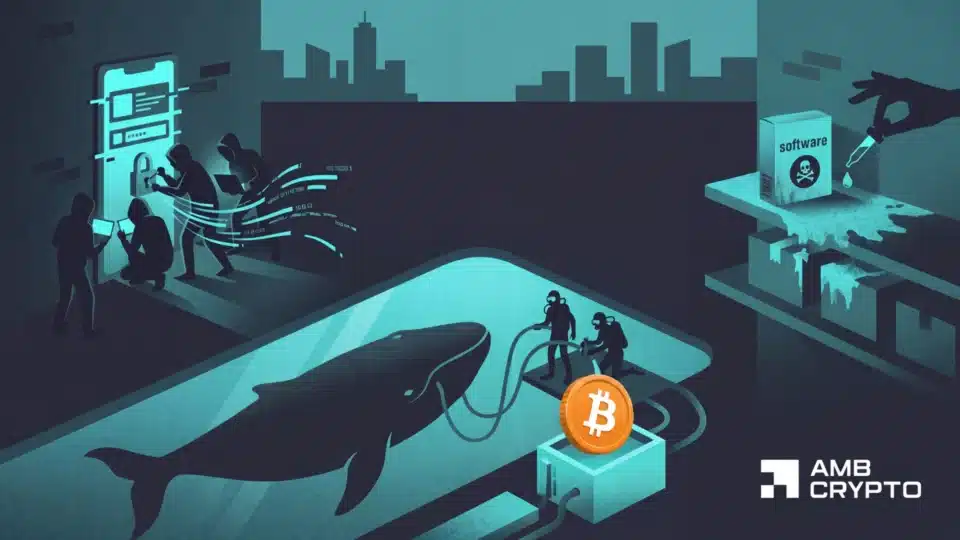
Cover image from Grok, ETHUSD chart from Tradingview

Связанные с этим вопросы

QAccording to Google's report, what major shift has occurred in how AI is being used by threat actors targeting crypto?

AThe report states that AI has transitioned from being used in nascent and experimental ways to being embedded at scale in offensive workflows as operational infrastructure, with generative models now used for autonomous malware, AI-generated zero-day exploits, and credential-targeting operations.

QWhat is the significance of the zero-day exploit mentioned in the GTIG report?

AThe report discloses, for the first time, a threat actor using a zero-day exploit believed to have been developed with AI assistance. This exploit was intended for a mass exploitation event, a scenario potentially prevented by GTIG's proactive discovery.

QHow does the AI-enabled malware PROMPTSPY specifically threaten crypto users' standard 2FA security?

APROMPTSPY is an autonomous malware that interprets system states and generates commands in real-time. It can observe and respond to authentication flows, enabling timing attacks against SMS-based and app-based two-factor authentication (2FA) during live sessions, which static tools cannot do.

QWhat are the primary defensive measures recommended for crypto users in light of the AI-upgraded threats described in the report?

AThe report suggests that hardware security keys, air-gapped signing devices, and multi-signature wallet architectures represent the current frontier of meaningful protection, as the gap between these measures and standard 2FA has widened significantly.

QWhich state-linked actors does the report mention as showing significant interest in using AI for vulnerability discovery?

AThe report notes that state-linked actors associated with China and North Korea have demonstrated significant interest in using AI for vulnerability discovery.

Похожее

Wall Street's 'Compliance Hunt': The Great Stablecoin Reserve Migration

In a concentrated move over the past week, several Wall Street giants have advanced their tokenized money market fund initiatives, signaling a strategic shift driven by impending U.S. stablecoin regulations. JPMorgan Chase launched its second such fund, JLTXX, on Ethereum, explicitly targeting future stablecoin issuer reserve needs. Concurrently, Franklin Templeton partnered with Kraken to integrate its BENJI tokenized funds onto the exchange platform for use as collateral and cash management tools. BlackRock further solidified its position by filing for two new tokenized funds with the SEC, aiming to convert its massive traditional stablecoin custody business into a tokenized model. These parallel developments represent a multi-pronged institutional "compliance hunt" to capture future crypto liquidity. BlackRock and JPMorgan are focusing on the backend, preparing to serve as the core reserve and settlement infrastructure for compliant stablecoins as outlined by the GENIUS Act. This act defines strict "qualified reserve asset" requirements for stablecoin backing while prohibiting interest payments to holders. Franklin Templeton and Kraken, however, are exploiting a potential regulatory gap. By offering a tokenized fund (BENJI) that is not a stablecoin, they aim to provide yield-bearing, collateralizable digital cash instruments, circumventing GENIUS Act's ban on stablecoin yield. The impending CLARITY Act, which will delineate digital asset market structure, is seen as a complementary piece to GENIUS. Its treatment of passive income could solidify the niche for instruments like BENJI. With conservative market size estimates for tokenized money market funds reaching hundreds of billions by 2030, Wall Street institutions are positioning themselves early, using on-chain settlement as a key competitive differentiator to offer superior liquidity and composability for the next generation of dollar reserves.

marsbit53 мин. назад

Wall Street's 'Compliance Hunt': The Great Stablecoin Reserve Migration

marsbit53 мин. назад

Altman Drops Bombshell While Musk is Away: He Once Wanted His Children to Inherit OpenAI

In a California court, Sam Altman testified for the first time in the ongoing legal battle between Elon Musk and OpenAI. Altman made a striking claim: Musk once suggested that control of OpenAI could one day be passed down to his children. This statement reframes the long-standing conflict not as a simple governance dispute but as a foundational power struggle. Altman sought to counter the narrative that OpenAI betrayed its original non-profit, idealistic mission. He argued that from the beginning, it was Musk who sought increasing control over the organization, including a larger equity stake and ultimate decision-making authority. Altman opposed this, citing OpenAI's core principle that AGI should not be controlled by any single individual. He also addressed the key point of contention about OpenAI's shift to a for-profit structure, claiming Musk was aware of and initially supportive of exploring such a model to secure the massive funding needed for advanced AI research. Altman framed the change as a practical necessity, not a betrayal. Further testimony revealed internal concerns after Musk left OpenAI's board, with worries he might take retaliatory action. Altman critiqued Musk's management style as unsuitable for a research lab, damaging morale and culture. Throughout his testimony, Altman's focus appeared to shift from technological idealism to the realities of organizational governance and resource requirements. Regarding his brief ouster in 2023, Altman stated he seriously considered joining Microsoft but ultimately returned because OpenAI was too important to abandon.

marsbit1 ч. назад

Altman Drops Bombshell While Musk is Away: He Once Wanted His Children to Inherit OpenAI

marsbit1 ч. назад

Торговля

Спот
Фьючерсы

Популярные статьи

Неделя обучения по популярным токенам (2): 2026 может стать годом приложений реального времени, сектор AI продолжает оставаться в тренде

2025 год — год институциональных инвесторов, в будущем он будет доминировать в приложениях реального времени.

1.8k просмотров всегоОпубликовано 2025.12.16Обновлено 2025.12.16

Неделя обучения по популярным токенам (2): 2026 может стать годом приложений реального времени, сектор AI продолжает оставаться в тренде

Обсуждения

Добро пожаловать в Сообщество HTX. Здесь вы сможете быть в курсе последних новостей о развитии платформы и получить доступ к профессиональной аналитической информации о рынке. Мнения пользователей о цене на AI (AI) представлены ниже.

活动图片