From Parallel Finance to Mainstream Finance: The On-Chain Securities Era Ushers in a Historic Window

marsbitОпубликовано 2026-06-01Обновлено 2026-06-01

Введение

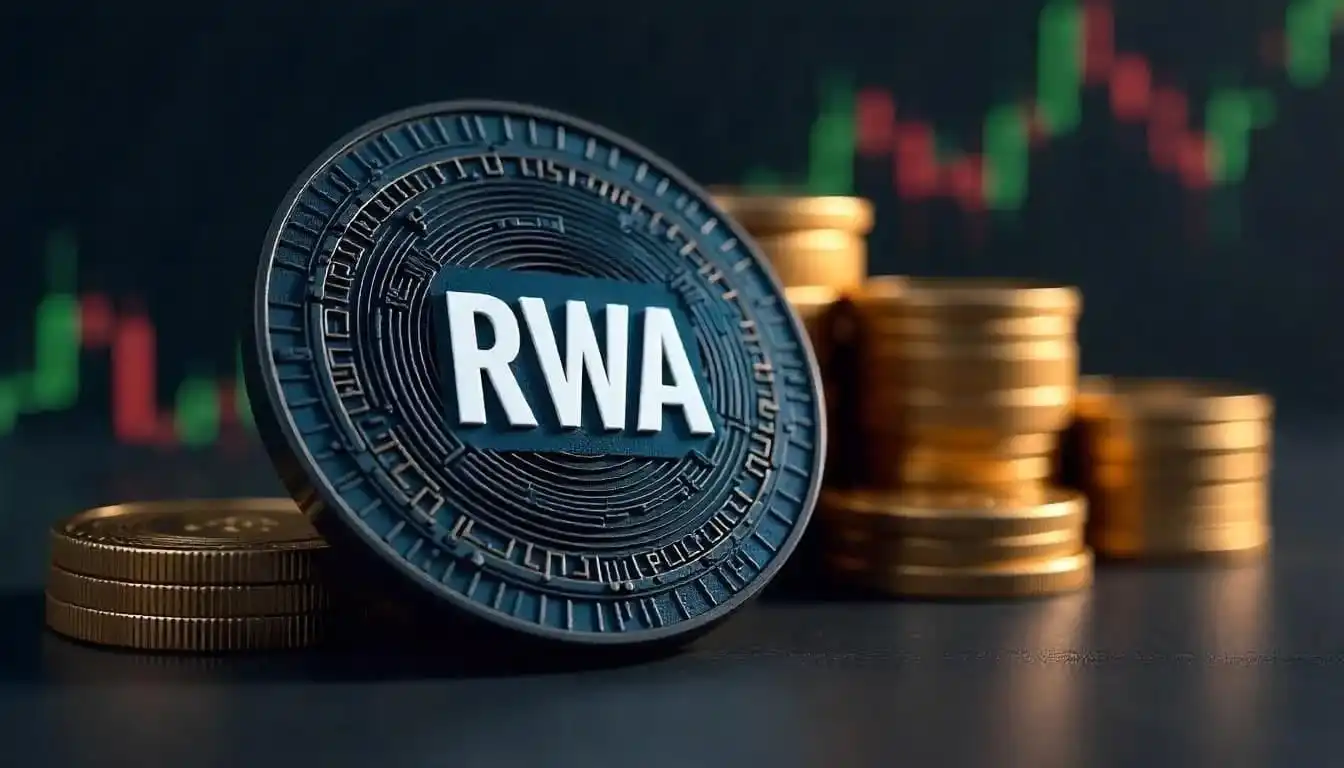
From Parallel Finance to Mainstream: The Dawn of On-Chain Securities For over a decade, the crypto industry has operated as a parallel financial system with its own currencies, markets, and assets—from Bitcoin and ICOs to DeFi, NFTs, and memecoins. Despite building a robust internal ecosystem, a wall has separated it from the traditional financial world. That barrier is now crumbling. The industry's first act was one of internal evolution: ICOs streamlined fundraising, DeFi recreated financial services on-chain, and layer-2 networks competed for scalability—all within the crypto bubble. While innovative, this cycle remained closed, with capital and users circulating internally, leading to volatile boom-bust cycles. Even Bitcoin ETFs, while attracting Wall Street capital, merely provided a channel to buy crypto assets without bridging the systems. The next, larger narrative is Real-World Assets (RWA) moving on-chain. This involves tokenizing stocks, bonds, funds, and future cash flows. Blockchain can compress the complex traditional processes of trading, settlement, clearing, and custody into a seamless, automated network operating in seconds. This shift is creating a new financial gateway: the native crypto securities broker. This entity will combine functions of an exchange, broker, bank, and custodian into a unified global financial operating system. Consequently, the next major battleground won't be the "public chain wars" focused on speed and cost, but the competition ...

Author: Climber, CryptoPulse Labs

For over a decade, the crypto industry has been like a financial experiment operating independently from the real world. It has its own monetary system, its own trading markets, its own logic for asset pricing, and its own set of beliefs and narratives.

From the birth of Bitcoin, through the ICO boom, to the explosion of DeFi, NFTs, Layer 2s, meme coins, and on-chain derivatives, the crypto world has gradually built an almost complete financial ecosystem.

But no matter how it has developed, one question has always remained. That is, a wall still separates the crypto world and the real-world financial system. Now, this wall is being dismantled. In the next decade, an era of native crypto securities brokerage that integrates with the global financial system is opening up.

I: The First Half of the Crypto Industry: The Self-Evolution of a Closed Ecosystem

In recent years, the U.S. CFTC has been gradually promoting a regulatory framework for compliant perpetual contracts, and the U.S. SEC has also begun to consistently signal policy support for tokenizing securities. The recent news about SpaceX's upcoming super IPO event has also made the market realize that the world's highest-quality assets in the future may be seeking new ways to circulate.

Scenarios that once sounded like science fiction are now step by step becoming reality. This means the crypto industry is about to enter a new stage.

However, looking back at the history of the crypto industry, it becomes clear that the past decade-plus has actually been an ongoing, escalating internal financial experiment.

The 2017 ICO frenzy essentially solved the fundraising problem. For the first time, startup projects didn't need traditional VCs or IPO approvals; with just a whitepaper and a token model, they could raise funds globally. The market saw for the first time the immense efficiency gains blockchain could bring to capital formation.

The subsequent DeFi Summer then began to address the issue of financial services. Lending, trading, market-making, yield aggregation began to move on-chain. Functions originally performed by banks, brokerages, and financial institutions were gradually replaced by smart contracts. The most important change during this period was not the emergence of a particular killer protocol, but the fact that the entire financial infrastructure began to be reconstructed.

Next, the industry entered the era of the public chain war. Due to Ethereum's performance limitations, numerous high-performance public chains began competing for developers, users, and liquidity. Faster speeds, lower costs, and higher TPS became the focus of market competition. However, looking back, this competition was still essentially internal.

Because the participants didn't change—users were still crypto users, capital was still crypto capital, and assets were still crypto assets.

Later, the NFT boom shifted the industry narrative from finance to culture and social interaction. Digital collectibles, on-chain identity, and gaming assets entered the market. This was followed by the meme coin frenzy, decentralized perpetual contracts, DAT, and other new models continuously emerging.

While the industry seems to have been evolving, most of these changes occurred within the same circle. The crypto world has been more like an ever-expanding closed economy, with capital flowing internally, users circulating internally, new assets constantly being created, and then being bought up by new capital.

This is also why every cycle has seen obvious bubbles and pullbacks—because truly massive external capital had never fully entered.

Even with Bitcoin ETFs starting to attract Wall Street capital, the crypto industry has still not truly connected with the real-world financial system. Because ETFs only allow traditional capital to buy crypto assets; real-world assets have not yet truly moved on-chain.

II. A Bigger Story than ETFs: Real-World Assets Begin Moving On-Chain

Many believe that Bitcoin ETFs opened the door for traditional finance to embrace crypto. But in reality, ETFs are only the first step.

Because they merely add a channel for the traditional financial system to purchase crypto assets. What could truly change the industry's structure is another matter—securities assets beginning to enter the on-chain world.

This means stocks, bonds, funds, income rights, and even future cash flows could all be digitized.

In the past, buying a stock required a securities account, cross-border trading required a broker, asset custody required a bank, and after trading, a clearinghouse was needed for final settlement—the entire system was extremely complex.

But blockchain offers a new perspective. If assets natively exist on-chain, then trading, settlement, clearing, custody, and even identity verification could all be completed within the same network.

Processes that used to take days to complete could end in seconds in the future. Work that previously relied on multiple institutions could potentially be executed automatically by smart contracts. This is actually changing the financial infrastructure itself.

What makes Wall Street truly powerful has never been just the scale of its capital. More importantly, it controls the underlying financial network. Exchanges, brokerages, banks, custodians, clearinghouses together constitute a vast system. And blockchain is gradually compressing these links.

In the future, many financial services may no longer be performed by multiple institutions, but run directly within a unified network.

Therefore, the protagonists of the crypto industry's next phase may no longer be trading platforms. They will be new financial gateways.

The so-called native crypto securities brokerage is essentially this new gateway. It not only handles trading functions but also assumes the roles of wallet, asset management, custody, clearing, and financial services.

It might be like an exchange, and also like a broker. Like a bank, and also like a payment system—even more like a global financial operating system.

III. The Next War: Not Public Chain Competition, but Financial System Competition

In recent years, the crypto market has been debating who will become the next king of public chains. The market compares TPS, gas fees, number of ecosystems, and developer size. But in the future, the importance of these metrics may gradually decline.

Because what truly matters in financial markets is not speed, but assets. Even if a chain has a million TPS, it's hard to create long-term value without high-quality assets entering.

What is truly valuable is liquidity. And the core of liquidity is asset quality.

If in the future, users can buy global stocks, index funds, bonds, and even shares in top-tier tech companies like SpaceX on-chain, the entire industry logic will change.

Because the boundary between the on-chain world and the real world will gradually disappear.

In the past, the crypto industry competed for the internal market; in the future, it will compete for the global capital market. These are two completely different stories.

Currently, the global crypto market remains in the multi-trillion dollar range, while the global stock market is close to a hundred trillion dollars, and the bond market is even larger. They are not on the same order of magnitude.

In the past, the industry discussed the next billion-dollar project; in the future, it may discuss how to accommodate the flow of tens of trillions of dollars in assets. The ICO era solved the fundraising problem; the DeFi era solved the on-chain finance problem; the ETF era solved the capital gateway problem; and the native crypto securities brokerage era may solve the problem of integrating real-world finance with crypto finance.

Conclusion

For over a decade, the crypto industry has been trying to create a new world. In the next decade, it may no longer need to recreate the world.

Because it will directly connect to the original world.

When traditional finance and the crypto ecosystem truly converge, the industry's biggest growth story may just be beginning.

Связанные с этим вопросы

QAccording to the article, what is the fundamental problem that the crypto industry has faced despite its development over the past decade?

AThe fundamental problem is that there has been a 'wall' separating the crypto world from the traditional real-world financial system. The crypto ecosystem developed independently with its own currency, markets, and logic, but remained largely disconnected from mainstream global finance.

QWhat event does the author suggest is an even bigger development than the introduction of Bitcoin ETFs?

AThe author suggests that the migration of traditional securities (like stocks, bonds, and funds) onto the blockchain is an even bigger story. This process of real-world asset tokenization has the potential to fundamentally change the industry's structure by blurring the lines between crypto and traditional finance.

QWhat new type of entity does the article predict will be a key player in the next phase of the crypto industry?

AThe article predicts that 'native crypto securities brokerages' will be key players. These entities will act as new financial gateways, combining functions of exchanges, brokers, banks, custodians, and payment systems, essentially serving as a global financial operating system.

QWhat does the author argue will be the primary focus of competition in the future, replacing the past focus on 'public chain wars'?

AThe author argues that future competition will shift from 'public chain wars' (focusing on TPS, fees, etc.) to a competition over financial systems. The true value will lie in attracting high-quality assets and liquidity, with the ultimate prize being a share of the global capital markets, which are orders of magnitude larger than the current crypto market.

QWhat is the core thesis of the article regarding the future relationship between crypto and traditional finance?

AThe article's core thesis is that the crypto industry is transitioning from being a parallel, closed financial experiment to becoming integrated into the mainstream global financial system. The next decade will be defined not by creating a separate new world, but by directly connecting to and reshaping the existing world of finance through the tokenization of real-world assets.

Похожее

24/7 Unstoppable Derivatives Wave: Cryptocurrency Is Forcing Traditional Finance to 'Change Time Zones'

The article discusses how the 24/7 nature of the cryptocurrency market is compelling traditional finance to adapt its operating hours and infrastructure. The key catalyst is the CME Group's planned launch of nearly round-the-clock trading for regulated crypto derivatives, a move driven by strong institutional demand for continuous risk management. This shift highlights a fundamental change: derivatives, not spot trading, now dominate crypto market activity and price discovery. However, integrating continuous trading into traditional finance reveals structural tensions. While execution times can be extended, settlement, clearing, and regulatory reporting largely remain bound to traditional business-day cycles. This creates a lag where weekend price movements can impact risk exposures before traditional control systems are fully active. Furthermore, the article explores new challenges arising from this always-on environment. The inherent transparency of public blockchains, while ensuring auditable settlement, also exposes sensitive corporate information like treasury flows to competitors in real-time. This has elevated privacy from a feature to a core requirement for institutional adoption. The next phase hinges on building systems that balance this necessary privacy with regulatory accountability and compliance. In conclusion, the move towards 24/7 trading signifies more than crypto becoming institutionalized. It represents traditional finance beginning to adopt the temporal structure of crypto-native markets. The future will be defined by how successfully traditional risk, identity, privacy, and settlement frameworks can operate at the continuous speed cryptocurrency markets demand.

marsbit31 мин. назад

24/7 Unstoppable Derivatives Wave: Cryptocurrency Is Forcing Traditional Finance to 'Change Time Zones'

marsbit31 мин. назад

Unitree Passes the Hearing, Hangzhou Reaps the Rewards

Unitree Technology, a leading company in Hangzhou's tech scene known as one of the "Hangzhou Six Dragons," has officially passed the review for listing on the Shanghai Stock Exchange's STAR Market (科创板). It plans to raise 4.202 billion yuan for the research and development of intelligent robot models and robot hardware. This milestone will make Unitree the "first humanoid robotics stock." Founded in 2016 by Wang Xingxing, the company started humbly in a small office in Hangzhou's Binjiang district. Initially, the robotics sector was not viewed favorably by the market, with Unitree's products often labeled as "toys" and struggling to secure funding. At its most critical point, with only around 100,000 yuan left, Wang stopped his own salary to keep the company afloat. A crucial turning point came in 2018 when Hangzhou's state-owned capital system provided timely support. A financial platform under the city's state-owned assets completed due diligence in three days and granted a 20-million-yuan loan within a week. This "patient capital" infusion stabilized Unitree, enabling its transition from prototype development to mass production and commercial viability. Subsequently, Hangzhou Capital, through its two major 100-billion-yuan mother funds—the Hangzhou Science and Technology Innovation Fund and the Hangzhou Innovation Fund—participated in four of Unitree's financing rounds (B2, B3, C, and C+). This continuous backing helped the company grow, attract top-tier industrial investors like China Mobile, Tencent, Alibaba, and Geely, and solidify its position as a global leader in legged robotics. By 2025, Unitree achieved significant scale, with revenue reaching 16.99 billion yuan, net profit of 5.91 billion yuan, global leadership in humanoid robot shipments, and over 33,000 quadruped robots sold worldwide. Unitree's journey exemplifies Hangzhou's strategy of nurturing hard-tech startups from "seedlings" to industry leaders. Beyond Unitree, Hangzhou's capital ecosystem has supported other "Six Dragons" like Cloudwalk, BrainCo, and DeepSeek. The city has established a 500-billion-yuan "3+N" industrial fund cluster and specialized early-stage funds like the "Runmiao Fund" with a 20-year term to fill funding gaps for very early-stage projects. This robust "capital + talent" model, coupled with an influx of over 430,000 young professionals in 2025 alone, has fostered a vibrant innovation ecosystem. Hangzhou is now home to 48 unicorns and 413 potential unicorns, building comprehensive industrial chains in AI, robotics, brain-computer interfaces, and more. As Hangzhou experiences a wave of IPOs, it is solidifying its reputation as an ideal city for entrepreneurs.

marsbit56 мин. назад

Unitree Passes the Hearing, Hangzhou Reaps the Rewards

marsbit56 мин. назад

Are Rising U.S. Stocks Getting More Dangerous? Goldman Sachs: Downside Protection Mechanisms Have Almost Failed

The US stock market rally is showing signs of becoming increasingly precarious as key downside protection mechanisms fail, according to Goldman Sachs. Derivatives strategist Brian Garrett notes that the S&P 500 options volatility skew has plunged to an 18-month low, indicating the market now prices an 8% probability for both a 10% drop and a 10% rise—a sign of "skew failure." Concurrently, Goldman's Panic Index hit a two-year low, reflecting minimal demand for tail-risk hedging. This complacency emerges amid a relentless market surge, with the S&P 500 setting new records frequently in 2024. Garrett highlights three major concerns: extreme concentration in the top ten stocks (40% of index weight), heavy reliance on AI-themed performance, and a price pattern eerily similar to the 1998-1999 period. Despite pervasive media pessimism, this fear is absent in options pricing. Downside hedge costs are historically low. Goldman suggests tactical trades: buying RSP outperformance options versus the SPX for a broadening rally, purchasing VIX calls for protection, and going long on Bitcoin ETF volatility. Hedge funds have been net buyers for two weeks, with sector rotation into financials and out of industrials. Notably, the global single-stock leveraged/ inverse ETF AUM has doubled to over $60 billion in two months, underscoring growing speculative activity.

marsbit1 ч. назад

Are Rising U.S. Stocks Getting More Dangerous? Goldman Sachs: Downside Protection Mechanisms Have Almost Failed

marsbit1 ч. назад

Торговля

Спот
Фьючерсы

Популярные статьи

Как купить ERA

Добро пожаловать на HTX.com! Мы сделали приобретение Caldera (ERA) простым и удобным. Следуйте нашему пошаговому руководству и отправляйтесь в свое крипто-путешествие.Шаг 1: Создайте аккаунт на HTXИспользуйте свой адрес электронной почты или номер телефона, чтобы зарегистрироваться и бесплатно создать аккаунт на HTX. Пройдите удобную регистрацию и откройте для себя весь функционал.Создать аккаунтШаг 2: Перейдите в Купить криптовалюту и выберите свой способ оплатыКредитная/Дебетовая Карта: Используйте свою карту Visa или Mastercard для мгновенной покупки Caldera (ERA).Баланс: Используйте средства с баланса вашего аккаунта HTX для простой торговли.Третьи Лица: Мы добавили популярные способы оплаты, такие как Google Pay и Apple Pay, для повышения удобства.P2P: Торгуйте напрямую с другими пользователями на HTX.Внебиржевая Торговля (OTC): Мы предлагаем индивидуальные услуги и конкурентоспособные обменные курсы для трейдеров.Шаг 3: Хранение Caldera (ERA)После приобретения вами Caldera (ERA) храните их в своем аккаунте на HTX. В качестве альтернативы вы можете отправить их куда-либо с помощью перевода в блокчейне или использовать для торговли с другими криптовалютами.Шаг 4: Торговля Caldera (ERA)С легкостью торгуйте Caldera (ERA) на спотовом рынке HTX. Просто зайдите в свой аккаунт, выберите торговую пару, совершайте сделки и следите за ними в режиме реального времени. Мы предлагаем удобный интерфейс как для начинающих, так и для опытных трейдеров.

720 просмотров всегоОпубликовано 2025.07.17Обновлено 2026.06.01

Как купить ERA

Обсуждения

Добро пожаловать в Сообщество HTX. Здесь вы сможете быть в курсе последних новостей о развитии платформы и получить доступ к профессиональной аналитической информации о рынке. Мнения пользователей о цене на ERA (ERA) представлены ниже.

活动图片