Оригинал | Odaily星球日报(@OdailyChina)
Автор | Дин Дан (@XiaMiPP)

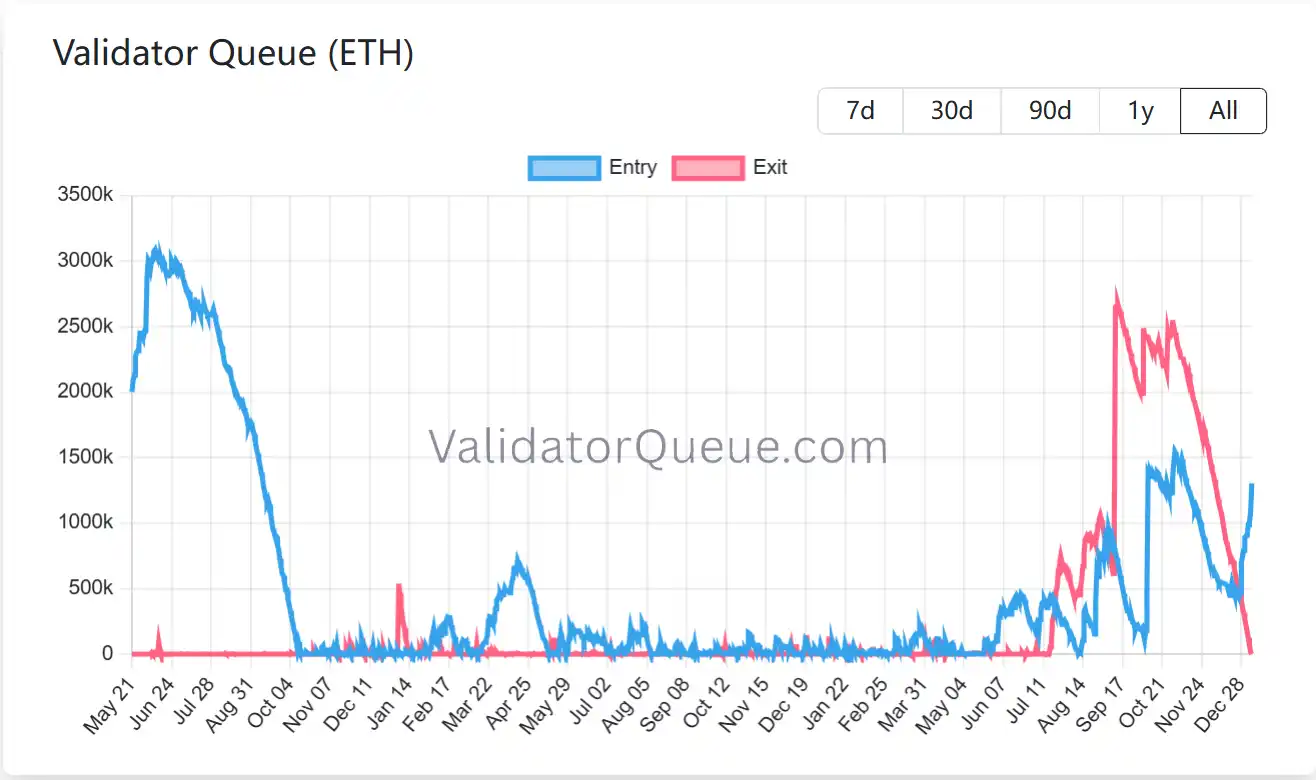
7 января очередь на выход из стейкинга в механизме Proof-of-Stake (PoS) Ethereum официально обнулилась. По крайней мере, согласно данным в блокчейне, давление на вывод, сохранявшееся несколько месяцев, наконец полностью поглощено, и в настоящее время не наблюдается новых крупных запросов на вывод.
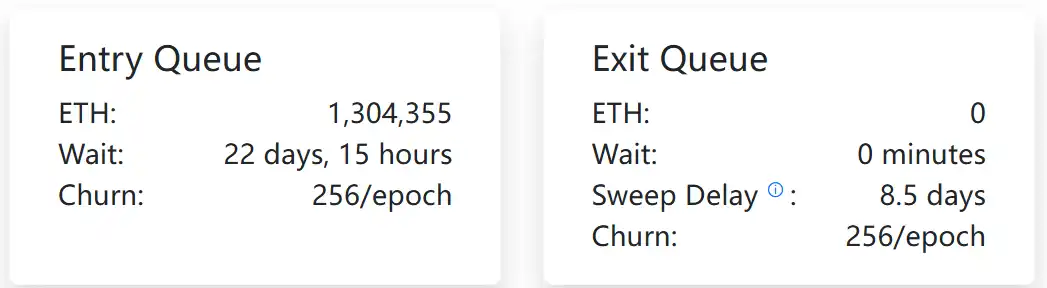
В то же время объем входящей очереди на стейкинг значительно вырос, текущий размер очереди увеличился примерно до 1,3044 млн ETH, время ожидания составляет около 22 дней 15 часов. Эта ситуация практически полностью противоположна той, что была в середине сентября прошлого года.
Тогда цена ETH находилась на этапном пике около 4700 долларов, рыночные настроения были высокими, но сторона стейкинга демонстрировала иное отношение: 2,66 млн ETH выбрали выход из стейкинга, время ожидания в очереди на выход一度 превышало 40 дней. В последующие три с половиной месяца цена ETH упала примерно на 34%, с 4700 долларов до 3100 долларов.
Сейчас, после завершения глубокой коррекции цены, очередь на выход наконец полностью поглощена.
Очередь стейкинга — «индикатор настроений», но не сигнал цены?
Обычно изменения в очереди валидаторов рассматриваются как важный индикатор для наблюдения за рыночными настроениями. Логика заключается в том, что Ethereum PoS для обеспечения стабильности консенсуса не позволяет узлам свободно входить и выходить, а регулирует темпы поведения стейкинга и выхода через механизм контроля потока.
Поэтому, когда цена ETH находится на высоком уровне, спрос на выход часто накапливается, некоторые стейкеры могут выбрать фиксацию прибыли, однако потенциальное давление продаж не высвобождается мгновенно, а «растягивается» в цепи через очередь выхода; а когда спрос на выход постепенно иссякает и даже полностью поглощается, это может означать, что структурное давление продаж подходит к концу.
С этой точки зрения, обнуление текущей очереди на выход и одновременный рост входящей очереди действительно представляют собой значимое изменение. Однако я считаю, что хотя это изменение на поверхности формирует позитивный резонанс, его «влияние» на рыночную цену не эквивалентно этапу «высокого выхода, низкого входа» в сентябре. Потому что ETH, входящий в очередь стейкинга, не обязательно эквивалентен «новым средствам, активно покупающим ETH в настоящий момент». Значительная часть монет, поступающих в стейкинг, вероятно, уже была накоплена на более раннем этапе и просто выбирает текущий момент времени для реконфигурации. Таким образом, рост очереди стейкинга в большей степени отражает изменение предпочтений в отношении долгосрочной доходности, безопасности сети и стабильности вознаграждений за стейкинг, а не значительное усиление немедленного спроса на цену. Это также означает, что текущее улучшение структуры очереди больше склоняется к восстановлению ожиданий, а не к оказанию равноценного по силе воздействия на краткосрочную цену.
Тем не менее, значительный рост входящей очереди стейкинга все еще заслуживает внимания. Его основной движущей силой является крупнейшая казначейская компания DAT BitMine. Данные CryptoQuant показывают, что BitMine за последние две недели простекировала около 771 000 ETH, что составляет 18,6% от ее портфеля примерно в 4,14 млн ETH.
Это означает, что разворот тренда стейкинга был вызван действием по распределению активов одного крупного институционального игрока, а не синхронным восстановлением общего аппетита к риску на рынке. Следовательно, это нельзя просто интерпретировать как «возврат всеобщего настроя на рост». Однако на emerging-рынках, таких как криптоиндустрия, с неравномерным распределением ликвидности, действия крупных институтов часто легче и с большей вероятностью могут оказать определенную поддержку настроениям и восстановлению ожиданий на рынке в краткосрочной перспективе.
Сможет ли этот тренд продолжиться и распространится ли он на более широкий круг участников, еще предстоит проверить временем. Но, судя по данным базовых показателей в блокчейне, несколько ключевых показателей Ethereum одновременно показывают признаки маргинального улучшения.
От «изменений в стейкинге» к «совместному улучшению базовых показателей»
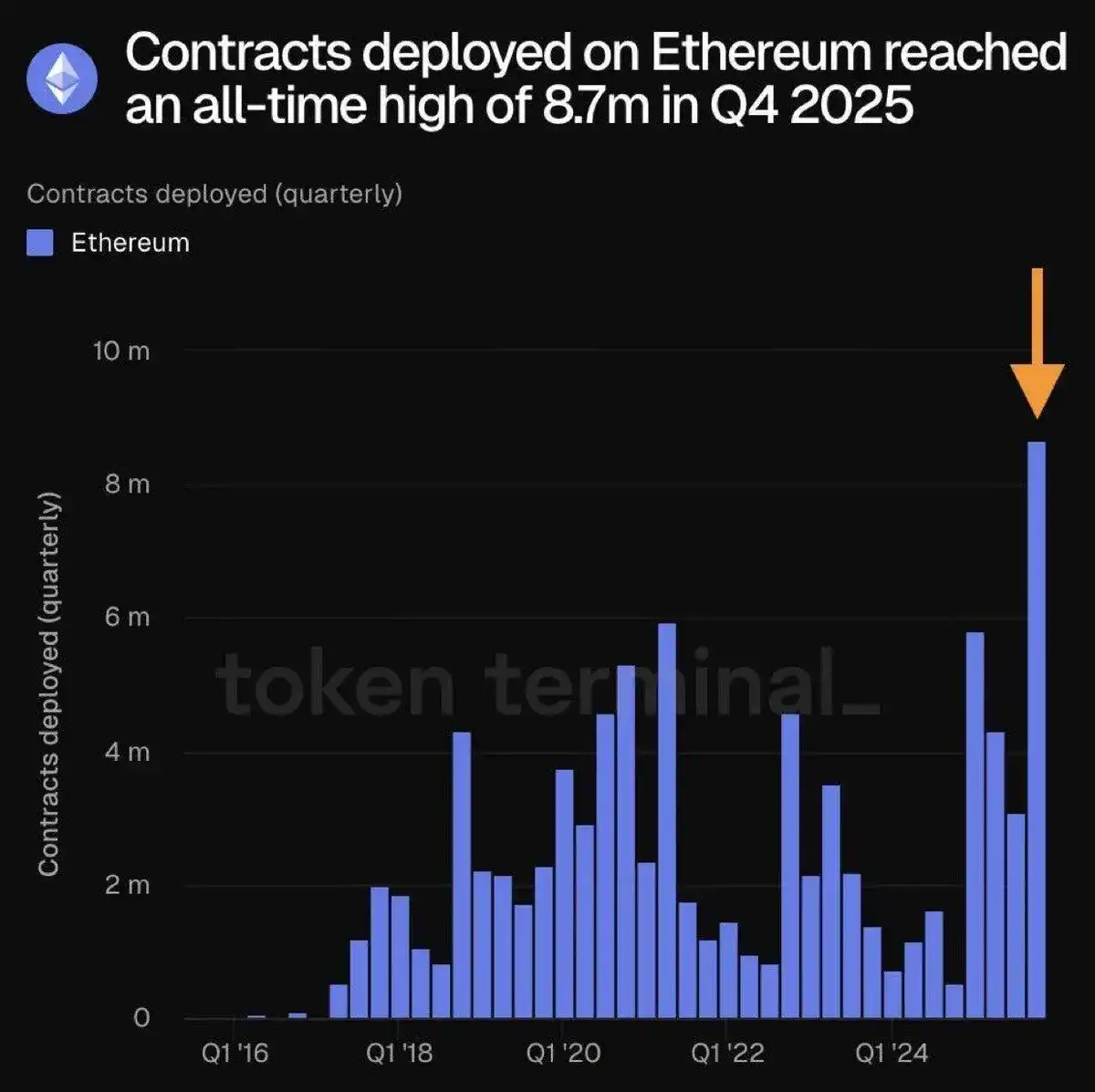
Во-первых, в измерении разработчиков активность разработки Ethereum достигает исторического максимума. Данные показывают, что в четвертом квартале 2025 года в Ethereum было развернуто около 8,7 млн смарт-контрактов, что обновило исторический рекорд за один квартал. Это изменение ближе к постоянной разработке продуктов и инфраструктуры, чем к краткосрочным спекулятивным действиям. Развертывание большего количества контрактов означает, что появляется больше DApp, RWA, стейблкоинов и инфраструктуры, роль Ethereum как ключевого уровня исполнения и расчетов продолжает укрепляться.
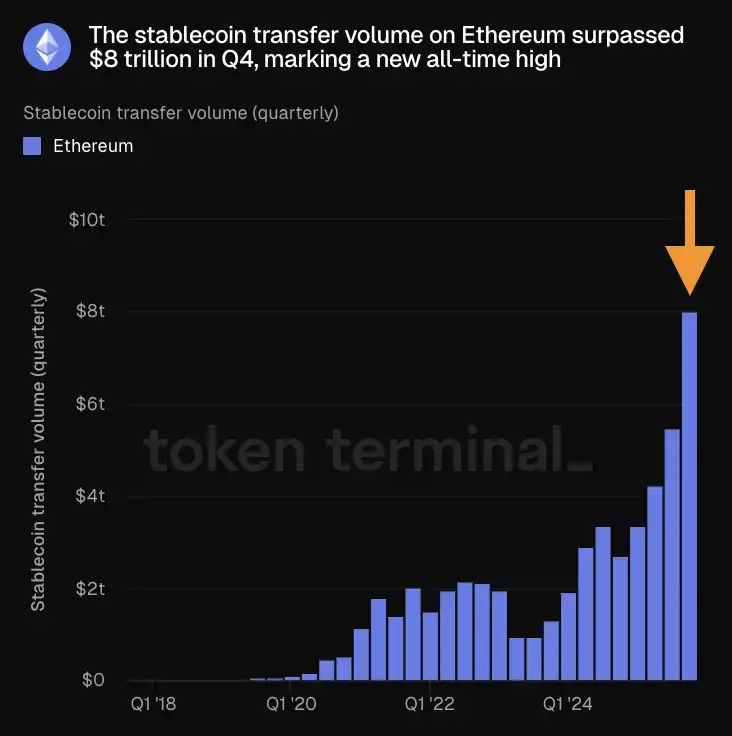
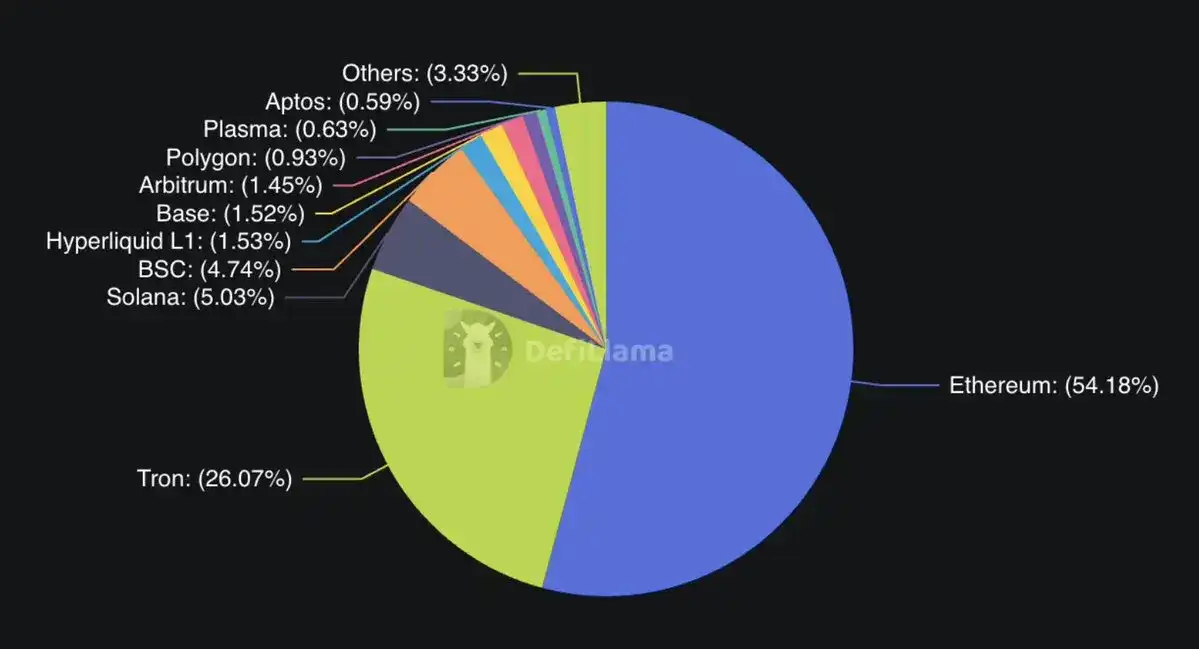
В сфере стейблкоинов объем переводов стейблкоинов в блокчейне Ethereum в четвертом квартале превысил 8 трлн долларов, также обновив исторический рекорд. С точки зрения структуры эмиссии преимущество Ethereum в экосистеме стейблкоинов по-прежнему значительно. Данные показывают, что доля эмиссии стейблкоинов в сети Ethereum составляет 54,18%, что намного превышает показатели других mainstream-блокчейн-сетей, таких как TRON (26,07%), Solana (5,03%), BSC (4,74%).
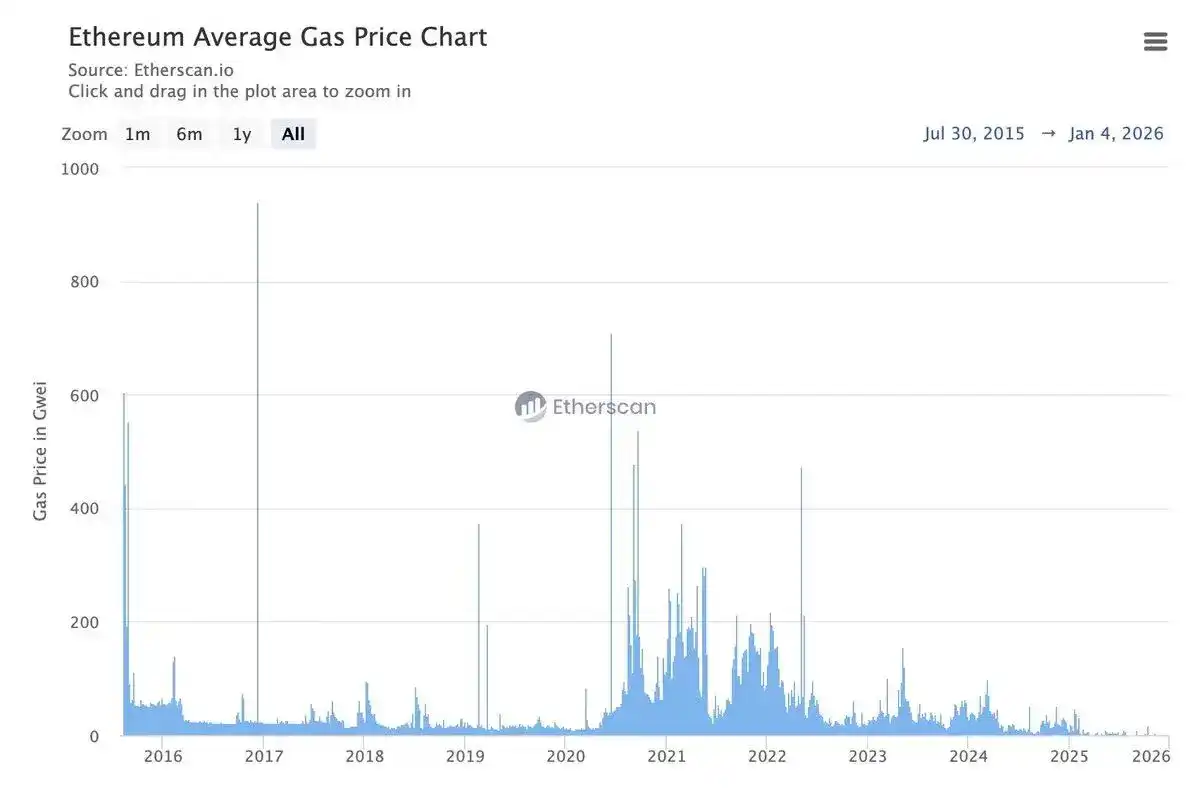
В то же время комиссия Gas Ethereum достигла самого низкого уровня с момента запуска mainnet-а и продолжает бить рекорды. В некоторые периоды комиссия Gas даже опускалась ниже 0,03 Gwei. Учитывая, что в этом году Ethereum продолжит推进 (продвигать) расширение блоков, этот тренд в среднесрочной перспективе仍有具备延续空间 (все еще имеет пространство для продолжения). Более низкие транзакционные издержки напрямую снижают порог активности в блокчейне и также提供 (предоставляют) практическую основу для持续扩展 (постоянного расширения) прикладного уровня.
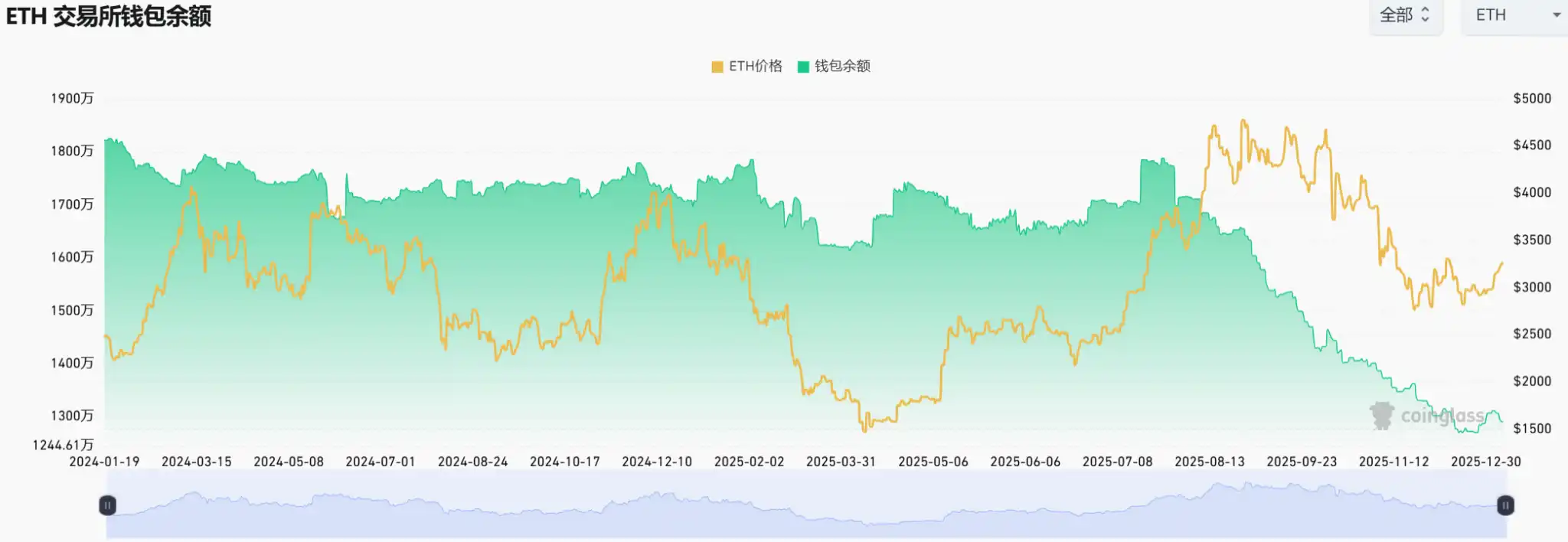
С точки зрения показателя баланса на биржах, потенциальное давление продаж Ethereum также находится на низком уровне. В середине декабря предложение Ethereum на биржах снизилось до 12,7 млн монет, что является самым низким уровнем с 2016 года. Особенно с августа 2025 года этот показатель показал значительное снижение более чем на 25%. Хотя в последнее время баланс на биржах略有 вырос, прирост составил всего около 200 000 монет, и в целом он остается в исторически низком диапазоне, что свидетельствует о нежелании трейдеров продавать.
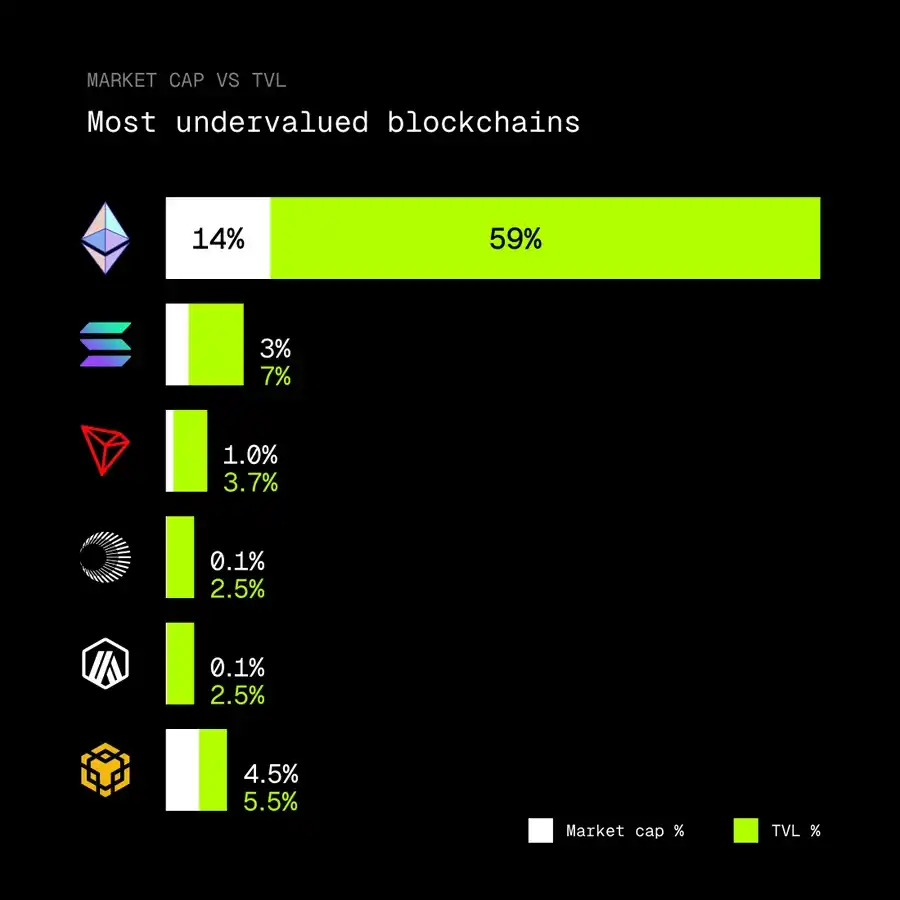
Кроме того, крипто-KOL rip.eth недавно написал на платформе X, что, судя по разрыву между общей заблокированной стоимостью (TVL) и рыночной капитализацией, Ethereum, возможно, является самой недооцененной блокчейн-сетью на текущий момент. Данные показывают, что Ethereum несет на себе 59% TVL крипторынка, но доля его токена ETH в рыночной капитализации составляет лишь около 14%. Для сравнения, соотношение рыночной капитализации токена / TVL у Solana составляет 3% / 7%, у Tron — 1% / 3,7%, у BNB Chain — 4,5% / 5,5%. Это в определенной степени отражает, что между оценкой ETH и масштабом экономической активности, которую он несет, все еще существует явный дисбаланс.
Заключение
В целом, изменения в очереди стейкинга, возможно, и не являются «единственной переменной», определяющей движение цены, но когда они同步改善 (синхронно улучшаются) с активностью разработчиков, объемом использования стейблкоинов, стоимостью транзакций, балансом на биржах и другими показателями, они представляют уже не изолированный сигнал, а более объемную картину базовых показателей.
Для Ethereum это, возможно, не является быстрым разворотом, движимым настроениями, а процессом постепенного восстановления структурной стабильности системы после завершения ею глубокой корректировки.