Do Stablecoins Really Count as Cash? After the Genius Act, Accounting Standards for Stablecoins May Be Adjusted

marsbitОпубликовано 2026-01-05Обновлено 2026-01-05

Введение

The U.S. Financial Accounting Standards Board (FASB) has added two crypto-related projects to its 2026 agenda: whether certain stablecoins can be classified as cash equivalents, and how to account for transfers of crypto assets. This follows the passage of the Genius Act, a regulatory framework for stablecoins, and reflects ongoing political support for the crypto industry from the Trump administration. FASB’s move aims to address accounting grey areas, such as when to derecognize crypto assets and how to treat wrapped tokens. These issues impact financial transparency, risk disclosure, and comparability for investors. Although FASB introduced fair-value accounting rules for crypto in 2023, significant gaps remain, particularly around the definition and treatment of stablecoins. Some critics argue the agenda is politically motivated rather than driven by widespread corporate adoption. However, as the Genius Act takes effect in 2027, stablecoin usage is expected to grow, increasing the urgency for clearer accounting guidance. FASB Chair Rich Jones emphasized the importance of defining what does—and does not—qualify as a cash equivalent. The SEC has also acknowledged the difficulty of applying existing accounting frameworks to crypto assets.

Editor's Note: The Financial Accounting Standards Board (FASB) has included "whether stablecoins can be considered cash equivalents" and "how to account for transfers of crypto assets" as key priorities for 2026. While these are technical accounting issues, they reflect a tug-of-war among regulation, politics, and capital markets over the legitimization of crypto assets: on one hand, the "Genius Act" is pushing stablecoins into the mainstream through institutionalization; on the other, Generally Accepted Accounting Principles (GAAP) still have many gray areas—especially regarding when assets are "derecognized" and how cross-chain and wrapped tokens are defined—leading to inconsistencies in how companies report these in their financial statements.

For investors, the real significance of this discussion is not just "whether they can be considered cash," but also risk disclosure, transparency, and comparability: as stablecoins become more like cash and more like financial products, financial statements must provide clearer boundaries.

Below is the original content:

The Financial Accounting Standards Board (FASB) has stated that it will study two crypto-related issues in 2026: whether some crypto assets can be classified as "cash equivalents," and how to account for transfers of crypto assets. These topics will be discussed against the backdrop of the Trump administration's increased support for such investments.

Over the past few months, FASB added these two crypto projects to its agenda based on public feedback. These issues are among the first of more than 70 topics that FASB will consider adding to its agenda; some of these may eventually develop into new accounting standards.

FASB expects to decide on the取舍 (selection) of these more than 70 potential topics by the end of this summer. These topics originated from an "agenda consultation," where businesses, investors, and others could submit letters indicating which issues they want FASB to prioritize.

"Many people have invested significant time and effort to help us set our agenda," said Chairman Rich Jones. "I see 2026 as the year to turn these inputs into action and deliver on our commitments."

In October of last year, FASB added the "cash equivalents" issue to its agenda, focusing particularly on certain stablecoins—assets typically pegged to a fiat currency.

This move came three months after President Trump signed a stablecoin regulatory bill into law. The bill established a regulatory framework for stablecoins, further integrating these assets into the mainstream financial system. Jones noted that the so-called "Genius Act" did not resolve the accounting question of "what can be considered a cash equivalent." He emphasized: "Telling people what does not qualify as a cash equivalent is as important as telling them what does."

President Trump himself and his family have interests in World Liberty Financial, a crypto company; he has introduced a series of policies supporting the crypto industry and halted previous regulatory crackdowns on the sector.

In November last year, FASB voted to study how businesses account for transfers of crypto assets, including "wrapped tokens"—tokens that allow crypto assets from one blockchain to be represented and used on another chain in a "mapped" form.

This project will build on requirements FASB proposed in 2023: that businesses measure Bitcoin and other crypto assets at fair value. That rule filled a gap in U.S. Generally Accepted Accounting Principles (GAAP) but did not cover non-fungible tokens (NFTs) or certain stablecoins.

Despite the crypto-related accounting requirements proposed in 2023, some believe the specific details remain unclear.

"I still think there is a huge gap in GAAP right now on a key issue: under what circumstances should we remove crypto assets from the balance sheet, i.e., derecognize them; and under what circumstances should we not?" said Scott Ehrlich, Managing Director of accounting training and consulting firm Mind the GAAP.
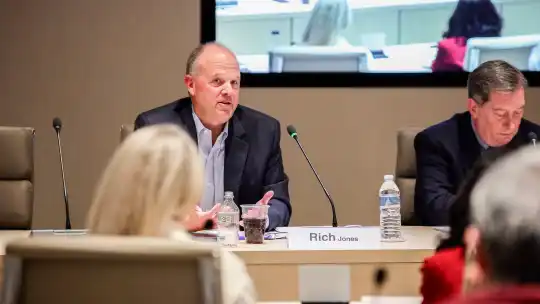
Both projects follow recommendations from a working group established by President Trump to support the crypto industry, while also responding to public feedback. Jones said these recommendations echo views already held by some of FASB's stakeholders.

Jones stated that he was not under pressure to adopt the working group's recommendations.

"I'm certainly happy that they believe the way to address accounting issues is to suggest these topics for FASB to evaluate," Jones said. "They did not recommend pushing legislation to handle accounting issues, nor did they suggest having the SEC speak out to set accounting treatment."

The SEC is responsible for enforcing the accounting standards set by FASB for public companies.

The securities regulator will also closely monitor any adjustments made by FASB. "The crypto space has a host of issues," said SEC Chief Accountant Kurt Hohl at a conference earlier this month. "The difficulty is that they don't fit neatly into the existing accounting standards framework."

Lawmakers and investors have occasionally expressed concerns about FASB's standard-setting approach. Recently, the agency came under scrutiny from U.S. House Republicans: they proposed freezing its funding if FASB did not withdraw upcoming tax disclosure requirements. Under the new requirements, public companies are preparing to disclose more details about taxes paid to government departments in their 2025 annual reports.

Some observers question whether the holding of crypto assets is widespread enough to warrant a place on FASB's agenda. Only a few companies, such as Tesla, Block, and MicroStrategy, include Bitcoin on their balance sheets.

"These new crypto projects don't seem to be driven by pervasiveness or other established FASB criteria for adding projects, but more by current political priorities," said Sandy Peters, head of the financial reporting policy team at the CFA Institute, which represents investment professionals.

However, as the "Genius Act" takes effect in 2027, the newly established regulatory guardrails are expected to reduce the volatility of stablecoins, and market interest in stablecoins is anticipated to heat up. Peters noted that without more adequate risk disclosures, investors are unlikely to accept stablecoins as cash equivalents.

FASB Chairman Jones also faces a "countdown." His seven-year term is expected to end in June 2027, and the search for his successor will begin in early 2026.

Jones said that in the roughly 18 months remaining, he hopes the board can initiate and complete an accounting standard on how to distinguish between "liabilities" and "equity." This determination is highly complex for certain instruments like warrants, and both businesses and auditors find it challenging.

Jones stated that this project has not yet been formally added to the agenda but could still be completed within that timeframe, as the board could opt for "targeted improvements" rather than building a completely new model. "I very much hope to get it done before I step down," he said.


Связанные с этим вопросы

QWhat are the two main crypto-related topics that the Financial Accounting Standards Board (FASB) plans to study in 2026?

AThe FASB plans to study whether certain crypto assets, particularly some stablecoins, can be classified as 'cash equivalents' and how to account for transfers of crypto assets.

QWhat significant legislation, signed by President Trump, helped bring stablecoins further into the mainstream financial system and preceded the FASB's agenda decision?

AThe significant legislation is the 'Genius Act', which established a regulatory framework for stablecoins and was signed into law by President Trump.

QAccording to the article, what is a key accounting problem that GAAP still has a major gap in, as stated by Scott Ehrlich of Mind the GAAP?

AThe key accounting problem is determining when to derecognize a crypto asset (remove it from the balance sheet) and when not to, particularly in the context of transfers and wrapped tokens.

QWhy do some observers, like Sandy Peters from the CFA Institute, question the motivation behind FASB's new crypto projects?

AThey question the motivation because the projects do not appear to be driven by the prevalence of crypto assets on corporate balance sheets, but rather by current political priorities set by the Trump administration.

QWhat is a major concern for investors regarding the treatment of stablecoins as cash equivalents, even after the Genius Act establishes regulatory guardrails?

AThe major concern is that without more robust and sufficient risk disclosures in financial statements, investors are unlikely to accept stablecoins as cash equivalents.

Похожее

Диалог с Далио: Сейчас мы находимся в пузыре ИИ, 1% моего инвестиционного портфеля — это биткоин

Источник: интервью Рэя Далио, основателя Bridgewater Associates, для подкаста "The Diary Of A CEO". Далио, предсказавший кризис 2008 года, обсуждает "большой цикл" — концепцию, охватывающую долговые проблемы, растущее неравенство и геополитические сдвиги. Он указывает, что текущий ажиотаж вокруг ИИ демонстрирует классические признаки пузыря, который может лопнуть из-за высокой долговой нагрузки, роста процентных ставок и чрезмерной эмиссии акций, что способно привести к рецессии. Для защиты личного капитала в неопределенные времена Далио советует диверсификацию: вместо хранения наличных инвестировать в акции, золото, облигации. Сам он держит около 1% портфеля в биткоине, считая его "твердыми деньгами", но предпочитает физическое золото из-за его статуса резервного актива и независимости от технологических рисков. Говоря о влиянии ИИ, Далио отмечает, что технология заменяет не только физический труд, но и элементы мышления, что увеличит разрыв между капиталом и трудом. Ключевыми останутся человеческие качества — эмоции и интуиция, а успеха добьются те, кто научится работать в партнерстве с ИИ. На геополитической арене, по его мнению, мир движется к регионализации с центрами в виде США и Китая. Вовлечение США в конфликты, подобные иранскому, обнажает снижение их абсолютного влияния. Внутренние вызовы, такие как дебаты о налогах на богатство, риск капитального бегства и низкая производительность, также ставят под вопрос стабильность традиционных держав в текущей фазе цикла.

marsbit3 ч. назад

Диалог с Далио: Сейчас мы находимся в пузыре ИИ, 1% моего инвестиционного портфеля — это биткоин

marsbit3 ч. назад

7.2 трлн вон за один день: иностранные инвесторы установили рекорд чистых покупок в пятницу! Уолл-Стрит: встречный ветер в плане ликвидности на южнокорейском рынке уже утих

Капиталы возвращаются на южнокорейский рынок акций. 31 июля иностранные инвесторы осуществили чистые покупки акций KOSPI на рекордные 7,2 трлн вон за один день, что стало самым высоким показателем в истории. По данным Citigroup, эта цифра знаменует собой кардинальный разворот после месяцев масштабного оттока средств нерезидентов. В июле чистые продажи иностранными инвесторами значительно сократились до 9,8 трлн вон по сравнению с 48,4 трлн и 44,5 трлн вон в июне и мае соответственно. Одновременно внутренние пенсионные и инвестиционные фонды в июле вернулись к чистым покупкам на 1,0 трлн вон. Дополнительным фактором снижения волатильности стали новые правила Комиссии по финансовым услугам (FSC), ужесточившие с 31 июля доступ розничных инвесторов к ETF с плечом на отдельные акции. После введения норм торговый оборот таких инструментов упал примерно вдвое. Citigroup сохраняет целевую точку для KOSPI на уровне 10000 пунктов, отмечая ослабление давления со стороны движения капиталов. Аналитики видят поддержку рынку в устойчивости фундаментальных показателей сектора чипов памяти, низких оценках KOSPI, сильной экономике и благоприятной политике властей, включая возможные меры по поддержке ликвидности.

marsbit3 ч. назад

7.2 трлн вон за один день: иностранные инвесторы установили рекорд чистых покупок в пятницу! Уолл-Стрит: встречный ветер в плане ликвидности на южнокорейском рынке уже утих

marsbit3 ч. назад

Как стать человеком, которого искусственный интеллект никогда не сможет заменить

В статье рассматривается вопрос о том, как остаться незаменимым в эпоху искусственного интеллекта. Автор утверждает, что вместо страха перед ИИ следует сосредоточиться на развитии качеств, которые машины не смогут заменить. Он критикует «зарплатное рабство» — зависимость от работы, не приносящей удовлетворения, и предлагает путь к финансовой независимости через создание собственного дела. Ключ к успеху — развитие пяти элементов: самостоятельности (агентности), вкуса, умения убеждать, упорства и способности к итерациям. Главное — не просто создавать что-либо (сегодня это может каждый), а создавать что-то ценное, востребованное и уметь это продвигать. Автор считает, что наиболее важным навыком будущего является создание контента (медиа), а не просто написание кода, поскольку ценность контента субъективна и требует уникального человеческого вкуса и суждения. ИИ может помочь в производстве, но не заменит оригинальность мысли и связь с аудиторией. В качестве практического шага предлагается упражнение: за 15 минут ответить на вопросы, чтобы обнаружить свои уникальные знания, опыт и точку зрения, которые станут основой для личного бренда и дела жизни. Первый шаг — немедленно опубликовать свою основную идею, чтобы получить обратную связь от реального мира и начать процесс роста. Цель — стать «непригодным для найма», построив жизнь вокруг собственного творчества и экспертизы.

marsbit5 ч. назад

Как стать человеком, которого искусственный интеллект никогда не сможет заменить

marsbit5 ч. назад

Благодаря броскам кубиков ключи от биткоинов хранятся в автономном режиме, но не все будут этим заниматься

Статья посвящена практике генерации сид-фраз для биткоин-кошельков с помощью бросков кубиков в свете уязвимости, обнаруженной в аппаратных кошельках Coldcard. Подчеркивается, что физический бросок кубика (дающий около 2.6 бит энтропии за бросок) создает высококачественную случайность, поскольку предсказать результат практически невозможно из-за множества переменных. Для создания стандартной сид-фразы из 12 слов (128 бит энтропии) требуется около 50 бросков, а для повышенной безопасности рекомендуется 99 и более. В связи с инцидентом Coldcard, когда неисправный генератор случайных чисел в прошивке (2021-2026 гг.) мог создавать предсказуемые ключи, выяснилось, что сид-фразы, сгенерированные вручную через кубики, были защищены от этой уязвимости. Однако исследование показало, что другие функции устройства (создание бумажных кошельков, ключей для мультиподписи, паролей и т.д.) по-прежнему использовали скомпрометированный генератор, подвергая риску владельцев даже с безопасной основной сид-фразой. Автор отмечает, что, хотя метод с кубиками криптографически надежен, он непрактичен для массового использования из-за трудоемкости, высокой вероятности ошибок при вводе и необходимости строгой дисциплины для сохранения секретности процесса. Делается вывод, что будущее безопасности лежит в создании надежных аппаратных генераторов случайных чисел и понятных интерфейсов, а ручные методы остаются нишевым инструментом для опытных пользователей. Владельцам Coldcard рекомендуется обновить прошивку и проверить/заменить все ключи, сгенерированные уязвимыми функциями.

cryptonews.ru8 ч. назад

Благодаря броскам кубиков ключи от биткоинов хранятся в автономном режиме, но не все будут этим заниматься

cryptonews.ru8 ч. назад

Торговля

Спот
活动图片




