Рынок резко упал в понедельник, когда BTC ненадолго опустился ниже $65 000, поскольку трейдеры отреагировали на сочетание изменений торговой политики США, геополитических рисков и надвигающихся экономических данных. Внезапные потери стерли выходные прибыли и погрузили рынок в состояние экстремального страха, который в настоящее время находится на уровне 5.
Общая рыночная капитализация криптовалют упала примерно на 3–5% за день, приблизившись к отметке в $2,2 триллиона. Спад совпал с ростом геополитических рисков и масштабными тарифными мерами, объявленными президентом США Дональдом Трампом, которые вызвали беспокойство на более широких финансовых рынках и снизили аппетит к рисковым активам.
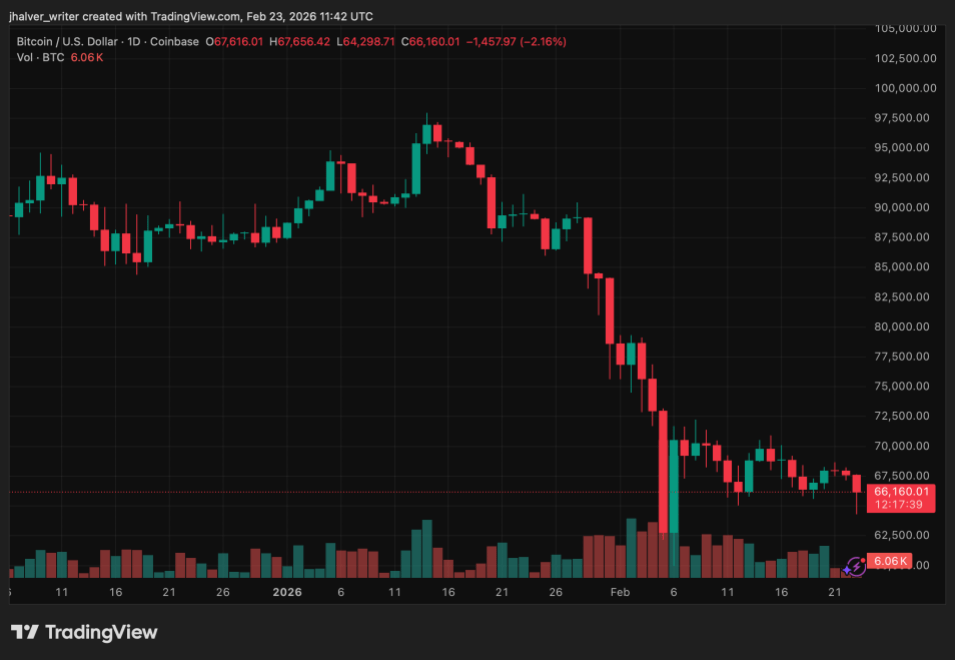
Цена BTC демонстрирует нисходящий тренд на дневном графике. Источник: BTCUSD на Tradingview
Торговые напряженности и макрориски вызывают распродажи
Волатильность рынка усилилась после того, как Верховный суд США постановил, что части предыдущих тарифных программ превышают президентские полномочия. Вскоре после этого Трамп ввел новые глобальные тарифы до 15% в рамках отдельных торговых полномочий, что вызвало опасения по поводу замедления глобального роста и устойчивой инфляции.
Эскалация напряженности между Соединенными Штатами и Ираном добавила еще один слой неопределенности, подтолкнув инвесторов к традиционным защитным активам, таким как золото. Криптоактивы, которые ранее выигрывали от нарратива «цифрового золота», во время последнего рыночного стресса вели себя скорее как высокорисковые инвестиции.
Продажи крупными держателями также способствовали нисходящему давлению, а увеличение переводов с кошельков «китов» на биржи сигнализировало о потенциальной ликвидационной активности. Аналитики отметили, что низкая ликвидность и слабая уверенность покупателей усилили ценовые колебания.
Экономические данные и политические решения в центре внимания
Инвесторы теперь внимательно следят за предстоящими экономическими показателями. Данные о доверии потребителей, заявки на пособие по безработице и показатели инфляции производителей, как ожидается, сформируют ожидания относительно процентных ставок. Недавние показатели инфляции, превысившие прогнозы, снизили надежды на скорое смягчение денежно-кредитной политики со стороны Федеральной резервной системы.
Между тем, центральный банк планирует влить примерно $14,6 миллиардов в финансовые рынки — шаг, который, по мнению некоторых аналитиков, может оказать временную поддержку спекулятивным активам, хотя и не эквивалентен полным стимулирующим мерам.
Прибыли технологических компаний также находятся в поле зрения, в частности, результаты Nvidia, чьи показатели часто влияют на настроения как на рынке акций технологического сектора, так и на крипторынках.
Ликвидации растут по мере доминирования страха в настроениях
Данные рынка показывают, что во время последнего спада было ликвидировано более $460 миллионов leveraged-позиций, причем на долгосрочных трейдеров пришлось большинство потерь. Институциональные потоки также ослабли, при этом биржевые криптофонды зафиксировали значительные оттоки средств.
Дополнительное давление предложения возникло после того, как майнинговая компания Bitdeer продала всю свою еженедельную добычу, в то время как публичные комментарии отраслевых деятелей, включая Майкла Сэйлора, свидетельствовали о том, что долгосрочный оптимизм сохраняется, несмотря на краткосрочную слабость.
Индекс страха и жадности крипторынка упал на территорию экстремального страха, отражая осторожное позиционирование на рынке. Пока не улучшится ясность макроэкономической ситуации, аналитики ожидают, что волатильность останется повышенной, поскольку трейдеры взвешивают политические риски против долгосрочных трендов внедрения.
Обложка от ChatGPT, график BTCUSD от Tradingview







