Indepth Research

Provide in-depth research reports and independent analysis, leveraging data, technology, and economic insights to deliver a comprehensive examination of the blockchain ecosystem, project potential, and market trends.

AI, Cryptocurrency, Tech Stocks: 3 Key Trends for 2026 and Answers from 2 Experts

In this market recap and outlook for 2026, Purpose Investments experts discuss key trends in AI, crypto, and Big Tech. Nick Mersch, Portfolio Manager, argues the AI boom is transitioning from hype to execution, with real revenue and enterprise adoption driving a multi-year infrastructure cycle. He advises focusing on companies with clear monetization paths, recurring revenue models, and key positions in compute, energy, or distribution. While some stocks are overvalued, he believes the cycle remains fundamentally strong. Paul Pincente, VP of Digital Assets, views crypto's late-2025 volatility as a typical correction rather than a systemic failure. He expects continued maturation in 2026, with reduced extreme volatility due to ETF adoption, regulatory clarity, and institutional participation. He emphasizes the growing role of stablecoins and tokenization beyond Bitcoin. On tech valuations, Mersch acknowledges high multiples but argues core infrastructure and cloud leaders justify premiums with strong fundamentals, AI-driven efficiency, and robust balance sheets. He warns that companies lacking economic discipline may struggle. Both experts conclude that AI and crypto are evolving toward greater maturity—AI through tangible productivity gains and embedded workflows, and crypto through improved infrastructure and institutional integration—making 2026 a year of selective opportunity rather than broad speculation.

比推12/19 17:27

AI, Cryptocurrency, Tech Stocks: 3 Key Trends for 2026 and Answers from 2 Experts

比推12/19 17:27

The Rise and Fall of Binance's Hegemony: The Stablecoin War from BUSD's 'Unification' to $U's 'Dominance'

"Binance's Stablecoin Wars: From BUSD's 'Unification' to $U's 'Domination'" This article chronicles Binance's evolving strategy in the stablecoin arena, tracing its journey from aggressive dominance to a more sophisticated, aggregator model. The story begins with the ambitious launch of BUSD, a Paxos-issued stablecoin born from a partnership between Binance's CZ and Paxos's Richmond Teo. Binance's most aggressive move came in 2022 with a "liquidity unification" blitz, automatically converting user balances of USDC, USDP, and TUSD into BUSD and removing their trading pairs. This tactic briefly propelled BUSD to a $23 billion market cap. However, its downfall was swift. A critical structural flaw was its "Binance-Peg BUSD," an unregulated, shadow version on the BNB Chain that sometimes lacked sufficient collateral. This led to a regulatory "Valentine's Day massacre" in February 2023, when the NYDFS ordered Paxos to stop minting BUSD, effectively killing the project. In the subsequent vacuum, Binance first promoted the Hong Kong-based FDUSD as a transitional solution and created BFUSD, an internal, yield-bearing "reward asset" for use as futures collateral. The narrative then shifts to Binance's latest and most surprising play: United Stables ($U). This new "meta-stablecoin" represents a strategic evolution. Instead of trying to eliminate rivals like USDT and USDC, $U aggregates them, backing itself with a basket of these major stablecoins. Notably, it also includes USD1, a stablecoin from the Trump-linked World Liberty Financial project, led by none other than Richmond Teo. A key innovation of $U is its design for the "AI economy," featuring gasless transactions (EIP-3009) to facilitate machine-to-machine micropayments. The article concludes that Binance's strategy has evolved from the "霸道" (hegemonic) force of BUSD to the "大同" (greater unification) approach of $U, which seeks to absorb existing liquidity rather than destroy it, while positioning itself for the future frontier of AI-driven finance.

marsbit12/19 12:13

The Rise and Fall of Binance's Hegemony: The Stablecoin War from BUSD's 'Unification' to $U's 'Dominance'

marsbit12/19 12:13

From Soaring to Out of Control: Deconstructing the Trading Logic Behind the Recent Five 'Meme Coins'

Amid a generally bearish crypto market, a handful of so-called "meme coins" or "pump-and-dump" tokens have exhibited extreme volatility and independent price action. This analysis examines five such tokens and the potential manipulation behind their recent price movements. **PIPPIN:** An AI-themed token that saw a 1000%+ price surge in a week. On-chain analysis revealed that a small group of addresses controlled up to 80% of the supply, indicating a highly coordinated pump by insiders who accumulated tokens over a month before the violent price appreciation, leading to massive liquidations. **FOLKS:** The token for a cross-chain DeFi protocol, which surged nearly 24x from its low following the announcement of its "Season 2" incentives program. The price quickly retraced by approximately 80% after the initial hype. **BEAT:** A low-market-cap token on BNB Chain, marketed as a "Web3 AI entertainment platform." It followed a classic pattern of rapid price pumps and dumps, growing its market cap from $25 million to over $440 million. **AIA:** A decentralized AI agent token that experienced a >90% crash after its perpetual contracts were delisted from Binance Futures. It subsequently surged over 160% after Binance Alpha announced a 1:1 token contract swap and relisting. **RAVE:** A music and culture DAO token that gained significant attention after receiving social media endorsements from Donald Trump Jr. and former Binance CEO CZ. Its price surged over 410% upon listing on Binance Alpha and multiple other exchanges. The common thread among these tokens is the presence of potential market manipulation, including concentrated ownership, coordinated trading, reliance on hype-driven announcements, and social media influence, leading to extreme price volatility often detached from fundamental value.

比推12/19 10:19

From Soaring to Out of Control: Deconstructing the Trading Logic Behind the Recent Five 'Meme Coins'

比推12/19 10:19

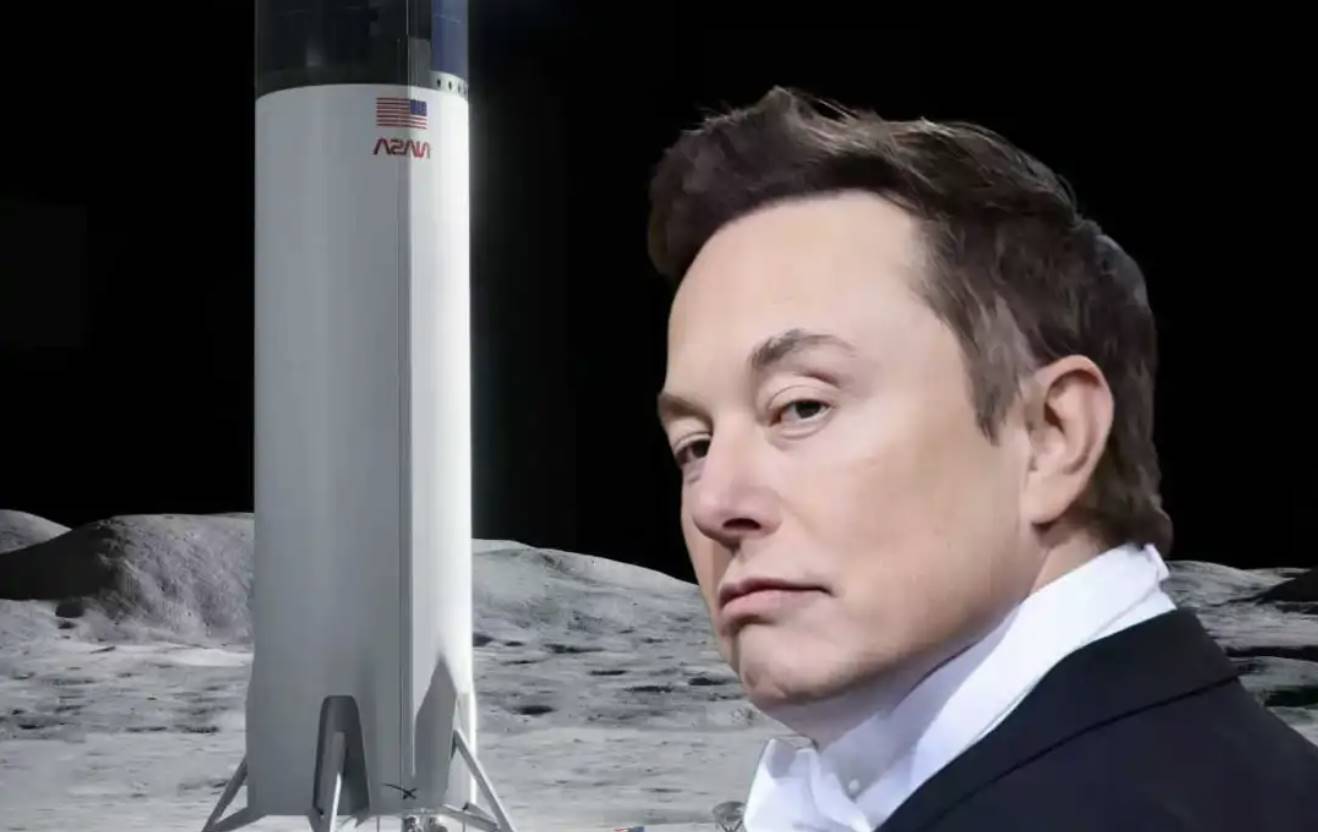
Before Soaring to a $1.5 Trillion IPO, Musk Almost Lost Everything

Elon Musk's SpaceX is on the verge of a historic $150 billion IPO in 2026, targeting a $1.5 trillion valuation, which would make it one of the largest public offerings ever. This marks a dramatic turnaround from its near-collapse in 2008. Founded in 2002, SpaceX faced immense skepticism and multiple failures. Its first three Falcon 1 rockets exploded, nearly bankrupting the company and coinciding with Musk's personal crises during the financial crash. The fourth launch in September 2008 succeeded, saving the company and securing a crucial $1.6 billion NASA contract. SpaceX’s breakthrough came from challenging aerospace norms. It pioneered reusable rockets, first landing a Falcon 9 booster in 2015, drastically cutting costs. For its Mars-bound Starship, Musk applied first principles, opting for cheap stainless steel over expensive carbon fiber, simplifying manufacturing and reducing expenses. The key to its $800 billion pre-IPO valuation is Starlink. With over 7.65 million subscribers and projected 2026 revenues of $22-24 billion, it provides stable cash flow, transforming SpaceX from a launch provider into a global telecom giant. Musk, initially opposed to IPO distractions, now seeks capital for Mars colonization. The IPO’s $30 billion raise will fund ambitious plans, including uncrewed Mars landings by 2027 and a self-sustaining city on Mars within 20 years. For Musk, wealth is a means to make humanity a multi-planetary species.

深潮12/19 06:12

Before Soaring to a $1.5 Trillion IPO, Musk Almost Lost Everything

深潮12/19 06:12

活动图片