Bitcoin slides before Japan’s rate decision – History hints at…

ambcryptoОпубликовано 2025-12-15Обновлено 2025-12-15

Введение

Bitcoin is declining ahead of the Bank of Japan's anticipated 25 basis point rate hike on December 19th, as traders de-risk early based on historical patterns. Previous BoJ hikes in March, July 2024, and January 2025 were followed by sharp BTC drawdowns of 23%, 26%, and nearly 31%, respectively. This time, early signs of selling are already visible through rising exchange inflows and falling, unstable funding rates, indicating proactive leverage unwinding. The market's reaction post-announcement may follow a "sell the rumor, buy the fact" dynamic. Bitcoin's next move will likely depend less on the hike itself and more on the yen's subsequent strength; a stronger yen could maintain pressure on risk assets, while a muted response might allow for a short-term relief rally.

er noopenBitcoin [BTC] is starting to feel the heat of next week’s Bank of Japan (BoJ) decision.

With a 25 basis point rate hike widely expected, markets appear to be adjusting ahead of time. Recent data says risk is already being trimmed, raising the odds that the sell-off happens ahead of the headline.

This leaves room for a “sell the rumor, buy the fact” reaction once the decision is out.

Sayonara, BTC gains!

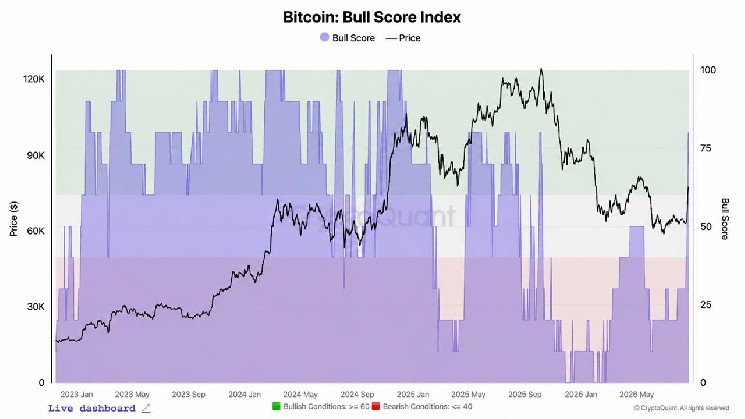
Bitcoin is slipping ahead of the BoJ’s expected 25 bps rate hike on the 19th of December... and we know this setup all too well. Previous rate hikes have repeatedly aligned with sharp BTC drawdowns as yen liquidity tightened and risk appetite faded.

In March 2024, Bitcoin fell about 23% after a rate hike. In July 2024, it dropped another 26%. January 2025 saw an even bigger pullback of nearly 31%. With another hike widely anticipated, traders appeared to de-risk early, pushing BTC lower before the announcement.

The pattern of course, doesn’t guarantee a repeat. But it certainly explains why nerves are rising fast.

The selling may have started early

Investors aren’t waiting for the policy decision to react.

During earlier BoJ hikes, Bitcoin saw Exchange Inflows rise after the announcement, signaling panic-driven spot selling.

This time, Exchange Netflows already showed rising inflows ahead of 19 December. That pointed to early spot selling and proactive risk reduction.

Funding behaviors also have a similar reaction.

During prior hikes, Funding Rates collapsed after the decision. Now, they have already drifted lower and turned unstable, suggesting that leverage was unwinding in advance.

That move aligned with expectations, becoming fully priced

So what happens after the meeting?

That early adjustment changes how this plays out. Unlike past hikes, the BoJ’s shift has been talked about for months. Yen carry trades already unwound, and tighter liquidity was no longer a shock. As a result, much of the pressure may already be reflected in price.

What matters next is the yen’s reaction. If it gets stronger after the decision, risk assets (including Bitcoin) could stay under stress. But if the yen doesn’t beef up much, the market may have little left to sell. In that case, a short-term relief move isn’t off the table.

At this point, the hike itself matters less than how markets respond once it’s finally out of the way.


Final thoughts

  • Bitcoin is weak of the BoJ’s expected 25 bps rate hike. Traders are de-risking early and unwinding leverage.
  • BTC’s next move may depend on the yen’s reaction, not the rate decision itself.

Похожее

a16z: AI's 'Amnesia', Can Continuous Learning Cure It?

The article "a16z: AI's 'Amnesia' – Can Continual Learning Cure It?" explores the limitations of current large language models (LLMs), which, like the protagonist in the film *Memento*, are trapped in a perpetual present—unable to form new memories after training. While methods like in-context learning (ICL), retrieval-augmented generation (RAG), and external scaffolding (e.g., chat history, prompts) provide temporary solutions, they fail to enable true internalization of new knowledge. The authors argue that compression—the core of learning during training—is halted at deployment, preventing models from generalizing, discovering novel solutions (e.g., mathematical proofs), or handling adversarial scenarios. The piece introduces *continual learning* as a critical research direction to address this, categorizing approaches into three paths: 1. **Context**: Scaling external memory via longer context windows, multi-agent systems, and smarter retrieval. 2. **Modules**: Using pluggable adapters or external memory layers for specialization without full retraining. 3. **Weights**: Enabling parameter updates through sparse training, test-time training, meta-learning, distillation, and reinforcement learning from feedback. Challenges include catastrophic forgetting, safety risks, and auditability, but overcoming these could unlock models that learn iteratively from experience. The conclusion emphasizes that while context-based methods are effective, true breakthroughs require models to compress new information into weights post-deployment, moving from mere retrieval to genuine learning.

marsbit53 мин. назад

a16z: AI's 'Amnesia', Can Continuous Learning Cure It?

marsbit53 мин. назад

Can a Hair Dryer Earn $34,000? Deciphering the Reflexivity Paradox in Prediction Markets

An individual manipulated a weather sensor at Paris Charles de Gaulle Airport with a portable heat source, causing a Polymarket weather market to settle at 22°C and earning $34,000. This incident highlights a fundamental issue in prediction markets: when a market aims to reflect reality, it also incentivizes participants to influence that reality. Prediction markets operate on two layers: platform rules (what outcome counts as a win) and data sources (what actually happened). While most focus on rules, the real vulnerability lies in the data source. If reality is recorded through a specific source, influencing that source directly affects market settlement. The article categorizes markets by their vulnerability: 1. **Single-point physical data sources** (e.g., weather stations): Easily manipulated through physical interference. 2. **Insider information markets** (e.g., MrBeast video details): Insiders like team members use non-public information to trade. Kalshi fined a剪辑师 $20,000 for insider trading. 3. **Actor-manipulated markets** (e.g., Andrew Tate’s tweet counts): The subject of the market can control the outcome. Evidence suggests Tate’sociated accounts coordinated to profit. 4. **Individual-action markets** (e.g., WNBA disruptions): A single person can execute an event to profit from their pre-placed bets. Kalshi and Polymarket handle these issues differently. Kalshi enforces strict KYC, publicly penalizes insider trading, and reports to regulators. Polymarket, with its anonymous wallet-based system, has historically been more permissive, arguing that insider information improves market accuracy. However, it cooperated with authorities in the "Van Dyke case," where a user traded on classified government information. The core paradox is reflexivity: prediction markets are designed to discover truth, but their financial incentives can distort reality. The more valuable a prediction becomes, the more likely participants are to influence the event itself. The market ceases to be a mirror of reality and instead shapes it.

marsbit1 ч. назад

Can a Hair Dryer Earn $34,000? Deciphering the Reflexivity Paradox in Prediction Markets

marsbit1 ч. назад

Торговля

Спот
Фьючерсы

Популярные статьи

Как купить S

Добро пожаловать на HTX.com! Мы сделали приобретение Sonic (S) простым и удобным. Следуйте нашему пошаговому руководству и отправляйтесь в свое крипто-путешествие.Шаг 1: Создайте аккаунт на HTXИспользуйте свой адрес электронной почты или номер телефона, чтобы зарегистрироваться и бесплатно создать аккаунт на HTX. Пройдите удобную регистрацию и откройте для себя весь функционал.Создать аккаунтШаг 2: Перейдите в Купить криптовалюту и выберите свой способ оплатыКредитная/Дебетовая Карта: Используйте свою карту Visa или Mastercard для мгновенной покупки Sonic (S).Баланс: Используйте средства с баланса вашего аккаунта HTX для простой торговли.Третьи Лица: Мы добавили популярные способы оплаты, такие как Google Pay и Apple Pay, для повышения удобства.P2P: Торгуйте напрямую с другими пользователями на HTX.Внебиржевая Торговля (OTC): Мы предлагаем индивидуальные услуги и конкурентоспособные обменные курсы для трейдеров.Шаг 3: Хранение Sonic (S)После приобретения вами Sonic (S) храните их в своем аккаунте на HTX. В качестве альтернативы вы можете отправить их куда-либо с помощью перевода в блокчейне или использовать для торговли с другими криптовалютами.Шаг 4: Торговля Sonic (S)С легкостью торгуйте Sonic (S) на спотовом рынке HTX. Просто зайдите в свой аккаунт, выберите торговую пару, совершайте сделки и следите за ними в режиме реального времени. Мы предлагаем удобный интерфейс как для начинающих, так и для опытных трейдеров.

1.2k просмотров всегоОпубликовано 2025.01.15Обновлено 2025.03.21

Как купить S

Sonic: Обновления под руководством Андре Кронье – новая звезда Layer-1 на фоне спада рынка

Он решает проблемы масштабируемости, совместимости между блокчейнами и стимулов для разработчиков с помощью технологических инноваций.

2.2k просмотров всегоОпубликовано 2025.04.09Обновлено 2025.04.09

Sonic: Обновления под руководством Андре Кронье – новая звезда Layer-1 на фоне спада рынка

HTX Learn: Пройдите обучение по "Sonic" и разделите 1000 USDT

HTX Learn — ваш проводник в мир перспективных проектов, и мы запускаем специальное мероприятие "Учитесь и Зарабатывайте", посвящённое этим проектам. Наше новое направление .

1.8k просмотров всегоОпубликовано 2025.04.10Обновлено 2025.04.10

HTX Learn: Пройдите обучение по "Sonic" и разделите 1000 USDT

Обсуждения

Добро пожаловать в Сообщество HTX. Здесь вы сможете быть в курсе последних новостей о развитии платформы и получить доступ к профессиональной аналитической информации о рынке. Мнения пользователей о цене на S (S) представлены ниже.

活动图片