Bitcoin Quantum-Proofing Push Could Open New Attack Risks, Mow Warns

bitcoinistОпубликовано 2026-04-07Обновлено 2026-04-07

Введение

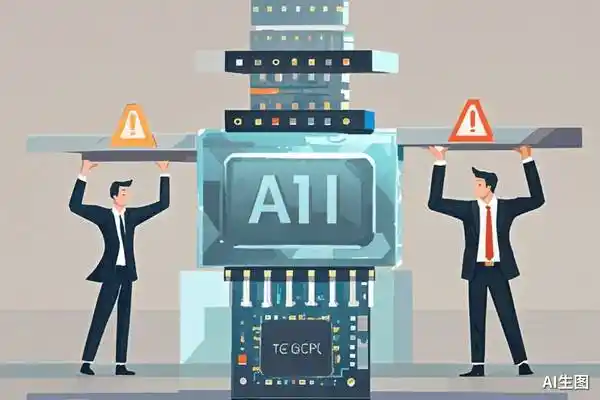
Samson Mow, founder of Bitcoin firm Jan3, warns that a rushed transition to post-quantum cryptography could introduce new risks to Bitcoin rather than securing it. This comes in response to calls from Coinbase executives to act immediately against quantum computing threats. Mow argues that larger post-quantum signatures could increase transaction sizes by up to 125 times, leading to network congestion, compatibility issues, and reduced transaction capacity—potentially reigniting past conflicts similar to the "Blocksize Wars." While not dismissing quantum risks, Mow believes capable quantum computers are still over a decade away, and implementing a premature fix could create more vulnerabilities than it solves.

Post-quantum cryptography could make Bitcoin’s signature sizes balloon by as much as 125 times — a technical reality now fueling a sharp debate over how fast the network should act.

Mow Calls Out The Rush

Samson Mow, founder of Bitcoin firm Jan3, went public over the weekend with a pointed warning: moving too fast on quantum security could leave Bitcoin more exposed, not less.

His comments came after Coinbase CEO Brian Armstrong and the company’s chief security officer, Philip Martin, called on the industry to start acting now against quantum computing threats.

Mow pushed back hard. A rushed transition to post-quantum cryptography, he said, risks opening up fresh vulnerabilities — including compatibility breakdowns and a sharp drop in how many transactions the network can handle at once.

“Simply put: make Bitcoin safe against quantum computers just to get pwned by normal computers,” Mow wrote on X.

A Ghost From Bitcoin’s Past

At the center of his concern is block size — the cap on how much transaction data fits inside a single Bitcoin block. Larger post-quantum signatures mean more data per transaction, which means fewer transactions per block, which means a slower and more congested network.

Former Bitcoin developer Jonas Schnelli put numbers to it, and Mow cited them directly. The implications go beyond speed. Block size has been a flashpoint before.

BTCUSD trading at $68,731 on the 24-hour chart: TradingView

Between 2015 and 2017, a bitter community dispute over whether to expand Bitcoin’s block size tore the ecosystem apart and ultimately led to a chain split.

That fight raised deep questions about decentralization, network security, and who really gets to decide Bitcoin’s direction. Mow is warning the same battle could be coming back — what he’s calling “Blocksize Wars 2.0.”

Image: Wccftech

Where Mow Draws The Line

Mow isn’t saying quantum threats should be ignored. His argument is about timing, not priority. Research on potential solutions is already underway, he said, and that work should continue.

But quantum computers capable of cracking Bitcoin’s encryption, he argued, are still a decade or two away at minimum. Rushing a fix for a threat that doesn’t yet exist, he said, creates real risks today in exchange for protection against something hypothetical tomorrow.

The debate is gaining urgency as new research from Google and the California Institute of Technology has stoked fresh concern about how quickly quantum computing may develop.

Armstrong and Martin flagged those findings as reason enough to move the timeline up. Mow’s position: the cure could be worse than the disease, at least for now.

Featured image from Trade Brains, chart from TradingView

Связанные с этим вопросы

QWhat is the main concern raised by Samson Mow regarding the push for post-quantum cryptography in Bitcoin?

ASamson Mow's main concern is that a rushed transition to post-quantum cryptography could create new vulnerabilities, including compatibility breakdowns and a significant reduction in the network's transaction capacity, rather than making it more secure.

QHow much could post-quantum cryptography increase Bitcoin's signature sizes, according to the article?

APost-quantum cryptography could make Bitcoin's signature sizes balloon by as much as 125 times.

QWhat historical Bitcoin event does Mow reference as a warning for the current debate?

AMow references the 'Blocksize Wars' that occurred between 2015 and 2017, a bitter community dispute over expanding Bitcoin's block size that led to a chain split, and warns that a similar conflict, 'Blocksize Wars 2.0,' could be coming.

QWhat is the core technical issue that larger post-quantum signatures would create for the Bitcoin network?

ALarger post-quantum signatures mean more data per transaction, which would result in fewer transactions fitting into each block, leading to a slower and more congested network.

QWhat is the key difference in perspective between Mow and Coinbase's executives on the timeline for addressing quantum threats?

ACoinbase's executives believe the industry should start acting now against quantum computing threats, while Mow argues that capable quantum computers are still a decade or two away, and rushing a fix for a non-existent threat creates real risks today.

Похожее

Anthropic's IPO Launch: Commercial Miracle or Valuation Bubble?

Anthropic has confidentially filed for an IPO, led by Morgan Stanley and Goldman Sachs, potentially going public by October. Following its latest $650 billion funding round, its pre-IPO valuation stands at $965 billion, with projections reaching up to $2 trillion at listing, which would make it the highest-valued private company ever. The article, written by Fu Sheng, addresses skepticism that this represents an AI bubble akin to the 2000 dot-com crash. It argues the current situation differs fundamentally. Unlike the internet bubble era, which relied on speculative narratives with little revenue, Anthropic's valuation is backed by unprecedented, measurable financial performance. Key data points include: * **Revenue Growth:** ARR skyrocketed from $10 billion in early 2025 to $470 billion by May 2026, targeting $100 billion by year-end—a growth curve unmatched in business history. * **Profitability:** It achieved operating profitability in Q2 2026 with an estimated $5.6 billion profit. * **Efficiency:** With ~3,000 employees and ~$470 billion ARR, its revenue per employee exceeds $10 million. Products like Claude Code, launched less than a year ago, already generate $25 billion in annualized revenue. * **Enterprise Adoption:** It boasts a strong enterprise client base, with 8 of the Fortune 10 and over 1,000 large firms spending over $1 million annually on Claude. The valuation is framed using a traditional SaaS model (e.g., a 10x Price-to-Sales multiple on $100 billion revenue). The author contends the core question for analysts has shifted from "How big could this be?" to "How much is it earning and will earn next quarter?" The discussion extends beyond Anthropic to a broader paradigm shift: the transition from a "carbon-based" to a "silicon-based" economy. Companies are increasingly prioritizing investment in compute and AI capabilities over human resources, as these directly scale productivity and competitive advantage. Anthropic's IPO is thus positioned not just as a corporate milestone, but as a price anchor for this new economic era.

链捕手45 мин. назад

Anthropic's IPO Launch: Commercial Miracle or Valuation Bubble?

链捕手45 мин. назад

Near Returns to the AI Stage: Transformation into a Public Chain Due to 'Payroll Difficulties,' Agent and Privacy Emerge as New Growth Narratives

NEAR Returns to AI Origins: From Payroll Struggles to Blockchain, Now Focusing on AI Agents and Privacy NEAR Protocol's journey began not with grand blockchain ambitions, but from a practical hurdle: its AI startup founders, including Transformer paper co-author Illia Polosukhin, couldn't efficiently pay international developers in 2017. This led them to pivot and build a high-performance, scalable blockchain. After years navigating various crypto narratives like sharding and cross-chain interoperability, NEAR is now leveraging its AI roots to re-enter the AI arena. A key driver is its "NEAR Intents" layer, which abstracts complex cross-chain transactions. Users simply state their goal (e.g., swap BTC for ETH), and a solver network finds the optimal route. This system has processed over $20B in cross-chain volume, generating significant fee revenue. A major growth area is private transactions via "Confidential Intents/Swaps," which hide trade details until settlement to protect against MEV and front-running. Remarkably, private swaps recently accounted for over 40% of NEAR's transaction volume, highlighting strong demand but also potential regulatory scrutiny. With its AI-founder pedigree, NEAR is positioning itself at the intersection of blockchain, AI agents, and privacy, aiming to become infrastructure for the emerging agent economy while navigating the challenges of its rapid adoption.

marsbit3 ч. назад

Near Returns to the AI Stage: Transformation into a Public Chain Due to 'Payroll Difficulties,' Agent and Privacy Emerge as New Growth Narratives

marsbit3 ч. назад

From Ethereum to AI's 'CROPS': What Exactly is This Set of 'Slow Variables' That Vitalik Repeatedly Emphasizes?

In recent discussions, Vitalik Buterin has frequently emphasized the concept of "CROPS," a framework defining core values for Ethereum's development. CROPS stands for Censorship Resistance, Capture Resistance, Open Source, Privacy, and Security. Initially outlined in the Ethereum Foundation's "EF Mandate," it represents a commitment to user sovereignty, ensuring that the network resists external control, remains open, protects privacy, and prioritizes security. The relevance of CROPS extends beyond Ethereum's foundational principles, becoming crucial in the context of AI integration. As AI agents begin handling wallet operations and automated transactions, the risk increases that users may cede control over their digital assets, privacy, and intentions to centralized AI service providers. A "CROPS AI" would therefore emphasize local execution where possible, privacy-preserving remote model calls (e.g., using zero-knowledge proofs), and transparent, verifiable processes to maintain user agency. Vitalik highlights a significant convergence between "CROPS Ethereum access layer" and "CROPS AI." Both address the same fundamental challenge: how users can access powerful services—be it blockchain data via RPCs or AI models—without exposing sensitive information or relinquishing ultimate control. This intersection points toward a future digital entry point that is more private, secure, and user-controlled. Ultimately, CROPS is not merely an abstract ideal but a practical guidepost. It steers development—from protocol resilience and wallet design to AI agent safety—towards a future where users retain self-sovereignty even as digital systems grow more complex and powerful. In an era of accelerating AI adoption, these "slow variables" of censorship resistance, openness, privacy, and security may define Ethereum's enduring value.

marsbit3 ч. назад

From Ethereum to AI's 'CROPS': What Exactly is This Set of 'Slow Variables' That Vitalik Repeatedly Emphasizes?

marsbit3 ч. назад

Торговля

Спот
Фьючерсы

Популярные статьи

Как купить PUSH

Добро пожаловать на HTX.com! Мы сделали приобретение Push Protocol (PUSH) простым и удобным. Следуйте нашему пошаговому руководству и отправляйтесь в свое крипто-путешествие.Шаг 1: Создайте аккаунт на HTXИспользуйте свой адрес электронной почты или номер телефона, чтобы зарегистрироваться и бесплатно создать аккаунт на HTX. Пройдите удобную регистрацию и откройте для себя весь функционал.Создать аккаунтШаг 2: Перейдите в Купить криптовалюту и выберите свой способ оплатыКредитная/Дебетовая Карта: Используйте свою карту Visa или Mastercard для мгновенной покупки Push Protocol (PUSH).Баланс: Используйте средства с баланса вашего аккаунта HTX для простой торговли.Третьи Лица: Мы добавили популярные способы оплаты, такие как Google Pay и Apple Pay, для повышения удобства.P2P: Торгуйте напрямую с другими пользователями на HTX.Внебиржевая Торговля (OTC): Мы предлагаем индивидуальные услуги и конкурентоспособные обменные курсы для трейдеров.Шаг 3: Хранение Push Protocol (PUSH)После приобретения вами Push Protocol (PUSH) храните их в своем аккаунте на HTX. В качестве альтернативы вы можете отправить их куда-либо с помощью перевода в блокчейне или использовать для торговли с другими криптовалютами.Шаг 4: Торговля Push Protocol (PUSH)С легкостью торгуйте Push Protocol (PUSH) на спотовом рынке HTX. Просто зайдите в свой аккаунт, выберите торговую пару, совершайте сделки и следите за ними в режиме реального времени. Мы предлагаем удобный интерфейс как для начинающих, так и для опытных трейдеров.

855 просмотров всегоОпубликовано 2024.03.29Обновлено 2026.06.02

Как купить PUSH

Обсуждения

Добро пожаловать в Сообщество HTX. Здесь вы сможете быть в курсе последних новостей о развитии платформы и получить доступ к профессиональной аналитической информации о рынке. Мнения пользователей о цене на PUSH (PUSH) представлены ниже.

活动图片