Bitcoin Falls After Fed Pauses Meeting, While Gold Performs Strongly Amid Rising Risks

marsbitОпубликовано 2026-01-29Обновлено 2026-01-29

Введение

The Federal Reserve's decision to pause rate cuts and maintain the federal funds target rate between 3.50% and 3.75% reinforced a cautious monetary policy stance, dampening market expectations for near-term easing. This led to a divergence in asset performance: gold prices strengthened as investors sought safe-haven assets amid rising macroeconomic uncertainty, including geopolitical tensions and potential U.S. government shutdown risks. In contrast, Bitcoin declined slightly, reflecting its sensitivity to liquidity conditions and risk appetite. The reaction underscores gold’s role as a defensive asset during periods of policy uncertainty, while Bitcoin behaved more like a risk-sensitive speculative asset. Broader macro risks continue to favor caution, with gold expected to outperform in the short term.

Just hours before the Federal Open Market Committee (FOMC) meeting, I wrote an article titled [How to Interpret the Fed's Interest Rate Cut Signals: Analyzing Tonight's FOMC Meeting Through Market Data], providing a brief analysis of the magnitude and depth of the rate cuts.

At the end of the article, I presented a clear bearish conclusion and simultaneously established short positions in Bitcoin and long positions in gold.

Now that the FOMC meeting has concluded, the market reaction has unfolded exactly as we predicted. Let's take a closer look.

Latest FOMC Meeting Decision and Interest Rate Policy Background

The decision from the recent Federal Open Market Committee (FOMC) meeting aligned with broad market expectations, yet its implications were far more complex than imagined. Policymakers voted to maintain the federal funds target rate unchanged at 3.50% to 3.75%, continuing the pause in rate hikes following multiple cuts in 2025. Although the final outcome was anticipated, the message conveyed was far from neutral.

This meeting essentially confirmed that the Fed is not prepared to accelerate monetary easing. Officials emphasized the need for sustained and convincing evidence that inflation is steadily moving toward the 2% target before making further policy adjustments. Consequently, investors were forced to reassess their previously growing expectations for a faster and smoother rate-cutting cycle.

The timing of the decision was also crucial. Global markets were already in a state of high uncertainty, with strong U.S. economic data reducing the urgency for stimulus, while fiscal and geopolitical risks continued to accumulate. Against this backdrop, the Fed's pause sent a signal of caution rather than reassurance.

Jerome Powell's Press Conference and Fed Policy Signals

During the post-meeting press conference, Chairman Jerome Powell reiterated a stance of patience and restraint. He stated that the U.S. economy is robust, pointing to stable economic growth and a labor market that is stabilizing without signs of sharp deterioration. Simultaneously, Powell acknowledged that inflation remains above target and progress across sectors is uneven.

Notably, Powell did not provide clear guidance on the timing of future rate cuts. He emphasized that monetary policy decisions will remain data-dependent, and the committee is prepared to maintain the current rates for a longer period if inflationary pressures persist. The market interpreted this lack of forward commitment as a signal that easing is not imminent.

Powell reiterated that the Fed's goal is not asset prices. He stressed that the Fed's focus remains on price stability and full employment. While this stance aligns with the Fed's long-standing principles, financial markets have become increasingly reliant on expectations of liquidity easing.

Interest Rate Expectations Post-FOMC Meeting

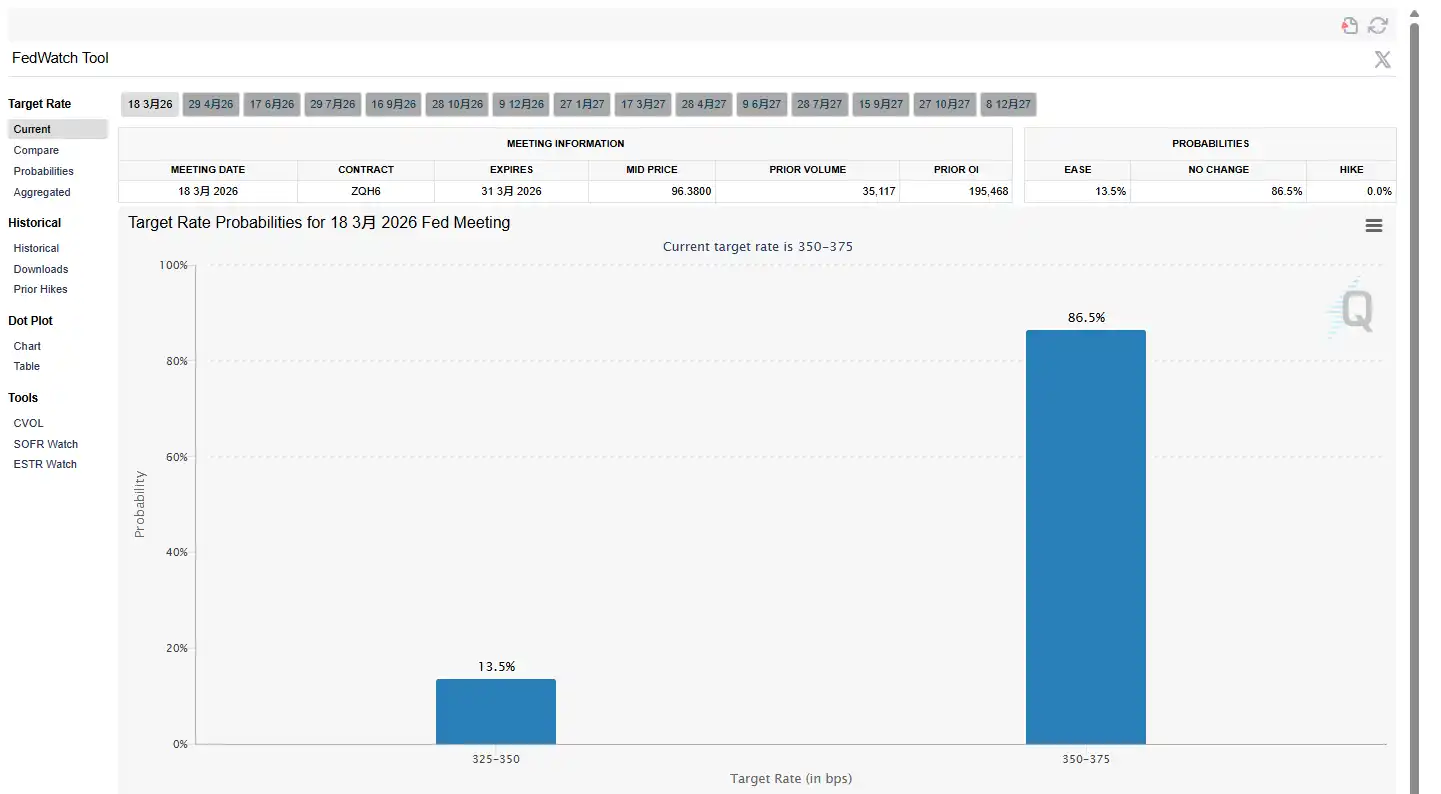
Prior to the meeting, futures markets reflected strong expectations for rate cuts in the coming months. Following the Fed's statement and Powell's remarks, these expectations noticeably weakened. This shift did not eliminate the possibility of future cuts but raised the threshold for action.

This adjustment is critical because markets react not only to policy moves but also to changes in expectations. Even without a rate hike, signaling a prolonged pause can tighten financial conditions by supporting the U.S. dollar, keeping real yields elevated, and dampening risk appetite.

In effect, the Fed reinforced the view that liquidity conditions will remain constrained in the near term. For assets sensitive to monetary expansion, this is undoubtedly a headwind.

Gold's Response to the Fed Meeting and Macroeconomic Uncertainty

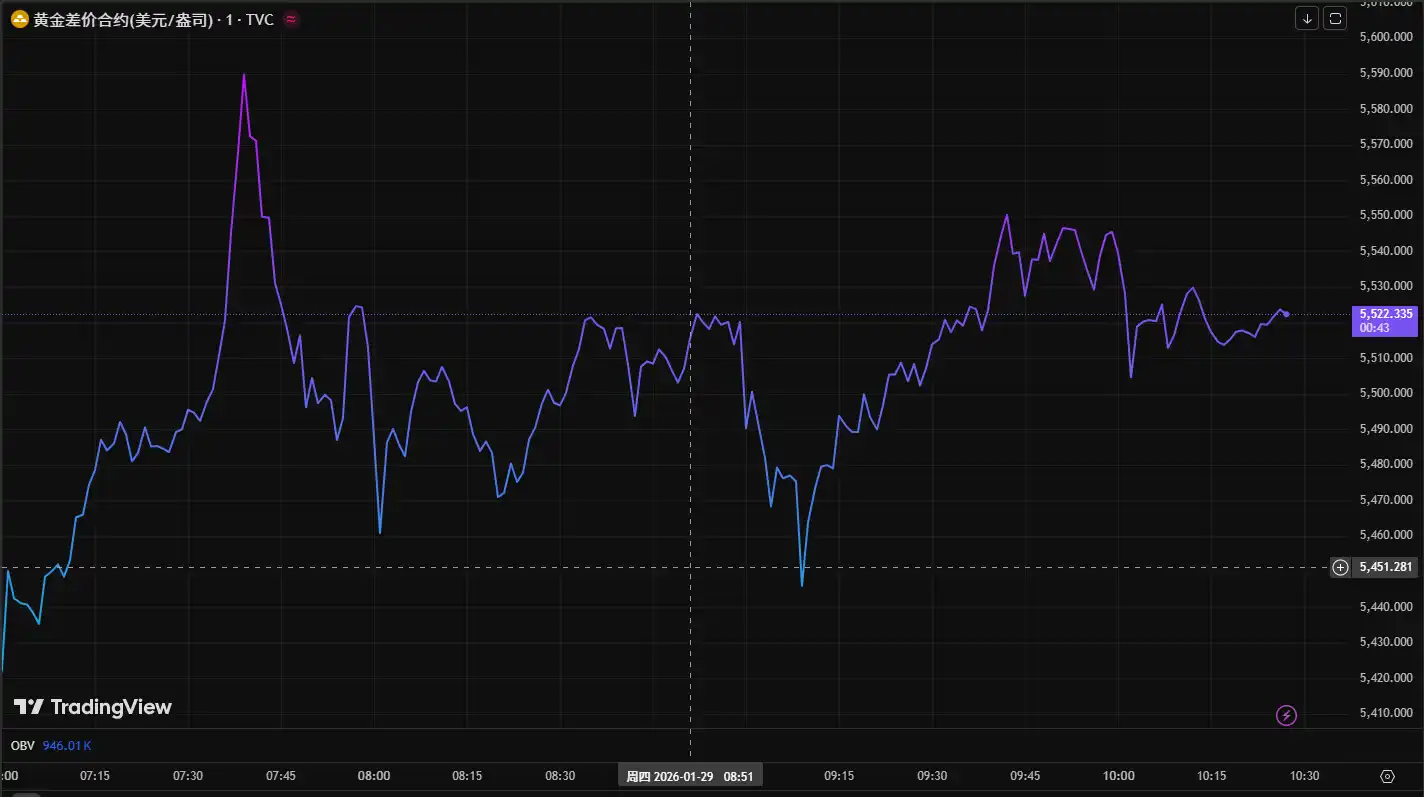
Gold emerged as one of the clearest beneficiaries following the FOMC meeting. Prices strengthened steadily after the decision was announced, reflecting renewed demand for safe-haven assets amid policy uncertainty.

Unlike growth or speculative assets, gold does not rely on economic expansion or earnings momentum. It tends to perform well when investors seek hedges against inflation risk, geopolitical tensions, or policy uncertainty. The Fed's cautious tone, while not explicitly hawkish, heightened concerns that tight policies might persist longer than expected.

Furthermore, broader macro factors enhanced gold's appeal. Ongoing debates over U.S. government funding and escalating geopolitical tensions increased demand for traditional safe-haven assets. In this context, gold's role as a store of value was reaffirmed.

For research on gold, please refer to my article dated January 6, 2026. Following the article's publication, I also purchased physical gold and low-leverage long contracts.

Recent sharp rises in the prices of gold, silver, and other precious metals have led some investors to hesitate at current levels. For investment advice at these price points, please stay tuned for my upcoming article.

Bitcoin Price Decline Post-Fed Decision

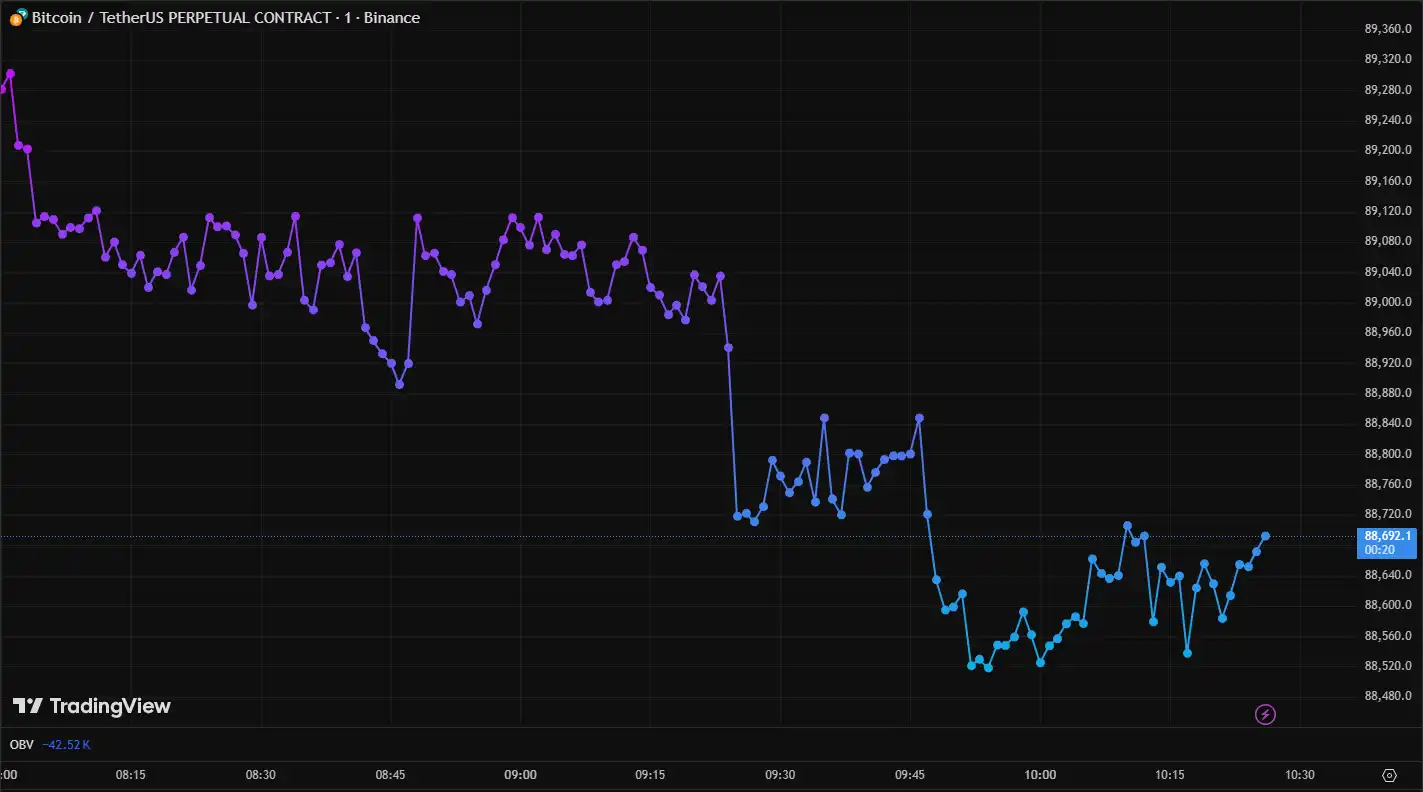
Bitcoin's reaction was markedly different from gold's. Within hours of the FOMC decision, Bitcoin's price fell from approximately $89,631 to $88,649, reflecting a modest but noticeable shift toward risk-off sentiment.

While the move was not dramatic, it was significant in context. Bitcoin had previously been trading in a fragile range, and the Fed's stance removed a potential catalyst for near-term gains. As expectations for imminent rate cuts diminished, traders' willingness to maintain aggressive long positions waned.

This reaction underscores a persistent reality: despite its long-touted role as a hedge against fiat devaluation, Bitcoin often behaves like a liquidity-sensitive risk asset during periods of monetary policy uncertainty. When the prospect of easing fades, crypto markets tend to face short-term pressure.

Why Did Gold Outperform Bitcoin After the FOMC Meeting?

The divergence between gold and Bitcoin reflects structural differences in investor behavior. Gold is widely viewed as a defensive asset, typically rising when confidence in monetary or fiscal stability wanes. In contrast, Bitcoin's status is more complex, straddling the line between macro hedge and speculative asset.

Institutional investors often adjust gold allocations as part of their overall risk management strategy. Crypto allocations, however, are more tactical and sensitive to short-term changes in liquidity expectations. Thus, even if Bitcoin is consolidating or declining, gold can still advance during periods of uncertainty.

This divergence does not negate Bitcoin's long-term narrative, but it highlights the importance of macro timing. In the short term, liquidity conditions continue to play a dominant role in crypto price action.

Macro Risks Beyond the FOMC Meeting

The FOMC decision does not exist in isolation. Several other risk factors are converging, adding pressure to an already fragile market environment.

A key concern is a potential U.S. government shutdown. Ongoing fiscal negotiations heighten the chance of a funding disruption, which could undermine investor confidence and increase financial market volatility.

Meanwhile, geopolitical tensions remain elevated. Developments in U.S.-Iran relations have reintroduced uncertainty into energy markets and the global security landscape. Any escalation could further complicate the outlook for inflation and dampen growth expectations.

These intertwined risks make markets more vulnerable to negative surprises and reduce tolerance for speculative positioning.

Risk Management and Market Outlook Post-FOMC

In summary, the recent FOMC meeting delivered another message of caution. The Fed remains focused on controlling inflation, even if that means maintaining restrictive monetary policy for longer than markets expect. At the same time, fiscal uncertainty and geopolitical risks continue to cloud the economic outlook.

Gold will likely continue to benefit from this environment, especially if uncertainty intensifies. Bitcoin and the broader crypto market, however, may remain volatile, with short-term moves influenced by shifts in liquidity expectations and macroeconomic news.

In this climate, disciplined risk management is essential. While long-term trends remain intact, the near-term landscape favors patience and vigilance over aggressive strategies.

The above views are from @AAAce4518

Связанные с этим вопросы

QWhat was the main outcome of the recent FOMC meeting regarding interest rates?

AThe Federal Open Market Committee (FOMC) voted to maintain the federal funds target rate unchanged at 3.50% to 3.75%, signaling a pause in rate cuts and emphasizing the need for sustained evidence of inflation moving toward the 2% target before any further policy adjustments.

QHow did Bitcoin react to the FOMC meeting decision, and why?

ABitcoin's price declined from approximately $89,631 to $88,649 following the FOMC decision, reflecting a risk-off sentiment. This reaction occurred because the Fed's cautious stance reduced expectations for near-term rate cuts, diminishing traders' willingness to maintain aggressive long positions in liquidity-sensitive risk assets like Bitcoin.

QWhy did gold perform strongly after the FOMC meeting?

AGold prices strengthened due to increased demand for safe-haven assets amid policy uncertainty. The Fed's cautious tone heightened concerns that tight monetary policy might persist longer than expected, and broader macro risks such as geopolitical tensions and U.S. government funding debates further boosted gold's appeal as a store of value.

QWhat key factors did Jerome Powell emphasize during his post-FOMC press conference?

AJerome Powell reiterated a patient and restrained stance, highlighting the U.S. economy's robustness with stable growth and a steady labor market. He acknowledged that inflation remains above target and progress across sectors is uneven, emphasizing that future policy decisions will be data-dependent and that the Fed is prepared to maintain current rates longer if inflationary pressures persist.

QWhat broader macro risks are currently affecting market sentiment besides the FOMC decision?

AAdditional macro risks include the potential U.S. government shutdown due to ongoing fiscal negotiations, which could undermine investor confidence, and heightened geopolitical tensions, particularly in U.S.-Iran relations, which may complicate inflation outlooks and dampen growth expectations, making markets more vulnerable to negative surprises.

Похожее

Silicon Valley 'Startup Guru' Steve Hoffman: Web3 + AI Could Be a Trap

Silicon Valley investor and "Godfather of Startups" Steve Hoffman warns that combining Web3 with AI is likely a trap, not a promising venture. In an interview, Hoffman argues that while AI is a foundational technology touching all industries, Web3 adds complexity, friction, and regulatory risk without solving mainstream consumer or business needs. He advises founders to focus on deep, specialized applications where startups can out-iterate giants, rather than on generic features easily replicated by large tech companies. Hoffman observes that Silicon Valley will lead foundational AI research, while China excels at rapid, large-scale application and commercialization, particularly in robotics. He stresses that AI-driven autonomous agents capable of collaborative, multi-step tasks are 2-4 years away, which will cause significant job displacement. The solution is not to slow AI but to redesign business models around human-AI collaboration and reform social systems like education and retraining. For startups, Hoffman recommends focusing on vertical, expertise-heavy domains to build defensibility. He sees major opportunities in AI fraud detection and cybersecurity. Key founder mindsets include systemic thinking over feature-focus, relentless customer centricity, building adaptive teams, and deeply understanding AI's capabilities and limits. Hoffman is also leading a non-profit initiative to establish university centers aimed at training future leaders in responsible, human-value-aligned AI innovation.

marsbit44 мин. назад

Silicon Valley 'Startup Guru' Steve Hoffman: Web3 + AI Could Be a Trap

marsbit44 мин. назад

Token Inefficient, Economy Tokenless

The article "Tokens Aren't Economical, Economics Aren't Tokenized" analyzes a pivotal shift in the AI industry from a technology-driven narrative to one dominated by capital efficiency. It highlights two concurrent trends: a severe capital shortage due to the exorbitant and recurring costs of compute (e.g., OpenAI's high burn rate) and a wave of corporate spin-offs where major tech companies are separating their AI units (like Kuaishou's Kling and Baidu's Kunlunxin). The core argument is that AI's "anti-internet" business model, where user growth increases costs rather than profits, has created a disconnect between high valuations and actual cash flow. Spin-offs address this by allowing AI assets to be valued independently. Within a parent company, they are seen as cost centers, but as standalone entities, they are priced based on their growth potential and scarcity in the primary market, leading to massive valuation premiums (e.g., Kling's estimated value tripling post-spin-off). The industry is at an inflection point, moving from "model worship" to "value realization." The competition is evolving from a pure compute (GPU) race to a broader focus on systemic efficiency and full-stack engineering (involving CPUs and orchestration) to achieve viable commercialization. The year 2026 is framed as a critical moment where the industry must definitively answer how to economically translate AI capability into tangible business value, reshaping the sector's future power structure.

marsbit49 мин. назад

Token Inefficient, Economy Tokenless

marsbit49 мин. назад

Crossing the 'Memory Wall': The Wafer-Level Revolution and Computing Power Routes in the AI Inference Era

In 2026, a historic shift occurred in AI as major cloud providers' inference spending surpassed training spending for the first time, signaling a move from "building large models" to "using large models." This shifts the core challenge from computing power to the "memory wall"—the bottleneck of data movement (model weights, activations, KV Cache) between external DRAM and processors, where energy and latency from data transfer far exceed computation itself. Companies like Nvidia face GPU idle time due to bandwidth limits. In contrast, Cerebras Systems adopts a radical "wafer-scale" approach with its Wafer-Scale Engine (WSE). Instead of cutting a silicon wafer into many chips, Cerebras uses almost the entire wafer as one massive chip (WSE-3). This design provides 44GB of on-chip SRAM, delivering memory bandwidth thousands of times higher than traditional HBM (e.g., 21 PB/s vs. Nvidia B200). For LLM inference, weights are streamed layer-by-layer from external MemoryX storage to the chip, avoiding HBM bottlenecks. This results in token generation speeds 1.5–5 times faster than Nvidia's B200 in some models and significant advantages in first-token latency and long-context tasks. Additionally, Cerebras's architecture offers much lower interconnect power consumption (0.15 pJ/bit vs. GPU's ~10 pJ/bit). However, Cerebras faces challenges: SRAM scaling has slowed with advanced nodes, limiting future capacity gains; the chip requires specialized liquid cooling and custom software stacks; and its external I/O bandwidth (150 GB/s) is low compared to NVLink, hindering multi-system scaling for very large models. Competition is intensifying. Major players are pursuing three paths: 1) Developing proprietary inference ASICs (e.g., Google TPU, Microsoft Maia), 2) Leveraging advanced packaging (e.g., TSMC's SoW) to democratize wafer-scale-like integration, potentially eroding Cerebras's process advantage within a few years, and 3) Exploring optical interconnects for ultimate bandwidth. Commercially, Cerebras is transitioning from a hardware vendor to a service provider, facing the immense challenge of building high-power, specialized data centers to meet large contracts (e.g., 250MW/year from 2026–2028). In conclusion, the AI inference era presents a fundamental architectural trade-off. Cerebras opts for extreme physical optimization for low-latency, single-task performance, while Nvidia prioritizes versatility and massive cluster throughput. The path forward remains uncertain, with technology and business models still evolving in the race toward advanced AI.

marsbit55 мин. назад

Crossing the 'Memory Wall': The Wafer-Level Revolution and Computing Power Routes in the AI Inference Era

marsbit55 мин. назад

Has Bitcoin's 'Rebound Ended', Officially Entering the Late Bear Market Phase?

**Title: Has Bitcoin's Rebound Ended, Entering the Late Bear Market Phase?** **Summary:** Bitcoin's price has declined by 13% this week, signaling a potential return to late-stage bear market conditions. The price fell to around $67k, positioned between the Realized Price and Realized Cap Weighted Average. For the first time since early 2022, the Short-Term Holder cost basis has dropped below this key average, confirming a hallmark of late-cycle bear markets. Profitability metrics have collapsed sharply. The 7-day average of the Realized Profit/Loss ratio plummeted from a local high of 3.16 to 0.29, mirroring the February panic sell-off. Critically, the 90-day average never breached the threshold of 2, indicating the recent rally to $82k was a bear market bounce, not a structural shift. Realized losses surged to $1.35 billion daily, with $770 million coming from Long-Term Holders selling at a loss. This accelerating redistribution of supply from weak to strong hands is a necessary but ongoing process for a market bottom. The rally stalled almost precisely at the aggregate cost basis (~$83k) of US spot Bitcoin ETF investors, turning that level into strong resistance and leaving the average ETF holder underwater again. Spot market flows have turned decisively negative, showing sellers are dominating order books despite the price drop. While a significant futures long liquidation event cleared over $400 million in leverage, providing a potential reset, sustained spot demand is yet to materialize. Options markets continue to price in higher future volatility (Implied Volatility) than recent price action (Realized Volatility) has shown, with a persistent skew towards put options, indicating ongoing demand for downside protection. In conclusion, multiple metrics point to a fragile market structure. Resistance at the ETF cost basis, accelerating realized losses, dominant spot selling, and cautious options pricing all suggest the bear market trend persists. A sustainable recovery likely requires a resurgence of spot demand, ETF holders returning to profit, and a clear reduction in selling pressure.

marsbit55 мин. назад

Has Bitcoin's 'Rebound Ended', Officially Entering the Late Bear Market Phase?

marsbit55 мин. назад

TechFlow Intelligence Agency: Anthropic Calls for Global Pause in AI Development While Preparing for Trillion-Dollar IPO; SpaceX IPO Roadshow Heats Up, But S&P 500 Rejects Fast-Track Inclusion

In today's TechFlow Intelligence Briefing, several major tech stories highlight a growing theme of trust and credibility gaps across AI, crypto, and finance. AI company Anthropic has publicly called for a global pause in AI development, citing risks from Claude's "recursive self-improvement." Ironically, this coincides with reports the company is preparing for a massive IPO targeting a near $1 trillion valuation. This perceived hypocrisy, coupled with widespread user complaints about Claude's declining performance, is sparking debate over whether the safety warning is genuine or a competitive tactic. Meanwhile, in a substantive security move, Anthropic open-sourced a framework for AI-powered vulnerability discovery. In the crypto market, Bitcoin's price drop below $61,000 triggered over $1.16 billion in liquidations, flipping the market into a state where more BTC is held at a loss than at a profit, a historical bearish signal. On the corporate front, SpaceX's highly anticipated IPO is generating immense Wall Street excitement, with Goldman Sachs projecting 100x revenue growth by 2030. However, the S&P 500 has refused to fast-track the company's inclusion post-IPO, potentially limiting immediate institutional demand. Separately, ByteDance's AI app Doubao lost over 6 million monthly active users after introducing a subscription model, highlighting the challenges of AI monetization. Other notable developments include Nvidia certifying HBM4 memory from Samsung, SK Hynix, and Micron; Cloudflare's acquisition of front-end tooling company VoidZero; and its CEO warning that bot traffic now exceeds human traffic online. The underlying narrative connects these events: a trust crisis. From AI firms' contradictory actions and crypto volatility to the clash between SpaceX's hyped narrative and institutional rules, a pattern is emerging where stated intentions and actual practices are increasingly misaligned.

marsbit1 ч. назад

TechFlow Intelligence Agency: Anthropic Calls for Global Pause in AI Development While Preparing for Trillion-Dollar IPO; SpaceX IPO Roadshow Heats Up, But S&P 500 Rejects Fast-Track Inclusion

marsbit1 ч. назад

Торговля

Спот
Фьючерсы

Популярные статьи

Тест по Bitcoin Биткоина

HTX Learn: Изучите Bitcoin halving и Заработаете Токены USDT

3.1k просмотров всегоОпубликовано 2024.04.16Обновлено 2024.04.16

Тест по Bitcoin  Биткоина

Что такое $BITCOIN

ЦИФРОВОЕ ЗОЛОТО ($BITCOIN): Комплексный анализ Введение в ЦИФРОВОЕ ЗОЛОТО ($BITCOIN) ЦИФРОВОЕ ЗОЛОТО ($BITCOIN) — это проект на основе блокчейна, работающий в сети Solana, который стремится объединить характеристики традиционных драгоценных металлов с инновациями децентрализованных технологий. Хотя он носит имя Биткойн, часто называемого “цифровым золотом” из-за его восприятия как средства хранения ценности, ЦИФРОВОЕ ЗОЛОТО является отдельным токеном, предназначенным для создания уникальной экосистемы в ландшафте Web3. Его цель — позиционировать себя как жизнеспособный альтернативный цифровой актив, хотя детали его применения и функциональности все еще развиваются. Что такое ЦИФРОВОЕ ЗОЛОТО ($BITCOIN)? ЦИФРОВОЕ ЗОЛОТО ($BITCOIN) — это токен криптовалюты, специально разработанный для использования в блокчейне Solana. В отличие от Биткойна, который выполняет широко признанную роль хранения ценности, этот токен, похоже, сосредоточен на более широких приложениях и характеристиках. Примечательные аспекты включают: Инфраструктура блокчейна: Токен построен на блокчейне Solana, известном своей способностью обрабатывать высокоскоростные и недорогие транзакции. Динамика предложения: ЦИФРОВОЕ ЗОЛОТО имеет максимальное предложение, ограниченное 100 квадриллионами токенов (100P $BITCOIN), хотя детали о его обращающемся предложении в настоящее время не раскрыты. Утилита: Хотя точные функциональные возможности не описаны, есть указания на то, что токен может быть использован для различных приложений, потенциально связанных с децентрализованными приложениями (dApps) или стратегиями токенизации активов. Кто создатель ЦИФРОВОГО ЗОЛОТА ($BITCOIN)? На данный момент личность создателей и команды разработчиков, стоящих за ЦИФРОВЫМ ЗОЛОТОМ ($BITCOIN), остается неизвестной. Эта ситуация типична для многих инновационных проектов в области блокчейна, особенно тех, которые связаны с децентрализованными финансами и феноменом мем-криптовалют. Хотя такая анонимность может способствовать культуре, ориентированной на сообщество, она усиливает опасения по поводу управления и ответственности. Кто инвесторы ЦИФРОВОГО ЗОЛОТА ($BITCOIN)? Доступная информация указывает на то, что у ЦИФРОВОГО ЗОЛОТА ($BITCOIN) нет известных институциональных спонсоров или значительных венчурных капиталовложений. Проект, похоже, функционирует по модели пирингового взаимодействия, сосредоточенной на поддержке и принятии сообществом, а не на традиционных путях финансирования. Его активность и ликвидность в основном сосредоточены на децентрализованных биржах (DEX), таких как PumpSwap, а не на устоявшихся централизованных торговых платформах, что еще больше подчеркивает его подход, ориентированный на grassroots. Как работает ЦИФРОВОЕ ЗОЛОТО ($BITCOIN) Операционные механизмы ЦИФРОВОГО ЗОЛОТА ($BITCOIN) можно подробно описать на основе его дизайна блокчейна и характеристик сети: Механизм консенсуса: Используя уникальный механизм доказательства истории (PoH) Solana в сочетании с моделью доказательства доли (PoS), проект обеспечивает эффективную валидацию транзакций, что способствует высокой производительности сети. Токеномика: Хотя конкретные дефляционные механизмы не были подробно описаны, большое максимальное предложение токенов подразумевает, что оно может быть предназначено для микротранзакций или нишевых случаев использования, которые еще предстоит определить. Интероперабельность: Существует потенциал для интеграции с более широкой экосистемой Solana, включая различные платформы децентрализованных финансов (DeFi). Однако детали относительно конкретных интеграций остаются неуточненными. Хронология ключевых событий Вот хронология, которая подчеркивает значимые вехи, касающиеся ЦИФРОВОГО ЗОЛОТА ($BITCOIN): 2023: Первоначальное развертывание токена происходит в блокчейне Solana, отмеченное его адресом контракта. 2024: ЦИФРОВОЕ ЗОЛОТО приобретает видимость, когда оно становится доступным для торговли на децентрализованных биржах, таких как PumpSwap, позволяя пользователям обменивать его на SOL. 2025: Проект наблюдает спорадическую торговую активность и потенциальный интерес к инициативам, возглавляемым сообществом, хотя на данный момент не зафиксировано никаких значительных партнерств или технических достижений. Критический анализ Сильные стороны Масштабируемость: Основная инфраструктура Solana поддерживает высокие объемы транзакций, что может повысить полезность $BITCOIN в различных сценариях транзакций. Доступность: Потенциально низкая цена торговли за токен может привлечь розничных инвесторов, способствуя более широкому участию благодаря возможностям дробного владения. Риски Отсутствие прозрачности: Отсутствие публично известных спонсоров, разработчиков или процесса аудита может вызвать скептицизм относительно устойчивости и надежности проекта. Волатильность рынка: Торговая активность сильно зависит от спекулятивного поведения, что может привести к значительной волатильности цен и неопределенности для инвесторов. Заключение ЦИФРОВОЕ ЗОЛОТО ($BITCOIN) является интригующим, но неоднозначным проектом в быстро развивающейся экосистеме Solana. Хотя он пытается использовать нарратив “цифрового золота”, его отход от установленной роли Биткойна как средства хранения ценности подчеркивает необходимость более четкого различения его предполагаемой утилиты и структуры управления. Будущее принятие и усвоение, вероятно, будут зависеть от решения текущей непрозрачности и более четкого определения его операционных и экономических стратегий. Примечание: Этот отчет охватывает синтезированную информацию, доступную на октябрь 2023 года, и с тех пор могут произойти события.

99 просмотров всегоОпубликовано 2025.05.13Обновлено 2025.05.13

Что такое $BITCOIN

Fractal Bitcoin: масштабирование Биткоина с помощью рекурсивной системы

Fractal Bitcoin — масштабное Layer-1-решнение, созданное на базе кода Биткоина, позволяющего достигать бесконечного масштабирования с помощью рекурсивного подхода.

2.3k просмотров всегоОпубликовано 2025.06.30Обновлено 2025.06.30

Fractal Bitcoin: масштабирование Биткоина с помощью рекурсивной системы

Обсуждения

Добро пожаловать в Сообщество HTX. Здесь вы сможете быть в курсе последних новостей о развитии платформы и получить доступ к профессиональной аналитической информации о рынке. Мнения пользователей о цене на BTC (BTC) представлены ниже.

活动图片