Bit Digital Saw Ethereum’s Strategic Value Before Institutions Caught On

bitcoinistОпубликовано 2026-05-30Обновлено 2026-05-30

Введение

Bit Digital recognized Ethereum's strategic value as a core balance sheet asset years before institutional consensus caught on. The company based its thesis on Ethereum's expanding role as the primary settlement layer for decentralized finance, stablecoins, and tokenized real-world assets (RWAs), even while its price remained compressed. Bit Digital has been building its ETH position over multiple cycles, viewing market weakness as a strategic accumulation opportunity. This view is supported by data showing large holders (with 100,000+ ETH) have increased their collective balance to a 9-week high, now holding roughly 22% of the circulating supply. The next phase of tokenization is expected to be defined by credible, compliant settlement infrastructure—a role Ethereum is increasingly dominating—rather than by speed or market narratives.

In a market where most institutions focus on crypto, Bit Digital appears to have taken a more forward-looking approach by recognizing Ethereum’s strategic importance early on. While many players were still treating ETH as a secondary asset, Bit Digital began positioning itself around ETH’s long-term potential as the backbone of decentralized finance, staking, and tokenized economies.

Ethereum’s Role As A Settlement Layer Continues To Expand

In a recent post on X, Bit Digital revealed that the company recognized Ethereum as a core strategic balance sheet asset years before the institutional consensus broadly embraced its role as the settlement infrastructure rail for crypto. Bit Digital anchored its thesis to a simple dynamic that usage and adoption continue to expand, while the price remains compressed.

As stablecoin settlement, tokenization, and on-chain financial activity continue to scale, ETH’s real-world usage has steadily increased regardless of market volatility. When the infrastructure layer individuals have been steadily accumulating becomes cheaper, and real-world utility continues to grow, the capital allocation decision becomes clearer.

The firm emphasized that its stack position has been diligently built over multiple market cycles, and its recent ETH purchase is a continuation of that strategic asset framework. Bit Digital also explains that it was early to recognize ETH as an asset suitable for a public company’s balance sheet, and that the company’s recent ETH purchase is a continuation of a long-standing thesis at a price the market made available.
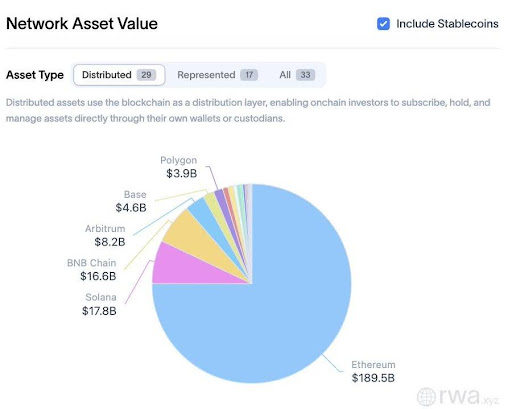
Source: Chart from Bit Digital on X

One of the strongest signals emerging from the real-world asset (RWA) market is the growing dominance of Ethereum as the primary settlement layer for the majority of tokenized financial assets. According to Pharos post, this trend is not being driven by institutions suddenly becoming more crypto-native. Instead, capital markets fundamentally value neutral settlement layers, credible infrastructure, and composability across financial applications.

Meanwhile, as the RWAs sector continues to scale, chains will increasingly compete on settlement credibility rather than community culture or market narratives. The next phase of tokenization will not be defined by who can launch assets fastest, but by who can support compliant and globally coordinated financial activity that could emerge at scale.

Large ETH Holders Continue Accumulating During Market Weakness

Ethereum is showing strong signs of quiet accumulation by large holders, a pattern often associated with early-stage bullish positioning. Crypto analyst Lucky has noted that the data reveal that wallets holding 100,000 ETH have increased their collective balance to around 17.41 million ETH, marking a 9-week high and accounting for roughly 22% of the circulating supply.

This type of behavior is what long-term investors watch closely because it reflects strategic accumulation during periods of price weakness, which is a very strong bullish setup for ETH.

ETH trading at $2,017 on the 1D chart | Source: ETHUSDT on Tradingview.com

Связанные с этим вопросы

QWhat differentiated Bit Digital's approach to Ethereum compared to most institutions initially?

ABit Digital recognized Ethereum's strategic importance as a core balance sheet asset and its role as the backbone for decentralized finance, staking, and tokenized economies early on, while most other institutions initially treated it as a secondary asset.

QAccording to Bit Digital, what key dynamic supported their thesis for accumulating ETH?

ABit Digital anchored its thesis to the dynamic that Ethereum's real-world usage, adoption, and utility continue to expand and scale across areas like stablecoin settlement and tokenization, while its price remained compressed.

QWhat is a primary reason for Ethereum's growing dominance in the Real-World Asset (RWA) tokenization market, as indicated in the article?

AEthereum's growing dominance is driven by capital markets fundamentally valuing neutral settlement layers, credible infrastructure, and composability across financial applications, not just institutions becoming more crypto-native.

QWhat recent on-chain data suggests bullish positioning for Ethereum by large holders?

AData shows that wallets holding 100,000 ETH have increased their collective balance to around 17.41 million ETH, a 9-week high, accounting for roughly 22% of the circulating supply, indicating strategic accumulation during market weakness.

QHow does the article characterize the next phase of competition in the tokenization sector?

AThe next phase will be defined not by who can launch assets fastest, but by which blockchain can support compliant and globally coordinated financial activity at scale, competing primarily on settlement credibility.

Похожее

Deconstructing the U.S. Stock Quantum Computing Sector: IonQ, Rigetti, D-Wave, Which of These Concept Stocks is Worth Betting On?

**Title:** Analyzing the US Quantum Computing Race: IonQ, Rigetti, D-Wave – Which Concept Stock is Worth Betting On? **Summary:** The podcast discusses the resurgence of quantum computing as a national priority for both the US and China, driven by its potential to break current encryption, revolutionize drug discovery, finance, and logistics. The core challenge is commercializing the technology, which is hampered by high error rates in quantum bits (qubits). Quantum error correction, requiring thousands of physical qubits per reliable logical qubit, is key but years away. The analysis compares three main publicly traded US quantum computing firms: * **IonQ (Ion Trap):** Considered the most financially stable with the fastest commercial progress (2025 revenue: $130M, +202%) and high-quality clients. Its valuation is very high, pricing in significant future growth. * **Rigetti (Superconducting):** Seen as the highest-risk, highest-potential-reward bet. It has the smallest revenue but recently launched a 108-qubit system. Its valuation multiples are extreme, making it highly sensitive to news. * **D-Wave (Quantum Annealing):** Has the most unique positioning with real-world enterprise clients today (e.g., Mastercard, Volkswagen) solving optimization problems. Its recent acquisition moves it into general-purpose quantum computing ("dual-platform"), adding execution risk. Major tech giants like Google, IBM, and Microsoft are also heavily invested, pursuing various technical approaches. Nvidia is positioning itself as the essential bridge between classical and quantum computing. The investment phase is likened to AI in 2018-2020: promising underlying technology with accelerating breakthroughs but a commercial inflection point still 3-7 years away, suggesting potential for a market correction ("bubble washout"). For investors, suggested approaches include gaining exposure through tech giants with quantum divisions (e.g., Google, IBM) or using niche ETFs like WQTM for pure-play quantum exposure, rather than direct stock picks in the highly volatile pure-play companies at this early stage.

marsbitТолько что

Deconstructing the U.S. Stock Quantum Computing Sector: IonQ, Rigetti, D-Wave, Which of These Concept Stocks is Worth Betting On?

marsbitТолько что

From Parallel Finance to Mainstream Finance: The On-Chain Securities Era Ushers in a Historic Window

From Parallel Finance to Mainstream: The Dawn of On-Chain Securities For over a decade, the crypto industry has operated as a parallel financial system with its own currencies, markets, and assets—from Bitcoin and ICOs to DeFi, NFTs, and memecoins. Despite building a robust internal ecosystem, a wall has separated it from the traditional financial world. That barrier is now crumbling. The industry's first act was one of internal evolution: ICOs streamlined fundraising, DeFi recreated financial services on-chain, and layer-2 networks competed for scalability—all within the crypto bubble. While innovative, this cycle remained closed, with capital and users circulating internally, leading to volatile boom-bust cycles. Even Bitcoin ETFs, while attracting Wall Street capital, merely provided a channel to buy crypto assets without bridging the systems. The next, larger narrative is Real-World Assets (RWA) moving on-chain. This involves tokenizing stocks, bonds, funds, and future cash flows. Blockchain can compress the complex traditional processes of trading, settlement, clearing, and custody into a seamless, automated network operating in seconds. This shift is creating a new financial gateway: the native crypto securities broker. This entity will combine functions of an exchange, broker, bank, and custodian into a unified global financial operating system. Consequently, the next major battleground won't be the "public chain wars" focused on speed and cost, but the competition to build the financial infrastructure capable of hosting high-quality, liquid real-world assets. Access to global equities, index funds, or stakes in companies like SpaceX could erase the boundary between crypto and traditional finance, unlocking a market orders of magnitude larger than crypto's current valuation. In summary, after years of creating a separate financial world, crypto's next decade will be defined by its integration into the existing global financial system, marking the true beginning of its largest growth story.

marsbit21 мин. назад

From Parallel Finance to Mainstream Finance: The On-Chain Securities Era Ushers in a Historic Window

marsbit21 мин. назад

Wang Chuan: When the Neighbor Old Wang Made 30x on Memory Stocks, How to Avoid Anxiety (Part Six) - The Trap of Commoditized Goods

Wang Chuan: When the Neighbor Lao Wang Made 30x on Storage Stocks, How to Stay Anxiety-Free (Part 6) - The Trap of Commoditized Goods. This essay uses historical and current examples to analyze the cyclical and high-risk nature of the data storage industry. It begins with the 1990s rise and dramatic fall of Iomega, whose stock soared over 160x in 18 months before collapsing 97% from its peak, illustrating the fleeting success of storage "meme stocks." The core problem is that storage products, like DRAM and flash memory, are highly commoditized. This leads to extreme volatility: prices have plummeted over 80% multiple times, and company stocks often crash 95% or go bankrupt. The industry's dynamic is defined by "elastic demand facing heavy-asset, long-cycle, rigid supply." When demand spikes and supply is fixed, prices skyrocket, as seen recently with AI-driven demand for High Bandwidth Memory (HBM). Companies like Sandisk and Micron have reported massive revenue and gross margin jumps (e.g., Sandisk's gross margin rising from 22.5% to 78.3%) despite minimal increases in production volume. However, these high margins are self-defeating. They incentivize massive new capacity investments (hundreds of billions planned from 2026), with supply expected to surge by late 2027. Once new supply meets demand, prices and profits will crash, potentially leading to a scenario where "selling more results in earning less." The article debunks the safety of long-term supply agreements, comparing them to fragile non-aggression pacts easily broken when market conditions shift. It warns that when an industry is highly profitable but trades at low P/E ratios, the risk is greatest, as plummeting prices quickly erase those earnings. Multiple asymmetric risks loom, including economic recession, reduced AI spending, faster-than-expected capacity expansion (especially from Chinese firms), and technological innovations that reduce memory requirements. In conclusion, the storage sector is a cyclical trap where periods of euphoric profits are often precursors to devastating downturns, luring unprepared investors into a "wealth incinerator."

marsbit31 мин. назад

Wang Chuan: When the Neighbor Old Wang Made 30x on Memory Stocks, How to Avoid Anxiety (Part Six) - The Trap of Commoditized Goods

marsbit31 мин. назад

Wang Chuan: When the neighbor Lao Wang earned thirty times from investing in memory storage stocks, how can you still avoid anxiety (6) - The trap of homogeneous products

The article, "Wang Chuan: How to Remain Unanxious After Neighbor Lao Wang's Thirty-Fold Gain on Storage Stocks (Part 6) - The Trap of Commoditized Goods," analyzes the cyclical and perilous nature of the data storage industry through historical and current case studies. It begins with the example of Iomega, whose Zip drives led to a stock surge of over 160x in the mid-1990s before collapsing over 97% from its peak due to competition from cheaper CD-R technology. This pattern is characteristic of storage, where products like DRAM are highly commoditized, leading to extreme price volatility. The sector has seen prices crash over 80% multiple times, with companies often facing bankruptcy. The core dynamic is "elastic demand facing heavy-asset, long-cycle, rigid supply." High prices attract new capacity, but the long lead time means supply eventually overshoots, causing sharp price corrections. The current AI-driven boom, exemplified by surging demand for High-Bandwidth Memory (HBM), has led to skyrocketing prices and profit margins for companies like SanDisk and Micron, despite relatively flat production volumes. However, the author warns this high-margin environment is self-defeating. The high profits are already triggering massive new capacity investments (hundreds of billions starting 2026), with supply expected to ramp up by late 2027. When supply catches up, total revenue and profits may fall even as more units are sold. Long-term supply agreements offer little protection, as buyers can find ways to renegotiate if market prices drop, similar to fragile political treaties. Key risks include economic downturns, cuts in AI spending, faster-than-expected capacity expansion (especially from Chinese firms), and innovations in chip/algorithm design that reduce memory needs. A critical trap is that at the cycle's peak, storage stocks often appear cheap with low P/E ratios, luring value investors just before an impending downturn where profits evaporate. The conclusion cautions that for commoditized goods like storage, high margins inevitably destroy themselves, and the current asymmetry favors downside risk over further upside. The neighbor's dream of easy wealth from storage stocks is portrayed as a precarious illusion.

链捕手48 мин. назад

Wang Chuan: When the neighbor Lao Wang earned thirty times from investing in memory storage stocks, how can you still avoid anxiety (6) - The trap of homogeneous products

链捕手48 мин. назад

Торговля

Спот
Фьючерсы

Популярные статьи

Manyu: восходящая мем-звезда на Ethereum, готовая открыть новую эру культуры Shiba

Manyu - это мемтокен на Ethereum, который приносит децентрализованную культурную и развлекательную ценность через вирусное влияние в соцсетях и вовлечённость сообщества.

1.9k просмотров всегоОпубликовано 2025.11.27Обновлено 2025.11.27

Manyu: восходящая мем-звезда на Ethereum, готовая открыть новую эру культуры Shiba

Неделя обучения по популярным токенам 14: Glamsterdam — самое ожидаемое обновление Ethereum в 2026 году

Ordinals/Runes по-прежнему стимулируют доходы от комиссий за блоки и активность разработчиков, рассматриваются как отправная точка «нативной эмиссии активов» в сети.

1.5k просмотров всегоОпубликовано 2026.04.29Обновлено 2026.04.29

Неделя обучения по популярным токенам 14: Glamsterdam — самое ожидаемое обновление Ethereum в 2026 году

Обсуждения

Добро пожаловать в Сообщество HTX. Здесь вы сможете быть в курсе последних новостей о развитии платформы и получить доступ к профессиональной аналитической информации о рынке. Мнения пользователей о цене на ETH (ETH) представлены ниже.

活动图片