Arthur Hayes' Latest In-Depth Article: Forget Wars and Inflation, the AI Bubble Is the Biggest Opportunity

marsbitОпубликовано 2026-05-12Обновлено 2026-05-12

Введение

In his latest article "The Butterfly Touch," Arthur Hayes argues that the massive capital expenditure (CAPEX) fueling the global AI race, driven by US-China technological competition and nationalism, is creating unprecedented dollar and renminbi liquidity. This monetary expansion, combined with inflationary pressures from geopolitical conflicts like the US-Iran war, is creating a perfect environment for Bitcoin and cryptocurrencies. Hayes believes foreign nations, threatened by supply chain disruptions, will increasingly shift savings from dollar assets to real infrastructure and commodities, forcing the US to maintain loose financial conditions to support its markets. He predicts Bitcoin, backed by "trillions of dollars and yuan that have yet to be printed," is poised for a significant rally, potentially back to $126,000, with the bullish trend accelerating past $90,000. While acknowledging a potential shift in US political sentiment against AI and inflation around the 2028 election, Hayes remains aggressively bullish for now. He advocates investing in cryptocurrencies, specifically mentioning his allocations to Hyperliquid ($HYPE), Zcash ($ZEC), and an upcoming focus on $NEAR due to its "privacy narrative" and potential for a major rally.

Original Author: Arthur Hayes, Co-founder of BitMEX

Original Translation: BitpushNews

Editor's Note: In Arthur Hayes' latest article "The Butterfly Touch," it is anticipated that US dollar and Renminbi liquidity will continue to rise, benefiting Bitcoin and cryptocurrencies.

AI Optimism
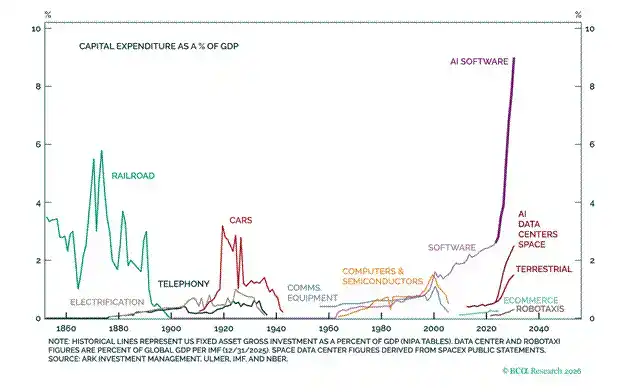
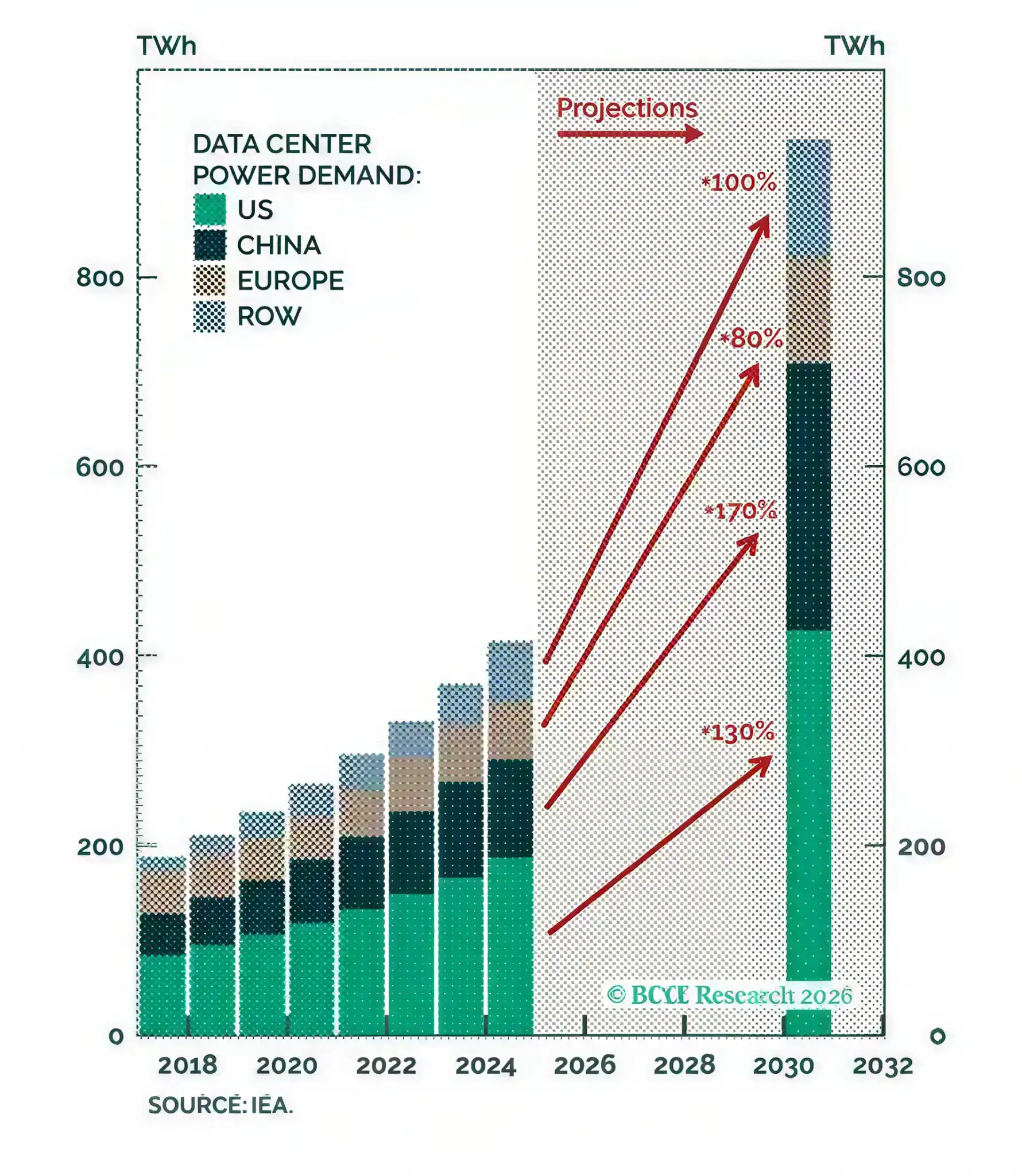
The capital expenditure (CAPEX) supporting AI model training and inference is unprecedented in human civilization. Many believe that this investment in intelligence will create value for humanity unlike any previous technological construction. I agree; however, as humans, we always tend to overdo things. In this universe, positive infinity and perfection are unattainable. Therefore, in anticipating a machine intelligence-driven future, we are likely to overbuild.

AI advocates cite nationalism as a reason for lavish spending, but patriotism should not have a price tag... Both the US and China believe that AI and technological hegemony are crucial to the survival of their domains.

Tech giants are also very happy to sell them horror stories: what will happen to this country if the other side gains hegemony in machine intelligence first. Objectively speaking, both leaders have witnessed firsthand how the proliferation of AI and drones can lead to victory and are convinced of it. Therefore, they will ensure that the primary economic and military objective is to further build the most efficient machine intelligence within their borders.
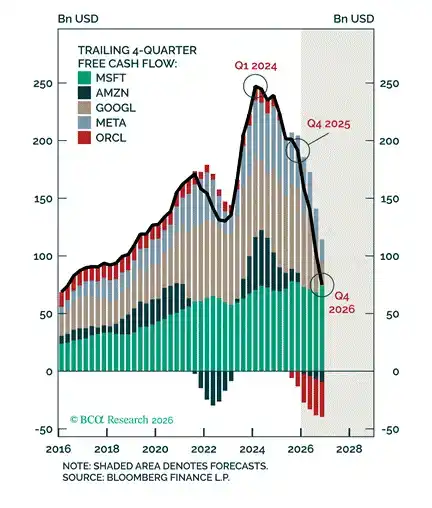
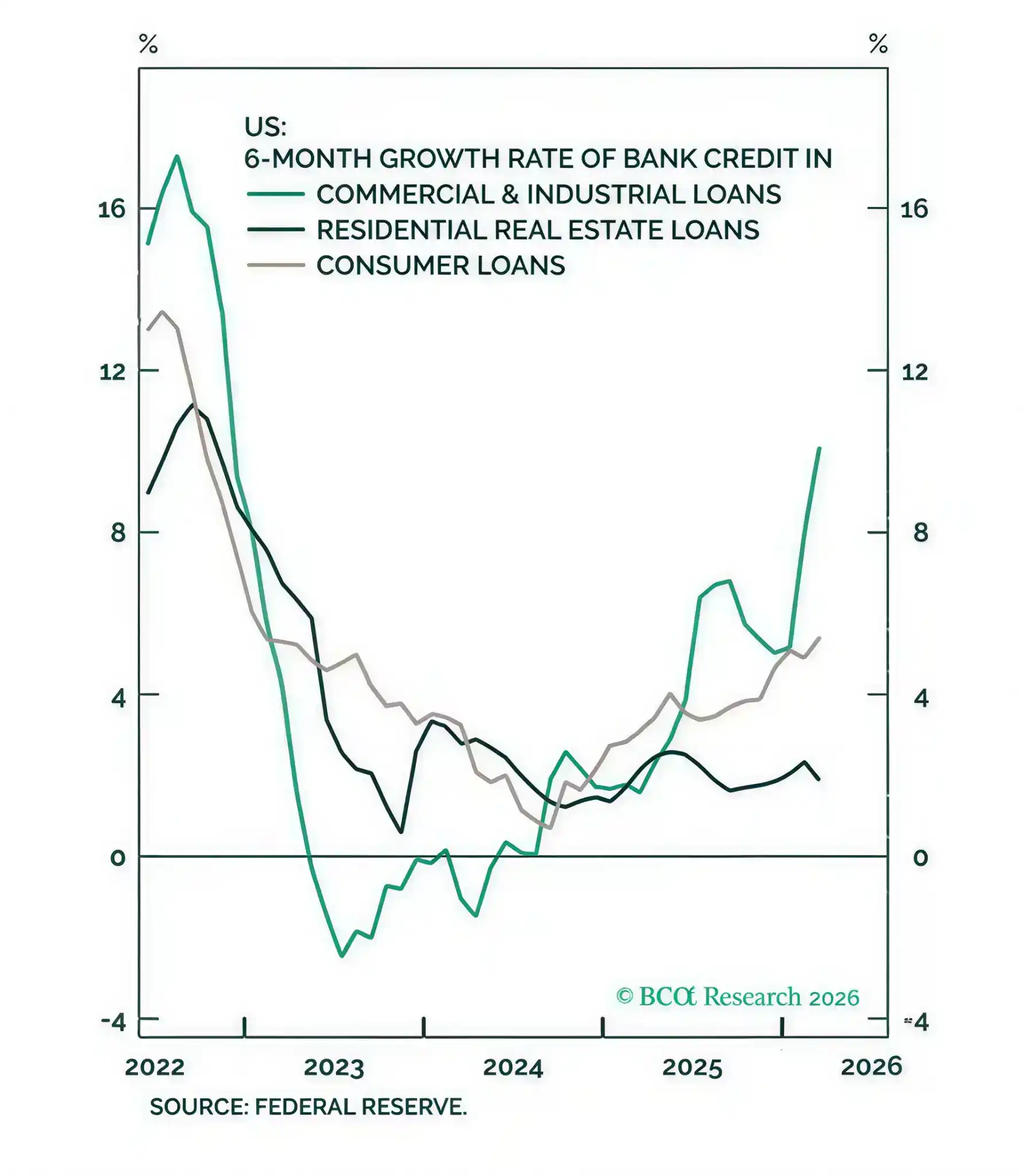
In the United States, most AI CAPEX to date has come from the operating cash flow of the most profitable software companies. But considering the scale of current and future expenditures, additional financing through credit channels will be needed.
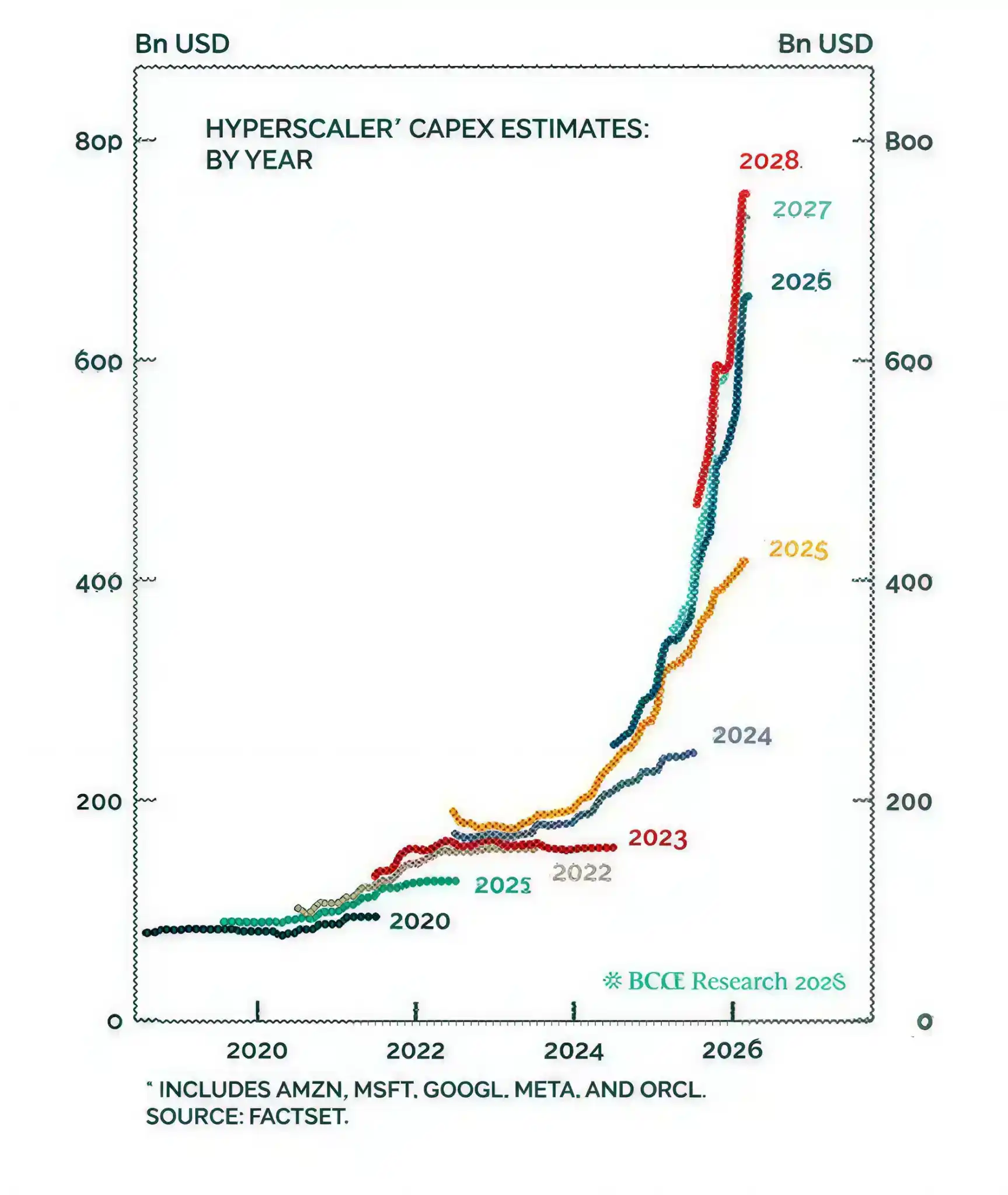
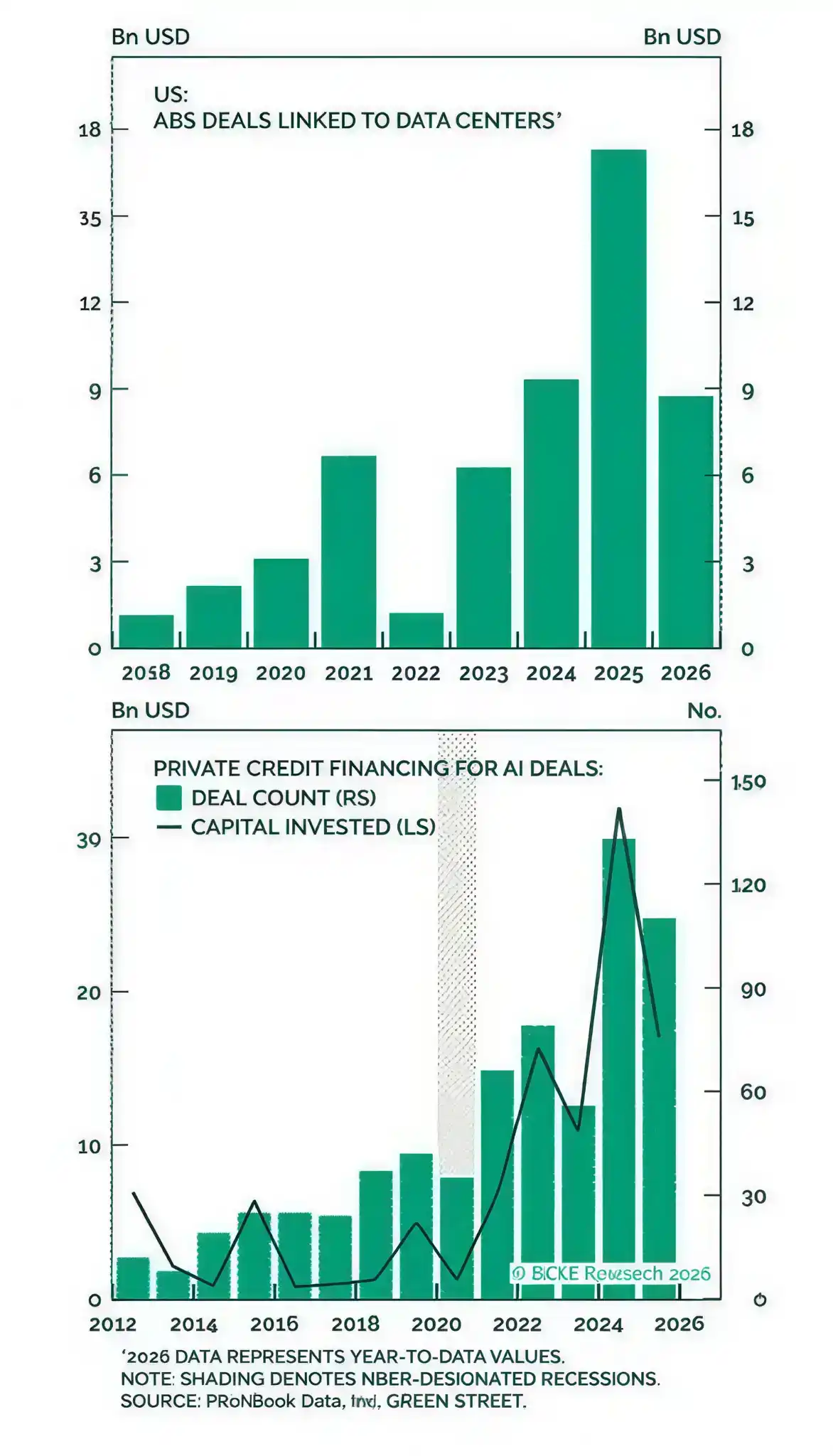
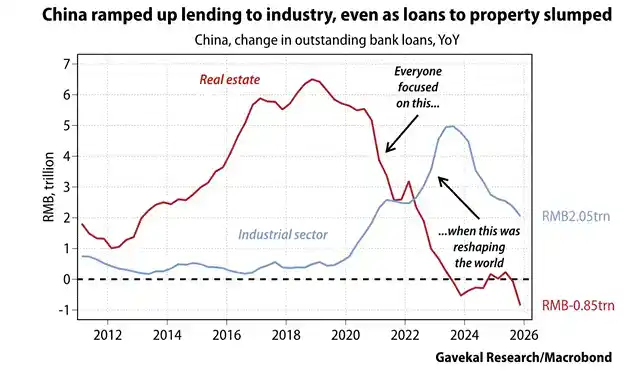
In China, banks are slowing down funding for real estate and instead funding the technology sector. In addition to data center-related expenditures, both the US and China are continuously investing funds to increase power supply.
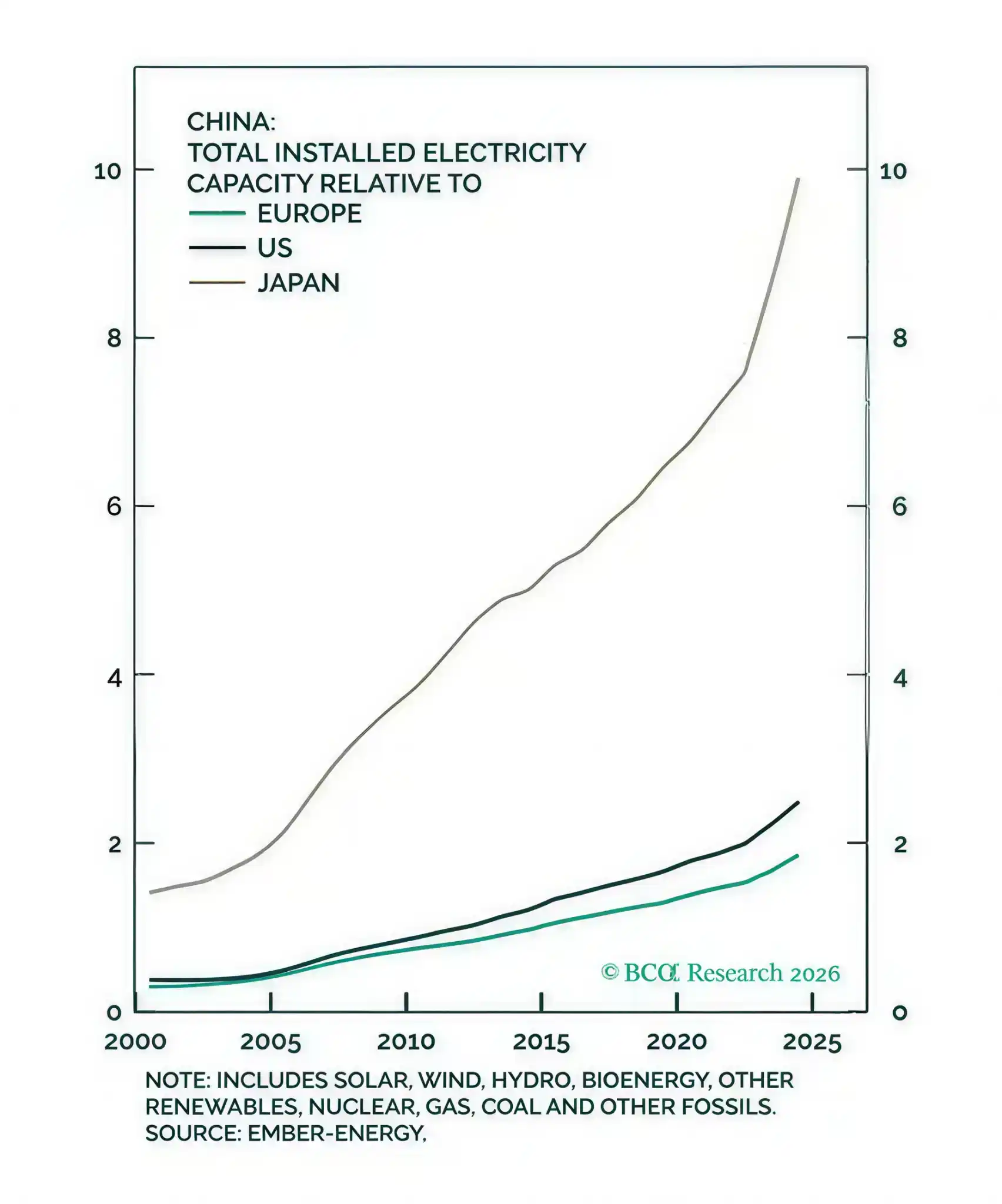
That is to say, central banks are all creating more fiat currency and easing financial conditions.
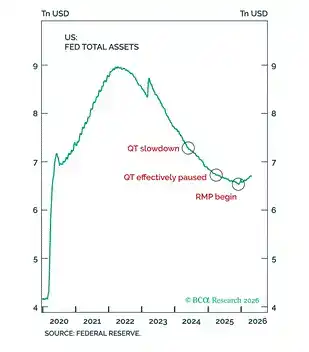
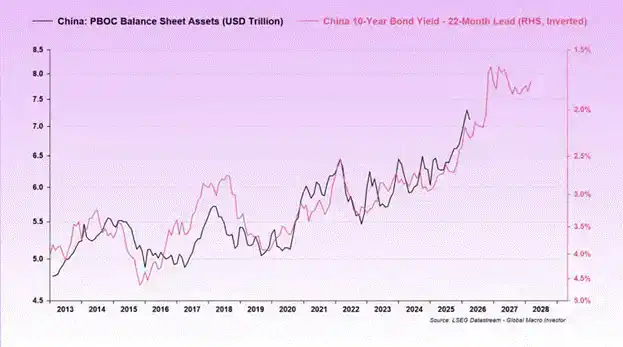
The combination of political will (to win the AI race) and financial will (to fund construction through printing money and lending) creates a perfect environment for cryptocurrency. There will be far more fiat currency units tomorrow than today, and due to the surge in AI and electrification expenditures, the rate of change is accelerating. As the cost per unit of intelligence decreases and the complexity of tasks performed by AI increases, this means computational power consumption grows exponentially; this is the essence of "Jevons' Paradox."

Additionally, there is the "Red Queen Effect": as competitors improve model efficiency, a company's invested AI CAPEX quickly depreciates. This leads to a race to increase spending further to create better models to defeat opponents, while also making the hundreds of billions (soon trillions) invested by opponents obsolete. Therefore, unless hindered by exogenous market events, AI CAPEX spending will expand indefinitely.

When Will This Frenzy End?

I believe two events will occur almost simultaneously, changing people's perception of the necessity of spending trillions on building AI.

Market Indigestion: The occurrence of a massive and financially irresponsible AI-related IPO or mega-merger that the market cannot stomach. This will sober the market from its manic phase, and people will start questioning whether machine intelligence is truly worth this much money.

Shift in Political Winds: The 2028 US election. The increase in prices of raw materials, labor, and especially electricity due to massive AI construction is not popular in many regions. Furthermore, 90% of Americans do not hold significant amounts of stock and cannot benefit from soaring stock prices. Politically, it is very easy to campaign by being anti-AI, focusing on the value of human labor, and suppressing inflation.

But at this moment, US dollar and Renminbi liquidity will continue to rise. Bitcoin and cryptocurrencies will benefit from this.

Every Nation Sweeps Its Own Doorstep

Trump bombs Iran, fundamentally unconcerned about the war's impact on the global economy. Or perhaps he cares, but the assumption that this year's "special military operation" would lead to a quick victory has proven overly optimistic. The US possesses God-given cheap energy (fossil fuels) and fertile farmland. Things might get expensive, but Americans will not starve even if the Strait of Hormuz is partially closed—unless politicians decide to spend money on Fallujah instead of food stamps.

But the people of Europe, Africa, and much of Asia are less fortunate. Unfortunately, the political elites of these countries mistakenly believe that US politicians will consider their lack of food and energy when deciding whether to launch another war threatening the flow of basic commodities. Trusting the US, these countries stored their surpluses in US dollar financial assets instead of building pipelines, trade routes, or stockpiling necessities.

Marco Papic of BCA Research puts it best:

"The entire globe—literally—is wired for US hegemony... Why is German defense insufficient against Russia? Because... the US. Why do most Gulf states have little energy transport infrastructure bypassing the Strait of Hormuz? Because... the US. Why is global manufacturing concentrated in China? Because... the US."

Due to an inability to access fertilizer or fuel, investment decisions in these countries will undergo dramatic changes. Holding US Treasuries or S&P 500 ETFs is meaningless when you cannot obtain food and energy because of a war you did not participate in. To remedy these deficiencies, sovereign nations will, in the future, marginally liquidate US dollar assets and instead invest in infrastructure, defense, and physical goods.
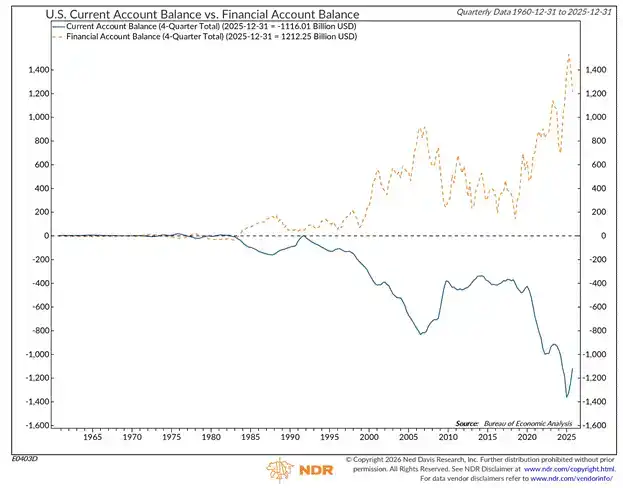
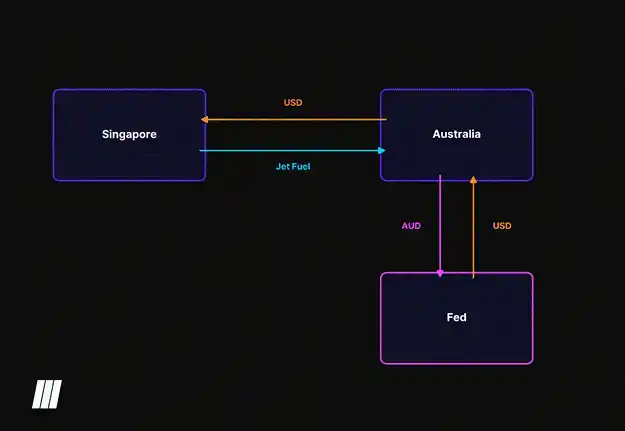
This is a problem for US financial markets due to the huge foreign ownership share. If left unchecked, the slow liquidation of US dollar assets will lead to market declines. US Treasury Secretary Bessent and other policymakers understand this. They have two options: encourage the use of US dollar swap lines or modify banking regulations.

"Bad" Australia: Sells US Treasuries to buy jet fuel.
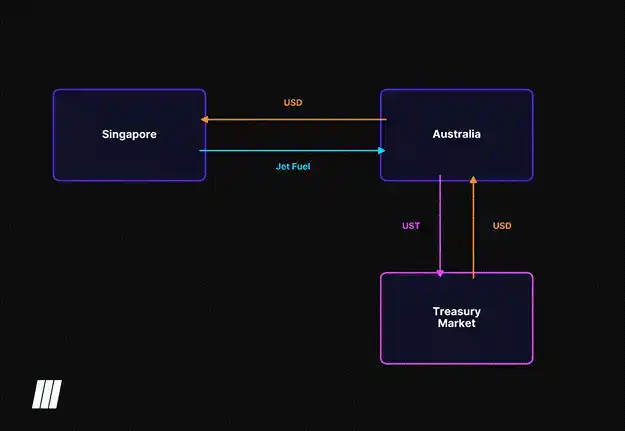
"Good" Australia: Borrows US dollars from the Fed to buy jet fuel.
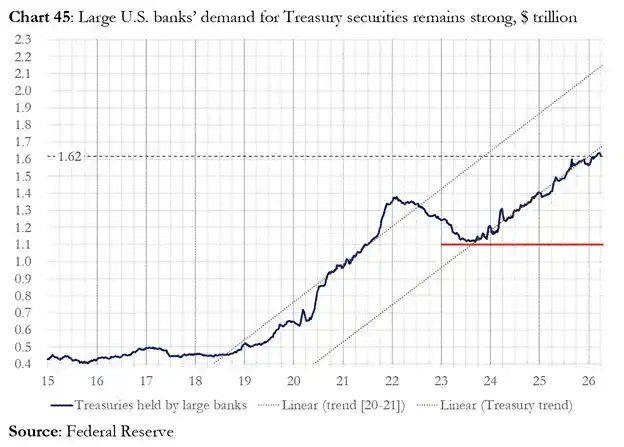
If US markets need more momentum to offset sovereign selling, regulations can be eased to allow banks to hold more US Treasuries and stocks. The relaxation of eSLR (Enhanced Supplementary Leverage Ratio) related capital requirements is a step in this direction.
Since the establishment of the Petrodollar system in the 1970s, saving surplus in US dollar assets has been "best practice." But today, holding US dollar assets no longer guarantees you a ship of fertilizer or oil. "Just-in-time" logistics is dead; "just-in-case" is here to stay. This is a structural trend that will last for decades. This means monetary policymakers must maintain loose financial conditions to fill the void left by foreigners investing their savings in physical infrastructure rather than "phantom US dollar financial assets."

Higher + Longer

War is inflationary, and the US-Iran conflict is no exception. AI CAPEX and infrastructure construction are excuses for increasing lending. Politicians support money printing due to real and perceived necessity. This is why Bitcoin has outperformed other major risk assets like gold and US tech stocks since February 28th.
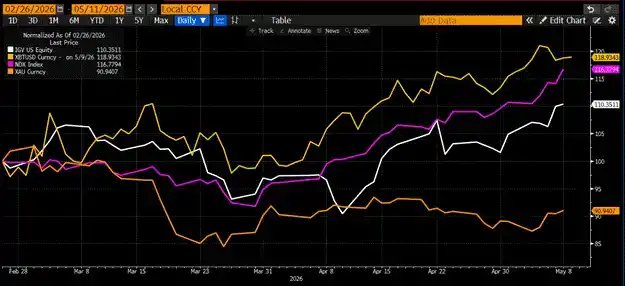
Bitcoin bottomed at $60,000 earlier this year, backed by trillions of US dollars and Renminbi yet to be created, and a return to $126,000 is a certainty. Many naysayers refuse to participate in this rally because Bitcoin's performance over the past 24 months has lagged behind tech stocks and gold. They don't understand why Bitcoin remains effective as a hedge against money printing. But it will demonstrate extreme sensitivity to fiat liquidity expansion. I expect the rally to intensify, becoming explosive once it breaks through $90,000 and many call option sellers are forced to cover.

I don't know how high Bitcoin can go, but I will set Maelstrom's portfolio risk to maximum unless a major change occurs. By the November midterm elections, US political sentiment towards AI and inflation could become very hostile, which might be a small hurdle in the ascent.

But remember: High oil prices don't hurt Trump as much as people think. MAGA is destined to lose in California (where energy policy leads to the highest gas prices in the US), but $100 crude and infrastructure reconstruction in Venezuela and the Middle East will benefit the oil and gas industries in states where Trump supporters reside. As long as money can be put in the pockets of ordinary Americans, Trump still has time to win re-election. So, let's go, baby, S&P 500 to 10,000!

It's time to play with Shitcoins. Besides Hyperliquid ($HYPE) and Zcash ($ZEC), which we are already heavily invested in, my next favorite is $NEAR. My next article will explain our thesis: why the "privacy narrative" combined with "Near Intents" will create positive cash flow for the protocol. This will completely reverse the token's sluggish price performance and create a massive catch-up opportunity, rapidly propelling it towards its all-time high from years ago.

It's a bull market; close your eyes and hit the buy button. There will be a time to sell, but it's not now. Don't mess it up, let's get crazy together.


Трендовые криптовалюты

Связанные с этим вопросы

QWhat is the main argument Arthur Hayes presents regarding the AI bubble and cryptocurrency?

AArthur Hayes argues that the massive capital expenditure (CAPEX) in AI, driven by US-China competition and funded by increased fiat liquidity (printing money), creates a perfect environment for cryptocurrencies like Bitcoin to rise. He believes this AI-driven money creation is the biggest opportunity, overshadowing concerns about war and inflation.

QAccording to Hayes, what are the two events that could potentially end the AI spending frenzy?

AHe identifies two potential events: 1) A market indigestion event, such as a massive, financially irresponsible AI-related IPO or merger that the market cannot absorb, causing a reality check. 2) A political shift, particularly the 2028 US election, where rising costs (materials, labor, electricity) due to AI build-out could make an anti-AI, pro-human labor, anti-inflation platform politically attractive.

QHow does the 'Jevons Paradox' relate to AI spending according to the article?

AThe 'Jevons Paradox' is mentioned to explain that as the cost per unit of intelligence falls and AI performs more complex tasks, the total computational power (and thus energy/capital) consumption grows exponentially. This, combined with the 'Red Queen Effect' (needing to spend more to keep up with competitors), leads to potentially infinite expansion of AI CAPEX.

QWhy does Hayes suggest that countries outside the US might start selling dollar assets?

AHe argues that wars (like the US-Iran conflict) threaten the flow of essential commodities (food, energy) to countries in Europe, Africa, and Asia. Since holding US financial assets (like Treasuries) doesn't guarantee access to these physical goods, sovereign nations will be forced to liquidate dollar assets to invest in physical infrastructure, defense, and commodity stockpiles for security, moving from 'just-in-time' to 'just-in-case' logistics.

QWhat specific cryptocurrency altcoins does Arthur Hayes mention being bullish on, besides Bitcoin?

AHe mentions being heavily invested in Hyperliquid ($HYPE) and Zcash ($ZEC). He also states that his next favorite is $NEAR, citing an upcoming article that will argue the 'privacy narrative' combined with 'Near Intents' will generate positive cash flow for the protocol and create a significant catch-up rally.

Похожее

После трёх кварталов падения: получится ли у крипторынка стабилизироваться в третьем квартале?

Криптовалютный рынок пережил худший квартал с 2022 года, общая капитализация упала на 12,6% до $2,1 трлн, а дневные объемы торгов снизились на 20,9%. Впервые за три года сократилась и капитализация стейблкоинов. Основные факторы спада — отток средств из биткоин-ETF, распродажа биткоинов корпоративным казначейством Strategy и ужесточение монетарной политики ФРС. Второй квартал завершился чистым оттоком $46,7 млрд из ETF, при этом в июне отток достиг рекордных $45 млрд. Ключевым событием третьего квартала станет заседание ФРС 28–29 июля. Мягкий сигнал может поддержать биткоин в диапазоне $68 000–84 000 и вернуть приток в ETF, тогда как жесткая риторика способна сместить торговый диапазон к $50 000–56 000. Законодательная неопределенность также давит на рынок: прогресс по закону CLARITY Act, определяющему регуляторные границы, замедлился, и вероятность его принятия в 2026 году упала до 40–45%. Несмотря на общий спад, два сегмента показали рост: объемы на рынках предсказаний выросли на 48,7%, а торговля токенизированными коллекционными предметами увеличилась на 143%. Сектор RWA продолжает стабильно развиваться, достигнув $28,1 млрд. Рынок, вероятно, миновал фазу острой распродажи, но для устойчивого восстановления необходимы ясность от ФРС и регуляторный прогресс.

marsbit5 ч. назад

После трёх кварталов падения: получится ли у крипторынка стабилизироваться в третьем квартале?

marsbit5 ч. назад

BIT Торговые часы: BTC по-прежнему под давлением 200 EMA на недельном графике, после отскока возможен перезапуск нисходящего движения; секторы хранения данных и полупроводников, выросшие ночью, начали падение в вечерней сессии

**Краткий обзор рынка: BTC под давлением, коррекция на рынке акций, внимание к данным и событиям** Рынок криптовалют демонстрирует осторожное восстановление. Bitcoin торгуется около $66 000, сталкиваясь со значительным сопротивлением в районе $68 000, где сосредоточены объемные "застрявшие" позиции. Ключевые технические уровни — 200-недельная скользящая средняя (~$63 333) и 200-недельная EMA (~$68 328). Аналитики отмечают низкую ликвидность, характерную для летнего периода. На фондовом рынке после сильного роста во вторник наблюдается коррекция. Фьючерсы на основные индексы США снижаются. Акции полупроводниковой и памяти, которые резко выросли накануне, падают в ночных торгах. Исключением стал SMCI, который вырос более чем на 15% после оптимистичного прогноза. На общий настрой негативно влияют рост цен на нефть (более $91 за баррель Brent) и доходности государственных облигаций США (10-летние — около 4,64%), что возрождает инфляционные опасения. Азиатские рынки показали нестабильную динамику. Индекс KOSPI в Корее вырос на 0,74%, а японский Nikkei 225 снизился на 0,18%. Основной риск для региона — ослабление японской иены до минимумов с 1986 года, что повышает вероятность вмешательства властей. **Ключевые события для наблюдения:** * **24 июля:** Финансовые отчеты Alphabet (Google), Tesla, IBM. Событие AMD, посвященное ИИ. * **25 июля:** Решение по процентной ставке ЕЦБ и пресс-конференция Кристин Лагард. Финансовые отчеты Intel, American Airlines, Honeywell и других. Данные по числу первичных заявок на пособие по безработице в США.

marsbit5 ч. назад

BIT Торговые часы: BTC по-прежнему под давлением 200 EMA на недельном графике, после отскока возможен перезапуск нисходящего движения; секторы хранения данных и полупроводников, выросшие ночью, начали падение в вечерней сессии

marsbit5 ч. назад

Бывший глава CFTC и президент Circle Тарберт: призывает к долгосрочной стратегии, но сам выводит $30 млн

Бывший председатель CFTC и президент Circle Хит Тарберт, публично пропагандируя долгосрочное видение компании для инвесторов на фоне падения акций на 70% с пиковых значений, сам активно распродавал свои акции CRCL. С момента IPO Circle он по плану 10b5-1 продал более 360 тысяч акций, выручив около 30 миллионов долларов, и при этом ни разу не докупал акции на открытом рынке. Эта разница между его публичными заявлениями и личными действиями вызвала критику. Карьера Тарберта демонстрирует классическое использование «вращающейся двери» между регулирующими органами и частным сектором. Уйдя с поста председателя CFTC в 2021 году, через 27 дней он занял должность главного юрисконсульта в маркет-мейкере Citadel Securities, который в тот момент находился под пристальным вниманием из-за скандала с акциями GameStop. Позже, уже работая в Citadel, Тарберт выступал за расширение полномочий CFTC на крипторынок, в то время как его работодатель планировал выход на этот рынок. В 2023 году Тарберт присоединился к Circle, где его опыт и связи сыграли ключевую роль в успешном проведении IPO компании в 2025 году. Однако его последующие массовые продажи акций, совпавшие с падением котировок и его же призывами к долгосрочным инвестициям, ставят под сомнение искренность его уверенности в будущем компании. Критики видят в его карьере образец превращения регуляторного опыта и политических связей в личную выгоду, в то время как риски несут обычные инвесторы, верящие его нарративам.

marsbit6 ч. назад

Бывший глава CFTC и президент Circle Тарберт: призывает к долгосрочной стратегии, но сам выводит $30 млн

marsbit6 ч. назад

Gate Research: Взлет «уолл-стритизации» криптофинансовых продуктов — это конкуренция или интеграция?

**Аналитический обзор Gate Research Institute: Волна "уолл-стритизации" криптофинансовых продуктов — конкуренция или интеграция?** Создание биткоина в 2009 году было ответом на финансовый кризис и стремлением построить децентрализованную систему без доверенных посредников. Однако к 2026 году значительная часть биткоинов (около 7,14%) хранится через ETF таких гигантов, как BlackRock. Это символизирует глубокую интеграцию традиционных финансов (TradFi) и крипторынка. С появлением биткоин-ETF, фьючерсов, RWA (токенизированных реальных активов) и государственных облигаций на блокчейне, традиционные институты получают всё больше влияния на выпуск, ценообразование, кастодию и дистрибуцию криптоактивов. Однако это не одностороннее поглощение, а взаимодополняющая конвергенция. Криптосфера приносит TradFi глобальную 24/7 ликвидность и программируемость, а TradFi предоставляет криптосфере регулируемые каналы, институциональное доверие и массовый доступ. Яркий пример — две противоположные, но ведущие к одной цели траектории: * **Путь А:** Криптобиржи, такие как Gate, начинают с токенизированных акций и CFD, а затем напрямую подключаются к инфраструктуре традиционных брокеров, предлагая реальную торговлю акциями США, Гонконга и Кореи за стейблкоины. * **Путь Б:** Традиционные брокеры, такие как Robinhood, интегрируют криптоактивы, а затем создают собственные Layer 2 для токенизации своих акций, стремясь к круглосуточной торговле. Обе стратегии нацелены на создание **универсального финансового аккаунта будущего** — единой точки доступа к акциям, криптовалютам, ETF, токенизированным облигациям и другим активам. Ключевой конкурентной борьбой становится не между CEX и брокерами, а между этими "супераккаунтами". Параллельно, слой RWA и токенизированных гособлигаций растёт даже на медвежьем рынке, становясь "прослойкой" для объединения капиталов. Хотя этот рынок (около $150 млрд токенизированных казначейских облигаций) ещё мал по сравнению с традиционным ($30 трлн), он демонстрирует устойчивый структурный тренд, привлекающий крупнейшие финансовые институты (JPMorgan, DTCC и др.). **Вывод:** "Уолл-стритизация" — это не поражение идеалов децентрализации, а формирование новой гибридной модели. Децентрализованные протоколы продолжают работать на базовом уровне, в то время как на уровне приложений и пользовательского опыта формируется более эффективный, глобальный и свободный объединённый рынок капитала, где активы TradFi и DeFi торгуются бок о бок в одном интерфейсе. Уолл-стрит не завоевала криптосферу, а криптосфера не обошла Уолл-стрит — они совместно строят новые финансовые рельсы.

marsbit6 ч. назад

Gate Research: Взлет «уолл-стритизации» криптофинансовых продуктов — это конкуренция или интеграция?

marsbit6 ч. назад

S&P Dow Jones и Pantera выпускают криптоиндекс, биткоин оставлен за бортом из-за «отсутствия прибыли»

Стандард энд Пурс (S&P Dow Jones Indices) совместно с Pantera Capital запускает индекс S&P Pantera Digital Asset Index. Новый индекс включает 18 токенов, но исключает биткоин, XRP и мем-токены. Критерием отбора послужила «финансовая жизнеспособность», по аналогии с S&P 500: протокол должен демонстрировать положительный доход в течение нескольких кварталов и распределять стоимость среди держателей токенов. Это первое применение фундаментального подхода к оценке криптоактивов со стороны крупнейшего в мире провайдера индексов. В первую пятерку активов вошли Ethereum (ETH), BNB, Solana (SOL), TRON (TRX) и Hyperliquid (HYPE). Pantera отмечает, что совокупный годовой доход всех протоколов индекса превышает $30 млрд. Биткоин был исключен по трем причинам: он рассматривается как монетарный актив, доступный через отдельные ETF; он не генерирует доход протокола; а смешивание его в индексе с доходными активами затрудняет фундаментальный анализ для институциональных инвесторов. Пока индекс является эталонным, но Pantera ведет переговоры о создании на его основе ETF и других инвестиционных продуктов. Компания также отмечает значительный разрыв на рынке: многие институциональные инвесторы готовы к аллокации в криптоактивы, но им не хватает структурированных продуктов, фокусирующихся на активах с реальной экономической деятельностью.

marsbit6 ч. назад

S&P Dow Jones и Pantera выпускают криптоиндекс, биткоин оставлен за бортом из-за «отсутствия прибыли»

marsbit6 ч. назад

Торговля

Спот

Популярные статьи

Неделя обучения по популярным токенам (2): 2026 может стать годом приложений реального времени, сектор AI продолжает оставаться в тренде

2025 год — год институциональных инвесторов, в будущем он будет доминировать в приложениях реального времени.

1.9k просмотров всегоОпубликовано 2025.12.16Обновлено 2025.12.16

Неделя обучения по популярным токенам (2): 2026 может стать годом приложений реального времени, сектор AI продолжает оставаться в тренде

Обсуждения

Добро пожаловать в Сообщество HTX. Здесь вы сможете быть в курсе последних новостей о развитии платформы и получить доступ к профессиональной аналитической информации о рынке. Мнения пользователей о цене на AI (AI) представлены ниже.

活动图片